Checked on 11 November 2026.
How to launch a crypto token in 2026 starts with how to create it: to create your own crypto token you deploy a token contract on an existing blockchain, ERC-20 on Ethereum, Base or BNB Chain or SPL on Solana, rather than building a new coin. The full launch runs in order: a job and a legal route, supply and vesting, a chain, an audited contract verified on the explorer, seeded liquidity, a listing, and marketing last. Deployment itself cost under $0.30 on five major chains when we measured it on 27 October 2026.
- Gas is the cheapest line in the budget: a standard OpenZeppelin ERC-20 needed about 1.10 million gas, roughly $0.11 on Ethereum and $0.015 on Base at our check.
- 84.7% of 118 tokens launched in 2025 traded below their launch valuation by 20 December 2025, with a median FDV change of -71.1% (Memento Research).
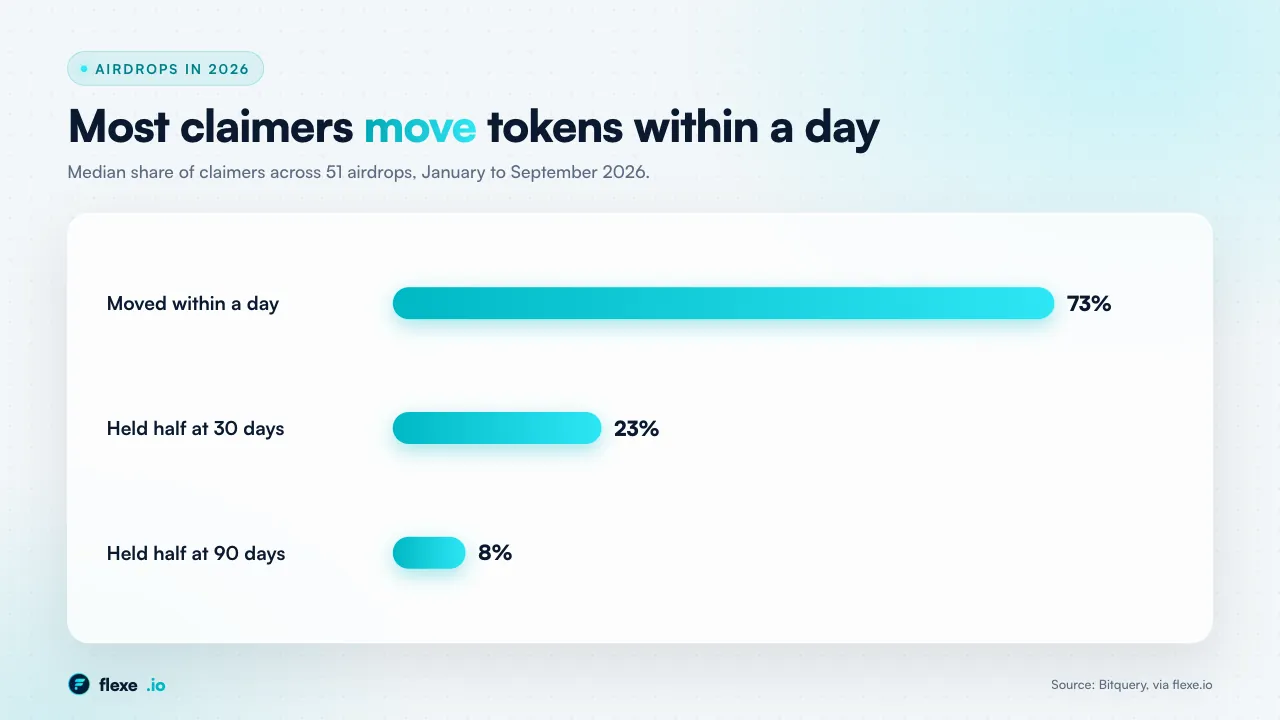
- In the median 2026 airdrop, 73% of claimers moved their tokens within a day (Bitquery, 51 airdrops).
- An EU public offer needs a white paper notified at least 20 working days before publication, and no marketing may go out before it is published.
What you need before writing a contract
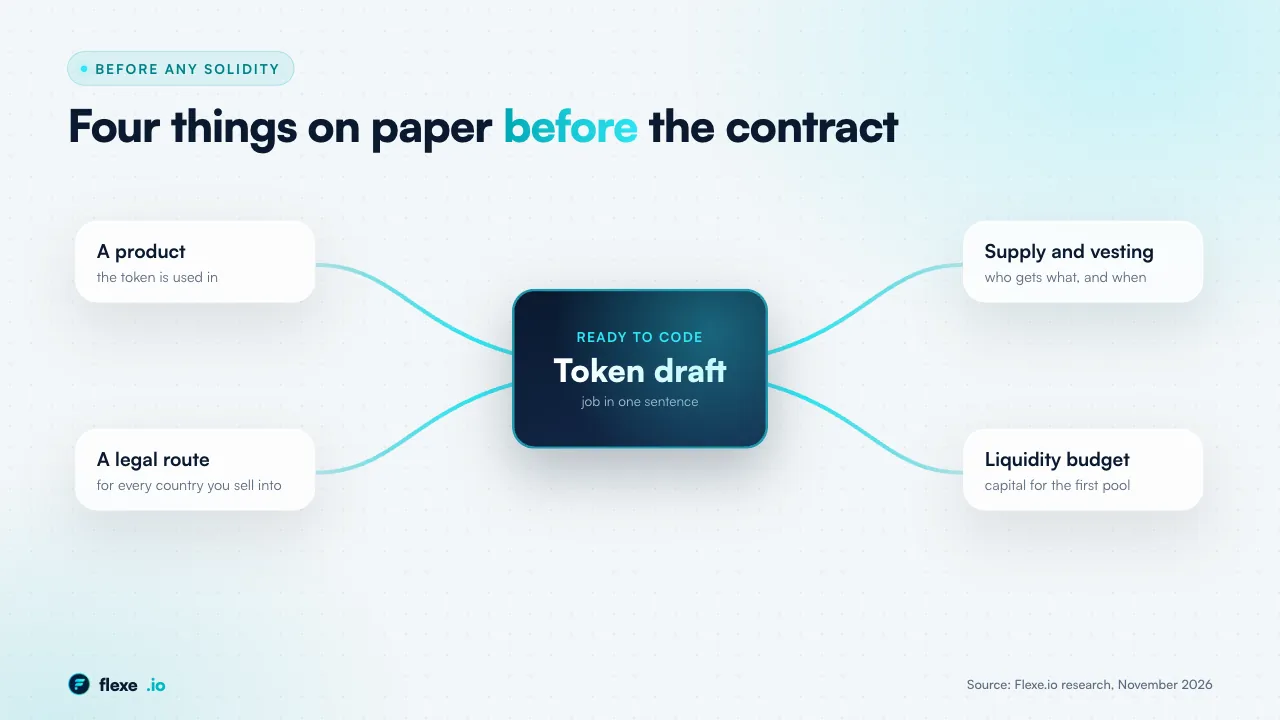
Before anyone writes Solidity, you need four things on paper: a product the token is used in, a legal route for every country you sell into, a supply and vesting model, and a liquidity budget. Write the token’s job in one sentence, such as paying fees or voting on parameters. If that sentence needs the word price, the legal work changes.
The standard itself is small. EIP-20, created on 19 November 2015, requires six functions and two events, and treats name, symbol and decimals as optional. Everything that makes a token trusted or flagged sits outside the standard: who can mint, who owns the contract, how much supply insiders hold and whether the code is public.
Launching within 90 days? We plan exchange listing for new tokens alongside PR and creators, so liquidity and announcements land in the same week.
How to launch a crypto token step by step
The order below follows dependencies, so each step needs the one before it. Costs and rules come from primary sources checked on 27 October 2026 and rechecked on 11 November 2026, and where no public price exists we say so. Founders asking how to launch your own crypto token can use the table as a planning sheet for launching crypto token projects.
| Step | Published cost or rule on 27 October 2026 |
|---|---|
| Utility and legal check | EU white paper notified at least 20 working days before publication |
| Tokenomics and vesting | 90% of 16,000+ token releases put negative pressure on price |
| Chain choice | Deployment under $0.30 on five chains |
| Contract | OpenZeppelin Wizard is free; about 1.10 million gas |
| Testnet | Free test ETH and SOL from faucets |
| Verification | Free on Etherscan-family explorers |
| Audit | Quoted per scope, no public price |
| Liquidity | Pool creation is permissionless; capital is the cost |
| Listing | CoinGecko free, or $1,000 Fast Pass |
| Launch communication | No EU marketing before the white paper |
1. Utility and legal check
In the US, the SEC interpretation of 17 March 2026 says digital commodities, collectibles and tools are not securities themselves, but a token can still be sold under an investment contract. It replaced the 2019 staff framework and excludes task-gated airdrops. In the EU, MiCA Article 4 exempts offers to fewer than 150 people per Member State or under EUR 1,000,000 over 12 months, but those exemptions vanish once you announce an exchange listing.
US rules for a token sale are still in draft. On 18 August 2026 the SEC proposed Regulation Crypto Assets, with a one-time exemption for offerings up to $5 million over four years and a second for up to $75 million in each 12-month period; public comments closed on 20 October 2026, and nothing is adopted yet. The CLARITY market structure bill also stalled when a Senate cloture vote failed 49 to 50, Galaxy Research reported on 18 September 2026, so plan on today’s exemptions.
2. Tokenomics and vesting
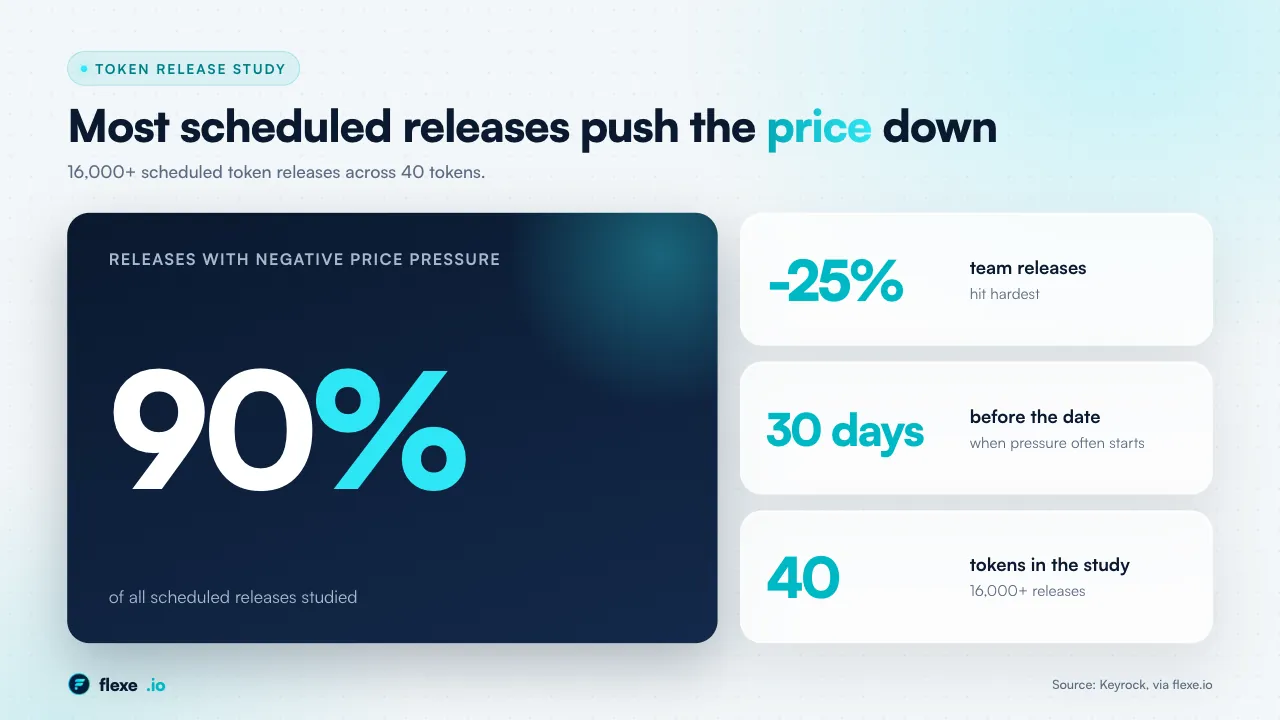
Vesting is where most supply shocks are written. Keyrock’s study of 16,000+ scheduled token releases across 40 tokens found that 90% created negative price pressure, that team releases hit hardest at about -25%, and that pressure often starts 30 days before the date. Enforce the schedule on-chain: OpenZeppelin’s VestingWalletCliff adds a cliff since v5.1, but tokens sent after vesting starts are partly releasable at once.
3. Chain choice
Anyone deciding how to launch your own token should pick the chain where users already hold wallets and where your first liquidity will sit. Ethereum, Base, Arbitrum and BNB Chain run the same ERC-20 code; Solana uses the SPL Token program. BNB Chain specifics, from BEP-20 naming to PancakeSwap pools, are in our guide to launching a BSC token.
4. ERC-20 or SPL contract with an audited library
Build on OpenZeppelin Contracts, whose free Wizard generates the Solidity source. On 11 November 2026 the latest audited release was still 5.6.1; version 5.7.0, released on 29 July 2026, had no audit report in the repository yet. Mint a fixed supply at deployment or add a cap, then move ownership to a multisig or renounce it. On Solana, create the mint with spl-token and disable the mint authority once supply is final.
5. Testnet
Deploy the exact build to Sepolia, Base Sepolia or Solana devnet with free faucet funds, and test transfers, approvals, swaps in both directions and every admin function. Token Sniffer simulates a sale on Ethereum, Base and BNB Chain, so a token that cannot be sold on testnet will be labelled a honeypot on mainnet.
6. Verification
Verify the source on Etherscan, Basescan or Arbiscan with the Standard JSON input. Verification is free on every plan. GoPlus returns no risk data at all for closed-source contracts, Token Sniffer counts it as a failed test, and Etherscan will not update your token profile until the source is verified.
7. Audit
An audited library is not an audited token. OpenZeppelin’s own README says using its contracts “is not a substitute for a security audit”, and your vesting or fee logic is custom code. If you are working out how to launch a DeFi token, audit the whole protocol, get two quotes early and publish the report.
8. Liquidity
Any answer to how to launch crypto token liquidity starts with capital. Creating a Uniswap v4 pool is permissionless, you set the starting price at initialization, and fee tiers run from 0.01% to 1.00%. Token Sniffer expects at least 95% of LP tokens locked or burned and no creator wallet above 5% of supply. Our guide to listing a token on a DEX covers pool setup.
9. Listing
Aggregator listings come after trading starts. CoinGecko requires the token to trade on an exchange it tracks, reviews free requests in up to 5 days, and charges $1,000 for a 24-hour Fast Pass that does not guarantee approval. CoinMarketCap says its free tier can take “days to months/years”. Exchanges run their own process, covered in our CEX listing application guide.
10. Launch communication
Communication comes last. Under MiCA, marketing must match a white paper that makes no claims about future value, and nothing goes out before it is published. We time PR across 800+ crypto and finance outlets and creators from 20,000+ influencers on X and YouTube (100+ active on X, 300+ on YouTube) in our database through our TGE marketing service.
Creating your own crypto token, generator or own contract
People asking how to create my own token or how to create my own crypto token land on a generator first. Generators such as 20lab, Bitbond Token Tool and thirdweb lead Google for erc20 token launch searches, but the template decides which owner powers your token carries.
Check what a generated contract can do before you pay. Mint buttons, pause switches, blacklists and adjustable fees are exactly what GoPlus and Token Sniffer flag, and even USDT trips several GoPlus flags because scanners read powers, not intent. Creating your own token from the OpenZeppelin Wizard is just as fast and leaves you with source you control.
Teams that skip generators write the contract in Remix IDE, an open-source editor that runs in the browser, or in Hardhat for local tests, then deploy from a MetaMask wallet. On Solana, pump.fun is a permissionless launchpad that creates a token with no code. Flexe.io plans TGE marketing for new tokens around either route.
A coin runs on its own blockchain, so learning how to start a crypto coin means building or forking a network, recruiting validators and maintaining nodes. That takes a team and months. If you only need an asset for a product, how to make a crypto token is the simpler question: an ERC-20 or SPL contract from an audited library, a testnet run, verification, liquidity and a listing.
Whether you search how to create your own crypto token, how to create your own token coin or how to create own crypto token, creating own crypto token means choosing convenience or control. Creating your own coin, a native asset on a new chain, needs validators and node software. For teams asking how to create own crypto coin, how to create your own coin or how to launch your own crypto coin, a token fits better.
ERC20 token launch, what changes by chain
The four EVM chains run the same Solidity source, so how to launch an ERC20 token barely changes between them; fees, explorers and liquidity do. We simulated deploying an OpenZeppelin 5.6.1 token with Permit, owner and mint on each chain’s public node at 22:41 UTC on 26 October 2026, with CoinGecko prices.
| Chain | Standard | Deploy cost at check | Explorer | Note |
|---|---|---|---|---|
| Ethereum | ERC-20 | about $0.11 | Etherscan | about $2.94 at the 30-day 95th percentile gas price |
| Base | ERC-20 | about $0.015 | Basescan | L2 fee plus an L1 security fee |
| Arbitrum One | ERC-20 | about $0.05 | Arbiscan | L1 data cost included in gas |
| BNB Chain | BEP-20 | about $0.04 | BscScan | ERC-20 compatible |
| Solana | SPL Token | about $0.26 (0.0026 SOL) | Solana explorers | mostly refundable rent deposits |
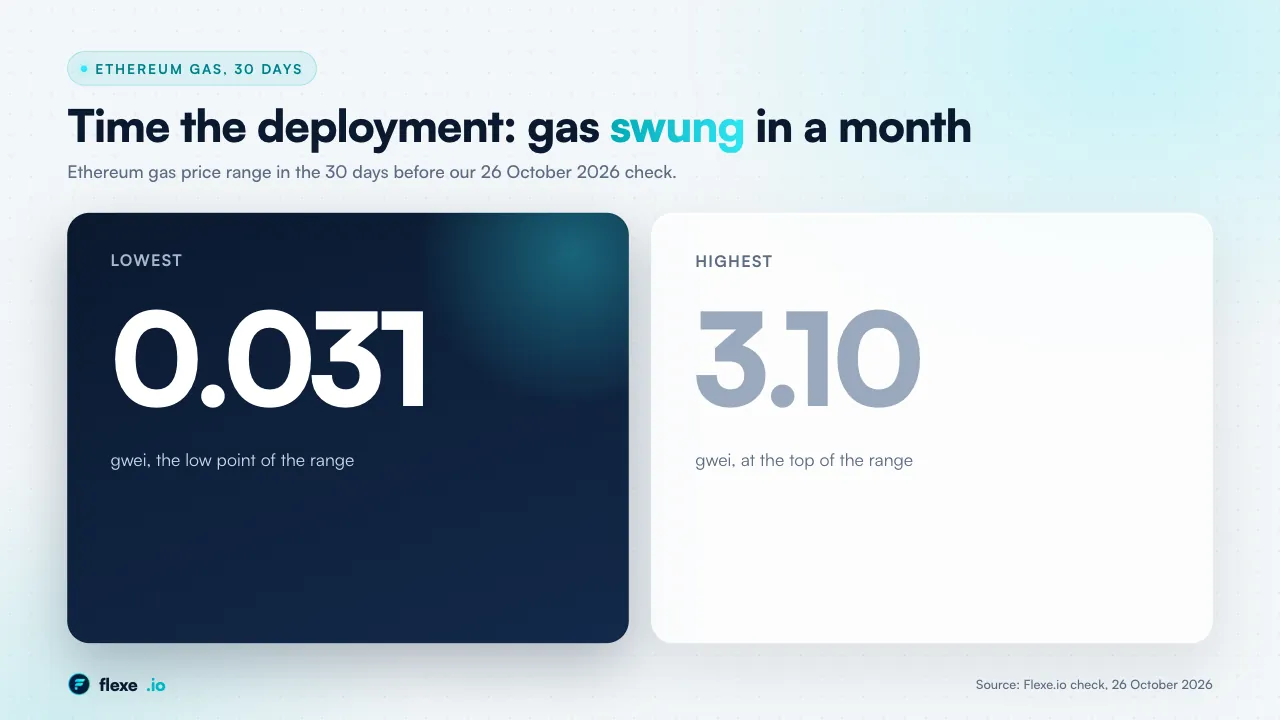
Ethereum gas moved from 0.031 to 3.10 gwei in the 30 days before our check, so time the deployment. On any chain, how to launch erc20 token contracts safely is one routine: deploy, verify, hand over or renounce ownership, then add liquidity.
How to launch NFT token drops
An NFT launch follows different rules from a fungible token at every layer. NFTs use ERC-721 or ERC-1155 rather than ERC-20, and on Solana an NFT is a mint with 0 decimals and a supply of 1. If you launch nft token collections next to a fungible token, keep separate contracts. MiCA Article 2(3) excludes assets that are unique and not fungible, so an nft launch token sold in interchangeable series needs a legal check, and nft launch crypto promotion sold as an investment raises SEC questions.
What creating your own token costs in total
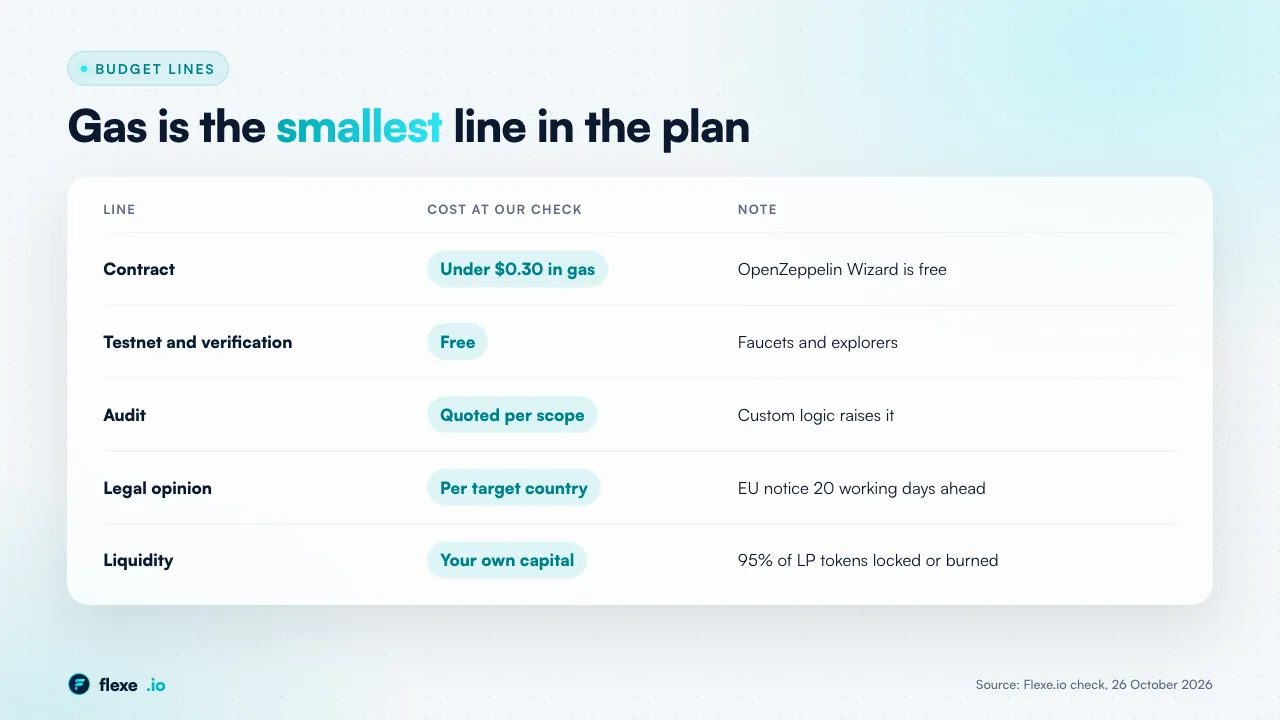
Gas is the smallest line in the plan, and people and capital take the rest. Creating your own token cost well under a dollar to deploy on each of the five chains we measured, while the items below decide whether the launch survives its first month.
- Contract: the OpenZeppelin Wizard is free, and deployment ran under $0.30 in gas at our 26 October 2026 check.
- Testnet and verification: free faucet funds and free source verification on explorers.
- Audit: quoted per scope, and custom vesting, fees or staking raise the quote.
- Legal opinion: one per target country, plus the EU white paper notification 20 working days ahead.
- Liquidity: your own capital in the pool, with at least 95% of LP tokens locked or burned.
Ask for audit and legal quotes in the same week you pick the chain. Both set the launch date more firmly than the code does, and both are easier to book before the token is announced.
Mistakes that sink new tokens
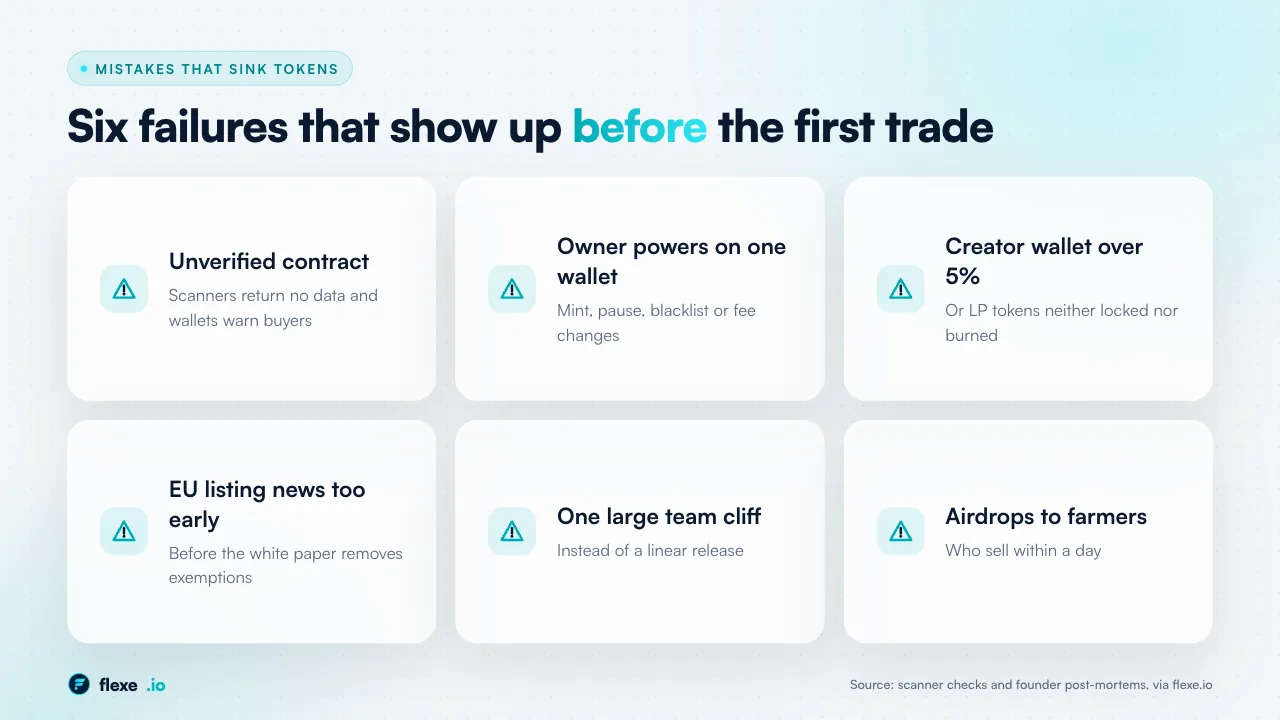
Anyone learning how to launch a crypto token should know that most failures show up in scanners before the first trade and cost less to fix on testnet. Six come up again and again in scanner checks and founder post-mortems.
- Leaving the contract unverified, so scanners return no data and wallets warn buyers.
- Keeping mint, pause, blacklist or fee-change powers on one wallet with no published reason.
- Holding more than 5% of supply in the creator wallet or leaving LP tokens neither locked nor burned.
- Announcing an exchange listing in the EU before the white paper, which removes MiCA exemptions.
- Scheduling one large team cliff release instead of a linear release.
- Sending airdrops to farmers who sell within a day.
Bitquery also found that 25 of 51 big 2026 airdrops drew fake same-name tokens, pushed into wallets 5.4 million times, so impostors are a launch risk. Publish the contract address on your site and socials before trading; CoinMarketCap requires it there too.
The first 30 days after launch
Most new tokens fall, and any crypto coin launch plan should assume it. Memento Research found that 84.7% of 118 tokens launched in 2025 were below their launch valuation by 20 December 2025, with a median FDV change of -71.1%. None of the 28 launches that opened at $1 billion FDV or more was above it, while those opening at $25 million to $200 million kept 40% green.
Airdrop supply leaves fast. In Bitquery’s study of 51 airdrops from January to September 2026, the median drop saw 73% of claimers move tokens within a day, mostly into DEX sales or exchange deposits. Only 23% still held half after 30 days and 8% after 90 days.
Spend the first month on proof. Publish holder distribution, a vesting dashboard and the verified contract address, update the free Etherscan token profile, and announce the first token release at least 30 days ahead, because Keyrock saw price pressure begin about a month early.
Measure marketing on users and volume, not on the chart. Our benchmark of 150 campaigns shows a median net return of 2.8x within 90 days, a range of 1.4x to 7.0x, and 12% that failed; the token launch timeline maps the weeks around the event.
When creating your own coin or token is a mistake
Do not launch a token if the product works just as well with points, a database or a stablecoin. Skip it if you have no legal route in your main markets, if selling it depends on price talk, or if you cannot fund an audit and a liquidity pool.
Meme-style launches are the extreme case. The SEC staff said on 27 February 2025 that such meme coins are not securities, but that their buyers are not protected by federal securities laws. CoinGecko counts 53.2% of all tokens tracked on GeckoTerminal as failed, 11.6 million of them in 2025. If the real plan is to launch your own ICO, treat it as a regulated offer, because most guides on how to launch token sales skip that part.
Want the order checked for your project? Send us your product, target countries and token draft, and within 24 hours we will return a free token launch plan: the order of steps, what to fix in the token design, launch week and the first 30 days. Message Flexe.io on Telegram.
How to choose where to launch a crypto token in 2026
Choose the chain and venue your first holders already use, then work back to the contract. A chain where your users hold no wallets adds a bridge to every purchase, and a thin pool shows a price that jumps on every trade.
- Your users already hold wallets on the chain.
- The contract uses an audited library and is verified on the explorer.
- You have capital for the liquidity pool on day one.
- The token has a legal route in your main markets before any sale.
Frequently Asked Questions
How much does it cost to launch a crypto token?
Deployment is cheap: on 27 October 2026 a standard OpenZeppelin ERC-20 cost about $0.11 on Ethereum and $0.015 on Base, and an SPL mint about 0.0026 SOL. Verification is free, and CoinGecko is free or $1,000 for a fast review. Audit, legal and liquidity are quoted per project and dominate the budget.
How do I create a crypto token?
Generate an ERC-20 from the OpenZeppelin Wizard, or create an SPL mint with the spl-token tool on Solana. Deploy it to a testnet, test transfers and swaps, then deploy to mainnet, verify the source on the explorer and disable any minting you do not need.
How to create a crypto token for free, and what is missing?
Creating your own token for free leaves out the expensive part: an audit, legal advice and capital for a liquidity pool. The OpenZeppelin Wizard, testnet faucets, explorer verification and a free CoinGecko request cost nothing, and mainnet deployment needs gas or SOL rent, usually cents.
How long does it take to launch a token?
The contract takes a day; the launch takes weeks to months. An EU public offer needs its white paper notified at least 20 working days before publication. CoinGecko reviews in up to 5 days once trading starts, and audit queues are set by the auditor, so book one early.
Do I need an audit for a standard ERC-20?
An unchanged OpenZeppelin token carries far less risk than custom code, but OpenZeppelin itself states plainly that its library is not a substitute for a security audit. Anything you add, such as vesting, staking, fees or a bridge, needs independent review.
Is launching a token legal?
In the US, the SEC’s March 2026 interpretation says some token types are not securities, but a sale can still be an investment contract, and the offering exemptions the SEC proposed in August 2026 are not adopted yet. In the EU, MiCA requires a white paper, a notification and marketing rules for public offers. Get a written opinion per target country.
How do I get my token listed?
Start on a DEX, where pool creation is permissionless. Once the token trades on a tracked exchange, request CoinGecko and CoinMarketCap listings through their own forms, with the contract address shown on your official site. Centralized exchanges review applications separately and often ask for an audit report.