These crypto community case studies cover 6 community and moderation engagements on Discord and Telegram, and what each was actually asked to fix. Community work is the least visible service an agency sells and the easiest to fake, so these entries state the mechanics rather than the outcomes alone.
Discord and Telegram setups built from zero
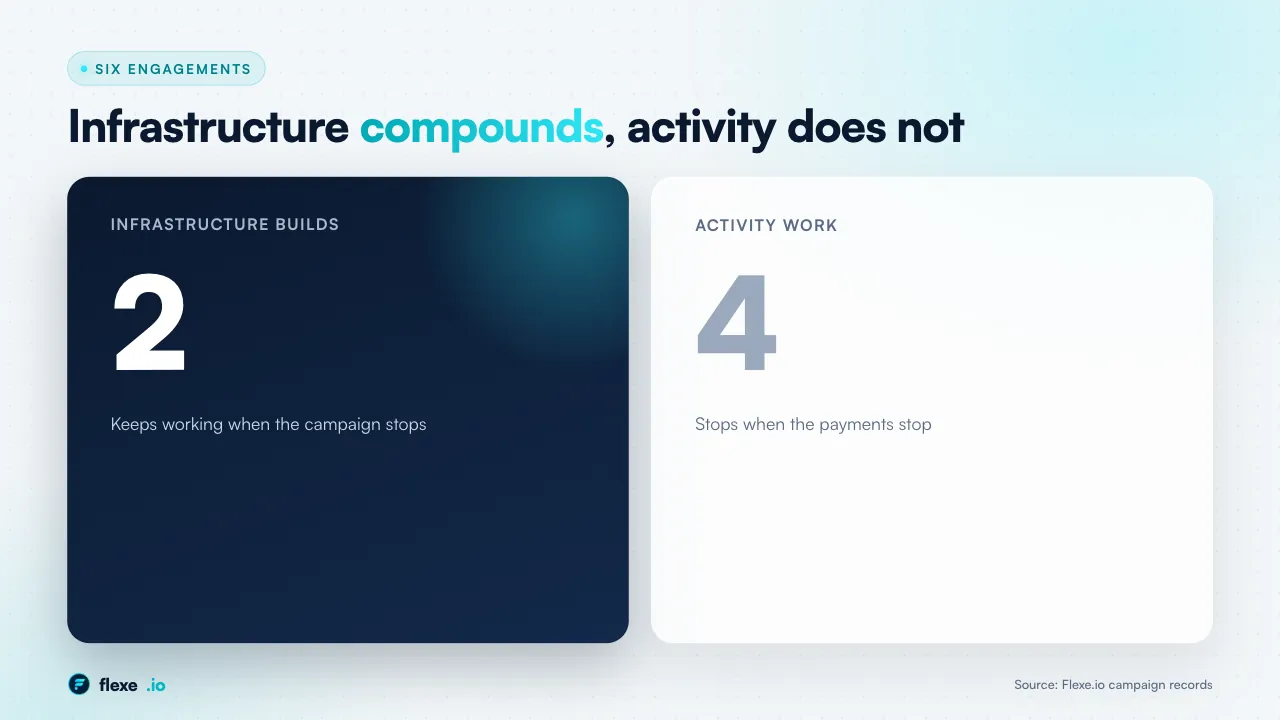
Two engagements here were infrastructure builds. The job was to make a server or chat safe and usable before any traffic arrived. Inery.io needed Discord moderation from scratch, and Swinca needed a Telegram chat with the basic trust signals in place. Both briefs started with rules and tools rather than with members.
Inery.io: Discord moderation from zero
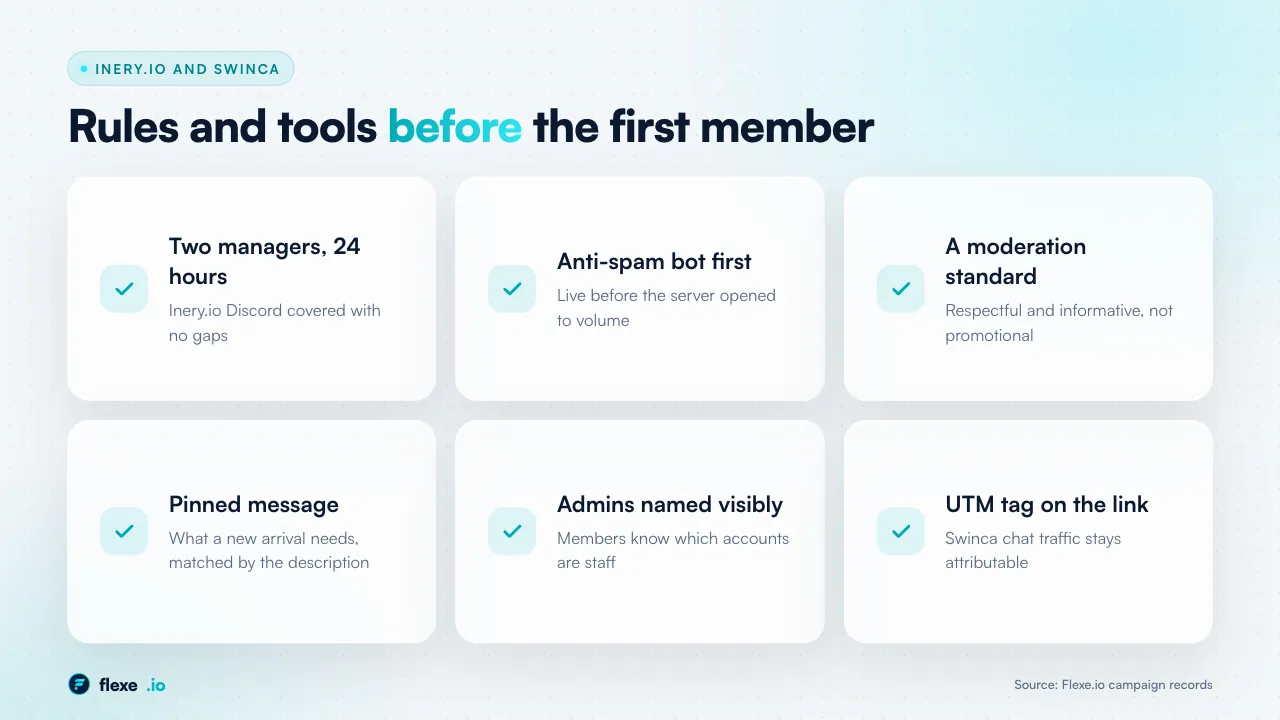
The brief was to launch Discord moderation and community management from scratch. Two managers covered 24 hours with no gaps, an anti-spam bot was added before the server opened to volume, and the moderation standard was set as respectful and informative rather than promotional.
Round-the-clock cover is the part clients underestimate. A Discord server left unattended overnight collects scam DMs in the exact window when nobody is watching, and the damage is done by morning.
Swinca: a Telegram chat set up properly
Telegram moderation and community management from scratch, starting with the parts most projects skip. A pinned message carrying the information a new arrival needs, a chat description that matches it, admins named visibly so members know who is real, a separate UTM tag on the link so traffic is attributable, and an anti-spam bot.
Naming the admins is the anti-scam measure that costs nothing. Members who know which accounts are staff do not fall for the impersonation that follows every announcement.
Chat activity and fake-member clean-up work
The rest was activity work. In these cases the chat already existed, and the problem was what visitors saw in it. 3DAX had a populated chat with no conversation, StoreCoin had purchased members that exposed themselves through view counts, and a Discord project bought activity on a monthly tier. Each entry states the method and its limits.
3DAX: activity in a chat nobody was using
Most projects arrive with a chat that is technically populated and visibly dead, and an investor checking the last few days will see that immediately. Activity was raised to around 40 messages a day, with the questions written to be the ones a real prospective user would ask.
This is the service that most needs saying plainly: it produces the appearance of a conversation while a real community is being built, and it is not a substitute for one.
StoreCoin: the fake-member problem
Clients regularly arrive with channels full of purchased members, and Telegram exposes it because post view counts are public. A channel with tens of thousands of members and a few hundred views per post is announcing what happened. The engagement work brings views into a plausible ratio with the member count.
The better answer is not to buy members in the first place. Our guide to running a Telegram group covers admission control, which is what prevents this.
Discord chat activity
Between 40 and 160 daily messages on a monthly basis, depending on the tier. The same caveat applies as above.
How to run a community launch like these
A community launch runs in a fixed order. Rules and tools come first, people second, traffic last. In the cases above, the Inery.io anti-spam bot went live before the server opened to volume, and Swinca had its admins named before anyone arrived. Projects that reverse the order spend their first week deleting spam instead of answering questions.
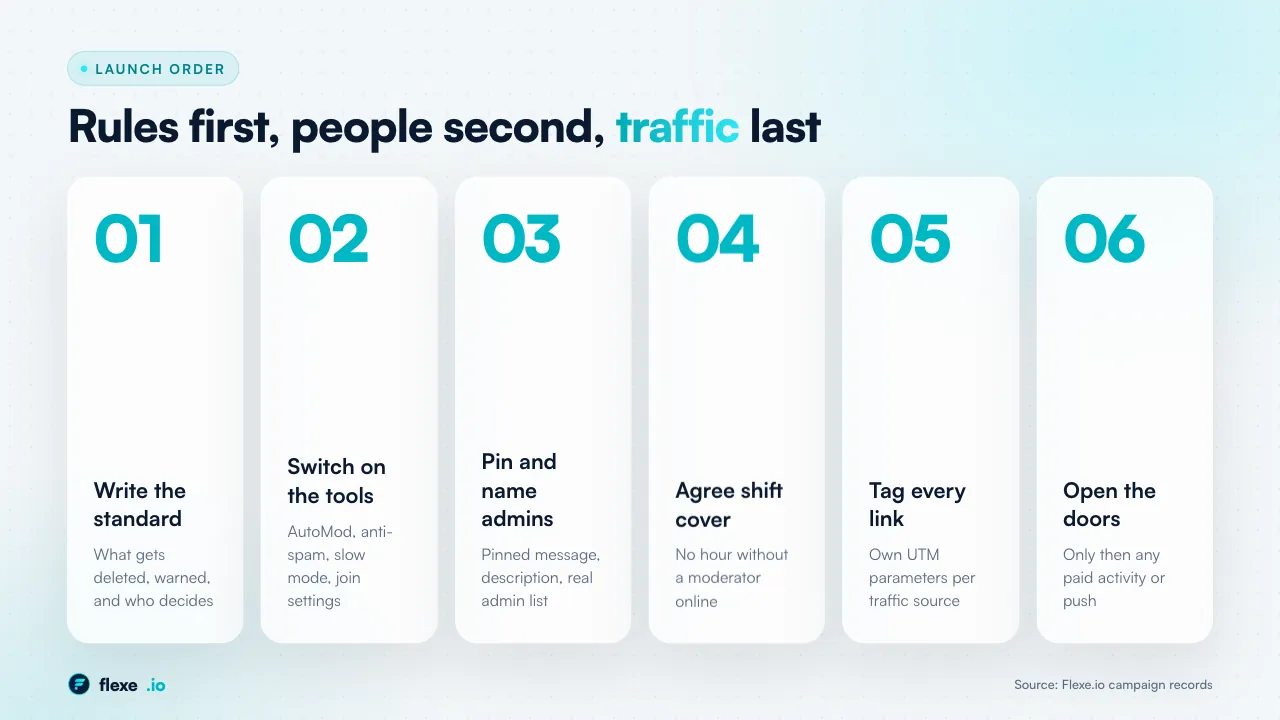
- Write the moderation standard: what gets deleted, what gets a warning, and who makes the final call.
- Switch on the platform tools: Discord AutoMod rules, Telegram anti-spam, slow mode and join settings.
- Publish the pinned message, a matching chat description and the list of real admin accounts.
- Agree on shift cover so that no hour of the day is left without a moderator online.
- Tag every inbound link with its own UTM parameters so each traffic source stays attributable.
- Open the doors, and only then start any paid activity or announcement push.
What the platforms give you for free
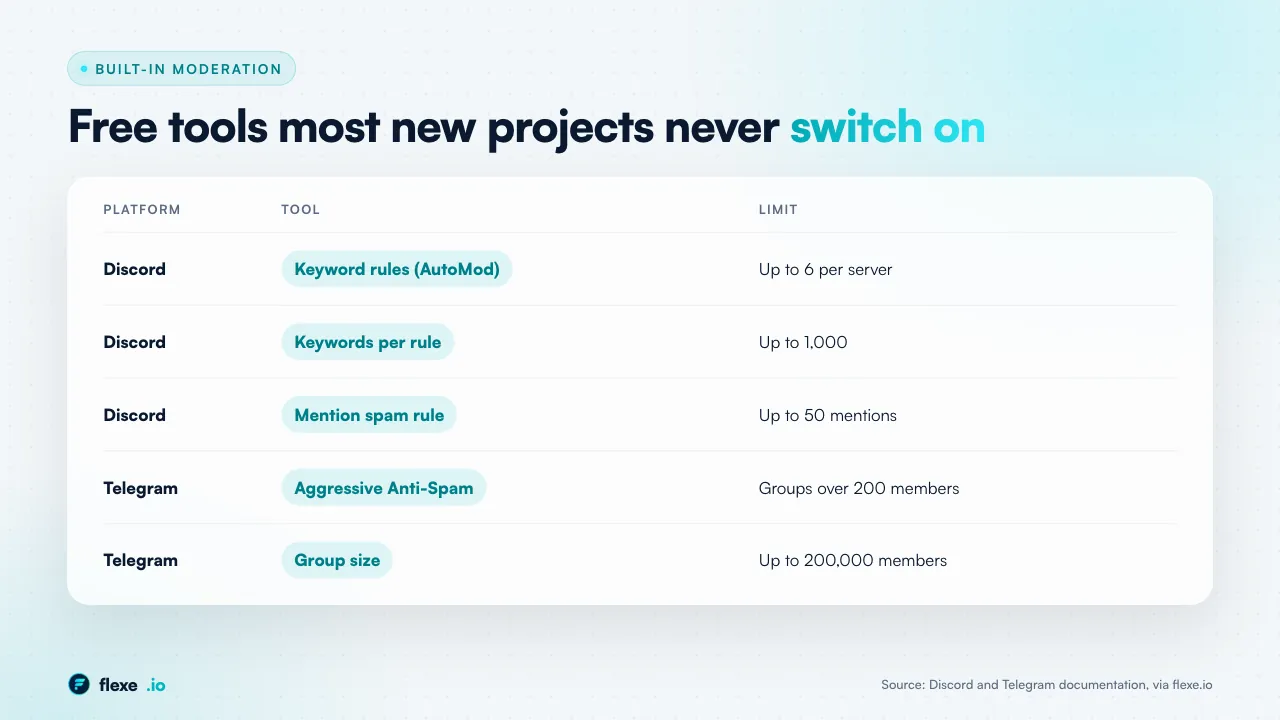
Both platforms ship moderation tools that many new projects never switch on. Discord lets a server run up to 6 keyword rules, each holding up to 1,000 keywords. A separate mention spam rule blocks messages above a limit you set, up to 50 mentions, according to the Discord auto moderation documentation.
Telegram added an Aggressive Anti-Spam mode on 6 December 2022 for admins of groups with over 200 members, as the Telegram announcement explains. Groups can hold up to 200,000 members, so these filters matter long before a chat reaches its ceiling. A custom bot then covers the project-specific rules the built-in filters miss.
What to prepare before day one
A short preparation pack saves the first weeks of any community engagement. We ask for the official links, the list of team accounts, written answers to the questions newcomers ask most often, and a clear line on what moderators may say about price. Without that line, moderators either stay silent or improvise, and both cost trust.
Our playbook on how to moderate a crypto Discord server covers the role structure and escalation rules in more detail. Across 800+ campaigns since July 2018, we have seen the same pattern: projects that hand over complete documentation get moderation, and projects that hand over nothing pay for research as well.
Staffing the shifts without gaps
Round-the-clock cover needs at least two moderators, as in the Inery.io case, and more once a second language appears. Shift handovers should be written, not verbal, so the next person knows which accounts were warned and which questions are still open. A gap of even two hours at night is the window scammers use.
Moderators also need authority to act. A moderator who must ask the founder before every ban is too slow during a raid. We agree in advance on the actions that need no approval: removing scam links, muting new accounts that post wallet addresses, and banning impersonators of the team.
Measuring community results after the campaign ends
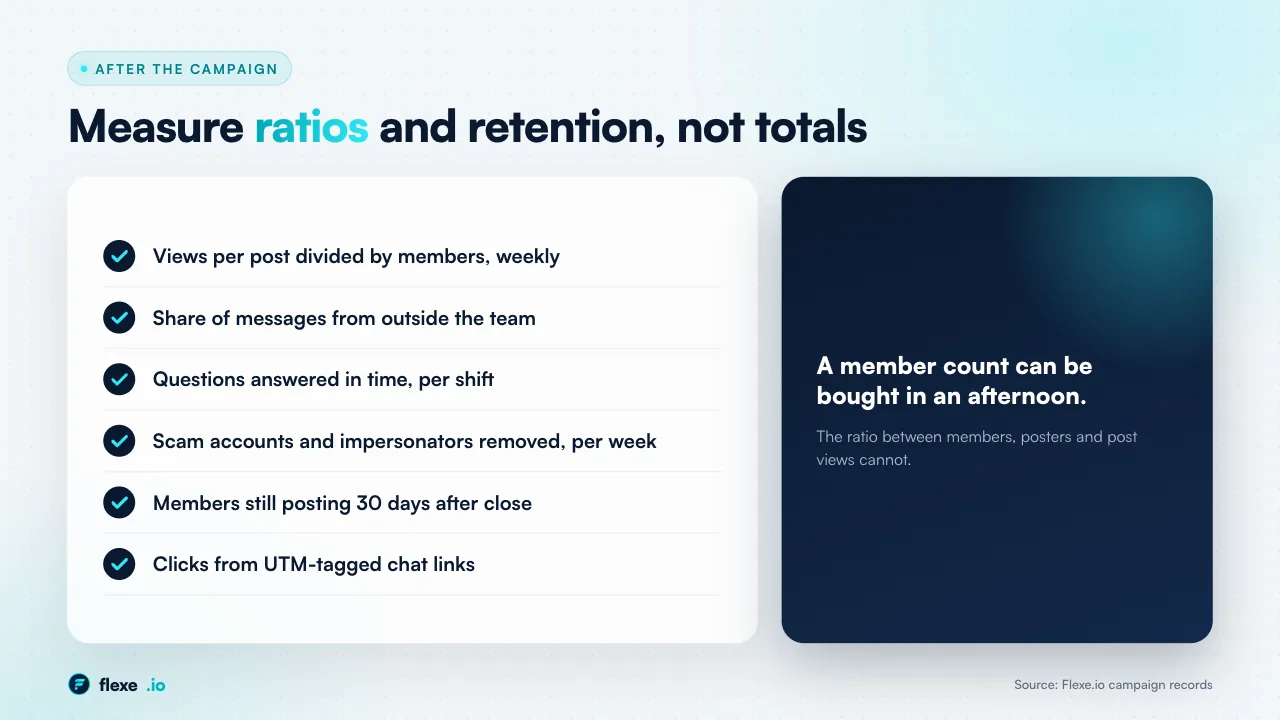
Community results are measured on ratios and retention, not on member totals. A member count can be bought in an afternoon, while the ratio between members, active posters and post views cannot. On Telegram every channel post has a view counter, per the Telegram channels FAQ, which is why the StoreCoin mismatch was visible to any visitor.
- Views per post divided by channel members, tracked weekly.
- Share of messages written by people outside the team and the moderators.
- Questions answered within the agreed response time, per shift.
- Scam accounts and impersonators removed, per week.
- Members still posting 30 days after the campaign closes.
- Clicks from the UTM-tagged chat links to the site or the app.
The 30-day check separates the two kinds of work in these cases. Infrastructure, such as the Inery.io moderation setup, keeps working when the campaign stops, while paid activity, such as the 3DAX chat, stops when the payments stop. Measuring both on the last day of the campaign hides that difference completely.
UTM-tagged links show which chat posts send visitors to the site, while the view counter shows reach per post. Together they answer the question founders care about: whether a busy chat sends anyone onward or only talks to itself. A chat that never sends traffic anywhere is a cost, whatever its activity level.
Reading the ratios without fooling yourself
Ratios need a baseline taken before the campaign starts, otherwise any change looks like progress. We record views per post, active posters and open questions for the two weeks before work begins. Messages written by staff and moderators are counted separately, because team posts inflate every activity metric.
What drives the budget for community work
The budget follows hours of human cover more than anything else. Moderation around the clock needs people in shifts, and each extra language adds another rota. Activity tiers scale with message volume, which ran from 40 to 160 daily messages in the Discord work above. Focused campaigns at Flexe start from $2,000.
Three other factors move the price: the number of platforms, whether the project already has a working bot or needs one built, and how much of the answer base the team can supply. Our Telegram and Discord activity service lists the tiers, and the free plan we send within 24 hours of a brief gives a cost range before anything is signed.
What these crypto community case studies do not prove
The crypto community case studies above prove delivery, not growth. They show that the mechanics were delivered, and they do not show that any of the projects grew as a result. The page records briefs and methods, such as two managers on shift or 40 messages a day. It records no retention figures, token prices or user numbers, so reading growth into them would be a mistake.
They also do not prove that activity work can replace a product people want to talk about. Paid conversation holds a chat open while a real audience forms, and the 3DAX entry says so directly. In our benchmark of 150 campaigns, the median net ROI was 2.8x within 90 days, and 12% of campaigns lost money, so no single format guarantees a return.
Why scam protection matters more than activity
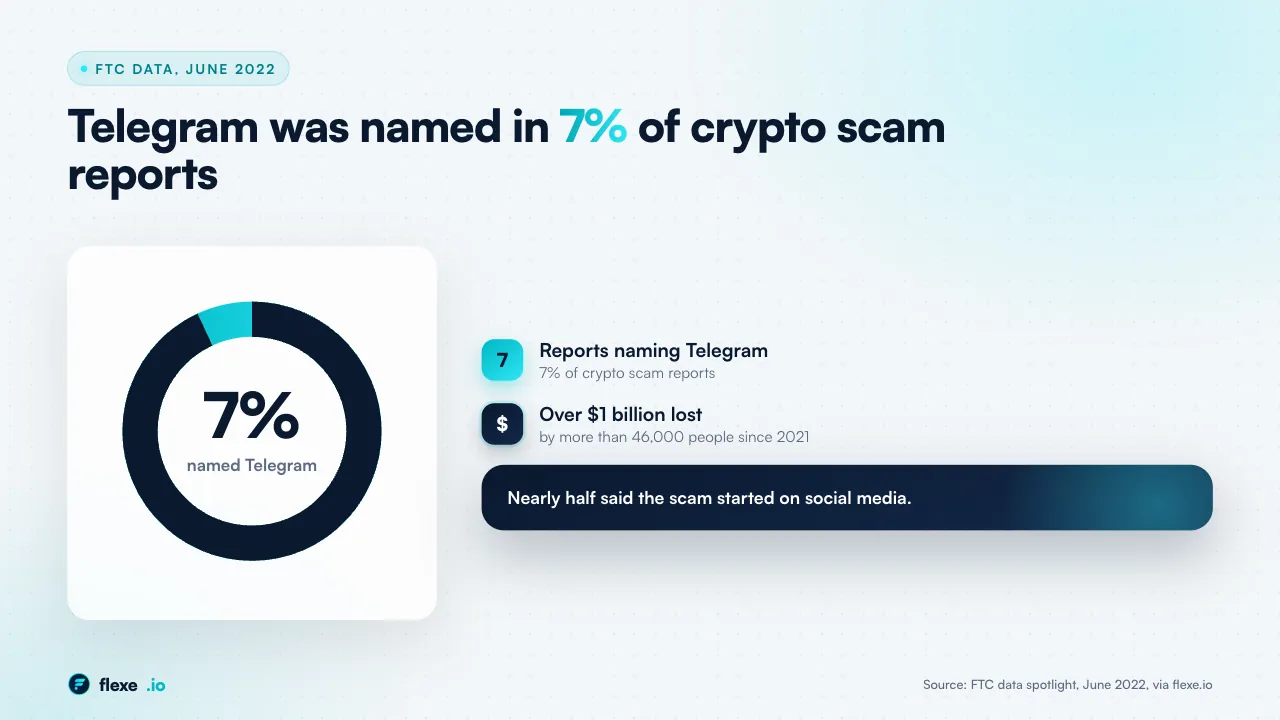
Scam protection deserves budget before activity in most crypto chats. The US Federal Trade Commission reported that since the start of 2021 more than 46,000 people lost over $1 billion in crypto to scams, and nearly half said it started on social media. Telegram was named in 7% of those reports, per the FTC data spotlight from June 2022.
Telegram says reported spam accounts are limited for a period and repeat offenders for longer, so reporting works, but only after the damage. A named admin list and a pinned warning about direct messages act before any report is filed. Platform rules and figures on this page were checked on 13 November 2026.
When a case like these is the wrong model
These engagements fit projects that already have something to discuss: a live product, a testnet, a token in circulation or regular releases. A project with only a roadmap gets less from moderation, because there is little for members to ask about. In that stage, content and PR usually do more work per dollar than a staffed chat.
Community work is also the wrong first spend for a project that has not decided where its users are. Testing one platform for a month costs less than staffing two at once. The response rates from that month show where the next dollar should go.
What we would tell a project reading these
Two of these six are infrastructure and four are activity. The infrastructure work compounds and the activity work does not, which is why campaigns that run activity without the infrastructure produce a spike and nothing after it. Retention should be measured 30 days after a campaign closes rather than on the day it ends, and our approach to community management is built around that measurement.
Building a community? Send the brief on Telegram at https://t.me/flexe_io_agency.
Other case studies
Campaigns grouped by discipline: PR, paid advertising, forum and airdrop, content production, influencer.
Crypto community case studies at a glance
The same engagements in one table, so you can find the case closest to your own starting point before reading the detail above.
| Case | Platform | Starting point | What we did | Output |
|---|---|---|---|---|
| Inery.io | Discord | No server moderation in place | Two managers on 24 hour cover, anti-spam bot before opening, written moderation standard | Server opened to volume with no unattended hours |
| Swinca | Telegram | New chat without trust signals | Pinned message, matching description, named admins, UTM-tagged link, anti-spam bot | Attributable traffic and visible staff accounts |
| 3DAX | Telegram | Populated chat, no conversation | Seeded questions a real prospective user would ask | Around 40 messages a day |
| StoreCoin | Telegram | Purchased members exposed by low post views | Engagement work to bring views in line with member count | Plausible views to members ratio |
| Discord project (monthly tier) | Discord | Quiet server between announcements | Chat activity on a monthly plan | 40 to 160 daily messages, by tier |
Read the last column with the caveats in the section on what these cases do not prove: activity numbers show what a visitor sees, not how many real holders the project gained.
Frequently Asked Questions
What does 24/7 Discord moderation actually involve?
It means two or more moderators covering the full day in shifts with no gaps, an anti-spam bot running before the server takes volume, and a written moderation standard. The overnight hours matter most, because scam direct messages arrive when nobody on the team is awake. In the Inery.io case, two managers split the 24 hours between them.
Why do purchased Telegram members show?
Telegram shows a view counter on every channel post, so anyone can compare views with the member count. A channel with tens of thousands of members and a few hundred views per post makes the purchase obvious to investors, journalists and exchange listing teams. Purchased accounts also never ask questions, so the chat itself stays silent.
How much does crypto community management cost per month?
The price depends on hours of cover, the number of platforms and languages, and whether paid activity is included. Round-the-clock moderation needs at least two people in shifts, which sets the floor. Focused campaigns at Flexe start from $2,000, and we send a free plan with a cost range within 24 hours of a brief on Telegram.
Should a crypto project use Discord or Telegram for its community?
Most projects use Telegram for fast announcements and support, and Discord when the community needs topic channels, roles and long technical threads. Telegram groups hold up to 200,000 members, while Discord suits structured discussion and developer communities. Running both doubles the moderation load, so start with the platform where your users already spend time.
How long does it take to build an active crypto community?
Expect months rather than weeks for a community that talks without paid help. Paid activity can make a chat look alive from the first day, but the honest test is whether members keep posting 30 days after the campaign ends. Projects with a working product and regular updates reach that point much faster than projects selling a roadmap.
What should a crypto community moderator never do?
A moderator should never send the first direct message to a member, never predict the token price, and never post a wallet address outside the pinned official links. Scammers copy moderator names and photos, so members must learn that real staff never message first. Deleting critical questions also backfires, because a public answer builds more trust than silence.