
Web3 Social Media Agency: Real Results from Verified Launches
Most articles about Web3 marketing agencies are full of theory and hype. This one isn’t. You’ll find real numbers from real founders who built audiences, raised capital, and closed deals—no fluff.
Key Takeaways
- A Web3 social media agency can help projects raise over $20M in seed rounds by leveraging decentralized platforms and community-first strategies.
- Verified cases show creators earning 5-figure incomes in weeks using InfoFi and AI-driven campaigns with zero upfront capital.
- Follower count alone is misleading—one 80K-follower account delivered only 6 real buyers, highlighting the need for holder metrics and engagement depth.
- Transitioning from Web2 to Web3 content creation unlocks higher rewards: one creator grew from 480 Instagram followers to 7.6K Twitter followers with 10M views and $76K market cap on Zora.
- Agencies charging 2–5% of raised funds can generate $40K+ per successful launch for scouts and affiliates.
- Tools like @gauge_e1 and Kaito have transformed how agencies identify real communities and deliver measurable ROI.
- Experienced agencies with 7+ years in the space and access to 150+ media outlets and 500+ KOLs accelerate user and holder growth faster than in-house teams.
What These Agencies Actually Do: Definition and Context
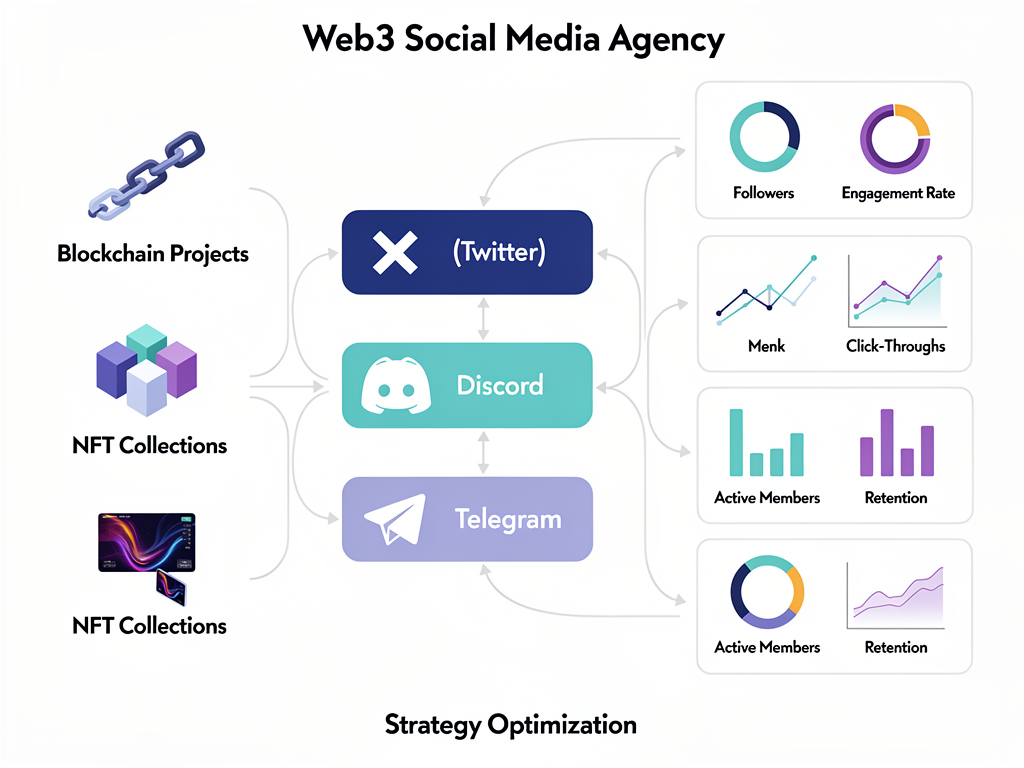
A web3 social media agency specializes in marketing blockchain projects, NFT collections, and decentralized protocols on platforms like X (formerly Twitter), Discord, Telegram, and emerging decentralized social networks. Unlike traditional digital marketing firms, these agencies focus on community ownership, token-holder engagement, privacy-respecting campaigns, and transparent on-chain metrics. Recent implementations show that agencies with deep Web3 expertise deliver faster user acquisition, higher token-holder retention, and stronger community trust than generalist firms.
These services matter now because the Web3 ecosystem is maturing. Projects need more than vanity metrics—investors, users, and partners demand verified engagement, real holders, and transparent results. A specialized agency brings networks of KOLs (key opinion leaders), access to crypto-native media, and experience navigating the unique challenges of decentralized marketing: wallet-based attribution, Sybil resistance, and regulatory nuance.
This approach is for blockchain startups preparing for seed or Series A raises, NFT creators launching collections, DeFi protocols building liquidity, and Layer 1 or Layer 2 chains growing developer ecosystems. It’s not for teams looking for traditional Facebook ads or LinkedIn campaigns—those channels rarely convert crypto-native audiences.
What These Implementations Actually Solve

Misleading vanity metrics and bot-inflated audiences. One founder shared a story of a creator with over 80,000 followers who was paid to promote a product. The campaign looked solid on paper—clean feed, decent engagement, strong pitch. But when the numbers came in, only 6 real buyers converted. The rest were bots and inactive accounts. This is a chronic problem in Web3, where follower count can be gamed cheaply. Specialized agencies use tools like @gauge_e1 to audit holder counts, bonding curves, and real capital commitment, cutting through the noise to find communities where people actually put money where their mouths are.
Gated deal flow and risk of non-payment. Before the rise of InfoFi platforms like Kaito, many creators hesitated to promote projects because deals were opaque, drainers exploited referral links, and non-payment or reputation damage was common. One artist with around 20,000 followers avoided project support entirely, earning through trading and art sales. After Kaito enabled transparent tracking and safer deal structures, the same creator earned 5-figure sums in a very short time with zero upfront capital. Agencies that integrate InfoFi and AI-driven platforms reduce friction, protect creators, and deliver measurable ROI for both parties.
Slow, manual scaling for founders. A marketer who spent years growing Web2 brands on Instagram and TikTok—driving millions of views for dropshipping pages and attracting 445 customers from a single low-cost ad—found it impossible to scale Web3 client work alone. Rather than staying stuck as a solo operator, this founder launched an agency to train social media managers and connect them to Web3 projects. The model allows faster scaling, better client coverage, and predictable revenue without burning out a single expert.
Opaque pricing and ROI for fundraising. One scout worked with a two-brother marketing agency that charged 2–5% of funds raised and had just closed a deal bringing in over $20 million for a client’s seed round. The scout’s cut for a successful referral would have been around $40,000. Although a personal setback delayed that payout, the experience revealed a clear value model: agencies that tie fees to outcomes (percentage of raise, token performance, or holder growth) align incentives and justify premium pricing. Projects know exactly what they’re paying for, and agencies are motivated to deliver real results.
Undervalued content creation in Web2 vs. Web3. A creator who racked up 250,000+ views on Quora, managed a 100,000+ LinkedIn page for “experience,” and had just 480 Instagram followers made the jump to Web3. Within months, they grew to 7,600 Twitter followers with 10 million views, 750+ followers on Base app, and 365 followers on Zora with a $76,000 market cap. The shift wasn’t just about numbers—it was about ownership, direct monetization, and community engagement that Web2 platforms can’t match. Agencies that understand this cultural and economic shift help creators and projects capture that upside.
How This Works: Step-by-Step
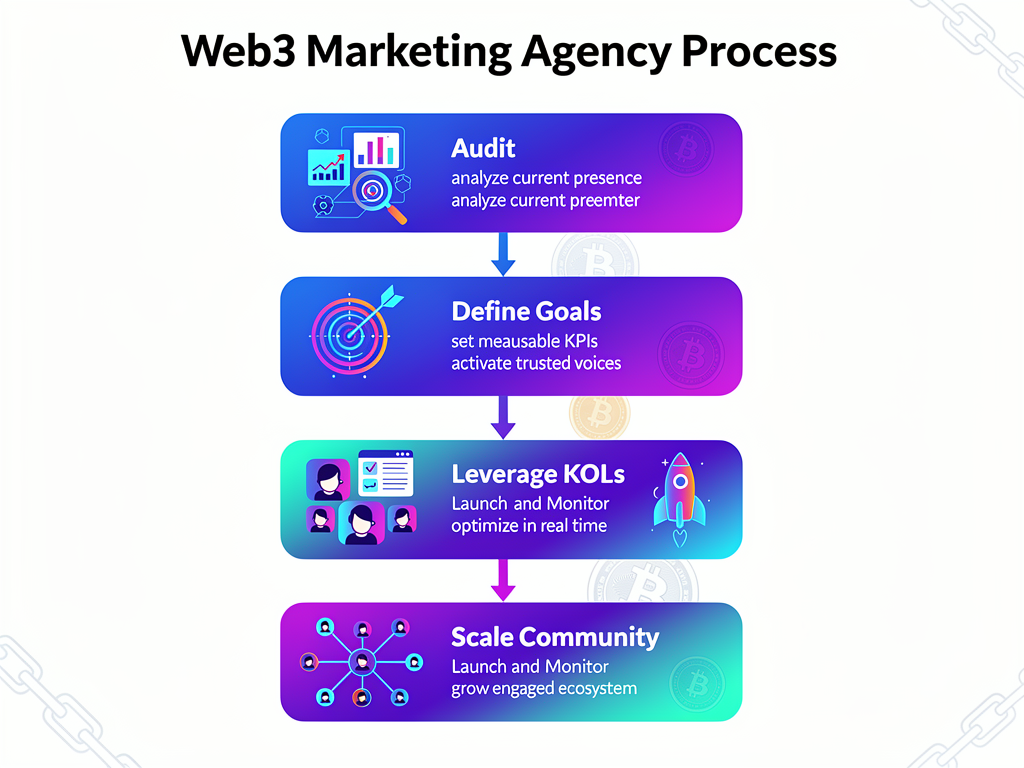
Step 1: Audit Current Social Presence and Community Health
Before launching any campaign, an agency audits your existing followers, engagement rates, and holder distribution. This means checking how many wallets hold your token, verifying follower authenticity on X and Discord, and mapping out your active community members. Tools like @gauge_e1 help identify real believers versus mercenary farmers. One team discovered their 80K-follower account had only 6 genuine buyers, which completely changed their strategy. Without this audit, you risk spending budget on audiences that will never convert.
Step 2: Define Campaign Goals and Success Metrics
Is your goal to raise capital, grow token holders, drive NFT mints, or recruit developers? Each objective requires different tactics. For a seed round, agencies focus on investor outreach, KOL endorsements, and media placements in outlets read by VCs. For holder growth, they optimize airdrop campaigns, liquidity incentives, and community challenges. One agency helped a project raise over $20 million by tailoring every touchpoint to institutional investors and crypto whales, not retail hype. Clear goals prevent wasted effort and ensure every dollar spent ties back to measurable outcomes.
Step 3: Leverage KOLs, Media, and On-Chain Incentives
Agencies with established networks can mobilize 150+ crypto media outlets and 500+ KOLs to amplify your message quickly. This isn’t just paid promotion—it’s strategic storytelling, exclusive interviews, AMAs, and co-branded content that builds trust. One marketer transitioned from running Facebook ads for Web2 brands to managing TikTok campaigns for dropshipping and digital products, growing pages to millions of views. When they moved into Web3, they applied the same content playbook but layered in token incentives, wallet-gated access, and on-chain rewards. The combination of media reach and tokenomics drives both attention and retention.
Step 4: Launch, Monitor, and Iterate Using Real-Time Data
Web3 campaigns generate on-chain data you can track in real time: wallet connections, token swaps, NFT mints, and governance votes. Agencies monitor these signals daily, adjusting messaging, reallocating budget, and testing new channels. One creator who built a personal X page to 7,600 followers in 8 months used constant iteration—posting at different times, experimenting with formats, and engaging directly with holders. This feedback loop is faster and more transparent than Web2 analytics, where you’re often guessing what’s working.
Step 5: Scale What Works and Build Long-Term Community
After identifying winning tactics, agencies scale by training additional social media managers, expanding to new platforms like Farcaster or Lens, and automating community engagement with bots and AI. One founder who started as a solo Instagram expert now runs an agency training SMMs with years of acquired knowledge and connecting them to Web3 projects. This model allows you to grow beyond one person’s bandwidth, serve more clients, and build recurring revenue. The key is documenting what works, codifying it into playbooks, and hiring talent who can execute at scale.
Where Most Projects Fail (and How to Fix It)
Chasing follower count instead of holder quality. Many teams celebrate hitting 50K or 100K followers without checking if those accounts are real, active, or aligned with the project’s mission. One campaign with an 80K-follower influencer delivered only 6 actual buyers because the audience was inflated with bots. The fix: use on-chain analytics to verify wallet holdings, check engagement depth (replies, not just likes), and prioritize micro-KOLs with smaller but highly engaged communities. Quality always beats quantity in Web3.
Ignoring the cultural shift from Web2 to Web3. Teams that simply repost their Web2 ad creative on X or Discord miss the mark. Web3 audiences value transparency, ownership, and community governance. One creator who managed Web2 brands for years had to learn that TikTok dropshipping tactics don’t translate directly—Web3 users want to see team backgrounds, tokenomics breakdowns, and roadmap updates. The fix: tailor content to Web3 culture. Share developer activity, highlight community contributions, and show on-chain proof of progress.
Running campaigns without clear attribution or ROI tracking. Unlike Web2, where pixel-based tracking is standard, Web3 attribution relies on wallet interactions, referral codes, and on-chain events. Many projects launch campaigns and can’t prove which channel or KOL drove conversions. One scout working with a two-brother agency learned that tying fees to outcomes (2–5% of funds raised) aligns incentives and forces rigorous tracking. The fix: use UTM parameters, wallet-based referral systems, and dashboards that tie social activity to on-chain actions. This is where experienced partners make a difference.
FLEXE.io, with 7+ years in Web3 marketing and a track record across 700+ clients, helps projects access 10+ crypto traffic sources, 150+ media outlets, and 500+ KOLs to quickly grow users and holders while maintaining transparent ROI tracking. Contact us on Telegram: https://t.me/flexe_io_agency
Neglecting community management after the initial hype. Launching a token or NFT collection generates buzz, but sustaining engagement requires daily effort—answering questions, moderating Discord, rewarding active members, and iterating based on feedback. One founder who grew a personal page to thousands of followers in 8 months emphasized constant engagement. The fix: allocate budget for full-time community managers, use bots to automate FAQs, and create recurring events (AMAs, contests, governance votes) that keep your audience active.
Underestimating the time to build trust and network. One marketer who worked as a scout for an agency expected to close deals quickly but faced setbacks when a lead fell ill. The lesson: relationships take time, and you need multiple prospects in your pipeline. The fix: start building your network today—attend crypto conferences, engage with founders on X, and contribute value before asking for anything. Agencies with years of network-building can shortcut this process, but even they invest ongoing effort to maintain trust.
Real Cases with Verified Numbers

Case 1: From Web2 Instagram Expert to Web3 Agency Founder
Context: A marketer spent 5 years managing Web2 brands on Instagram, became a certified Facebook ads specialist, and ran campaigns for hundreds of brands. Their biggest win was attracting 445 customers from a single ad that cost approximately N1800. They later transitioned to TikTok marketing, growing dropshipping and digital product pages to millions of views. After building a personal X page from scratch to a significant following in 8 months, they decided to launch an agency focused on training social media managers and connecting them to Web3 projects.
What they did:
- Leveraged Web2 expertise to build credibility and case studies.
- Studied Web3 culture, tokenomics, and community management.
- Built a personal brand on X to demonstrate organic growth and attract clients.
- Created a training program for SMMs and established partnerships with Web3 projects.
Results:
- Before: Managed Web2 brands with impressive ad ROI (445 customers from one low-cost ad) but no Web3 exposure.
- After: Launched agency with structured training, client pipeline, and scalable service model.
- Growth: Transitioned from solo operator to agency model in under a year, positioning for multi-project management.
Key insight: Proven Web2 skills combined with Web3-specific training and community building create a powerful foundation for agency growth.
Source: Tweet
Case 2: Scout Discovers $20M+ Agency Model
Context: A hustler working as a scout for a marketing agency owned by two brothers discovered the agency had just helped a client raise over $20 million in a seed round. The agency’s model was simple: charge 2–5% of the funds raised, and pay scouts a percentage of that fee for successful referrals. For the scout, a successful launch would have meant earning around $40,000.
What they did:
- Identified high-potential projects and pitched them to the agency.
- Learned how top agencies structure deals, track ROI, and justify premium pricing.
- Experienced a setback when a lead fell ill, delaying the deal.
- Shifted mindset from doing the work personally to closing deals and managing relationships.
Results:
- Before: Working solo with no clear path to scale.
- After: Gained insight into agency economics and began building capacity to replicate the model.
- Growth: Agency’s last client raised over $20M; scout’s potential earnings per successful launch calculated at $40K.
Key insight: Understanding how successful agencies structure fees and deliver outcomes helps founders and scouts build scalable, high-margin businesses.
Source: Tweet
Case 3: 80K Followers, Only 6 Real Buyers
Context: A friend shared a cautionary tale about a creator with over 80,000 followers who was paid to promote a product. On paper, the deal looked solid—clean feed, good engagement, compelling pitch. But when the campaign launched, the results were dismal: only 6 real buyers converted, and the rest of the audience consisted of bots and inactive accounts.
What they did:
- Paid the creator based on follower count without auditing audience quality.
- Launched campaign with optimistic expectations.
- Tracked conversions and discovered the harsh reality of inflated metrics.
Results:
- Before: 80,000+ followers, assumed strong reach.
- After: 6 real buyers, rest bots/inactive.
- Growth: Minimal real conversions; campaign ROI negative.
Key insight: Follower count is a vanity metric in Web3; tools like @gauge_e1 that reveal holder depth, bonding curves, and real capital commitment are essential for vetting influencers and communities.
Source: Tweet
Case 4: Zero Capital to 5 Figures with InfoFi
Context: An artist and trader with around 20,000 followers avoided supporting projects for years due to gated deals, risk of scams, and reputation concerns. When Kaito and other InfoFi platforms emerged, they enabled transparent tracking and safer partnerships. The creator began promoting projects and earned 5-figure sums in a very short time with zero upfront capital.
What they did:
- Used Kaito to discover vetted projects and track campaign performance.
- Promoted Tier 1 launches with clear attribution and on-chain proof.
- Leveraged AI and InfoFi tools to monitor upcoming launches like OpenLedger.
Results:
- Before: Earned through trading and art sales; avoided project work due to risk.
- After: 5-figure earnings in short time, zero capital required.
- Growth: Shift from risk-averse to active promoter with measurable ROI.
Key insight: InfoFi platforms like Kaito reduce friction and risk, enabling creators to monetize their audiences safely and transparently.
Source: Tweet
Case 5: Web2 to Web3 Content Creator Success
Context: A content creator with 250,000+ views on Quora, management of a 100,000+ LinkedIn page for “experience,” and only 480 Instagram followers decided to shift focus to Web3. They began creating content on Twitter, Base app, and Zora, embracing decentralized platforms and token-based engagement.
What they did:
- Built a Twitter presence from scratch, focusing on Web3 topics and community engagement.
- Joined Base app and Zora, minting content and building on-chain reputation.
- Leveraged ownership models and direct monetization unavailable in Web2.
Results:
- Before: Quora 250K+ views, LinkedIn 100K+ page management, Instagram 480 followers.
- After: Twitter 7,600 followers with 10 million views, Base 750+ followers, Zora 365 followers with $76,000 market cap.
- Growth: Significantly higher engagement, ownership, and monetization in Web3.
Key insight: Content creation in Web3 is more rewarding and fun due to ownership, direct monetization, and stronger community ties.
Source: Tweet
Tools and Next Steps
@gauge_e1: Audits holder counts, bonding curves, and real capital commitment to cut through vanity metrics and identify genuine communities.
Kaito: InfoFi platform that enables transparent project discovery, campaign tracking, and safer partnerships for creators and agencies.
Twitter (X): Primary social platform for Web3 projects. Use it for organic content, KOL partnerships, AMAs, and real-time community engagement.
Discord and Telegram: Essential for community management, support, governance discussions, and exclusive content distribution.
On-chain analytics dashboards (Dune, Nansen, Etherscan): Track wallet activity, token transfers, NFT mints, and governance votes to measure campaign ROI and community health.
FLEXE.io brings 7+ years of Web3 marketing expertise, serving over 700 clients and offering access to 10+ crypto traffic sources, 150+ media outlets, and 500+ KOLs to accelerate your project’s growth. Reach out on Telegram: https://t.me/flexe_io_agency
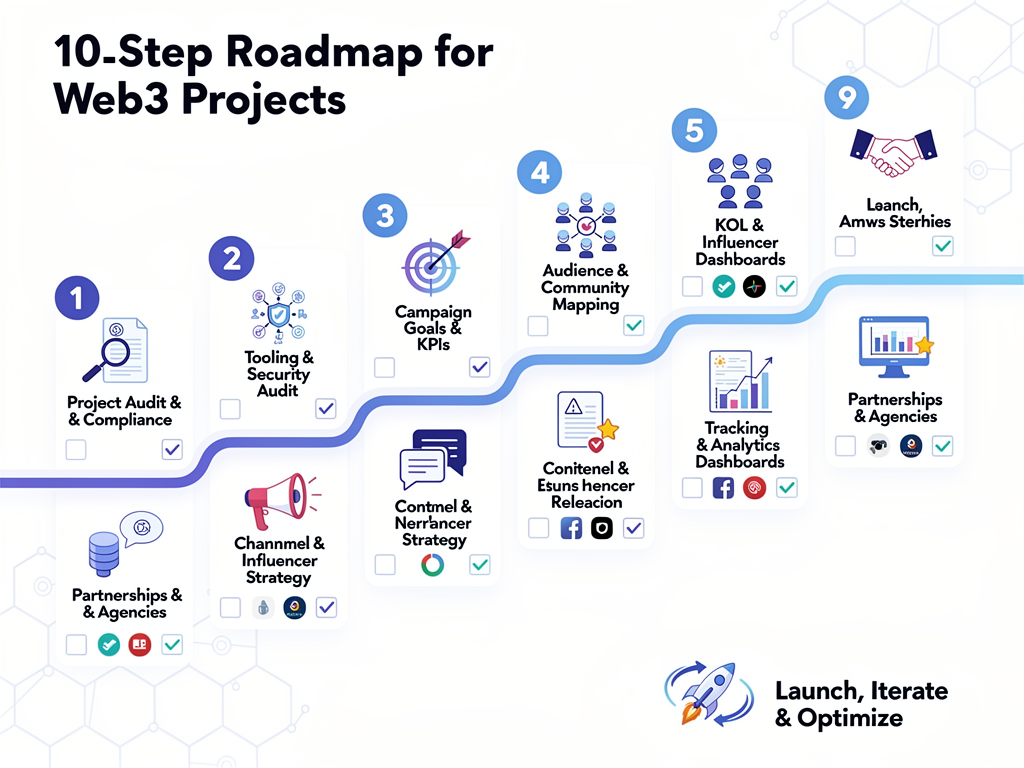
Your Next-Step Checklist:
- Audit your current social presence and verify follower authenticity using tools like @gauge_e1.
- Define clear campaign goals: fundraising, holder growth, NFT mints, or developer recruitment.
- Map out your existing community and identify your most active, engaged members.
- Research 5–10 Web3-native KOLs and media outlets aligned with your niche.
- Set up on-chain tracking dashboards to monitor wallet activity and conversions.
- Create a content calendar tailored to Web3 culture—transparency, ownership, and community governance.
- Test small campaigns with micro-KOLs to validate messaging and audience fit before scaling.
- Allocate budget for full-time community management, not just launch hype.
- Document what works and build playbooks for repeatable success.
- Explore partnerships with experienced agencies to shortcut network-building and accelerate growth.
FAQ: Your Questions Answered
What services does a Web3 social media agency provide?
These agencies handle community management, KOL partnerships, media outreach, content creation, Discord and Telegram moderation, token-holder engagement campaigns, and on-chain analytics tracking. Many also offer strategic consulting for tokenomics, governance rollout, and fundraising support. The goal is to build genuine, engaged communities that drive measurable outcomes like holder growth, capital raised, or developer adoption.
How much do Web3 social media agencies charge?
Pricing varies widely. Some agencies charge flat monthly retainers ranging from $5,000 to $50,000+ depending on scope. Performance-based models are common: 2–5% of funds raised, percentage of token supply, or success fees tied to specific milestones like hitting a certain market cap or user count. Scouts and affiliates can earn $10,000–$40,000+ per successful project referral, according to verified cases.
How do I know if a Web3 agency has real expertise?
Check their case studies, client testimonials, and on-chain results. Ask for verifiable metrics: funds raised, holder growth, media placements, and campaign ROI. Look for agencies with 5+ years in crypto, established networks of KOLs and media contacts, and transparent pricing models. Avoid firms with no Web3 portfolio or those promising unrealistic results without clear attribution.
Can I run Web3 marketing in-house, or do I need an agency?
You can run campaigns in-house if you have dedicated team members with crypto expertise, time to build KOL relationships, and experience with on-chain analytics. However, agencies accelerate results by offering established networks, proven playbooks, and specialized talent. Many projects use a hybrid model: core messaging and strategy in-house, execution and scaling through an agency.
Why are follower counts misleading in Web3?
Bots and inactive accounts inflate follower counts cheaply, making vanity metrics unreliable. One verified case showed an 80K-follower account delivering only 6 real buyers. Web3 tools like @gauge_e1 measure holder depth, bonding curves, and capital commitment—signals of genuine community interest that correlate with actual conversions and long-term retention.
What’s the difference between Web2 and Web3 social media marketing?
Web2 marketing relies on traditional ads, pixel tracking, and centralized platforms like Facebook and Instagram. Web3 marketing emphasizes community ownership, token incentives, wallet-based attribution, decentralized platforms (X, Farcaster, Lens), and on-chain transparency. Content must address tokenomics, governance, and community participation—not just product features. The cultural shift is as important as the technical tools.
How long does it take to see results from a Web3 marketing campaign?
Timeline depends on goals. Building a community from scratch takes 3–6 months of consistent effort. Fundraising campaigns with strong KOL support can generate traction in 4–8 weeks. NFT launches and airdrops may see spikes within days but require ongoing engagement to retain holders. Long-term success comes from sustained community management, not one-time hype.