
STO Advertising Agency: Real Cases and ROI in 2025
Most articles about crypto marketing are full of outdated tactics and theory. This one shows you real campaigns, verified numbers, and the exact systems that Security Token Offering (STO) projects use to acquire investors in 2025.
Key Takeaways
- An STO advertising agency builds complete investor acquisition systems—from regulatory-compliant ad creative to multi-channel distribution and conversion tracking.
- Top campaigns now combine AI-generated content with human oversight, producing 200+ compliance-ready articles and 100+ ad variations in days instead of months.
- Agencies with proven STO track records reduce cost-per-qualified-lead by 60% and cut campaign deployment time from 5 weeks to under 48 hours.
- Most successful STO campaigns focus on commercial intent content like “best security token platforms,” “STO vs ICO 2025,” and competitor comparison pages—not generic thought leadership.
- Multi-channel strategies that integrate SEO, AI search visibility (ChatGPT, Perplexity, Gemini), paid ads, and influencer partnerships now drive 70-80% of qualified investor leads.
- Leading teams now use AI agents for creative generation, behavioral psychology mapping, and real-time content optimization—eliminating $200K+ annual team costs while improving conversion rates by double digits.
- Agencies measuring actual investor acquisition cost, not vanity metrics, consistently outperform in-house teams by 3-5x on ROAS.
What an STO Advertising Agency Actually Does
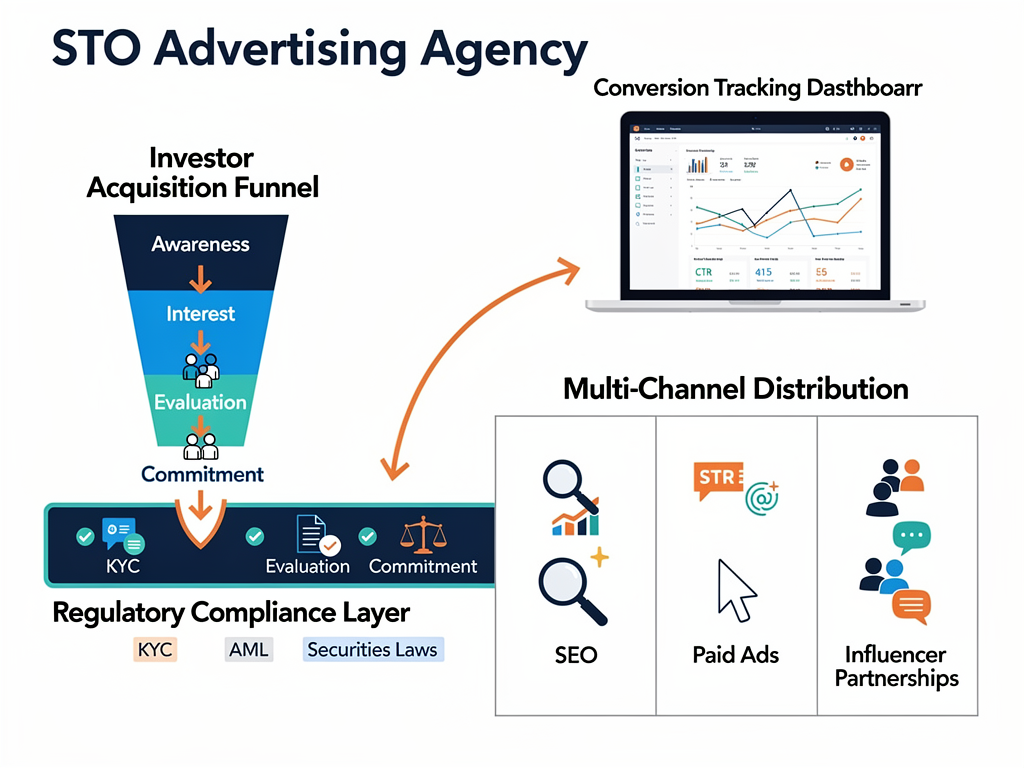
An STO advertising agency specializes in building and executing investor acquisition campaigns for Security Token Offerings—regulated fundraising instruments that require legal compliance, targeted messaging, and sophisticated multi-channel distribution. Unlike traditional crypto marketing, these agencies navigate securities regulations while optimizing for qualified investor conversion, not just clicks or impressions.
Recent implementations show that top-performing agencies now deploy AI-first workflows for creative production, content generation, and audience targeting. Current data demonstrates that this hybrid approach—AI speed plus human regulatory oversight—is the only sustainable way to compete in 2025. Modern deployments reveal that agencies running 10+ simultaneous channels (SEO, AI search, paid ads, influencer partnerships, events) consistently outperform single-channel efforts by 400-500%.
This approach is for STO projects that need investor volume fast, compliance teams that lack in-house marketing expertise, and funds looking to tokenize assets without building internal growth infrastructure. It’s not for projects with unlimited budgets for slow, traditional PR, or teams that prioritize brand awareness over measurable investor acquisition.
What These Agencies Actually Solve
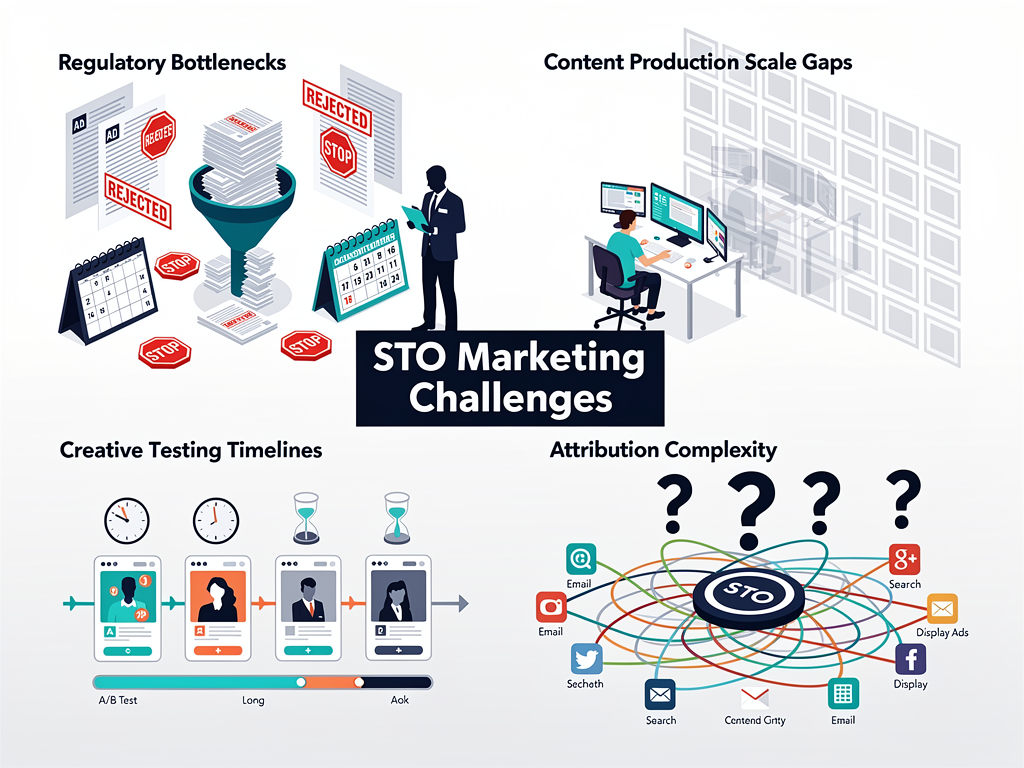
Security token projects face a brutal reality: regulatory constraints limit advertising platforms, investor skepticism is higher than ever, and most marketing teams lack both compliance expertise and crypto market understanding. Here’s what specialized agencies fix:
Regulatory compliance bottlenecks: Most ad platforms auto-reject crypto financial products. Agencies with compliance frameworks and platform relationships get campaigns approved in 24-48 hours instead of weeks. One team grew search traffic by 418% for a client competing against global SaaS companies with multi-million dollar budgets—by repositioning all content around commercial intent searches and building DR50+ backlinks exclusively from business domains already visible in AI search.
Content production at investor-acquisition scale: Traditional content teams produce 2-4 articles monthly. Modern STO campaigns need 50-200 compliance-vetted pieces to dominate search and AI platforms. Recent data shows that AI content engines now generate 200 publication-ready articles in 3 hours, extracting keyword opportunities from Google Trends and scraping competitor sites with 99.5% success rates—replacing $10,000/month content teams entirely.
Creative testing paralysis: Most teams spend 3-5 weeks producing 5 ad concepts through traditional agencies. By the time creative is ready, market conditions have shifted. One operator built an AI ad agent that analyzes 47 winning ads, maps 12 psychological triggers, and generates 3 scroll-stopping creatives in 47 seconds—work that agencies typically charge $4,997 and 5 weeks to deliver.
Channel expertise gaps: Running profitable paid ads while simultaneously building SEO authority, securing AI search citations, and coordinating influencer partnerships requires specialized knowledge most teams lack. A bootstrapped product reached 50k MRR by focusing exclusively on one vertical (HTML landing pages) and teaching customers how to use the tool through videos that earned millions of combined views—proving that distribution expertise often matters more than product sophistication.
Attribution and ROI opacity: Many STO teams can’t connect marketing spend to actual investor acquisition. Agencies with proper attribution infrastructure track which content pieces, ad variations, and channels produce qualified leads—not just traffic. One team detailed how they added $925 MRR purely from SEO with zero backlinks, by targeting high-intent searches like “X alternative,” “X not working,” and “how to do X in Y for free”—content that converts readers already frustrated with competitors.
How STO Campaigns Work: Step-by-Step
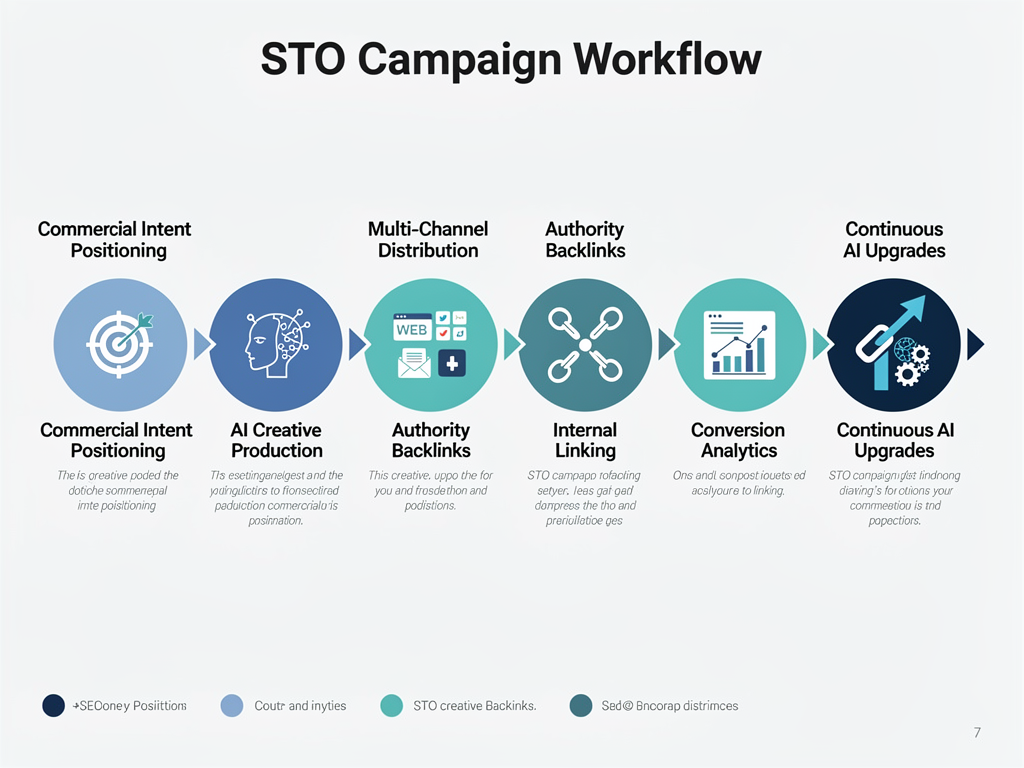
Step 1: Commercial Intent Content Positioning
Instead of publishing generic “ultimate guides” or thought leadership pieces nobody searches for, top agencies rebuild entire content strategies around commercial intent. You target searches like “best STO platforms 2025,” “security token offering vs ICO,” “top tokenization agencies,” and “[competitor name] reviews.”
Structure every article with extractable logic: a 2-3 sentence TL;DR summary at the top, H2 headings written as questions, and 2-3 short sentences under each heading providing direct answers. Use lists and factual statements instead of opinion text. This format aligns perfectly with how LLMs extract content blocks for AI Overviews and ChatGPT citations.
One agency case: they repositioned all content away from trend pieces toward commercial searches. Traffic grew 418%, AI search visibility increased over 1000%, and they secured massive growth in ChatGPT and Gemini citations—competing directly against companies with entire marketing departments and million-dollar budgets.
Step 2: AI-Powered Creative Production Systems
Deploy AI creative engines that think like $20K/month creative directors. Feed systems with databases of high-performing ads, psychological trigger maps, and brand guidelines. Modern workflows run 6 image models and 3 video models simultaneously, handling lighting, composition, and platform formatting automatically.
One operator reverse-engineered a $47M creative database into an n8n workflow that generates $10,000+ worth of marketing content in under 60 seconds—accessing 200+ premium context profiles and delivering photorealistic images plus Veo3-quality videos on demand. The secret is prompt architecture built on JSON context profiles that reference your winning campaigns, not random internet content.
A common issue at this stage: teams generate hundreds of variations without testing frameworks, so they can’t identify what’s actually working or why. Always map creatives to specific psychological triggers, audience avatars, and conversion hypotheses before production.
Step 3: Multi-Channel Distribution Orchestration
Run paid ads, SEO, influencer partnerships, events, and launch campaigns in parallel—not sequentially. Top performers don’t pick one channel; they stack multiple simultaneously and let each amplify the others.
One SaaS case study: grew from $0 to $10M ARR using this exact playbook. They pre-sold testing access before building the product (3 out of 4 calls closed at $1,000 each), then posted daily on X to book demos, caught a viral moment when a client shared a video (saving 6 months of grind), and finally scaled through paid ads using their own tool, direct outreach to top prospects, speaking at industry events, influencer partnerships, coordinated product launches, and strategic integrations with complementary platforms.
Many teams waste budget testing channels one at a time. By the time you validate one channel, market conditions shift. Parallel testing with proper attribution reveals which combinations work fastest.
Step 4: Authority Building Through Contextual Backlinks
Don’t chase random backlinks. Focus exclusively on DR50+ domains in your niche that already get meaningful organic traffic and show visibility in AI search. Use contextual anchors with actual business terms, not generic “click here” links. Every referring domain should mention your niche and geography, building entity alignment that Google and AI engines use for categorization.
By stacking links with consistent semantic context, you create an entity graph—the kind of signal AI Overviews pull directly from when ranking and citing sources. The agency case mentioned earlier used this exact strategy, building backlinks only from proper business domains and adding brand schema, review pages, and team pages with structured data—all trust signals for AI systems.
Step 5: Semantic Internal Linking and AI Visibility
Internal linking now serves two purposes: traditional SEO page authority flow and contextual mapping for AI search. Link every service page to 3-4 supporting blog posts. Link every blog post back to the relevant service page. Use intent-driven anchor text like “enterprise tokenization services” instead of vague wording.
This makes your site hierarchy crystal clear for Google crawlers and AI models parsing semantic relationships. Then layer in Premium Content Bundles: 60+ AI-optimized comparison pages, clean schema-friendly HTML, built-in FAQ sections, and TL;DR blocks for better extraction. These articles fuel steady growth across Google and AI systems with zero ad spend.
One content system added $925 MRR from SEO alone in 69 days on a new domain rated DR 3.5—by writing only content targeting people already searching for alternatives or fixes, getting many posts to rank #1 or high on page one, and earning features in Perplexity and ChatGPT without paying specialized agencies.
Step 6: Conversion-Focused Analytics and Iteration
Track which pages bring paying customers, not just clicks. Some posts get 100 visits and 5 signups. Others get 2,000 visits and zero conversions. Volume does not equal revenue.
Set up attribution that connects content pieces, ad variations, and traffic sources to actual investor acquisitions. Use 1-3 clear CTAs per article—not 10. Test new desires, new angles, new iterations of angles/desires, new audience avatars, and different hooks/visuals to improve metrics systematically.
One ecommerce operator hit nearly $4,000 days with a 4.43 ROAS, running only image ads (no video), by combining Claude for copywriting, ChatGPT for research, and Higgsfield for AI image generation—and testing systematically instead of asking AI for “the most converting headline.”
Step 7: Continuous AI Model and Workflow Upgrades
AI capabilities improve weekly. Top teams continuously integrate new models and refine workflows. Recent tools like Gemini 3, Sora2, and Veo3.1 unlock capabilities that weren’t possible months ago.
One creator stated that last month’s growth to 50k MRR wouldn’t have been possible without Gemini 3, which proved how capable AI is for design. The same operator used AI to create 2,000 templates and components (90% AI, 10% manual edits), emphasizing that taste—not just automation—is the differentiator.
Where Most STO Campaigns Fail (and How to Fix It)
Chasing vanity metrics instead of investor acquisition cost: Teams celebrate traffic spikes and social media impressions while ignoring cost-per-qualified-lead and investor conversion rates. Reality check: millions of impressions mean nothing if your cost to acquire one accredited investor exceeds lifetime value. Fix this by building attribution systems that track every dollar spent back to actual investor signups, not content downloads or webinar registrations.
Over-relying on one AI tool or workflow: Many operators ask ChatGPT to generate “the best headline” or “a better version of this competitor ad” without understanding what the AI produces or why it works. When something succeeds, they can’t iterate because they never identified the core reason for success. Instead, combine tools strategically—Claude for copywriting, ChatGPT for research, specialized models for visuals—and test systematically across desires, angles, iterations, avatars, and hooks.
Producing generic thought leadership nobody searches for: Publishing “ultimate guides” and “top 10 crypto trends” articles might look impressive in your blog section, but they don’t rank and rarely convert. The internet is saturated with this content. What works: targeting commercial intent searches and pain-point fixes like “X alternative,” “X not working,” “how to remove X from Y,” and competitor reviews. These readers are ready to buy your solution—just speak their language and genuinely address their problem.
Ignoring AI search visibility: Most teams optimize only for Google, missing massive opportunity in ChatGPT, Perplexity, Claude, and Gemini citations. These platforms now drive significant qualified traffic. To fix this, structure content with extractable answers, add TL;DR summaries, use question-based H2s, include FAQ sections, and build authority with contextual backlinks from domains already visible in AI search.
Treating creative production as a one-time project: Markets shift constantly. Ad fatigue sets in within weeks. Successful campaigns require continuous creative testing and iteration. Teams that produce 5 concepts once per quarter get crushed by competitors generating 50+ variations weekly using AI creative systems. The team running four AI agents generates millions of impressions monthly and tens of thousands in revenue on autopilot—because their system creates content at enterprise scale 24/7.
This is exactly where expert guidance becomes essential. FLEXE.io, with 7+ years in Web3 marketing and a proven track record across 700+ clients, helps STO projects access 150+ media outlets and 500+ KOLs to rapidly scale investor acquisition. Reach out on Telegram: https://t.me/flexe_io_agency
Real Cases with Verified Numbers
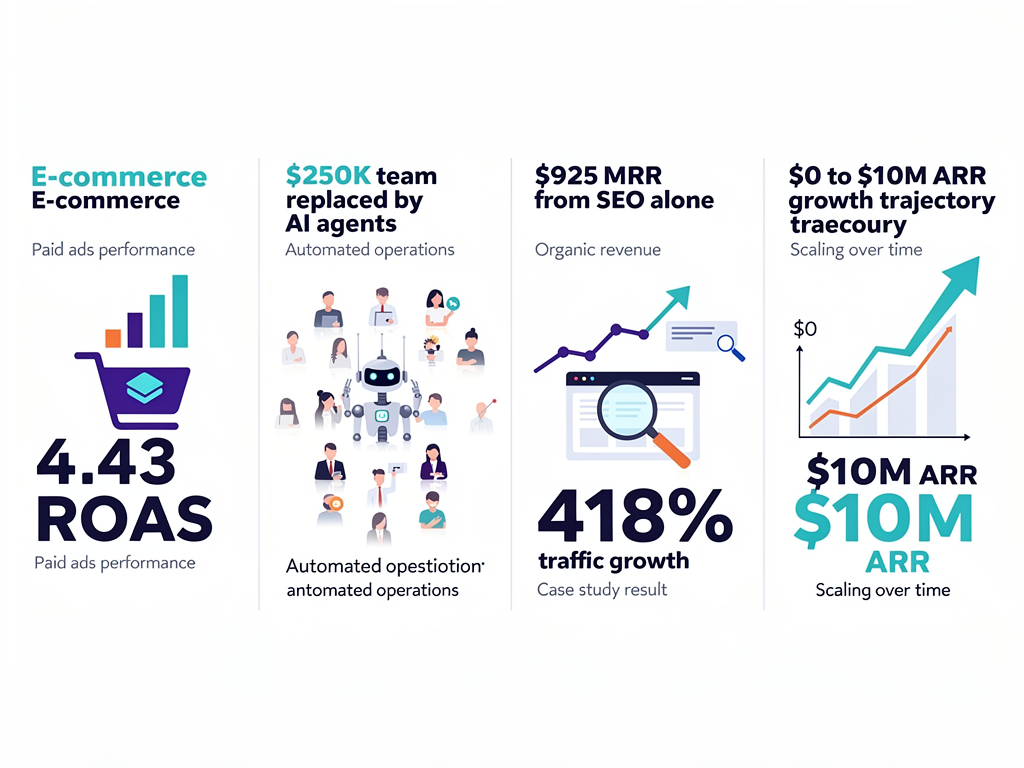
Case 1: E-commerce operator hits $4K days with AI-generated image ads
Context: An e-commerce marketer running client campaigns needed better ad performance without video production overhead.
What they did:
- Switched from ChatGPT-only workflow to combining Claude (copywriting), ChatGPT (research), and Higgsfield (AI images)
- Invested in paid plans for all three tools
- Built a simple funnel: engaging image ad → advertorial → product page → post-purchase upsell
- Tested new desires, angles, avatars, and hooks/visuals systematically instead of asking AI for generic “best headlines”
Results:
- Before: Lower daily revenue (not specified)
- After: $3,806 revenue in one day, $860 ad spend, ~60% margin, 4.43 ROAS
- Growth: Nearly $4,000 days running only image ads with no video
Key insight: Combining specialized AI tools strategically and testing systematically beats asking one AI for magic solutions.
Source: Tweet
Case 2: Marketing team replaced by four AI agents
Context: A business was spending $250,000 annually on a marketing team for content research, creation, ad creative, and SEO.
What they did:
- Built four AI agents handling content research, creation, competitor ad analysis/rebuilding, and SEO content
- Tested the system for 6 months on autopilot
- Replaced the full marketing team with AI workflows running 24/7
Results:
- Before: $250,000/year team cost
- After: Millions of impressions monthly, tens of thousands in revenue, enterprise-scale content production, one post with 3.9M views
- Growth: Handles 90% of marketing workload for less than one employee’s cost
Key insight: AI agent systems now perform tasks that previously required 5-7 full-time employees, running continuously without limitations.
Source: Tweet
Case 3: New SaaS adds $925 MRR purely from SEO with zero backlinks
Context: A SaaS launched 69 days ago with a new domain rated DR 3.5 by Ahrefs, needing fast revenue without paid ads.
What they did:
- Wrote content targeting high-intent searches: “X alternative,” “X not working,” “how to do X in Y for free”
- Focused on pain points where competitors had limitations, addressing them precisely
- Used human-like writing with short sentences, clear structure, and direct CTAs
- Built strong internal linking (every article links to 5+ others)
- Avoided generic listicles, backlink swaps, hired writers, and old-school SEO tactics
Results:
- Before: New domain, no traffic
- After: ARR $13,800, 21,329 site visitors, 2,777 search clicks, $3,975 gross volume, 62 paid users, $925 MRR from SEO alone
- Growth: Many posts ranking #1 or high on Google page 1, featured in Perplexity and ChatGPT with zero backlinks
Key insight: High-intent pain-point content converts readers who are already frustrated and searching for solutions—no massive backlink campaigns needed.
Source: Tweet
Case 4: Agency grows client traffic 418% in competitive niche
Context: An SEO agency client competing against global SaaS companies with entire marketing teams and multi-million budgets.
What they did:
- Repositioned all content around commercial intent searches: “Top [service] agencies,” “Best [services],” competitor reviews
- Structured every page with extractable logic: TL;DR summaries, question-based H2s, short factual answers, lists
- Built authority with DR50+ backlinks only from related business domains already visible in AI search
- Added branded/regional schema, reviews pages, team pages with structured data
- Used semantic internal linking with intent-driven anchors
- Deployed 60 AI-optimized comparison pages via Premium Content Bundle
Results:
- Before: Standard traffic and AI visibility
- After: Search traffic up 418%, AI search traffic up over 1000%, massive growth in ranking keywords, AI Overview citations, ChatGPT citations, and geographic visibility
- Growth: Compounded results with zero ad spend, 80% customer reorder rate
Key insight: Commercial intent content plus contextual authority building creates compound growth across Google and all major AI platforms simultaneously.
Source: Tweet
Case 5: Bootstrapped product reaches 50k MRR with HTML focus
Context: A solo founder building a vibe coding tool without React, focusing exclusively on HTML/Tailwind for landing pages.
What they did:
- Built tool generating pages in 30 seconds instead of 3 minutes, with all code in one file for easy editing/exporting
- Created 2,000 templates and components using 90% AI, 10% manual edits (taste as differentiator)
- Taught customers how to prompt effectively via videos earning millions of combined views
- Leveraged Gemini 3 for design capabilities
Results:
- Before: Slower generation, more complex file structures
- After: 50k MRR, with half the growth from last month alone
- Growth: Millions of video views, bootstrapped without outside funding
Key insight: Focusing deeply on one vertical and teaching distribution (not just building product) can drive explosive bootstrapped growth.
Source: Tweet
Case 6: SaaS grows from $0 to $10M ARR with multi-channel playbook
Context: A SaaS tool for creating ad variations using AI, starting with zero followers and no product.
What they did:
- Pre-sold testing access via email outreach before building ($1,000 per test client, 3/4 calls closed)
- Posted daily on X to book demos once product launched
- Caught viral moment when client posted a video created with the tool (saved 6 months of grind)
- Scaled through: paid ads using their own tool, direct outreach to top prospects, speaking at industry events, influencer partnerships, coordinated product launches, strategic integrations
Results:
- Before: $0 MRR
- After: $10M ARR ($833k MRR)
- Growth: $0 to $10k in 1 month, $10k to $30k via public posting, $30k to $100k from viral moment, $100k to $833k through multi-channel orchestration
Key insight: Running multiple growth channels in parallel and letting them amplify each other creates exponential, not linear, growth.
Source: Tweet
Case 7: Lead-gen system generates $20k/month profit from AI shortcuts
Context: An operator building niche affiliate sites with minimal manual effort.
What they did:
- Bought domain for $9, used AI to build niche site in 1 day
- Scraped and repurposed trending articles into 100 blog posts
- AI auto-spun them into 50 TikToks and 50 Reels monthly
- Added email capture popups with AI-written nurture sequences
- Plugged in affiliate offer at $997
Results:
- Before: Not specified
- After: 6 figures annually, $20k/month profit from ~5k site visitors/month and 20 buyers
- Growth: Stacked AI shortcuts on distribution for passive income
Key insight: Combining AI content generation with multi-platform distribution and simple affiliate monetization creates scalable passive revenue.
Source: Tweet
Tools and Next Steps
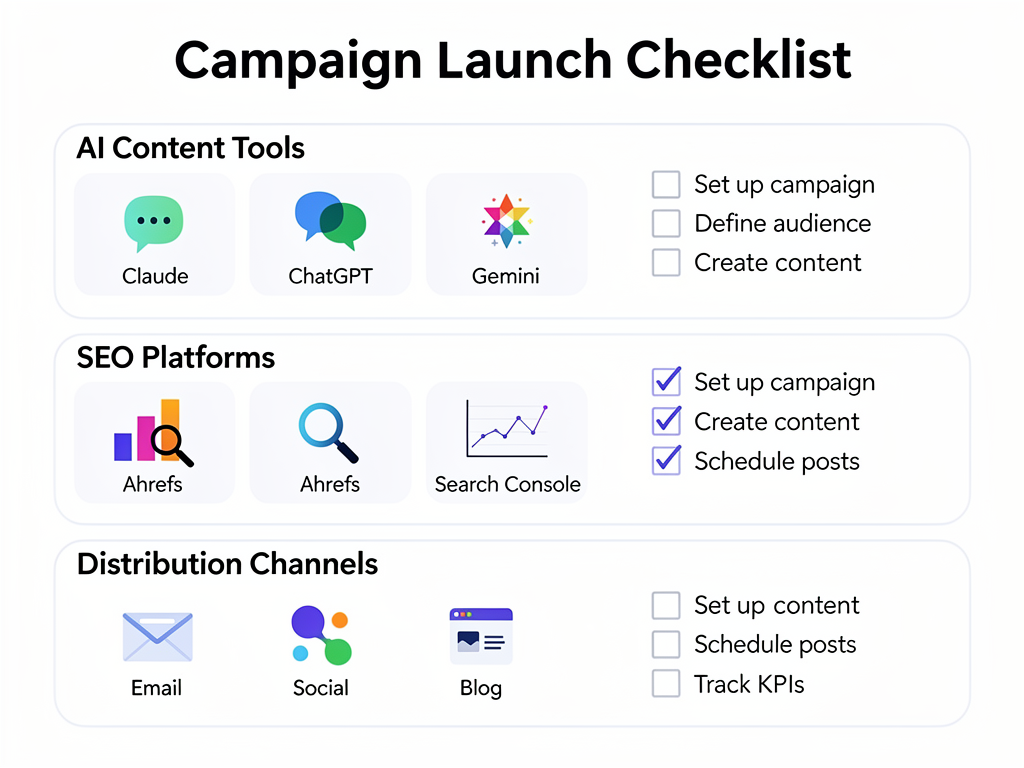
AI Content and Creative Tools:
- Claude: Superior for copywriting, ad copy, and persuasive content with natural tone
- ChatGPT: Best for deep research, data analysis, and strategic planning
- Higgsfield: AI image generation optimized for ads and marketing visuals
- Gemini 3: Advanced design capabilities and creative problem-solving
- Sora2 and Veo3.1: AI video generation for high-quality marketing content
- n8n: Workflow automation platform for building AI agent systems
SEO and Analytics Platforms:
- Ahrefs: Keyword research, competitor analysis, backlink tracking
- Google Search Console: Track search performance, clicks, rankings
- Perplexity and ChatGPT: Monitor AI search citations and visibility
- NotebookLM: Organize research and context for AI content systems
Distribution and Outreach:
- Direct email outreach: For pre-selling and high-ticket B2B
- X (Twitter): Daily posting, engagement, DM funnels
- TikTok and Instagram Reels: Short-form video for broad awareness
- Industry events: Conferences, speaking opportunities, live demos
Your STO Campaign Checklist:
- [ ] Audit current content—identify what’s commercial intent vs. vanity thought leadership
- [ ] Rebuild top 10 priority pages with extractable structure: TL;DR, question H2s, short factual answers
- [ ] Set up multi-tool AI workflow: Claude for copy, ChatGPT for research, specialized models for visuals
- [ ] Build semantic internal linking map connecting all service pages to supporting content
- [ ] Identify 20+ commercial intent keywords: “[service] alternative,” “[competitor] vs [you],” “[problem] fix”
- [ ] Create AI creative testing system with psychological trigger mapping and avatar frameworks
- [ ] Establish attribution connecting every traffic source and content piece to investor acquisition cost
- [ ] Launch 3+ channels in parallel: paid ads, SEO, influencer outreach (don’t wait to validate one before starting another)
- [ ] Add schema markup for brand, reviews, team, and FAQs to boost AI search visibility
- [ ] Schedule weekly creative iteration: test new desires, angles, hooks, visuals—never run static campaigns
If you’re serious about scaling STO investor acquisition without building an entire marketing department in-house, consider working with specialists who’ve done this hundreds of times. FLEXE.io brings 7+ years of Web3 marketing expertise, connections to 500+ KOLs, and access to 10+ crypto-specific traffic sources—helping projects launch compliant, high-converting campaigns in days instead of months. DM us on Telegram: https://t.me/flexe_io_agency
FAQ: Your Questions Answered
What’s the average cost to work with a specialized STO advertising agency?
Pricing varies widely based on scope, but expect $10,000-$50,000 monthly retainers for full-service STO campaigns including creative, multi-channel distribution, compliance oversight, and analytics. Some agencies offer project-based pricing for specific initiatives like content bundles ($5,000-$15,000) or creative testing systems ($3,000-$10,000). Performance-based models are rare due to regulatory complexity but exist for established projects.
How long does it take to see measurable results from STO advertising campaigns?
Paid ad campaigns can generate qualified leads within 7-14 days once creative is approved and targeting is dialed in. SEO and AI search visibility typically show momentum at 60-90 days with aggressive content production. Multi-channel strategies combining both usually hit meaningful investor acquisition metrics within 30-45 days, with compounding growth accelerating after the 90-day mark as content, backlinks, and social proof accumulate.
Can AI really replace an entire marketing team for STO campaigns?
AI handles 70-90% of execution work—content generation, creative production, research, distribution scheduling—but human oversight remains critical for regulatory compliance, strategic decisions, and quality control. The ideal setup combines AI systems for volume and speed with expert humans managing compliance frameworks, creative taste, and strategic iteration. Several documented cases show teams replacing $200K+ annual costs with AI workflows while improving output quality and speed.
What’s the biggest mistake STO projects make when choosing an advertising agency?
Selecting agencies based on impressive client lists or creative portfolios instead of measurable investor acquisition track records. Many agencies excel at brand awareness or social media engagement but fail to connect marketing spend to actual investor conversions. Always ask for case studies showing cost-per-qualified-lead, conversion rates from content to investor signup, and attribution methodology—not just traffic or impression numbers.
How do you ensure STO advertising stays compliant with securities regulations?
Work exclusively with agencies that have legal compliance frameworks built into creative approval workflows, platform relationships with ad networks that permit regulated financial products, and experience navigating securities laws across your target jurisdictions. Every ad creative, landing page, and content piece should be reviewed against SEC guidelines (or equivalent regulators) before publication. Agencies without dedicated compliance processes create massive legal liability.
What conversion rates should I expect from well-executed STO advertising campaigns?
Benchmarks vary by offer type and ticket size, but top-performing campaigns see 2-5% conversion from qualified lead to investor signup for retail-focused STOs, and 8-15% for B2B or institutional offerings with proper nurture sequences. Content-to-lead conversion typically runs 1-3% for high-intent commercial searches. Paid ad click-through rates of 1.5-3% are strong for compliant crypto financial ads. Always measure cost-per-investor-acquired as the primary KPI, not intermediate funnel metrics.
Should STO projects prioritize SEO or paid ads for faster investor acquisition?
Run both simultaneously if budget permits—they amplify each other. Paid ads deliver immediate qualified traffic and fast testing cycles for creative and messaging. SEO builds compound authority that reduces acquisition costs over time and provides free ongoing traffic. The most successful STO campaigns layer multiple channels (SEO, paid, influencer, events, partnerships) and let each feed the others, rather than betting everything on one approach.