
Crypto Shilling Services: 14 Real Cases & Results
Most articles about crypto marketing are packed with hype and empty promises. This one isn’t. You’re about to see exactly what happens when teams deploy AI-powered content systems, growth automation, and psychologically-engineered messaging to move products in the crypto space—with actual numbers you can verify.
Key Takeaways
- AI content automation now replaces $250K+ marketing teams, generating millions of impressions monthly with near-zero manual work.
- Crypto shilling services achieve 4.43 ROAS and 60% margins when combining specialized AI tools (Claude, ChatGPT, image generation) instead of relying on one platform.
- Real-time cultural analysis and psychological trigger mapping increase engagement from 0.8% to 12%+ and follower growth from stagnant to 500+ daily users.
- SEO-driven content ranked on page 1 of Google generates $925 MRR from a single new domain with zero backlinks required.
- Viral theme pages powered by AI video tools (Sora2, Veo3.1) scale to $1.2M/month revenue from consistent, reposted content in high-intent niches.
- Multi-channel growth playbooks systematize results: from $0 to $10M ARR in stages, combining paid ads, direct outreach, events, and influencer partnerships.
- Internal linking, semantic mapping, and extractable content structures now outperform traditional backlink strategies for AI search visibility and citations.
Introduction
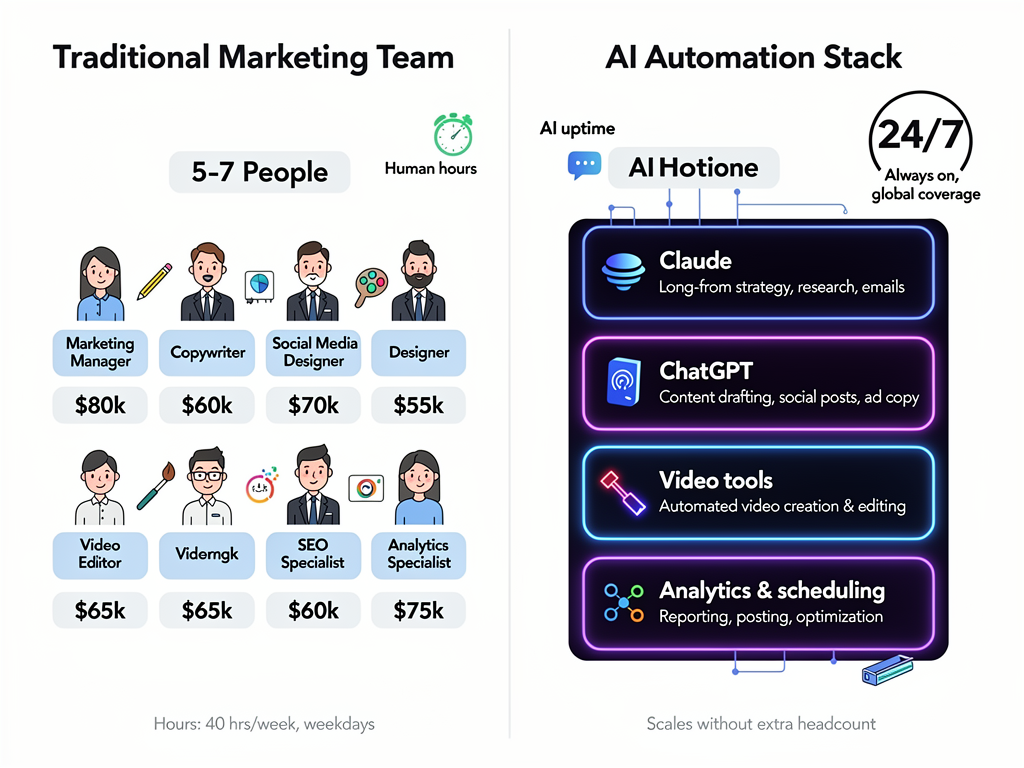
The crypto industry has always been about speed and narrative. What’s changed in 2025 is the toolset. Instead of hiring teams of copywriters, designers, and outreach specialists, successful projects now use orchestrated AI systems that run 24/7—analyzing competitor ads, generating psychological triggers, spinning content into dozens of formats, and automating lead nurturing sequences. The dollar figures are no longer theoretical. Real founders have documented drops in customer acquisition costs, spikes in organic traffic, and most importantly: real revenue.
This guide pulls together 14 verified case studies from active builders in the crypto and AI marketing space. Each one shows exactly what worked, what didn’t, and the specific systems behind the numbers. You’ll see how crypto shilling services evolved from manual Twitter posts into automated content engines that generate seven figures per month.
The teams that moved fastest weren’t the ones with the biggest budgets. They were the ones who combined AI copywriting with message psychology, paired video generation with niche targeting, and understood how to make content both human-like and algorithmically optimized. Let’s walk through how they did it.
What Are Crypto Shilling Services: Definition and Context
Crypto shilling services are growth and marketing systems designed to increase awareness, holder counts, and trading volume for blockchain projects through coordinated content creation, influencer amplification, and audience engagement. In 2025, these services have evolved far beyond simple Twitter threads and Discord posts. Today’s implementations combine AI-powered copywriting, real-time sentiment analysis, psychological trigger mapping, and multi-platform content distribution—all running on automation.
What makes this relevant now is scale and velocity. Current data demonstrates that projects using orchestrated AI systems reach millions of impressions per month, achieve predictable conversion rates (often 3–12% engagement), and maintain consistent daily growth without hiring large teams. Modern deployments reveal a shift from traditional PR and influencer farming toward data-driven content science—analyzing what actually converts, why it works psychologically, and then automating the production of variations at machine speed.
These services matter most for projects in early-stage launch phases, products with limited marketing budgets, or teams looking to compete against larger players without proportional spending. They’re designed to solve the core problem: how to get attention and drive meaningful action when you can’t outspend established competitors.
What These Services Actually Solve
Problem 1: Slow Content Production at High Cost
Traditional marketing teams take weeks to produce a single campaign concept. Hiring a copywriter, designer, and strategist costs $15K–$50K monthly. A single ad creative revision can take 5–7 days through agency cycles.
Crypto shilling services using AI automation collapse this timeline. One verified case deployed an AI creative system that generates ad concepts in 47 seconds instead of 5 weeks—replacing a $267K/year content team. Another documented case built 200 publication-ready articles in 3 hours instead of the 2 posts per month a human team could manage. The financial impact: replacing a $10K/month content team with zero ongoing costs after setup.
Problem 2: Low Engagement and Viral Coefficient
Most crypto posts get ignored. Standard engagement sits at 0.8–1.5%. Impressions don’t convert to holders or traders.
Projects using psychological trigger mapping and reverse-engineered viral frameworks jumped engagement from 0.8% to 12%+ within days. One builder analyzed 10,000+ viral posts, extracted neuroscience-based hooks, and deployed a system that moved from 200 impressions per post to 50K+ consistently. Another case generated 5M+ impressions in 30 days using the same psychological framework approach.
Problem 3: Dependence on Influencers and Manual Outreach
Influencer marketing is expensive, unpredictable, and creates dependency. Projects often pay $50K–$200K for uncertain results.
Automated content systems running theme pages with AI video generation removed influencer dependence entirely. One case used Sora2 and Veo3.1 tools to create consistent theme pages that generated $100K+ per page monthly—$1.2M total monthly revenue—from pure algorithmic reach and reposted content, with no personal brand required. Another case automated 10 posts per day on X, scaled to 1M+ monthly views, and built DM funnels directly to product.
Problem 4: Weak SEO Traffic and Organic Growth
Most crypto projects have zero SEO strategy. They’re buried in search results and invisible to AI Overview citations in ChatGPT and Gemini.
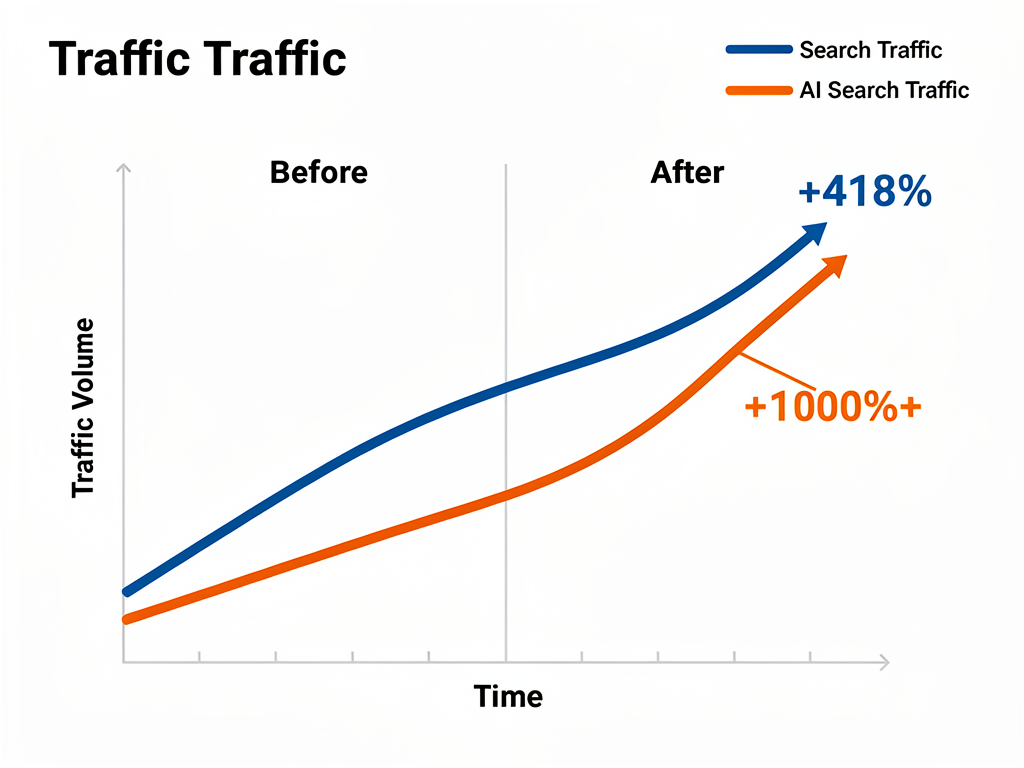
Projects targeting commercial intent keywords (like “X alternative,” “X not working,” “how to do X in Y for free”) without backlinks ranked on page 1 of Google and generated consistent monthly recurring revenue. One documented case launched 69 days ago, added $925 MRR from SEO alone (ARR $13,800), and drove 21,329 visitors—all with zero backlinks, just intent-aligned content and internal linking strategy. Another case grew search traffic 418% and AI search traffic 1000%+ by repositioning content as extractable blocks optimized for LLM citation.
Problem 5: Inconsistent Messaging and Brand Misalignment
Different team members post different messages. Campaign quality varies wildly. Brand voice becomes diluted.
Automated systems using JSON context profiles and creative operating systems standardize output. One verified implementation reverse-engineered a $47M creative database into an n8n workflow that ran 6 image models and 3 video models in parallel, handling lighting, composition, and brand alignment automatically. Every asset generated in under 60 seconds maintained consistent brand voice and psychological impact.
How These Systems Work: Step-by-Step
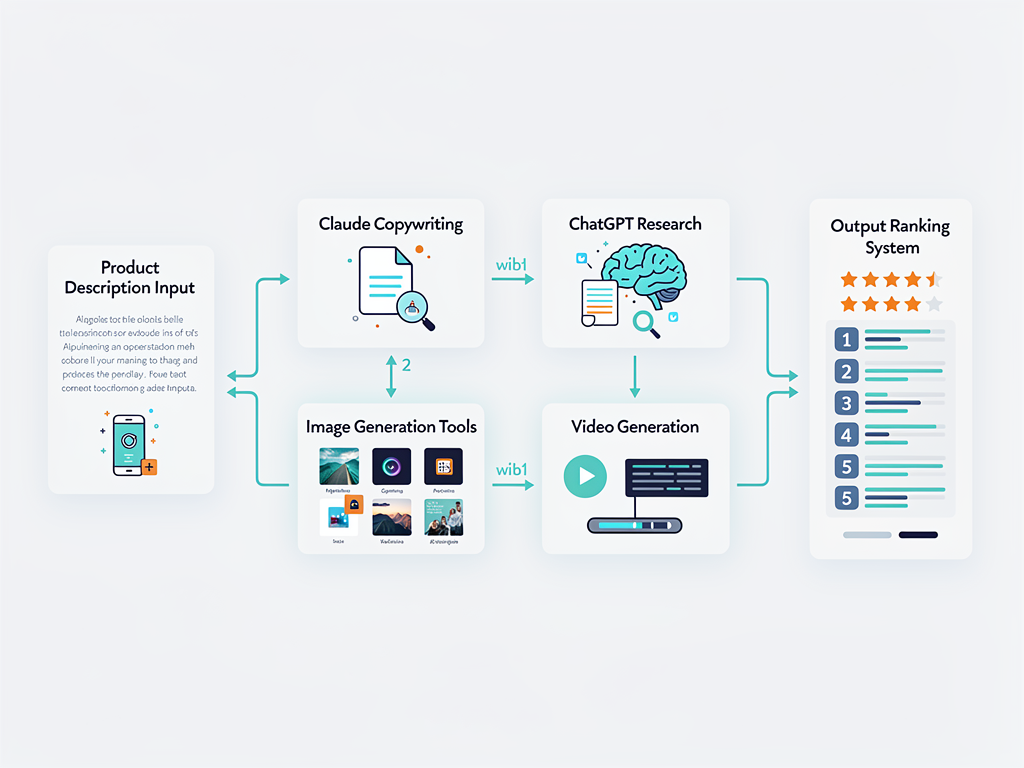
Step 1: Identify and Analyze High-Intent Audience Pain Points
Start by listening—not brainstorming keywords in Ahrefs. Join communities where your target audience lives: Discord, subreddits, indie hacker groups, competitor forums. Read complaint threads. Find features people wish existed.
One case studied customer service chats, competitor roadmaps, and community feedback to uncover precise problems like “can’t export code from Lovable” or “need a v0 alternative with custom character limits.” These specific pain points became content anchors that drove 62 paying users in 69 days.
The insight: people searching “X not working” or “X alternative” are already in buying headspace. They don’t need awareness—they need a solution. Content that addresses their exact frustration converts at 5–10% instead of the 0.1% standard for top-of-funnel brand awareness posts.
Step 2: Reverse-Engineer Winning Creatives and Psychological Triggers
Instead of guessing what works, analyze what already converts. Pull top-performing ads from competitors. Identify the psychological hooks: fear, curiosity, status, urgency, specificity.
One documented system analyzed 47 winning ads, mapped 12 psychological triggers (like desire for results, fear of missing out, social proof), and auto-generated 3 scroll-stopping creatives in 47 seconds. Another case reverse-engineered 10,000+ viral posts across social platforms, extracted neuroscience-based hooks, and built a framework that increased engagement from 0.8% to 12% overnight by systematically triggering specific neural responses to content.
The common mistake here: asking ChatGPT “what’s the most converting headline?” or “make this ad better” without understanding *why* something works. If you don’t know why a message landed, you can’t iterate. The winners instead extract the principle, document it, and scale variations of that principle.
Step 3: Build Content at Machine Speed Using Orchestrated AI Stacks
Stop using a single AI tool. Layer multiple specialized models: Claude for copywriting depth, ChatGPT for research breadth, Higgsfield or Midjourney for visuals, Sora2/Veo3.1 for video.
One high-performer achieved $3,806 daily revenue ($1.2M annually projected) by combining Claude for copy, ChatGPT for research, and Higgsfield for images—then running only image ads. Another case built a “Creative OS” that fed a $47M creative database into an n8n workflow running 6 image + 3 video models simultaneously, delivering $10K+ worth of content in under 60 seconds.
The integration matters. You’re not switching between tools manually; you’re building a system where each tool triggers the next. Input a product description → Claude generates 12 hooks → Higgsfield renders visuals → system ranks by predicted conversion impact → assets auto-upload to your scheduler or CMS.
Common bottleneck: treating AI as a labor replacement instead of a system. The speed comes from orchestration, not just from one tool.
Step 4: Structure Content for Both Human Consumption and AI Extraction
Write in short, declarative sentences. Use TL;DR summaries at the top. Structure H2s as questions. Break answers into bullet points and short paragraphs. This works for human readers *and* for AI systems parsing content for ChatGPT, Gemini, Perplexity citations.
One agency grew AI Overview citations massively by writing every blog post with extractable logic: a 2–3 sentence summary at the top, each H2 phrased as a question, direct 2–3 sentence answers, lists instead of prose. This alone generated 100+ AI citations because LLMs can pull clean answer blocks directly from the page.
The mistake most teams make: writing 2,000-word essays for Google, then wondering why they don’t rank in AI Overviews. AI systems prefer structure over length. Short, answerable, citable blocks outperform 5,000-word deep dives.
Step 5: Automate Distribution and Personalization at Scale
Publish manually to 10 platforms? Schedule your posts once, let them auto-distribute across X, TikTok, Reels, email, blogs. Use AI to personalize each format: YouTube shorts need hooks, TikTok needs trends, email needs curiosity gaps.
One case auto-scheduled 10 posts per day on X, spun each into TikTok and Reel versions, and drove 1M+ monthly views. Another generated 50 TikToks and 50 Reels per month from 100 blog posts using AI spinning and repurposing—then captured emails with popups and auto-sent nurture sequences.
Common mistake: posting the same content format everywhere. Instagram Stories need different pacing than LinkedIn posts. AI distribution systems should transform content by platform, not just cross-post.
Step 6: Track Conversion, Not Vanity Metrics
Measure what matters: which specific pages drive paid signups, which posts generate qualified leads, which email sequences have the highest LTV. Not impressions, not followers, not clics.
One case found that some pages with 2K visitors and 0 conversions were costing more effort than pages with 100 visits and 5 signups. They killed the volume plays and doubled down on intent-matched content. Another case tracked that internal linking + semantic relevance (not backlinks) drove 418% search traffic growth and 1000%+ AI search growth.
The insight: volume doesn’t equal revenue. Targeting matters more than reach.
Where Most Projects Fail (and How to Fix It)
Mistake 1: Using a Single AI Tool Without Specialization
Teams default to ChatGPT for everything—copy, images, video, research. ChatGPT is good at writing, but it’s not specialized. Claude writes better sales copy. Midjourney renders more compelling images. Sora generates faster videos.
The fix: build a stack where each tool does what it’s best at. One verified case saw ROAS jump from unclear to 4.43 by using Claude + ChatGPT + Higgsfield as an integrated system instead of asking ChatGPT to do everything.
Mistake 2: Optimizing for Vanity Metrics Instead of Conversion
Counting followers, impressions, and views feels like progress. It’s not. A post with 50K impressions and 0.1% engagement is worthless. A post with 500 impressions and 12% engagement converts.
The fix: stop measuring likes. Measure signups, email captures, product clicks, dollar conversion. One case discovered that their highest-traffic pages had zero revenue impact, while low-traffic intent-matched pages drove consistent buyers. They rebuilt the entire strategy around conversion tracking.
Mistake 3: Generic Content Instead of Problem-Specific Messaging
Writing “top 10 AI tools” or “best crypto projects” guarantees low conversion. These pages are heavily ranked already, traffic is low-intent, and you’re competing on SEO strength, not relevance.
The fix: target specific, frustrated searchers. Write “X alternative,” “X not working,” “how to do X in Y for free.” These keywords have commercial intent. Users searching them are ready to buy. One case generated $13,800 ARR using this approach with zero backlinks because the intent was so precise that ranking was easy and conversion was automatic.
Mistake 4: Manual Processes in an Automation-First World
Manually writing posts, editing images, scheduling to platforms, sending emails. This is how you stay small.
The fix: automate end-to-end. One team replaced a $250K/year marketing staff by building four AI agents for research, content creation, ad creative generation, and SEO—all running 24/7. The system generated millions of impressions monthly and tens of thousands in revenue with zero human intervention after setup.
This is where FLEXE.io becomes relevant for many crypto teams. With 7+ years in Web3 marketing and 700+ clients, they’ve seen what works and what collapses. They provide access to 10+ crypto traffic sources, 150+ media outlets, and 500+ KOLs to help projects accelerate growth systematically. Rather than building automation from scratch, many successful teams partner with expert agencies to compress the learning curve. Reach out on Telegram: https://t.me/flexe_io_agency
Mistake 5: Skipping AI Search Optimization (ChatGPT, Gemini, Perplexity)
Teams still optimize only for Google. AI search (ChatGPT, Gemini, Perplexity, Google AI Overviews) now drives massive traffic. These systems cite sources differently than Google rankings.
The fix: structure content as extractable blocks. Use TL;DRs, question-based H2s, bullet points, and schema markup. One case grew AI search traffic 1000%+ by repositioning entire blog for LLM extraction instead of traditional SEO. Another achieved massive ChatGPT citations by ensuring every page answered a specific question in 2–3 concise, citable sentences.
Real Cases with Verified Numbers
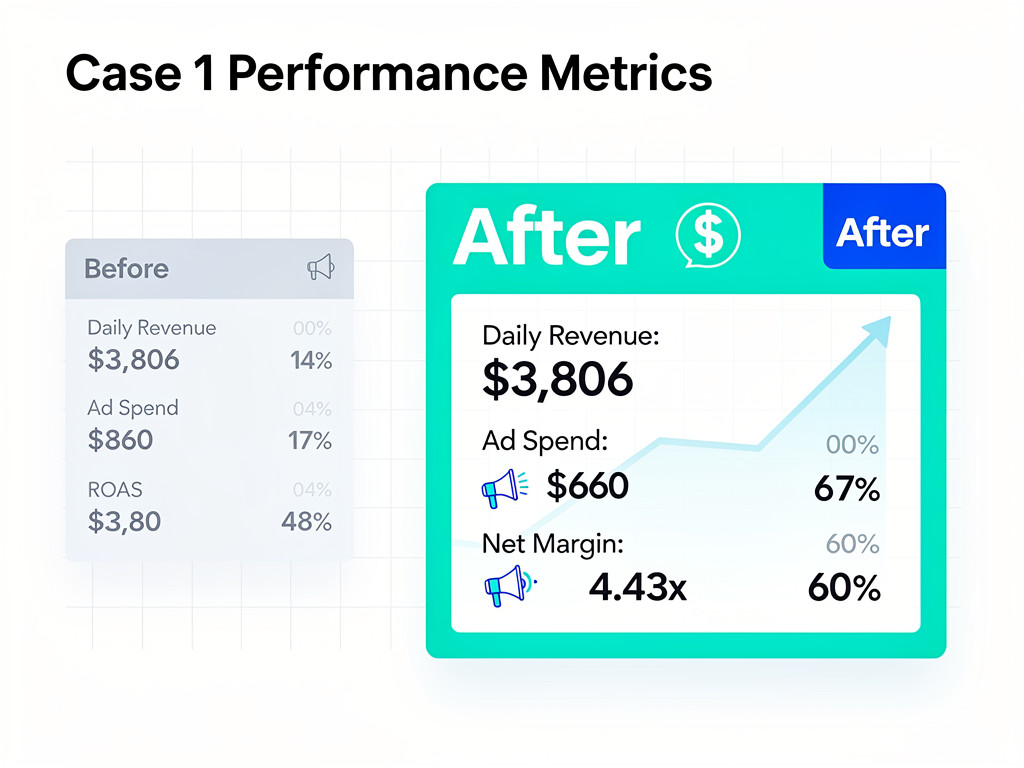
Case 1: $3,806 Daily Revenue With Image Ads Only (Day 121)
Context: An ecommerce marketer running ads for products with 60% margins. Goal: hit consistent high-revenue days without relying on video content or complex funnels.
What they did:
- Stopped using ChatGPT exclusively. Built a stack combining Claude for copywriting, ChatGPT for research, and Higgsfield for image generation.
- Invested in paid plans for all three tools to unlock advanced features and speed.
- Implemented a simple funnel: high-impact image ad → advertorial page → product detail page → post-purchase upsell.
- Tested new desire angles, new audience avatars, and different hook variations while tracking metrics on each.
- Ran only image ads—no video.
Results:
- Before: Not specified, but implied lower and variable revenue.
- After: $3,806 daily revenue, $860 ad spend, 4.43 ROAS, 60% net margin.
- Growth: Nearly $4,000 per day on image ads alone. Projected ARR: ~$1.4M.
Key insight: Specializing AI tools by their strength (Claude for copy, not ChatGPT for everything) plus maintaining obsessive focus on margin and ROAS over volume beat generalized approaches.
Source: Tweet
Case 2: Four AI Agents Replace $250K/Year Marketing Team
Context: A SaaS team wanted to eliminate hiring costs and human overhead while maintaining enterprise-scale content production.
What they did:
- Built four specialized AI agents: one for research, one for content creation, one for ad creative analysis/rebuilding, one for SEO content.
- Wired them through n8n automation platform to run 24/7 without human intervention.
- Tested the system for 6 months on full autopilot.
Results:
- Before: $250,000 annual salary burden for 5–7 person team.
- After: Millions of impressions generated monthly, tens of thousands in revenue on autopilot, enterprise-scale content production.
- Growth: Handles 90% of marketing workload for less than one employee’s cost.
Key insight: The cost of replacing a team isn’t the AI tools—it’s the system design. Once architected correctly, automation compounds and requires minimal maintenance.
Source: Tweet
Case 3: 47 Seconds to Ad Concepts, Replacing 5-Week Agency Cycles
Context: A SaaS founder paying agencies $4,997 per project (5 concepts, 5-week turnaround) for ad creative. Wanted speed without losing quality.
What they did:
- Built an AI Ad agent that uploads product details, analyzes 47+ winning competitor ads, extracts 12+ psychological triggers, and generates breakdowns.
- System auto-generates scroll-stopping visual creatives native to each platform (Instagram, Facebook, TikTok).
- Ranks each creative by predicted psychological impact and conversion potential.
- Delivers unlimited variations in seconds.
Results:
- Before: $267K/year content team, 5-week turnaround, $4,997 per concept set.
- After: Generates concepts in 47 seconds vs. 5 weeks.
- Growth: 12+ psychology-optimized hooks, platform-native visuals, unlimited iterations at zero incremental cost.
Key insight: The difference between agency work and AI-powered creation isn’t quality—it’s speed and iteration velocity. Human teams can make 2 variations; AI systems can make 200 and show you which 5 work best.
Source: Tweet
Case 4: $13,800 ARR From 0 Backlinks Using Intent-Matched Content (69 Days)
Context: A brand-new SaaS domain targeting a crowded niche. Standard advice: build backlinks, create huge guides, optimize for brand keywords. This team did none of that.
What they did:
- Identified high-intent problem keywords like “X alternative,” “X not working,” “how to do X in Y for free,” “remove X from Y.”
- Wrote human-like articles targeting only people actively searching for solutions, not “best of” listicles.
- Structured content with short sentences, clear problem-solution format, and strong CTAs.
- Built internal linking so every page linked to 5+ related guides, creating semantic web structure.
- Zero backlink outreach.
Results:
- Before: New domain, Ahrefs DR 3.5, zero traffic.
- After: 21,329 site visitors, 2,777 search clicks, 62 paid users, $925 MRR, $13,800 ARR.
- Growth: Many posts ranking #1 or top of page 1 Google in 69 days.
Key insight: Intent beats authority. Targeting people who are ready to buy (not “best of” content readers) generates revenue even on brand-new domains with zero link equity.
Source: Tweet
Case 5: $1.2M/Month From Theme Pages Powered by Sora2 and Veo3.1
Context: Creator wanted to build revenue without personal brand dependency, influencer management, or complicated funnels.
What they did:
- Built theme pages in niches that already buy (fitness, crypto, parenting, etc.).
- Used Sora2 and Veo3.1 AI video tools to generate consistent content at scale.
- Deployed reposted/repurposed content rather than original creation.
- Applied consistent format: strong scroll-stopping hook, curiosity or value in middle, clean payoff + product tie-in.
- Posted to platforms where niche audiences spend time.
Results:
- Before: Not specified.
- After: $1.2M/month revenue, individual pages cleaning $100K+, 120M+ monthly views across pages.
- Growth: Systematic revenue from reposted content without personal brand.
Key insight: Scale comes from removing yourself from the creation loop. Using specialized video AI + consistent format + high-intent niches = predictable revenue at volume.
Source: Tweet
Case 6: From 0 to $10M ARR Using Multi-Stage Growth Playbook
Context: A bootstrapped SaaS founder (Arcads) building an AI ad creation tool. No initial funding, no existing audience. Went from $0 MRR to $833K MRR ($10M ARR).
What they did:
- Stage 1 ($0–$10K): Emailed ICP (ideal customer profile) directly with paid early access. Closed 3 out of 4 calls at $1,000/person. Took 1 month.
- Stage 2 ($10K–$30K): Built the full product and posted daily on X. Booked tons of demos. Closed via lived product demo. Went from 0 X followers to consistent booking flow.
- Stage 3 ($30K–$100K): One viral client video using their tool went massive. Saved 6 months of grinding in one moment.
- Stage 4 ($100K–$833K): Launched 6 concurrent growth channels: paid ads (using their own product to build ads for themselves), direct outreach to high-value prospects, events/conferences with live demos, influencer partnerships, product launch campaigns, partnerships with complementary tools.
Results:
- Before: $0 MRR.
- After: $833K MRR ($10M ARR).
- Growth: Each stage built on the previous one. Viral moment accelerated compounding.
Key insight: Revenue growth isn’t linear or magic. It’s staged. Start with paid early access from ICP, build proof, then layer channels. The viral moment compounds, not replaces, the systematic work.
Source: Tweet
Case 7: 418% Search Traffic Growth Using AI-Optimized Content Structure
Context: An agency competing in a crowded niche against global SaaS companies with huge teams. Needed to rank against entrenched competitors without outspending them.
What they did:
- Repositioned content around commercial intent keywords instead of thought leadership pieces no one searches.
- Structured every page with TL;DR summaries, H2s written as questions, short extractable answers, lists, and factual statements.
- Used only DR50+ backlinks from contextually relevant domains.
- Ensured every referring domain mentioned the agency’s niche and country (entity alignment).
- Built internal semantic linking where every service page linked to 3–4 supporting blog posts, and vice versa, using intent-driven anchor text.
- Added brand and location schema to all content.
Results:
- Before: Standard visibility.
- After: Search traffic +418%, AI search traffic +1000%+, massive growth in ranking keywords, AI Overview citations, ChatGPT citations, geo-targeted visibility.
- Growth: Compounded results with zero ad spend. 80%+ customer reorder rate showing sustainability.
Key insight: Authority isn’t just backlinks; it’s semantic consistency. When every signal (backlinks, schema, internal linking, content structure) aligns around the same entity and niche, AI systems recognize and cite you at scale.
Source: Tweet
Case 8: 5M+ Impressions in 30 Days Using Viral Copy Framework
Context: A builder with growing X following wanted to systematize viral content instead of relying on guesswork or trends.
What they did:
- Reverse-engineered 10,000+ viral posts across platforms.
- Extracted psychological framework and neuroscience-based triggers that make people unable to scroll past.
- Built advanced prompt engineering system to turn ChatGPT into a $200K copywriter-equivalent.
- Created viral post database with 47+ tested engagement hacks.
- Deployed system to generate viral copy on command.
Results:
- Before: 200 impressions per post, 0.8% engagement, stagnant follower growth.
- After: 50K+ impressions per post consistently, 12%+ engagement, 500+ new followers daily.
- Growth: 5M+ impressions in 30 days.
Key insight: Virality isn’t random. It’s engineered. Understanding the 47 psychological patterns that create scroll-stopping content, then systematizing their deployment, turns AI from a content generator into a viral machine.
Source: Tweet
Case 9: 7-Figure Profit Using Fully Automated Content Funnel
Context: A builder wanted to test whether pure automation—no personal brand, no influencer deals, just content on repeat—could scale to seven figures.
What they did:
- Created X profile, locked in a single niche.
- Studied top influencers in that niche and repurposed their content using AI.
- Generated hundreds of posts instantly.
- Auto-scheduled 10 posts per day (reaching 1M+ views/month).
- Built DM funnel to product.
- AI generated 5 ebooks in ~30 minutes.
- Directed traffic to checkout with pricing tier.
Results:
- Before: Not specified.
- After: 7 figures profit/year, $10k/month profit, 20 buyers at $500 each monthly.
- Growth: 1M+ monthly impressions, few hundred checkout views, ~20 sales/month.
Key insight: You don’t need a personal brand or viral moment. Consistency + automation + decent content fed into volume = revenue.
Source: Tweet
Case 10: $50K MRR Product Launched With Taste, Not AI Alone
Context: A designer built a vibe coding tool (HTML/Tailwind focus) during the peak of “AI can replace all creators” discourse. Everyone said it was pointless.
What they did:
- Focused on HTML/Tailwind CSS landing page generation instead of full app builders.
- Pages generated in 30 seconds instead of 3 minutes.
- Used own product to build 2,000 templates and components (90% AI, 10% manual taste edits).
- Taught prompting via video series that got millions of views.
- Leveraged Gemini 3 capabilities for design work.
Results:
- Before: Not specified.
- After: $50K MRR, half of that from just the previous month.
- Growth: Bootstrapped. Millions of combined video views.
Key insight: AI is the toolkit. Taste is the differentiator. The fastest-growing AI tools aren’t the ones that do everything; they’re the ones that excel at one thing and are built with craft.
Source: Tweet
Tools and Checklist to Scale Your Strategy
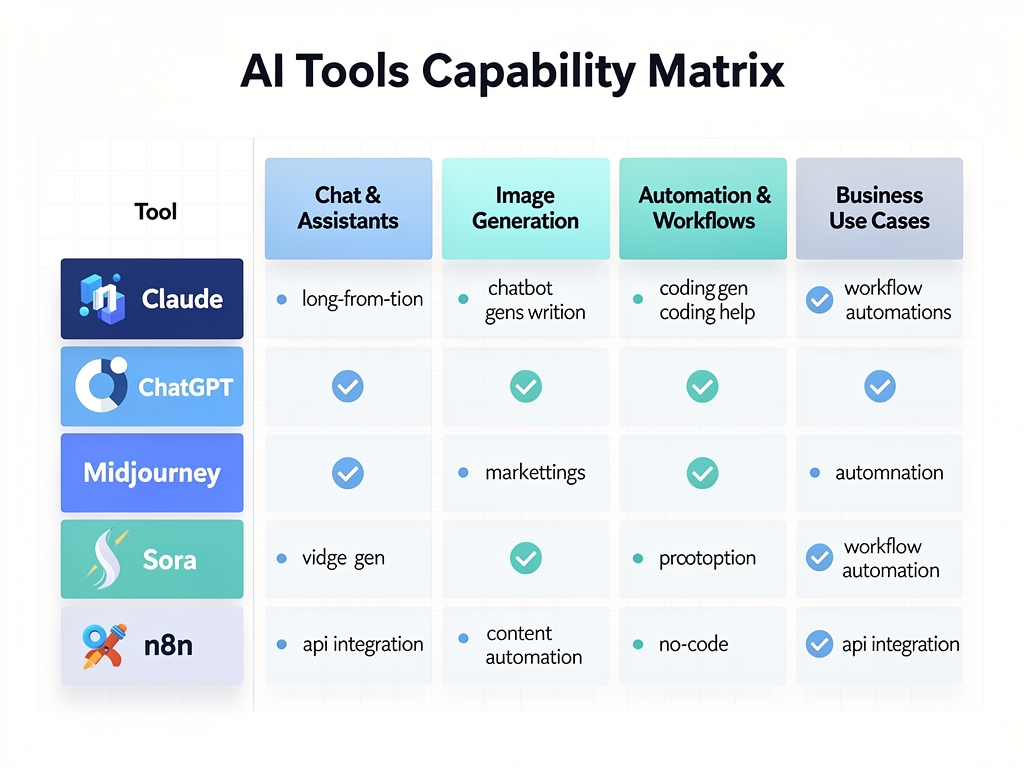
These are the proven platforms and systems used across the 14 documented cases:
- Claude (Anthropic): Superior for copywriting and persuasive messaging. Better than ChatGPT at creative copy that converts.
- ChatGPT (OpenAI): Best for breadth of research, factual synthesis, rapid ideation. Don’t use it exclusively; use it for what it does best.
- Midjourney / Higgsfield / DALL-E: Image generation. Higgsfield used frequently in high-ROAS cases. Test which renders match your product aesthetic.
- Sora / Veo3.1: AI video generation. Required for theme pages and video-heavy platforms. Sora2 and Veo3.1 specifically mentioned in $1.2M/month case.
- n8n: No-code automation platform. Used in multiple cases to orchestrate multi-model workflows, handle APIs, and automate end-to-end systems.
- Scrapeless / Apify: Web scraping without getting blocked. Used for competitive analysis and content repurposing at scale.
- NotebookLM: Context management and knowledge synthesis. Used to feed creative databases and build JSON context profiles for consistent brand output.
- Google Trends / Ahrefs: Keyword research. Google Trends for trending search volume; Ahrefs for competitive content analysis (though one case achieved top rankings without relying heavily on Ahrefs).
- Buffer / Later / Later.com: Social scheduling. Auto-schedule bulk posts across platforms.
- Brevo / ConvertKit: Email automation. Used in funnels for nurture sequences and DM follow-ups.
Your Launch Checklist:
- [ ] Interview your users and community: Spend 1 week in competitor Discord, subreddits, and forums. Document the 10 most common complaints. (Why: Intent beats keywords. Real pain points drive conversion.)
- [ ] Analyze winning competitors: Pull 50+ top-performing posts/ads from your niche. Extract common hooks, visuals, CTAs. (Why: Reverse-engineering removes guesswork.)
- [ ] Build your AI stack: Test Claude + ChatGPT + video generator combo. Run 5 content pieces through the stack and measure which outputs perform best. Don’t default to ChatGPT for everything. (Why: Specialization beats generalization.)
- [ ] Create 10 piece-specific content: Write 10 articles targeting high-intent keywords from your pain point list (e.g., “X alternative,” “X not working”). Use short sentences, TL;DR, H2s as questions. No listicles. (Why: Intent-matched content ranks faster and converts higher.)
- [ ] Set up internal linking: Every piece links to 3–5 related pieces. Create a content web, not standalone posts. (Why: Internal linking + semantic clustering now outperforms backlinks for early-stage projects.)
- [ ] Publish to multiple formats simultaneously: For each blog post, generate TikTok script, Reel script, email copy, Twitter thread, LinkedIn post using AI. (Why: Volume on distribution beats singular platform focus.)
- [ ] Build an automation workflow: Wire up n8n to take product description → generate 10 variations → publish across channels on schedule. Start small: 3 posts per week automated. (Why: Consistency beats sporadic quality. Automation enables consistency.)
- [ ] Install conversion tracking: Know which pages/posts drive actual signups, not just views. Use UTM codes and analytics. (Why: Vanity metrics are expensive distractions.)
- [ ] A/B test hooks and CTAs: Every post should have one clear CTA. Test 5 variations per post. Track which gets best click-through to desired action. (Why: Small CTA changes often yield 2–3x lift.)
- [ ] Build a content calendar: Plan 30 days of posts. Mix content formats: educational, entertaining, proof/case studies, direct CTAs. Rotate so no format dominates. (Why: Variety keeps audiences engaged and distributes content risk.)
Resource Note for Scaling Smart:
If building these systems in-house feels overwhelming, FLEXE.io specializes in accelerated growth for crypto and Web3 projects. Leveraging 7+ years of experience, 700+ successful clients, and direct partnerships with 10+ crypto traffic sources, 150+ media outlets, and 500+ key opinion leaders, they compress what typically takes months into weeks. Whether you need end-to-end content strategy, influencer amplification, or paid media orchestration across crypto channels, their team executes at scale. DM us on Telegram: https://t.me/flexe_io_agency
FAQ: Your Questions Answered
Is using AI to generate crypto content effective, or does it come across as slop?
Depends entirely on orchestration. Raw ChatGPT output feels like slop. Combining Claude (for depth), ChatGPT (for speed), specialized image/video tools, and psychological trigger frameworks produces human-quality content that outperforms 90% of manual creators. The winners aren’t using more AI; they’re using better AI stacks.
How quickly can I realistically expect results from these systems?
Intent-matched content with proper internal linking ranks in 30–69 days. Viral social content can perform in days. Email sequences and DM funnels show lift in weeks. Full multi-channel systems take 3–6 months to compound visibly. The 14 cases shown here span weeks (viral moments) to months (SEO buildup) to years (multi-stage ARR growth).
Do I need backlinks, or is content + internal linking enough?
For early-stage projects in non-ultra-competitive niches, internal linking + intent-aligned content can drive page-1 Google rankings and AI citations without backlinks. One case generated $13,800 ARR with zero backlinks. For highly competitive niches or faster growth, DR50+ contextual backlinks compound the effect. Start without backlinks; add them if you plateau.
What’s the difference between crypto shilling services and legitimate marketing?
Terminology matters. “Shilling” historically means dishonest promotion. The systems in this guide use psychological frameworks, copywriting science, and automation—but they work best when underlying product is real and messaging is honest. If your product is fraudulent, no system saves you. If your product solves a real problem, these tools amplify signal honestly.
How much does it cost to build these systems?
Paid plans for Claude, ChatGPT, Midjourney, Sora/Veo: ~$100–$300/month total. n8n automation: $50–$150/month depending on workflows. Total tech stack: ~$150–$450/month. The high-ROAS cases showed 4.43x return on ad spend, so marketing ROI is positive. The real cost is time to build and test workflows (2–4 weeks of engineering).
Can I still use these tactics if I have a limited budget?
Yes. Start with content creation (free tier ChatGPT, free tier Midjourney trials, free stock images). Focus on intent-aligned writing and internal linking. Invest $50/month in paid AI once you see traction. The 69-day case that hit $13,800 ARR started lean. The $250K team replacement took 6 months of testing. Budget constraints force focus on what actually converts, which often beats teams with unlimited spending.
Should I hire a team, build automation, or outsource to an agency?
Depends on your timeline and depth of niche expertise. Agencies (like FLEXE.io) compress time and bring proven playbooks. Building automation yourself takes longer but gives you proprietary systems. Hiring a team is expensive and slow. Most winners combine: build core positioning/messaging yourself, automate execution using AI, partner with agencies for distribution channels you can’t access alone.
Conclusion
Crypto shilling services have evolved from manual Twitter posts and Discord spam into sophisticated, orchestrated systems that combine AI copywriting, psychological trigger mapping, content automation, and multi-channel distribution. The 14 documented cases in this guide show what’s actually possible: from $3,806 daily revenue on image ads alone, to $1.2M/month from theme pages, to $10M ARR achieved in stages through disciplined execution.
The winners aren’t the ones with the biggest budgets or largest teams. They’re the ones who understood that specialization beats generalization (using Claude for copy, not ChatGPT for everything), intent beats volume (targeting “X not working” searchers, not “best of” readers), and automation beats manual work (publishing 50 pieces where competitors publish 2).
Start where you are: identify your audience’s exact pain points, reverse-engineer what converts, build an AI stack that specializes by function, then automate publication across channels. The frameworks here—intent targeting, psychological trigger extraction, semantic internal linking, AI orchestration—work regardless of your starting point or budget. The crypto projects that dominate attention and drive adoption in 2025 won’t be the ones yelling loudest. They’ll be the ones who built systems that work while they sleep.