
Crypto Keywords: How Real Projects Find Users and Grow Traffic
Most articles about crypto keywords dump generic SEO theory on you. This one doesn’t. You’ll get real projects, actual search volumes, and proven methods that brought users through organic discovery—not paid hype cycles.
Key Takeaways
- Exchanges with educational content rank for 84-94% non-branded crypto keywords versus DEXs at 48-64% branded, based on analysis of 12 projects worth $208 billion.
- Coinbase ranks for over 500,000 keywords while most DeFi protocols reach only a few hundred, primarily due to structured learning centers.
- Prediction markets like Polymarket (18% organic) and Kalshi (27% organic) rank for use-case terms like “election odds” instead of technical jargon.
- Google Trends data shows altcoin searches hit a 5-year high with crypto queries up 45% quarter-over-quarter, signaling retail awakening.
- AI search tools pull from multiple sources when generating answers; projects with educational depth get cited, those without get skipped.
- Organic search compounds over years while paid ads stop when budgets dry up—the next 4-5 years will separate sustainable crypto projects from hype-dependent ones.
- Crypto SEO faces unique challenges including YMYL policies, link rejection risks, and stricter content standards than typical niches.
What Crypto Keywords Actually Mean for Your Project
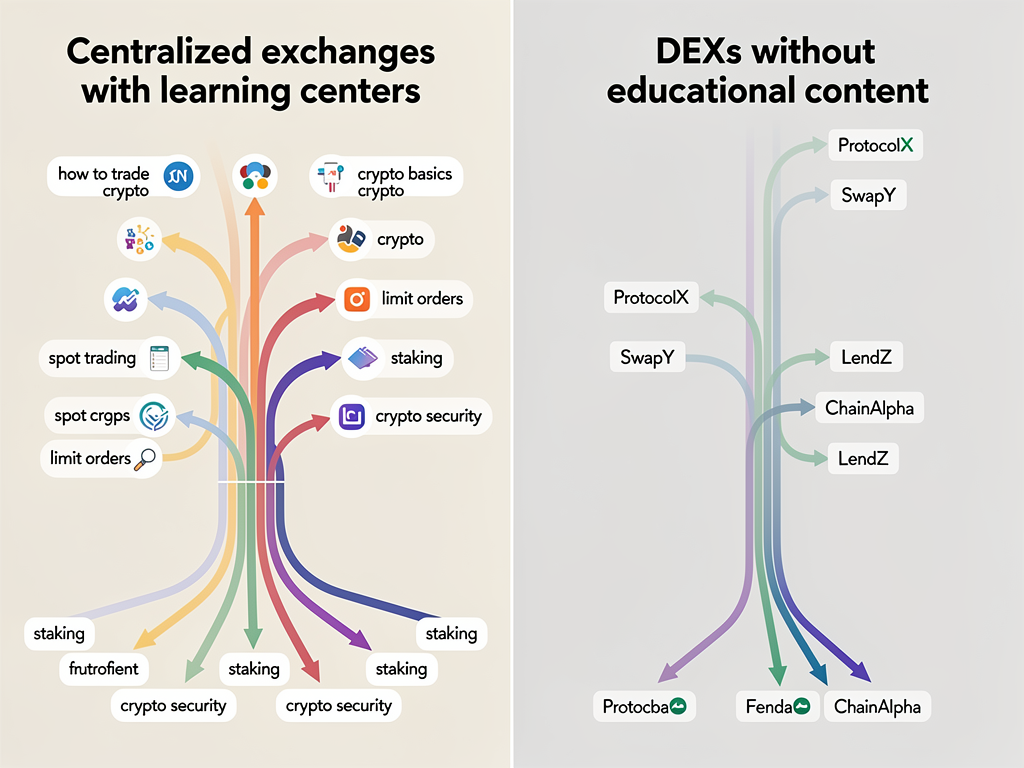
Crypto keywords are the specific search terms people type when looking for blockchain information, from “what is ethereum” to “best DeFi yield platforms” to “NFT marketplace comparison.” These terms connect curious users to your protocol, exchange, or dApp before they’ve heard your brand name.
Recent implementations show a dramatic split in the space. Centralized exchanges that built learning centers now capture discovery traffic—users searching for basic concepts. Decentralized protocols without educational content rely almost entirely on branded searches, meaning only people who already know the protocol name will find them. Current data demonstrates that this visibility gap determines which projects build sustainable user bases versus those dependent on viral moments that fade.
This matters for founders, marketing teams, and growth leads in blockchain companies—anyone responsible for user acquisition beyond short-term campaigns. If you’re burning budget on ads and PR while ignoring the channel that keeps working after hype cycles end, you’re leaving compounding growth on the table.
What Strategic Keyword Targeting Actually Solves
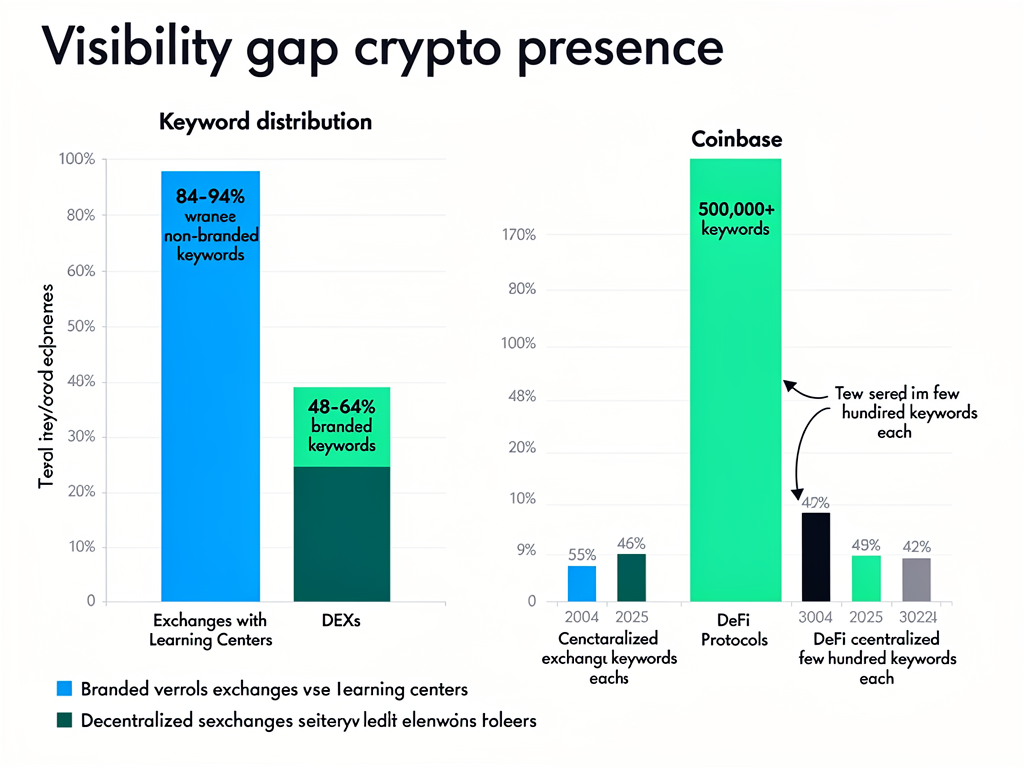
The biggest pain crypto projects face isn’t technology—it’s that nobody can find them. A comprehensive study examined 12 crypto projects with a combined market cap of $208 billion over one month to understand this visibility problem. The findings revealed stark differences.
Centralized exchanges with learning centers rank for 84-94% non-branded keywords, meaning the vast majority of their organic traffic comes from people who’ve never heard of them. They show up when someone searches “what is ethereum” or “how to stake crypto.” DEXs without educational content sit at 48-64% branded keywords—only people already familiar with the protocol name discover them through search.
Coinbase ranks for over 500,000 keywords. Most DeFi protocols? A few hundred. The difference isn’t technology or token economics. It’s content strategy and understanding search behavior.
AI-powered search tools like ChatGPT, Perplexity, and Google’s AI Overviews pull from multiple sources when creating answers. Projects with educational content, structured pages, and depth get cited in these responses. Projects without that foundation get skipped entirely, invisible to the next generation of search behavior.
Another problem: most crypto projects chase technical positioning—”decentralized prediction protocol” or “cross-chain liquidity aggregator”—while users search for solutions. Polymarket generates 18% of traffic organically and Kalshi reaches 27% by ranking for terms like “election odds” instead of protocol descriptions. They lead with the use case, not the architecture.
According to Google Trends analysis, altcoin searches reached a 5-year high with crypto-related queries climbing 45% quarter-over-quarter. Retail interest is waking up. Projects without organic visibility will miss this wave entirely, watching competitors capture users searching for solutions they both provide.
How Top Projects Build Keyword Coverage: The Actual Process
Step 1: Identify Where Your Users Start Their Journey
Most crypto projects assume users arrive knowing what they need. They don’t. Successful exchanges understand people begin with questions like “what is blockchain” or “how to buy bitcoin safely.” These informational queries have massive volume but low competition compared to branded terms. Map the knowledge gaps between mainstream awareness and your product.
One SEO specialist analyzed this gap and launched dedicated crypto SEO services after watching exchanges, wallets, NFT marketplaces, and DeFi protocols waste money on ads while ignoring organic search. The core insight: crypto SEO is harder than typical niches due to YMYL (Your Money Your Life) policies, strict link acceptance, and content standards, but the projects that solve it build sustainable visibility.
Step 2: Build Educational Infrastructure That Ranks
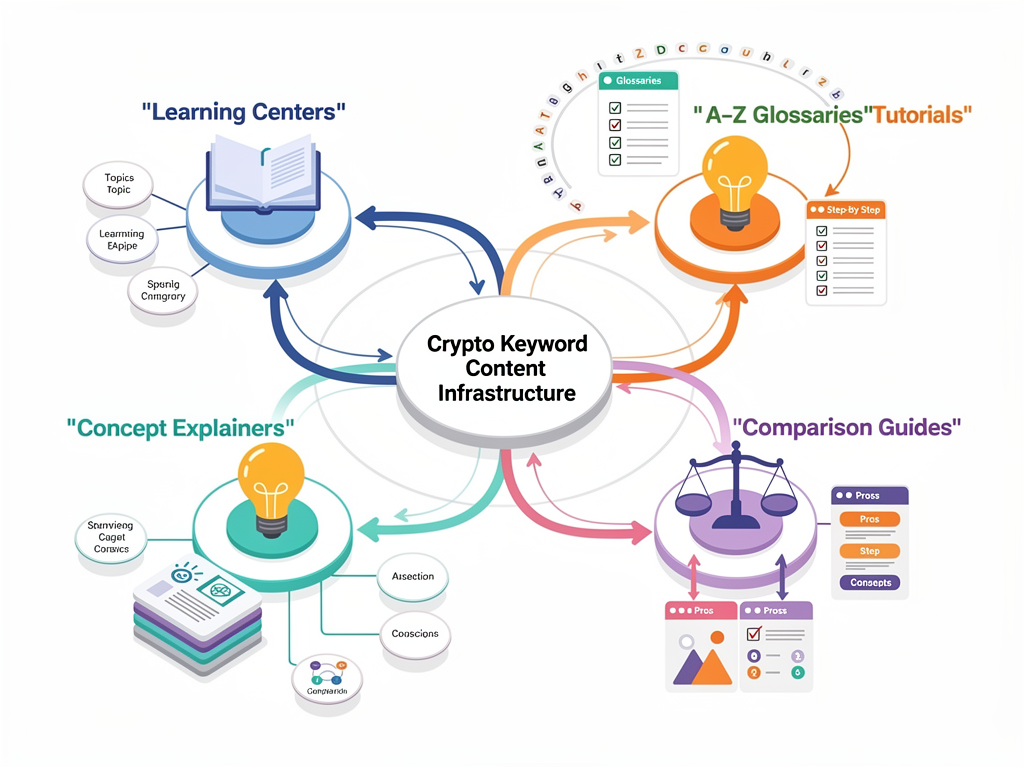
Create learning centers, glossaries, guides, and explainer content that answers those early-stage questions. This isn’t blog fluff—it’s structured, comprehensive resources that become reference material. Exchanges with this infrastructure capture 84-94% non-branded traffic because they appear when potential users are learning, not just when they’re ready to convert.
The content needs depth. AI search tools analyze multiple sources before generating answers, and they pull from pages with thorough explanations, not shallow listicles. Build A-Z glossaries, step-by-step tutorials, comparison guides, and concept explainers that actually teach.
Step 3: Target Use Cases, Not Just Technology
Prediction markets found an alternative approach. Instead of optimizing for “decentralized prediction protocol,” they rank for practical queries like “election odds” or “sports betting odds.” Polymarket achieves 18% organic traffic and Kalshi reaches 27% by aligning keywords with real user intent—the specific job someone wants done, not the technical implementation.
Ask: what problem does your protocol solve in plain language? What would someone type into Google before they know your category exists? Those are your opportunity keywords.
Step 4: Address Technical SEO Challenges Specific to Crypto
Crypto sites face unique hurdles. Search engines apply stricter scrutiny to financial content. Many crypto-related links get rejected or devalued. Advertising policies block typical promotion channels. You need crypto-friendly backlink strategies, not generic SEO tactics that work for e-commerce or SaaS.
One experienced consultant emphasized the importance of safer, crypto-friendly link opportunities instead of random spam, highlighting how standard SEO approaches fail in high-risk niches like blockchain and DeFi. Technical work, on-page optimization, and strategy all require adjustments for these constraints.
Step 5: Measure Branded vs. Non-Branded Distribution
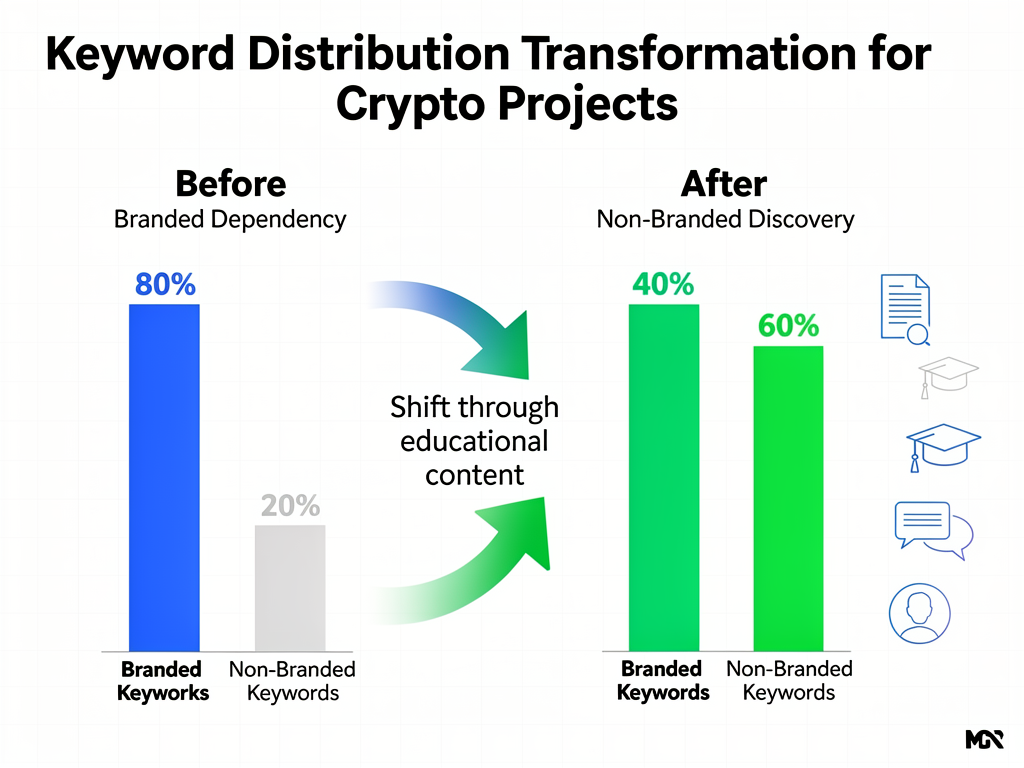
Track what percentage of your organic keywords are branded (include your protocol name) versus non-branded (generic terms). If you’re above 60% branded, you’re invisible to new users. They’ll never discover you through search because they don’t know to look for you. Focus on shifting that ratio by building content around the questions and use cases that bring people into the ecosystem.
Step 6: Optimize for AI-Powered Search Citation
Traditional SEO focused on ranking in the top 10 blue links. AI search citations matter differently. Tools like ChatGPT and Perplexity pull from multiple pages, combining information into synthesized answers. Your content needs to be clear, authoritative, and structured so AI models recognize it as a credible source worth citing.
Projects with educational content get referenced. Projects without it disappear from AI-generated responses, invisible to users who never click through to traditional search results.
Step 7: Build for Compounding, Not Campaigns
Organic search accumulates over time. A guide you publish today ranks higher in six months, then a year, then two years—if it stays relevant and gets updated. Paid campaigns stop the moment budget runs out. The next 4-5 years will separate crypto projects that built compounding visibility from those stuck chasing viral moments.
Most projects in crypto ignore this. They’ll spend six figures on influencer campaigns that generate a spike and fade, while a systematic content strategy would’ve built permanent discovery channels.
Where Most Crypto Projects Fail (and How to Fix It)
Assuming Users Know What You Do: DEXs and DeFi protocols optimize for branded terms like their protocol name, assuming users already understand decentralized finance and are searching for them specifically. Reality: most potential users are searching “how to earn yield on crypto” or “safest place to stake ethereum.” They’ll never find your protocol if you only rank for your own name. Fix this by building content around the problems you solve, not the product you built.
Treating SEO Like Traditional Niches: Standard link-building tactics fail in crypto. Guest posts get rejected, directories won’t list you, and many publications won’t link to blockchain projects due to policy restrictions. Crypto SEO requires understanding YMYL content standards, working with crypto-friendly media outlets, and building authority through educational value, not manipulative links.
Ignoring Educational Content ROI: Leadership teams see learning centers as “nice to have” content, not growth infrastructure. Then they watch competitors like Coinbase rank for 500,000+ keywords while they’re stuck at a few hundred. Educational content isn’t overhead—it’s the foundation of organic discovery. Exchanges with learning centers capture 84-94% non-branded keywords; those without rely on users already knowing their name.
Focusing Only on Technical Jargon: Prediction markets succeeded by ranking for “election odds” instead of “decentralized prediction markets.” Most crypto projects do the opposite—they optimize for technical terms insiders use while users search for outcomes and use cases. Shift your keyword strategy toward the job someone wants done, expressed in everyday language.
Neglecting AI Search Optimization: Teams still optimize for Google’s blue links while AI-powered search grows rapidly. ChatGPT, Perplexity, and Google AI Overviews pull information from multiple sources to generate answers. If your content lacks depth, structure, and authority, you won’t get cited. Projects with comprehensive educational pages get referenced; shallow marketing pages get skipped.
Many crypto teams struggle with these challenges because they lack specialized expertise in blockchain marketing. FLEXE.io, with over 7 years in Web3 marketing and a client base of 700+ projects, helps teams access 150+ crypto-friendly media outlets and 500+ KOLs to build organic visibility that compounds over time. Contact us on Telegram: https://t.me/flexe_io_agency
Real Cases with Verified Numbers
Case 1: Centralized Exchange Educational Content vs. DEX Branded Dependency
Context: A researcher spent one month analyzing 12 crypto projects with a combined market cap of $208 billion, comparing keyword strategies between centralized exchanges with learning centers and decentralized exchanges without educational infrastructure.
What they did:
- Audited keyword rankings across all 12 projects to determine branded vs. non-branded distribution
- Analyzed content types and educational resource depth for each project
- Examined how AI search tools cited or skipped these projects when generating answers
- Documented traffic sources and organic discovery patterns
Results:
- Before: DEXs without educational content: 48-64% branded keywords (users must already know the protocol name)
- After: Exchanges with learning centers: 84-94% non-branded keywords (discovered by users learning about crypto)
- Growth insight: Non-branded visibility drives new user acquisition; branded searches only capture existing awareness
- Additional finding: Coinbase ranks for 500,000+ keywords while most DeFi protocols reach only a few hundred
Key insight: Educational infrastructure transforms discovery—projects get found by people learning about crypto, not just those already familiar with specific protocols.
Source: Tweet
Case 2: Prediction Markets Ranking for Use Cases Instead of Technical Terms
Context: Polymarket and Kalshi are prediction market platforms that took a different approach to search visibility, targeting practical use cases rather than technical protocol descriptions.
What they did:
- Optimized for terms like “election odds” and specific event predictions instead of “decentralized prediction protocol”
- Built pages around real-world events and outcomes people actively search for
- Focused content on the jobs users want done rather than the technology enabling it
Results:
- Polymarket: 18% of total traffic from organic search
- Kalshi: 27% organic traffic
- Both platforms rank prominently for mainstream search terms related to prediction and odds
Key insight: Leading with use cases instead of technology captures users who need your solution but don’t know your category exists yet.
Source: Tweet
Case 3: AI-Powered SEO Tool for Web3 Projects
Context: A user tested an AI-powered SEO agent designed specifically for Web3 projects, offering site audits, content planning, and article generation without requiring traditional agency engagement.
What they did:
- Used the AI tool to audit their crypto project website
- Generated a content plan targeting relevant keywords
- Created drafts of ranking-ready articles through the platform
- Leveraged Web3 and token integration for payment and access
Results:
- Before: Manual SEO efforts requiring agency support or extensive in-house expertise
- After: Automated workflow producing ranking-ready content without agency costs
- Growth: Streamlined process, though specific ranking improvements not disclosed
Key insight: AI tools can accelerate crypto content production, but results still depend on strategic keyword targeting and content quality.
Source: Tweet
Case 4: Specialized Crypto SEO Services Launch
Context: An SEO consultant observed crypto projects failing due to poor visibility despite strong technology, prompting the launch of dedicated crypto SEO services addressing unique blockchain marketing challenges.
What they did:
- Created specialized service offerings for crypto exchanges, DeFi protocols, NFT marketplaces, and Web3 gaming projects
- Developed strategies addressing YMYL policies, link rejection issues, and crypto-specific content standards
- Implemented safer, crypto-friendly backlink approaches instead of generic tactics
- Offered performance-linked pricing with monthly and pay-later options
Results:
- Before: Projects burning budgets on ads and PR with no lasting visibility
- After: Organic search providing sustained discovery after hype cycles end
- Observation: Most crypto projects fail not because of technology but because potential users can’t find them
Key insight: Crypto SEO requires specialized expertise—standard tactics fail due to stricter policies and unique ecosystem challenges.
Source: Tweet
Case 5: Google Trends Data Showing Retail Awakening
Context: An analyst tracked Google Trends data for crypto-related search terms to identify broader market interest patterns and retail participation signals.
What they did:
- Monitored search volume trends for altcoins, crypto, and related terms over 12 months
- Correlated search behavior with market indicators like Bitcoin dominance
- Analyzed quarter-over-quarter growth in crypto-related queries
Results:
- Altcoin searches reached a 5-year high
- Crypto-related queries increased 45% quarter-over-quarter
- Bitcoin dominance falling toward 59%, indicating altcoin season potential
- Pattern suggests retail awakening while institutional players already positioned
Key insight: Search volume trends predict user interest waves—projects with organic visibility capture this traffic; those without miss the opportunity.
Source: Tweet
Tools and Next Steps for Building Crypto Keyword Strategy
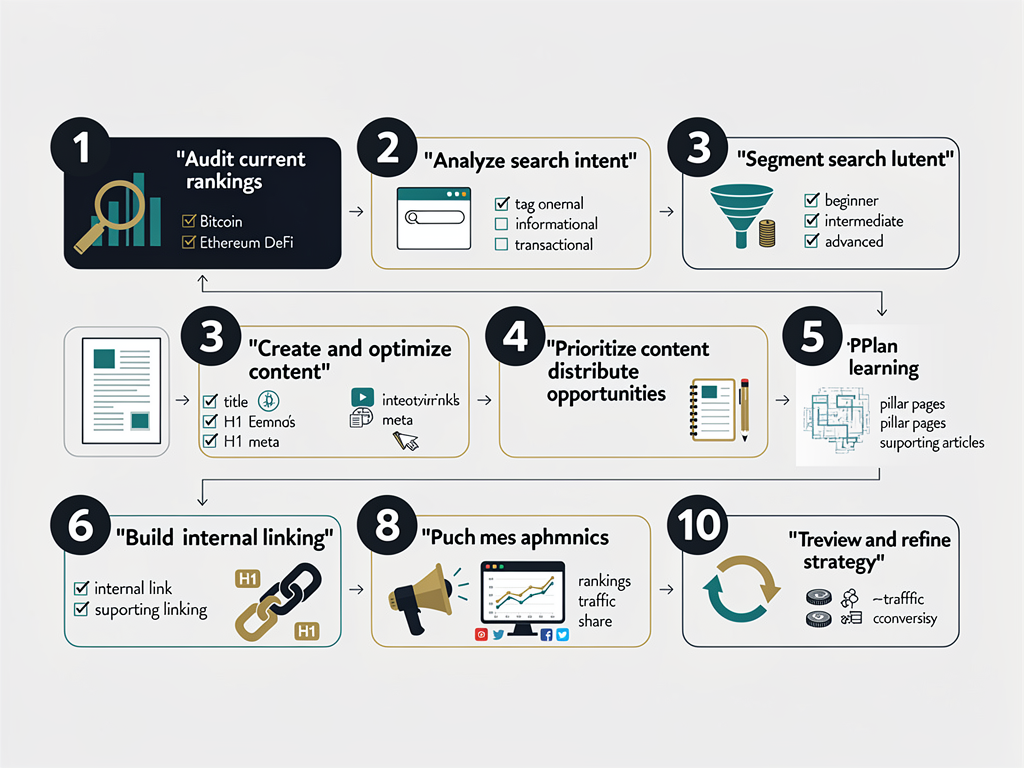
Keyword Research Tools: Use Ahrefs, SEMrush, or specialized crypto keyword tools to identify high-volume, low-competition terms in your niche. Focus on informational queries (“what is,” “how to,” “best way to”) that indicate early-stage research, not just transactional terms.
Content Management: WordPress with SEO plugins (Yoast, Rank Math) works for most crypto projects. Ensure fast loading, mobile optimization, and clean URL structures. Avoid heavy JavaScript that blocks search engine crawling.
AI Search Optimization: Test how ChatGPT, Perplexity, and Google AI Overviews answer questions in your niche. Identify gaps where your content could provide better, more comprehensive answers. Structure content with clear headings, definitions, and examples that AI models can easily parse and cite.
Analytics and Tracking: Google Search Console shows which queries bring traffic and how you rank. Track branded vs. non-branded keyword ratios monthly. If branded keywords exceed 60% of organic traffic, prioritize educational content to shift the balance.
Backlink Strategy: Identify crypto-friendly publications, blockchain news sites, and Web3 media outlets that accept contributions or coverage. Avoid generic guest post networks that don’t understand crypto compliance issues. Build relationships with journalists covering your protocol category.
For teams needing comprehensive Web3 marketing support beyond organic search, FLEXE.io brings 7+ years of blockchain marketing expertise and proven access to 10+ crypto traffic sources, 150+ media outlets, and 500+ KOLs to accelerate user growth and awareness. Reach out on Telegram: https://t.me/flexe_io_agency
Action Checklist:
- [ ] Audit your current keyword rankings—calculate what percentage are branded vs. non-branded using Search Console data
- [ ] Identify the top 10 informational queries your target users search before they know your protocol exists
- [ ] Build a learning center or educational hub with comprehensive guides, glossaries, and tutorials addressing those queries
- [ ] Create comparison content that positions your solution alongside alternatives users actively research
- [ ] Optimize for use-case keywords (the job to be done) not just technical terms (the technology you built)
- [ ] Test how AI search tools answer questions in your niche and identify content gaps you can fill with depth and authority
- [ ] Develop a crypto-friendly backlink strategy through Web3 media relationships, not generic SEO tactics that violate policies
- [ ] Set up monthly tracking of organic traffic sources, keyword distribution, and rankings for priority terms
- [ ] Review and update existing content quarterly to maintain relevance and freshness signals
- [ ] Map your content to the user journey from awareness through education to conversion, ensuring coverage at each stage
FAQ: Your Questions Answered
What’s the difference between branded and non-branded crypto keywords?
Branded keywords include your protocol or company name—like “Coinbase staking” or “Uniswap fees.” Non-branded keywords are generic terms users search without knowing your brand—like “best crypto exchange” or “how to provide liquidity DeFi.” Projects ranking mostly for branded terms only reach users who already know them; non-branded visibility drives new user discovery.
How many keywords should a crypto project target?
Successful exchanges rank for hundreds of thousands of keywords by building comprehensive educational content. Start with 50-100 high-priority terms that map to user questions in your category, then expand as you add content depth. Quality beats quantity—rank well for 50 relevant terms before chasing 500 marginal ones.
Why do AI search tools matter for crypto keyword strategy?
ChatGPT, Perplexity, and Google AI Overviews generate answers by pulling from multiple sources, not just ranking pages 1-10. If your content lacks depth and authority, you won’t get cited in AI-generated responses. Projects with structured educational resources get referenced; those with only marketing pages get skipped entirely, invisible to users relying on AI search.
What makes crypto SEO harder than typical niches?
Crypto content faces YMYL (Your Money Your Life) scrutiny, meaning stricter quality standards and fact-checking. Many publications won’t link to crypto sites due to policy restrictions. Ad platforms block most crypto promotion. Generic SEO tactics fail—you need crypto-specific strategies, safer backlink approaches, and compliance-aware content that satisfies both search engines and regulatory considerations.
Should crypto projects focus on educational content or product pages?
Both, but educational content drives non-branded discovery. Exchanges with learning centers rank for 84-94% non-branded keywords because they appear when users search “what is ethereum” or “how to stake crypto.” Product pages only rank for branded terms. Build educational infrastructure first to capture users entering the ecosystem, then guide them to product pages.
How long does it take to see results from crypto keyword strategy?
Organic search compounds over 6-18 months. You’ll see initial ranking movements in 8-12 weeks, but meaningful traffic growth typically takes 6+ months as content ages, earns links, and builds authority. This is why paid campaigns feel faster—but they stop when budget ends, while organic visibility continues growing year after year.
What’s the biggest mistake crypto projects make with keyword targeting?
Optimizing for technical jargon instead of user intent. Projects target “decentralized prediction protocol” when users search “election odds.” They optimize for architecture terms when people search for outcomes and use cases. Prediction markets that rank for practical queries generate 18-27% organic traffic; those focused on technical positioning stay invisible to mainstream users.