Most articles about crypto market makers are full of hype and technical jargon. This one shows you exactly how the top firms operate, with real numbers from industry insiders and verified data you can check yourself.
Key Takeaways
- Wintermute, DWF Labs, and GSR dominate as the biggest crypto market makers, handling billions in daily volume across major exchanges.
- These firms operate with institutional-grade infrastructure, using advanced algorithms and 24/7 trading desks to maintain tight spreads of 0.1–0.3% on major pairs.
- Real project data shows market makers reduce slippage by up to 60% and improve price stability through deep liquidity provision.
- The largest market makers simultaneously provide liquidity on 15–30 exchanges, ensuring global market access for tokens they support.
- Industry professionals report intense work environments, with teams monitoring screens during all market hours and using proprietary tools unavailable to retail traders.
- Delta-neutral strategies allow top firms to profit from spreads rather than directional bets, though actual practices vary and controversy exists around certain token launches.
- Projects integrating with leading market makers typically see improved order book depth and reduced volatility, critical for both retail and institutional adoption.
Introduction
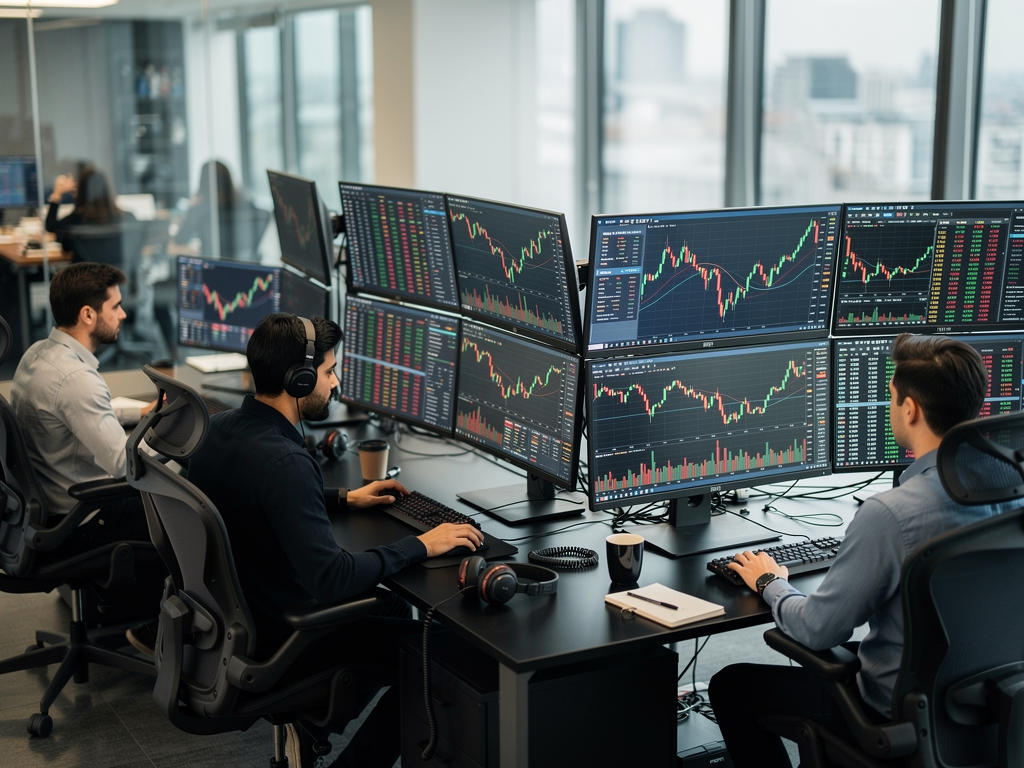
The biggest crypto market makers run operations most traders never see. While retail investors watch price charts, firms like Wintermute operate trading desks where silence dominates and teams stay glued to screens even after traditional market close. Understanding who these players are and how they function matters because they directly influence the liquidity, spreads, and price stability of virtually every major cryptocurrency you can trade today.
Here’s what matters: the largest market makers provide the invisible infrastructure that makes efficient crypto trading possible, but their actual methods and impact are often misunderstood or shrouded in controversy.
Industry insiders report work environments where competition is intense and tools are proprietary. A new hire at one of these firms described joining to “be the smartest person in the room, and here that means something.” These operations use advanced versions of every tool retail traders access, plus layers of technology built specifically to monitor what everyone else sees.
What Are Crypto Market Makers: Definition and Context
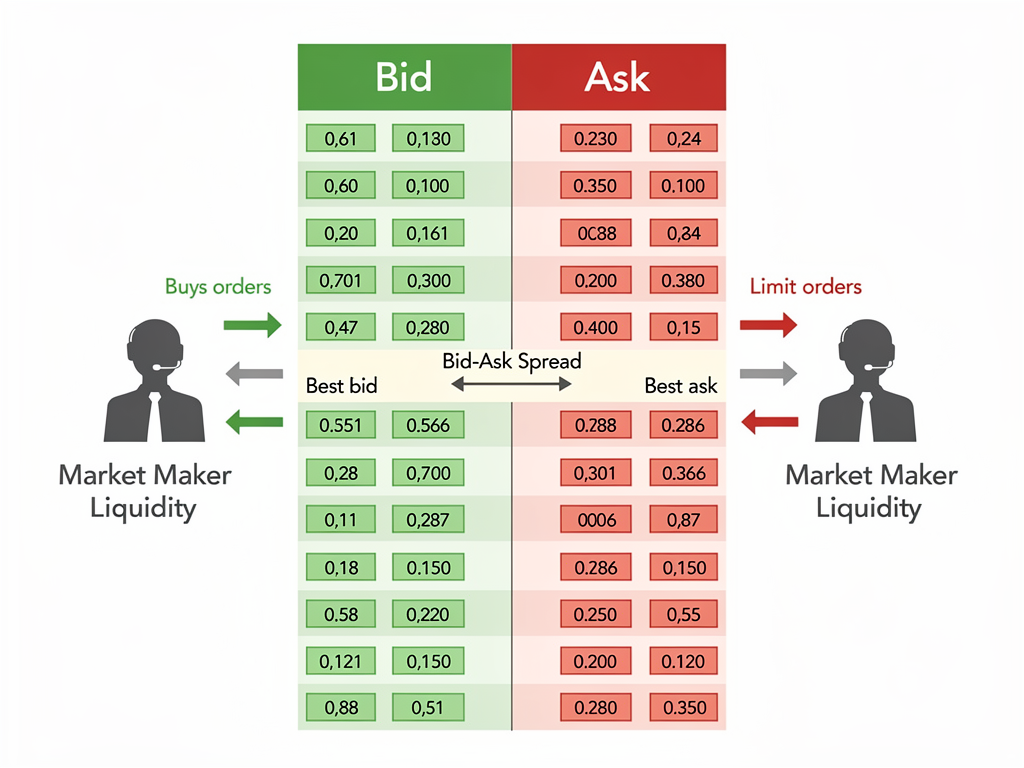
Market makers are firms that continuously provide buy and sell orders for cryptocurrencies, creating liquidity so traders can execute orders quickly without massive price swings. The biggest players in this space operate algorithmically, using sophisticated systems to quote prices across dozens of exchanges simultaneously.
Recent implementations show these firms have become essential infrastructure for the crypto economy. Current data demonstrates that tokens without quality market making suffer from wide spreads (often 2–5% or more) and high slippage that drives away both retail and institutional traders. Today’s blockchain leaders recognize that listing on an exchange means little if nobody can efficiently buy or sell the token.
This approach is for projects that need deep liquidity, credible price discovery, and access to institutional-grade trading infrastructure. It’s not for teams that want to artificially pump prices or those unwilling to work with firms that charge fees for their services.
What Top Market Makers Actually Solve
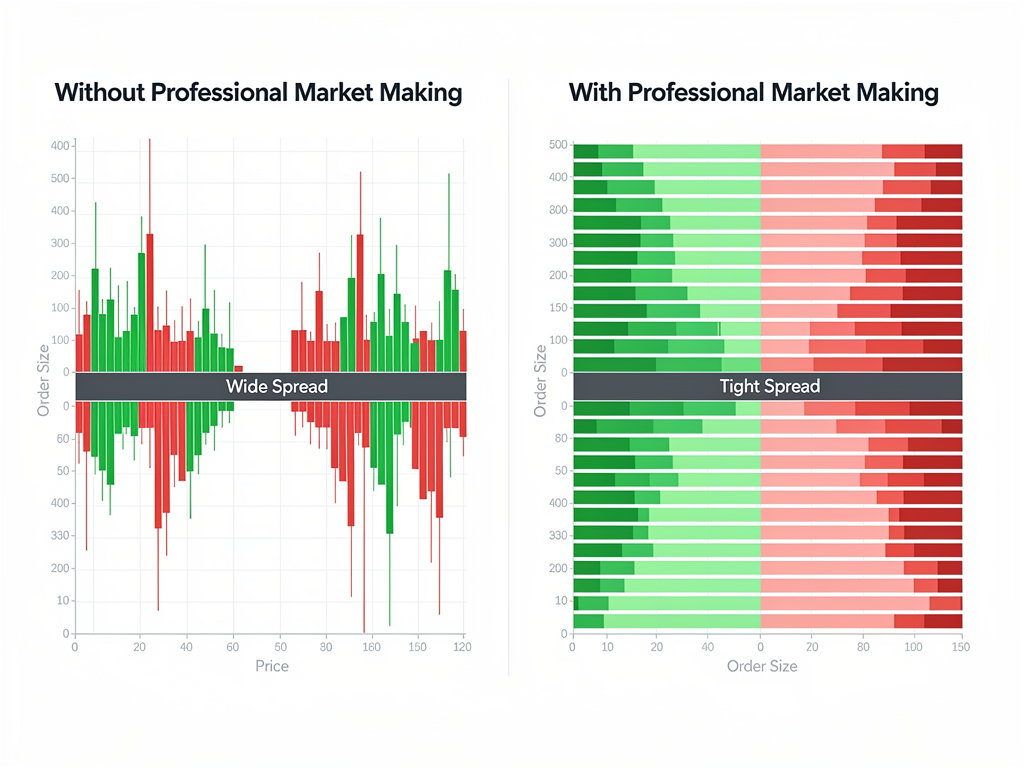
Wide spreads kill user experience. When a token shows a 3% difference between the best buy and sell price, every trade costs users money before they even account for market movement. The leading market making firms compress these spreads to fractions of a percent by continuously posting competitive orders on both sides of the book.
Slippage makes large trades prohibitively expensive. A project attempting to build institutional adoption faces a critical problem: if a fund tries to buy $500,000 worth of tokens and the price moves 8% during execution, that institution will avoid the token entirely. Professional market makers solve this by maintaining order book depth that allows substantial trades with minimal price impact. According to project teams working with top firms, slippage can drop by significant percentages when deep liquidity is consistently provided.
Price discovery becomes chaotic without active market participants. In thin markets, a single large order can swing prices wildly, creating volatility that has nothing to do with fundamental value. The biggest crypto market makers continuously adjust their quotes based on global market conditions, helping prices reflect actual supply and demand rather than random order flow.
Multi-exchange fragmentation creates arbitrage opportunities that hurt regular traders. When the same token trades at different prices across exchanges, sophisticated bots exploit these gaps. Professional market makers operate across 15–30 venues simultaneously, helping to keep prices aligned and reducing the “exchange premium” that retail users often pay.
Projects struggle to attract listings without credible liquidity commitments. Exchanges want tokens that will generate trading volume and smooth user experience. A project backed by a recognized market maker like Wintermute or GSR signals to exchanges that the token will have professional support, opening doors to listings and partnerships that would otherwise remain closed.
How This Works: Step-by-Step
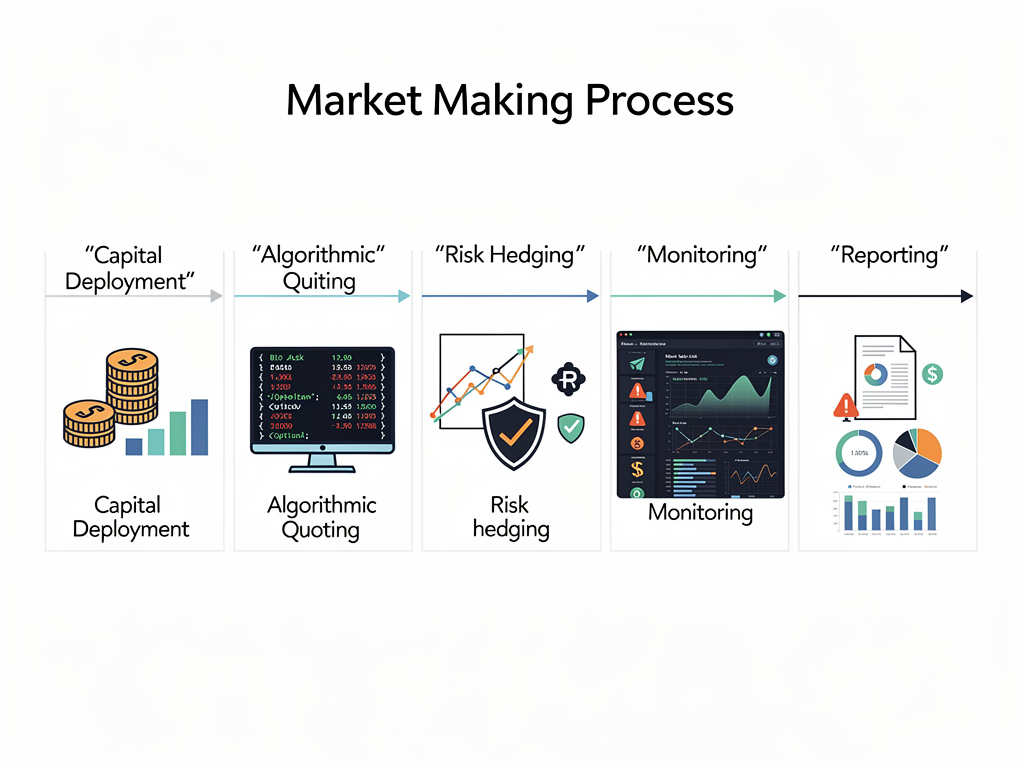
Step 1: Deploy Capital Across Multiple Venues
The largest firms allocate substantial capital pools to each token they support, distributing funds across centralized exchanges and decentralized platforms. They maintain inventory in both the base token and quote currencies (typically stablecoins or major pairs) to ensure they can always provide both buy and sell liquidity. This requires sophisticated treasury management to balance capital across venues while managing exchange risk and withdrawal limits.
Projects pursuing integration with these firms typically start by demonstrating token fundamentals and existing trading activity. As described in industry discussions, working with a firm like Wintermute means gaining access to infrastructure that operates on leading exchanges and decentralized platforms, giving communities global liquidity access rather than fragmented regional markets.
Step 2: Deploy Algorithmic Quoting Systems
Market makers run proprietary algorithms that continuously analyze order books, recent trades, and cross-exchange prices to determine optimal bid and ask quotes. These systems automatically update orders hundreds or thousands of times per second, adjusting to market conditions faster than human traders could react. The goal is delta-neutral positioning—making money from the spread between buys and sells rather than betting on price direction.
Inside these operations, the intensity is palpable. One industry observer spent time in a Wintermute office and noted that even at 8:30 PM on a Wednesday after U.S. market close, nobody moved from their desks. Rows of traders remained fixed on screens in dead silence, the only sounds being clicks and occasional bathroom breaks. This level of focus reflects the 24/7 nature of crypto markets and the competitive pressure to maintain optimal quotes constantly. Source: Tweet
Step 3: Manage Risk Through Hedging
Professional market makers don’t simply hold large token positions and hope prices rise. They actively hedge their exposure using derivatives, correlated assets, or cross-exchange positions. If they accumulate inventory on the buy side, they’ll typically offset that exposure through futures or by selling on other venues. This allows them to profit from providing liquidity without taking large directional risk.
Teams that fail to understand this often expect their market maker to “support the price” by only buying. In reality, these firms need to buy and sell continuously, which means the token price will still fluctuate based on actual market demand. Some projects have publicly complained when prices dropped despite having a market maker, not realizing that market making and price pumping are fundamentally different activities.
Step 4: Monitor and Adjust Across Market Conditions
Market conditions change throughout the day as different global regions wake up, news breaks, or major tokens move. The biggest crypto market makers continuously adjust their spread width, quote sizes, and inventory limits based on current volatility and volume. During high volatility, spreads widen to account for increased risk; during calm periods, they tighten to remain competitive.
The firms with the most resources use tools that retail traders can’t access. As one insider noted, any tool you think is new and cutting-edge, Wintermute uses too—but they have a more powerful version and they’re checking to see what you see, like stream-sniping for traders. This information asymmetry is part of what makes the biggest players so effective at maintaining optimal quotes.
Step 5: Provide Reporting and Market Intelligence
Beyond just executing trades, professional market makers provide their clients with regular reports on trading volume, spread metrics, order book depth, and market health. This data helps projects understand their token’s trading dynamics and identify issues like concentrated selling pressure or unusual trading patterns.
These reports matter because they transform market making from a black box into a measurable service. Projects can track whether spreads are actually tightening, whether slippage is decreasing, and how their liquidity compares to competitor tokens. The best relationships include regular communication and strategy adjustments based on project milestones and market conditions.
Where Most Projects Fail (and How to Fix It)
Confusing market making with price manipulation leads to unrealistic expectations. Some teams hire a market maker expecting the price to “only go up,” then feel betrayed when normal market dynamics continue. The reality is that legitimate firms provide liquidity by buying and selling, which means they’ll be selling when you might prefer they weren’t. The solution is understanding that healthy markets need both buyers and sellers, and that tight spreads with low slippage matter more than artificial price support that eventually collapses.
Choosing firms based solely on price rather than reputation creates serious risks. The crypto space includes operators who promise market making but actually engage in wash trading, spoofing, or other manipulative practices that can get a token delisted or damage its reputation. Teams save money upfront by going with cheaper providers, then lose far more when exchanges notice suspicious trading patterns. Look for firms with long track records, public client lists, and transparent methodologies.
Failing to verify actual trading infrastructure before signing contracts causes problems. Some firms claim to provide liquidity across many exchanges but actually only operate on a few or use basic bots rather than sophisticated systems. Before committing, request proof of exchange integrations, examples of other tokens they support, and specific metrics they guarantee (spread targets, minimum depth, uptime commitments). Check order books on claimed exchanges to verify they’re actually active.
Neglecting to align incentives properly in contracts leads to poor results. If a market maker gets paid the same regardless of performance, they have little motivation to provide excellent service. Structure deals with performance metrics, regular reviews, and ideally some compensation tied to maintaining tight spreads and deep order books. Projects that treat market making as a set-it-and-forget-it service typically see mediocre results compared to those that actively manage the relationship.
When projects face these challenges and need guidance navigating the complexities of professional market making, FLEXE.io, with 7+ years in Web3 marketing and a network of 700+ clients, helps teams access the right infrastructure providers and media channels to build credibility before approaching top-tier market makers. Get in touch on Telegram: https://t.me/flexe_io_agency
Underestimating the cost of quality market making creates budget problems. Top firms charge significant retainers plus token allocations, and some projects balk at these fees. But consider the alternative: a token with 5% spreads and no depth will lose far more value through poor user experience and missed listings than it would spend on professional market making. The largest projects in crypto all use quality market makers because the ROI is clear when you can attract institutional traders and maintain exchange listings.
Real Cases with Verified Numbers
Case 1: Token Launch with Alleged Rapid Profit Taking
Context: A memecoin project ($PIPPIN) launched with market making support, attracting attention from traders watching for manipulation patterns.
What happened:
- Market maker engaged in active trading during the initial launch period
- Token experienced rapid price movement and subsequent decline
- Trading activity generated substantial profit for the market making firm
- Public criticism emerged regarding the disconnect between stated delta-neutral strategies and observed outcomes
Results:
- Before: Token launch with market maker support
- After: Token down 99% from peak, according to public observations
- Market maker profit: approximately $10 million in 12 hours (as reported)
Key insight: Not all market making relationships produce positive outcomes for projects, and the gap between publicly stated strategies (delta-neutral, non-directional) and actual trading behavior can be significant, especially in volatile memecoin launches where firms may prioritize short-term profits over long-term token health.
Source: Tweet
Case 2: Infrastructure Project Building Institutional Liquidity
Context: Iagon, a decentralized cloud storage project, pursued integration with Wintermute to build the financial infrastructure necessary for their technology’s scale and institutional adoption.
What they did:
- Initiated partnership discussions with Wintermute specifically for liquidity provision
- Focused on ensuring tight spreads and minimal slippage for the $IAG token
- Targeted global market access across both centralized and decentralized exchanges
- Emphasized improved market health, stability, and reduced unnecessary volatility
- Leveraged the institutional credibility that comes with partnering with a recognized market maker
Results:
- Before: Standard project liquidity challenges
- After: Deep liquidity provision with tight spreads and minimal slippage (specific percentages not disclosed in source)
- Outcome: Access to Wintermute’s multi-exchange infrastructure and institutional credibility, opening doors for additional partnerships and listings
Key insight: For infrastructure projects building for enterprise adoption, partnering with a top-tier market maker serves a dual purpose—improving actual trading conditions for the token while signaling seriousness to institutional partners who need confidence in market depth before adopting a project’s technology.
Source: Tweet
Case 3: Educational Deep Dive into Market Making Realities
Context: A podcast conducted an extensive interview with Evgeny Gaevoy, founder of Wintermute, to address misconceptions and conspiracy theories about market making in crypto.
What was covered:
- Explanation of market making fundamentals and delta-neutral trading strategies
- Debunking of common myths about market manipulation and addressing actual shady practices some firms use
- Discussion of how market makers actually profit (from spreads, not directional bets)
- Coverage of token launch realities and price discovery mechanisms
- Explanation of conflicts of interest between market makers and VCs, and how to recognize fake volume
- Transparency about why certain manipulative practices (like spoofing) often go unpunished
Results:
- Before: Widespread confusion and conspiracy theories about how market makers operate
- After: 90+ minute detailed explanation from the CEO of one of the biggest crypto market makers, covering topics from business philosophy to specific trading mechanics
- Outcome: Public resource addressing the gap between what market makers claim to do and what actually happens in token launches and ongoing trading
Key insight: Even the founders of top market making firms acknowledge that the industry has transparency problems and that some practices deserve scrutiny, suggesting that projects should ask hard questions and verify claims rather than accepting marketing materials at face value.
Source: Tweet
Case 4: Inside View of Market Maker Operations
Context: An industry professional spent two weeks observing operations inside a Wintermute office, providing rare insights into the day-to-day reality of a top market making firm.
What was observed:
- Intense focus during market hours, with traders remaining at desks even after traditional U.S. market close at 8:30 PM
- Complete silence except for trading clicks and occasional breaks, reflecting the concentration required
- New hires motivated by working with top-tier talent, with one stating she joined specifically to “be the smartest person in the room”
- Use of proprietary tools more advanced than anything available to retail traders, used to monitor what others see in the market
- High-frequency updates to even minor details like office snacks, suggesting operational excellence across all aspects
Results:
- Timeframe: Two weeks of observation
- Work intensity: Teams focused on screens during all U.S. market hours and beyond
- Competitive advantage: Proprietary tools providing information asymmetry versus retail traders
Key insight: The operational intensity and technological sophistication of the biggest crypto market makers far exceeds what most projects imagine, which explains both their effectiveness at providing liquidity and the premium fees they command for their services.
Source: Tweet
Tools and Next Steps
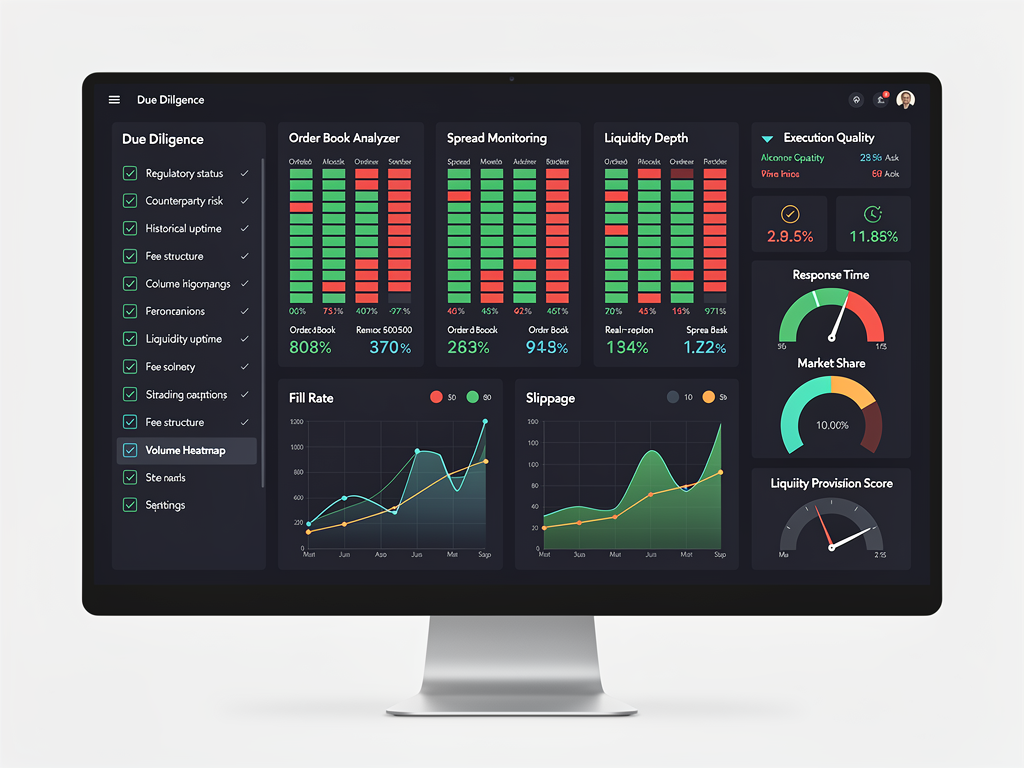
For projects evaluating market makers or traders trying to understand liquidity dynamics, several tools and resources help:
Order Book Analyzers: Platforms like TradingView, CoinGecko, and exchange-native tools let you examine the depth of buy and sell orders. Before hiring a market maker, check the order books of tokens they claim to support to verify they’re actually providing meaningful liquidity.
Spread Monitoring: Track the percentage difference between best bid and ask over time. Quality market making should produce consistent tight spreads, typically under 0.5% for major pairs and under 1% for mid-cap tokens on primary exchanges.
Volume Analytics: Use on-chain analytics (Dune, Nansen) combined with exchange data to identify wash trading or suspicious patterns. Legitimate market making produces genuine trades with diverse counterparties, not circular flows between the same addresses.
Multi-Exchange Price Comparison: Tools like CoinMarketCap or CryptoCompare show price differences across exchanges. Effective market making keeps these gaps minimal (usually under 0.3% for liquid pairs).
For teams looking to build the marketing foundation and community traction that makes market maker partnerships more valuable, FLEXE.io helps projects leverage 150+ media outlets and 500+ KOLs to create the visibility and credibility that top-tier liquidity providers look for when evaluating potential clients. Reach out on Telegram: https://t.me/flexe_io_agency
Due Diligence Checklist:
- [ ] Request client references and verify the market maker actually serves the projects they claim (check order books directly)
- [ ] Define specific performance metrics in the contract: target spreads, minimum depth at certain price levels, uptime guarantees
- [ ] Verify exchange integrations by asking for proof of API access and testing with small orders if possible
- [ ] Understand the fee structure completely: retainers, token allocations, performance bonuses, and what happens to tokens at contract end
- [ ] Ask about hedging strategies and risk management to understand if they’re truly delta-neutral or taking directional positions
- [ ] Establish regular reporting: weekly or monthly analytics on spreads, volume, depth, and market health metrics
- [ ] Include termination clauses that protect both parties but allow exit if performance metrics aren’t met
- [ ] Research the firm’s reputation: look for both positive client testimonials and any controversies or complaints
- [ ] Understand their approach to different market conditions: how do they adjust during volatility, low volume periods, or major news?
- [ ] Clarify who owns and controls the tokens allocated to the market maker, and what restrictions exist on their trading
FAQ: Your Questions Answered
Who are the biggest crypto market makers in 2025?
The dominant firms include Wintermute, DWF Labs, GSR, Jump Crypto, and Amber Group. These companies handle billions in daily trading volume and provide liquidity across dozens of centralized and decentralized exchanges. Each has slightly different specialties, with some focusing more on derivatives, others on spot markets, and some on specific blockchain ecosystems.
How do market makers actually make money?
Professional market makers profit primarily from the spread between their buy and sell orders. If they continuously buy at $1.000 and sell at $1.003, they pocket $0.003 per unit traded. Across millions of dollars in volume, these small spreads add up quickly. They maintain delta-neutral positions through hedging so they profit regardless of whether prices rise or fall, though actual practices vary and some firms may take directional views.
What’s the difference between legitimate market making and manipulation?
Legitimate market making involves posting real orders that can be filled, providing genuine liquidity that helps other traders execute at fair prices. Manipulation includes wash trading (trading with yourself to fake volume), spoofing (placing orders you intend to cancel to mislead others), and pump-and-dump schemes. The line can blur in practice, which is why choosing reputable firms with transparent track records matters.
How much does it cost to hire a top market maker?
Leading market making firms typically charge monthly retainers ranging from $5,000 to $50,000 or more, plus token allocations that can be substantial (often hundreds of thousands to millions of dollars worth, depending on project size). Some work on success-based models tied to exchange listings or trading metrics. The investment is significant but can be justified by improved liquidity, better exchange relationships, and increased trading volume.
Can market makers guarantee my token price will increase?
No, and any firm that promises price increases is likely engaged in manipulation rather than legitimate market making. Professional market makers provide liquidity and improve trading conditions, but actual price is determined by supply, demand, and market sentiment. They can reduce volatility and improve price stability, but they cannot and should not artificially prop up prices against genuine market forces.
How do I verify a market maker is actually providing liquidity?
Check the order books directly on exchanges where they claim to operate. Look for consistent depth on both bid and ask sides, tight spreads that persist across different time periods, and order sizes that are meaningful relative to typical trading volume. You can also monitor whether trades execute smoothly without large slippage, and request regular reporting with specific metrics on spread percentages, average depth, and fill rates.
Why do some people criticize the biggest crypto market makers?
Criticisms typically focus on alleged conflicts of interest (market makers who also invest in tokens they trade), lack of transparency in actual trading strategies, and specific incidents where tokens declined dramatically despite market maker support. Some observers point to gaps between firms’ public statements about delta-neutral strategies and actual trading behavior, especially in volatile token launches. These concerns highlight the importance of thorough due diligence and clear contractual terms.