Most crypto AMAs are a formality. A host reads eight questions the project wrote itself, the founder answers at length, a giveaway is announced, and the channel returns to silence forty minutes later. The format is not the problem. The preparation is.
Run properly, an AMA is one of the few moments where a project talks to people who have already decided to pay attention. Here is the sequence that makes that hour count.
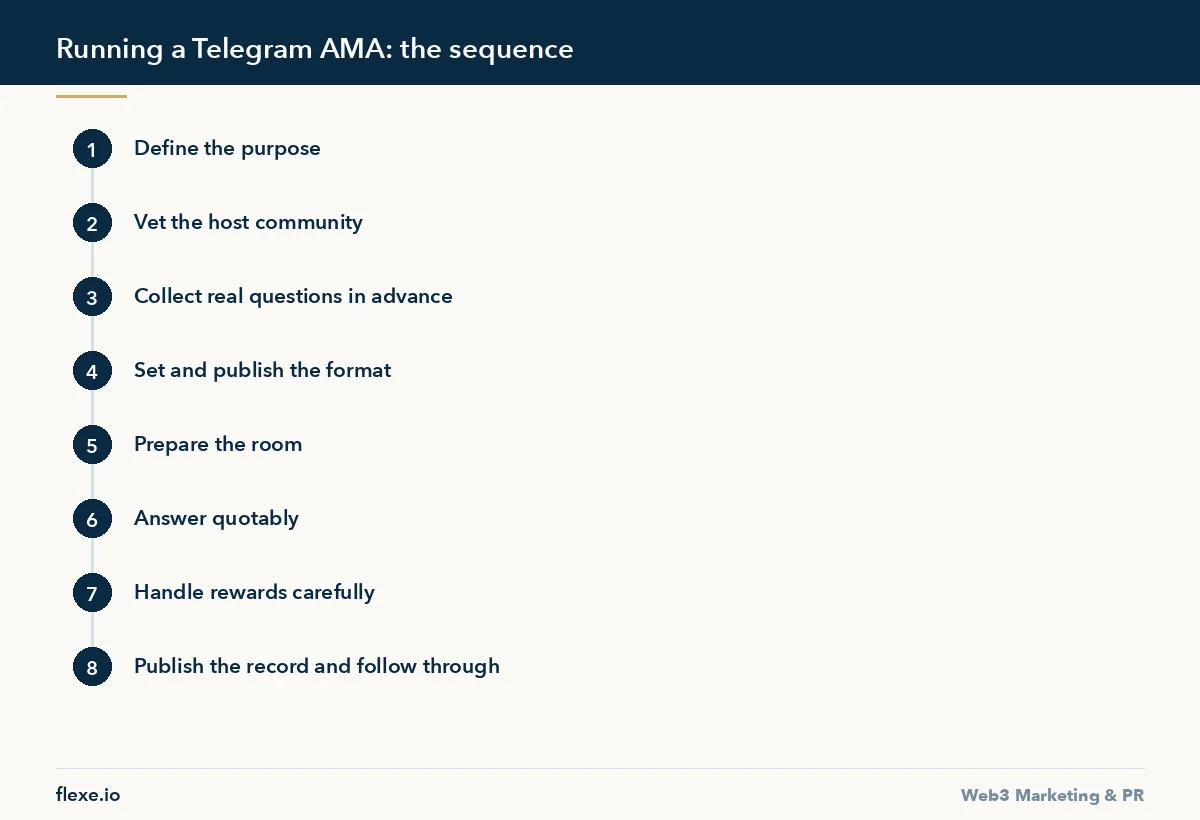
1. Decide what the AMA is for before booking it
There are three honest reasons to run one: to explain something the community has misunderstood, to reach the audience of another community, or to answer accumulated criticism directly. Each needs a different guest list, host and format.
An AMA held because it has been a while produces the empty version. If nobody on the team can name the question this session exists to answer, the session does not exist yet.
2. Choose the room over the follower count
When the AMA is hosted in someone else’s community, member count tells you almost nothing. What matters is whether their previous AMAs had genuine questions from named regulars, and whether the guest projects saw anything afterwards.
Scroll back through their last three sessions. Repeated one-word messages and identical praise are a room of paid participants, and the audience you reach there is nobody’s audience.
3. Collect real questions in advance
Open a thread a few days before and ask for questions. Read the support inbox, the community complaints and whatever is being said about the project elsewhere, and build the running order from those.
Include the two questions the team is least comfortable with. They will be asked anyway, and answering them in a prepared slot beats answering them under pressure in the live segment.
4. Set the format and enforce it
A workable structure is short: five minutes of introduction, twenty minutes of prepared questions, twenty minutes live with the chat unmuted, five minutes on what happens next. Sixty minutes total, ending on time.
Publish the structure in the announcement. Attendance decisions are made against a known shape, and an open-ended session reads as one that will run long and say little.
5. Prepare the room for the live segment
Unmuting a Telegram group of any size produces a flood. Decide in advance how questions are selected, brief two moderators to pull the good ones into the main flow, and set slow mode so the chat stays readable.
Have someone whose only job is watching for scam accounts posting fake contract addresses and support links during the session. AMAs are a known moment for that, and it happens fastest when everyone on the team is busy answering.
6. Answer in a form that can be quoted
Short answers with a number or a date in them travel. Long answers that restate the roadmap do not. If a question has an uncomfortable answer, give it plainly, because the alternative is a clip of the evasion.
Say “we do not know yet” where that is true and add when you will know. It is the most credible sentence available in the format and almost nobody uses it.
7. Handle the giveaway carefully or not at all
A reward for the best question raises quality. A reward for attendance fills the room with accounts that leave the moment it is distributed, and it inflates the numbers you will use to judge whether the session worked.
If a prize is used, announce the winners and pay them within a day. Unpaid AMA prizes are remembered far longer than the session, and hosts hear about it.
8. Publish the transcript and act on it
Within a day, post a written summary with the questions and the answers, pin it, and link it from the site. Most of the eventual readership arrives after the session, and a session with no record has an audience of exactly the people who attended.
Then do the thing you promised. The single strongest signal an AMA can produce is a follow-up post two weeks later saying that the commitment made on the call has been delivered.
How to tell whether it worked
Not by peak concurrent viewers. Useful signals are members still active a week later, questions in the channel that reference something said in the session, and whether the same names appear in the next one.
Across the communities we manage, the sessions that produce lasting activity are consistently the ones with fewer attendees and harder questions. The ones with the biggest turnout are usually the ones with a prize attached.
Ongoing moderation, retention and channel structure around events like this are covered on our crypto community management page, and building the room in the first place in how to build a Telegram group from zero.