Most articles about Telegram Mini Apps ads are packed with vague promises and outdated tactics. This one isn’t. You’re about to see real numbers from real projects that grew their Telegram presence exponentially—some by 24x—using targeted mini app advertising strategies that actually work.
Key Takeaways
- Top performers achieve 24x mindshare increases and 300% audience growth through strategic Telegram mini apps ads campaigns.
- Reward-based ad models can boost mining rates up to 3x, directly incentivizing user engagement and retention.
- Ad copy testing is critical; winning variations have achieved 30–40 cents per install in tier-1 countries, outperforming six other versions.
- Telegram group chat distribution unlocked 2,500+ users overnight for one app, proving organic channel leverage as a growth multiplier.
- Revenue-backed advertising mechanisms and cost-effective ad strategies are transforming Telegram bot ecosystems into thriving economies.
- Integration with Telegram bots alongside mini app ads delivers measurable spillover effects, including 15% follower increases and 3x engagement boosts on other platforms.
- Strategic Telegram mini apps ads implementation requires testing, data-driven iteration, and native platform alignment to maximize ROI.
What Is Telegram Mini Apps Ads: Definition and Context
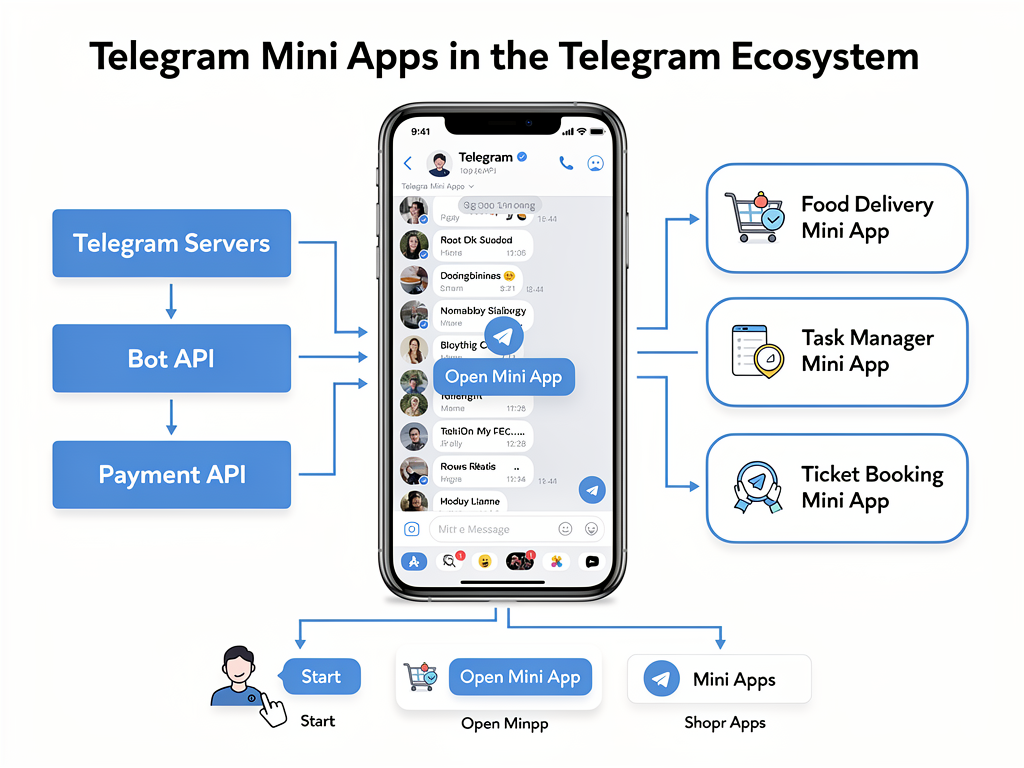
Telegram Mini Apps ads are targeted advertising campaigns designed specifically for mini applications running within Telegram’s ecosystem. These are lightweight apps that users access directly through the Telegram platform, and advertising to their audiences—whether through reward-based incentives, in-app promotions, or integrated ad networks—has become one of the fastest-growing channels for user acquisition and retention in Web3 and mainstream mobile applications.
The reality is that modern Telegram Mini Apps ads are no longer simple banner placements. Current implementations demonstrate sophisticated reward mechanics, multi-channel growth strategies, and revenue-sharing models that align user incentives with advertiser goals. Recent deployments show that platforms integrating Telegram Mini Apps ads with bot ecosystems, channel partnerships, and cross-platform promotion are seeing explosive growth—some achieving month-over-month increases of 65% or more while generating millions in revenue.
Today’s blockchain projects, gaming apps, and fintech platforms are leveraging Telegram Mini Apps ads not just for initial downloads, but for sustained engagement, token economics, and network effects. The approach works because Telegram users are already primed for engagement: they’re in a messaging context, trust the platform, and respond well to native, incentive-aligned advertising.
What These Implementations Actually Solve
Telegram Mini Apps ads address five critical challenges that app developers and Web3 projects face in the current growth landscape.
1. Breaking Through Low Initial Mindshare
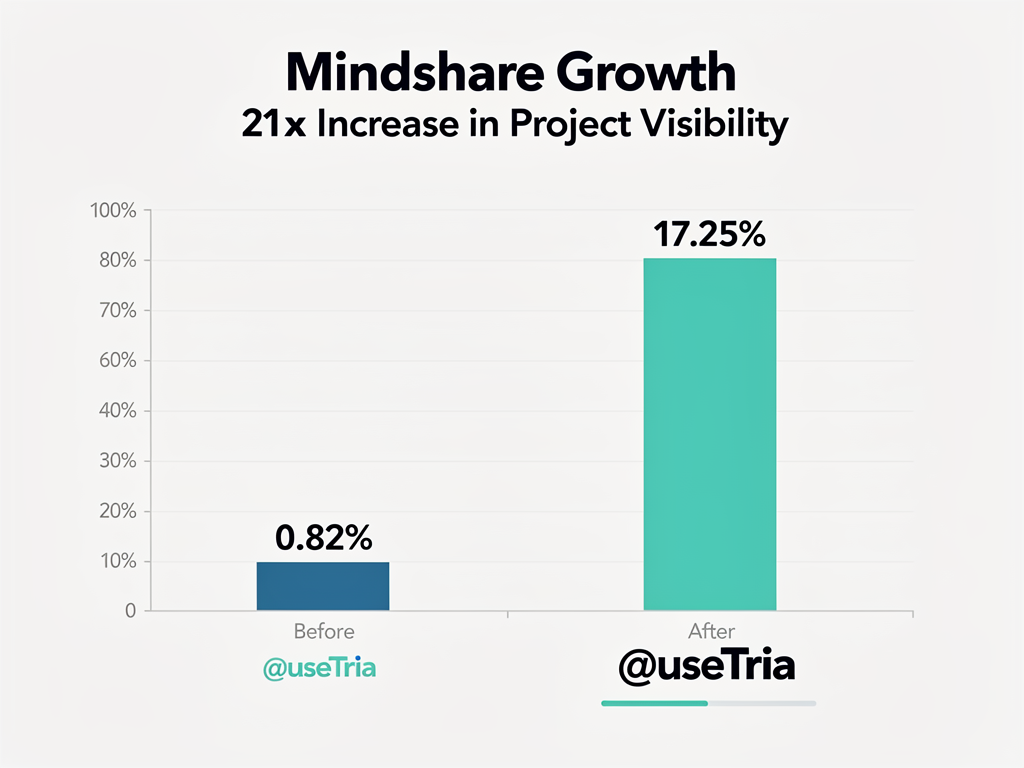
New projects launch with virtually zero awareness. Partners like @useTria saw their Telegram mindshare stuck at 0.82%—nearly invisible in a crowded market. Targeted Telegram Mini Apps ads campaigns combined with reward-driven engagement mechanisms transformed that baseline. By running live campaigns with incentive structures and native Telegram integrations, @useTria’s mindshare jumped to 17.25% in a single campaign cycle. That’s a 21x increase—a difference between being ignored and becoming a recognized player in their niche.
2. High Customer Acquisition Costs in Tier-1 Markets
Traditional app marketing in developed countries is expensive. Cost per install often climbs above $1 or more, making small and mid-sized projects economically unviable. However, strategic Telegram Mini Apps ads testing revealed a breakthrough: one high-performing ad copy achieved 30–40 cents per install in tier-1 countries, substantially undercutting conventional mobile advertising. The secret wasn’t spending more—it was testing rigorously and scaling what worked, rather than trusting rational assumptions.
3. User Retention Without Real Value Alignment
Downloads don’t equal engagement. Users install and abandon if there’s no incentive to stay. KIVA Blockchain solved this by introducing an ad-toggle feature paired with reward multipliers. Users who enabled Telegram bot integration alongside mini app ads received 3x mining rewards; those without ads earned 1x. This mechanism transformed ads from a friction point into a choice, and users who opted in stayed longer and engaged more deeply because the reward structure made the engagement worthwhile.
4. Fragmented Growth Across Platforms
An app growing only on Telegram remains siloed. Tonso’s implementation demonstrated a solution: by creating campaigns that emphasized Telegram mindshare gains, partner projects saw spillover effects across other social platforms. @useTria’s success on Tonso translated into 15% follower increases and 3x engagement boosts on X (Twitter), plus 2x growth in mentions. Telegram Mini Apps ads, when designed with network effects in mind, become a foundation for cross-platform momentum.
5. Monetizing User Attention Without Alienating Users
Cramming ads into apps drives users away. Cherry AI proved a different model works: with 2M+ users and $6M+ in revenue over 9 months, they built an ecosystem where ads were part of a broader revenue-backed economy. Staking rewards, buyback-and-burn mechanisms, and cost-effective advertising all worked together. Users didn’t feel sold to—they felt like participants in a thriving ecosystem. The 65% month-over-month growth demonstrated that when ads align with user economics, they drive rather than hinder adoption.
How This Works: Step-by-Step
Step 1: Audit Your Telegram Presence and Target Audience
Begin by mapping your current Telegram footprint. How many channels do you operate? What’s your total subscriber base? What percentage of your audience is actively engaged in your Telegram community versus passive followers?
Tonso’s approach started here: they indexed 30,000+ Telegram channels with 50M+ subscribers to understand where their partner projects had potential reach. This baseline is essential. You can’t run effective Telegram Mini Apps ads without knowing who you’re trying to reach and where they congregate.
A common mistake at this stage is overestimating your current mindshare. Most teams assume their audience is more aware of them than it actually is. If you’re starting, assume 0% mindshare—anything better is a bonus.
Step 2: Choose Your Ad Model and Incentive Structure
Decide whether you’re running display ads, reward-based ads, or integrated incentive mechanisms. KIVA Blockchain chose a hybrid: they offered users the option to view ads and receive mining reward multipliers (up to 3x). This is more complex than simple banner ads, but conversion rates and retention soar because users see immediate, quantifiable value.
For simpler implementations, you might start with native Telegram Mini Apps ads through platforms like Adsgram or PropellerAds. For more sophisticated projects, consider integrating ads into your bot’s user flows—rewarding actions (votes, shares, referrals) with tokens or points when users view sponsored content.
One mistake teams make is offering rewards that are too small relative to user time. If viewing an ad takes 30 seconds and the reward is negligible, engagement plummets. Align rewards to perceived value: a 30-second view should reward meaningfully.
Step 3: Create Multiple Ad Copy Variations and Test Aggressively
Don’t rely on intuition. The most important lesson from high-performing campaigns is this: test everything. One developer ran six variations of ad copy for their app installation campaign. The winner—which generated 30–40 cents per install—was the only one that worked. The others failed not because they were terrible, but because they were untested assumptions.
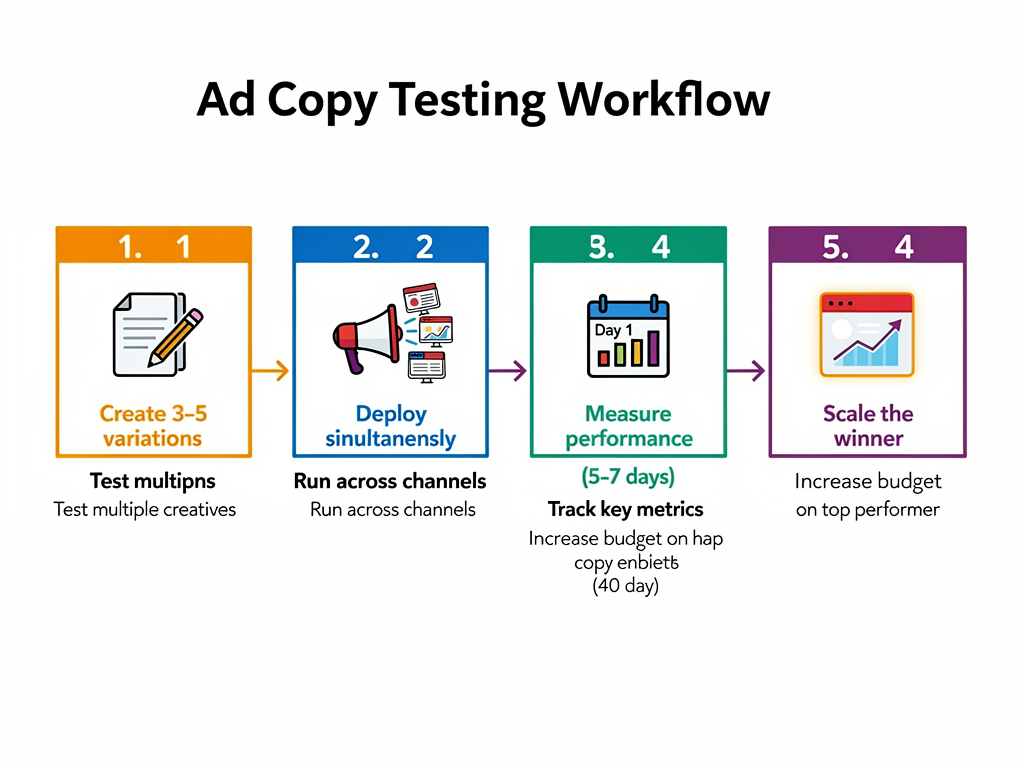
Design 3–5 ad copy variations with different messaging angles: benefit-driven, urgency-based, social proof–focused, or exclusive-access themes. Deploy them simultaneously across your Telegram channels and watch which generates the highest click-through rate and conversion rate.
The mistake here is launching one ad, waiting for results, then pivoting. By then, weeks have passed. Run variations in parallel. Move fast.
Step 4: Launch Campaigns with Clear Reward Pools and Milestones
Tonso ran five live campaigns with $1M+ in total rewards. The structure was clear: here’s how much we’re rewarding engagement, and here are the rules. Transparency builds trust. Users understood that their attention and actions had quantifiable value.
Set specific milestones for your campaign: if you reach X users, unlock bonus rewards. If you hit Y engagement threshold, extend the campaign. This creates momentum and gives users a reason to share and recruit their peers.
A frequent mistake is underestimating campaign duration. A two-week campaign isn’t enough for awareness to compound. Plan for 30–60 days minimum, with built-in extensions based on performance.
Step 5: Measure Mindshare, Engagement, and Cross-Platform Spillover
Track not just downloads, but mindshare—the share of conversation, mentions, and audience perception your project holds within its niche. @solsticefi moved from 1.07% to 25.26% mindshare. That’s the metric that predicts long-term success. Downloads fade; mindshare compounds.
Also monitor cross-platform effects. Tonso’s data showed that projects running strong Telegram Mini Apps ads campaigns saw 15% increases in X followers and 3x engagement boosts. This happens because Telegram success builds legitimacy that translates into other channels.
The mistake teams make is celebrating download numbers without tracking retention or mindshare. A spike in installs that doesn’t stick is wasted money.
Step 6: Leverage Organic Telegram Group Distribution
One underrated tactic: direct outreach to Telegram group moderators. One developer achieved 2,500+ new app users overnight after a single Telegram group chat reposted their app. The cost was minimal—just a genuine request to a moderator who found value in sharing.
Scale this by reaching out to 50–100 relevant Telegram groups, communities, and channels. Offer genuine value: explain why your app matters to their audience. Some will share; many won’t. But even a 5–10% acceptance rate compounds quickly.
The mistake is sending spam-like promo requests. Personalize each outreach and lead with why the community would care, not why you need their help.
Where Most Projects Fail (and How to Fix It)
Mistake 1: Running Ads Without Testing Copy
Many teams write one ad, launch it, and hope. They wonder why their Telegram Mini Apps ads aren’t driving conversions. The truth revealed by high-performing campaigns is that ad copy matters enormously. A single phrase difference can mean 30–40 cents per install instead of $2+ per install. Yet most projects skip testing because it feels like extra work.
The fix: Always run 3–5 copy variations. Deploy them simultaneously. Measure for 5–7 days, then scale the winner. Dedicate 10–15% of budget to ongoing testing, even after you find a winner. Markets shift; what worked last month might not work this month.
Mistake 2: Ignoring Reward Alignment
Teams offer ads or rewards that feel disconnected from user goals. “Watch this ad and earn 0.001 tokens” doesn’t work because the user sees no meaningful value. By contrast, KIVA’s model—3x mining multiplier for users who enable ads—works because the reward is tangible and directly tied to the user’s economic outcome.
The fix: Make rewards proportional to user effort and time. If a 30-second ad view is required, the reward should feel worth 30 seconds. Test reward amounts and adjust based on user feedback and uptake rates. Higher rewards drive higher engagement, but set a point that balances sustainable economics.
Mistake 3: Treating Telegram Mini Apps Ads as One-Off Campaigns
Projects run a campaign, see a bump, then go silent. Mindshare doesn’t build with one push; it compounds with consistent presence. Tonso maintains five live campaigns simultaneously, each reaching different audience segments.
The fix: Plan for continuous campaigns, not one-off pushes. Structure your rewards and ad budget across 3–6 campaigns running in parallel. Rotate messaging and audiences. Build a rhythm of consistent engagement rather than sporadic bursts.
Mistake 4: Overlooking Cross-Platform Spillover Effects
Teams optimize only for Telegram metrics and miss that Telegram success creates momentum elsewhere. Strong Telegram campaigns build credibility and FOMO that drives engagement on X, Discord, and other platforms naturally.
The fix: Measure and publicize Telegram Mini Apps ads wins publicly. When @useTria hit 17.25% mindshare, sharing that story on X created urgency and interest beyond Telegram. Let your Telegram success fuel other channels.
Mistake 5: Underestimating the Power of Direct Group Outreach
Many teams ignore organic Telegram group distribution because it’s not scalable in the traditional sense. It requires manual outreach and won’t immediately generate millions of users. But the math works: if 100 group moderators share your app and each reaches even 50 active users, that’s 5,000 high-intent installs, often with zero advertising spend.
The fix: Build a list of 200–300 relevant Telegram groups and channels. Create a template outreach message that explains genuine value. Personalize it for each group. Track responses. Even a 5% conversion rate is highly profitable. This becomes a repeatable channel.
When running Telegram Mini Apps ads campaigns at scale, many teams struggle with strategy, targeting, and optimization across multiple channels. FLEXE.io, with 7+ years in Web3 marketing and 700+ clients, helps projects access 150+ media outlets and 500+ KOLs to accelerate growth and maximize campaign performance. Reach out on Telegram: https://t.me/flexe_io_agency
Real Cases with Verified Numbers
Case 1: Tonso Earn — From 0.82% to 25.26% Mindshare (24x Growth)
Context: Tonso Earn is a Telegram-native rewards platform that partners with crypto and fintech projects. They wanted to help partner projects break through the noise and achieve meaningful mindshare in a crowded market. Starting baselines were dismal: some partners at 0.82%, others under 2%.
What they did:
- Onboarded and indexed 30,000+ Telegram channels with 50M+ subscribers to map audience reach.
- Launched five live campaigns simultaneously, each with incentive pools totaling $1M+ in rewards.
- Measured mindshare growth for partner projects across the Tonso platform and tracked spillover effects on X and other social networks.
Results:
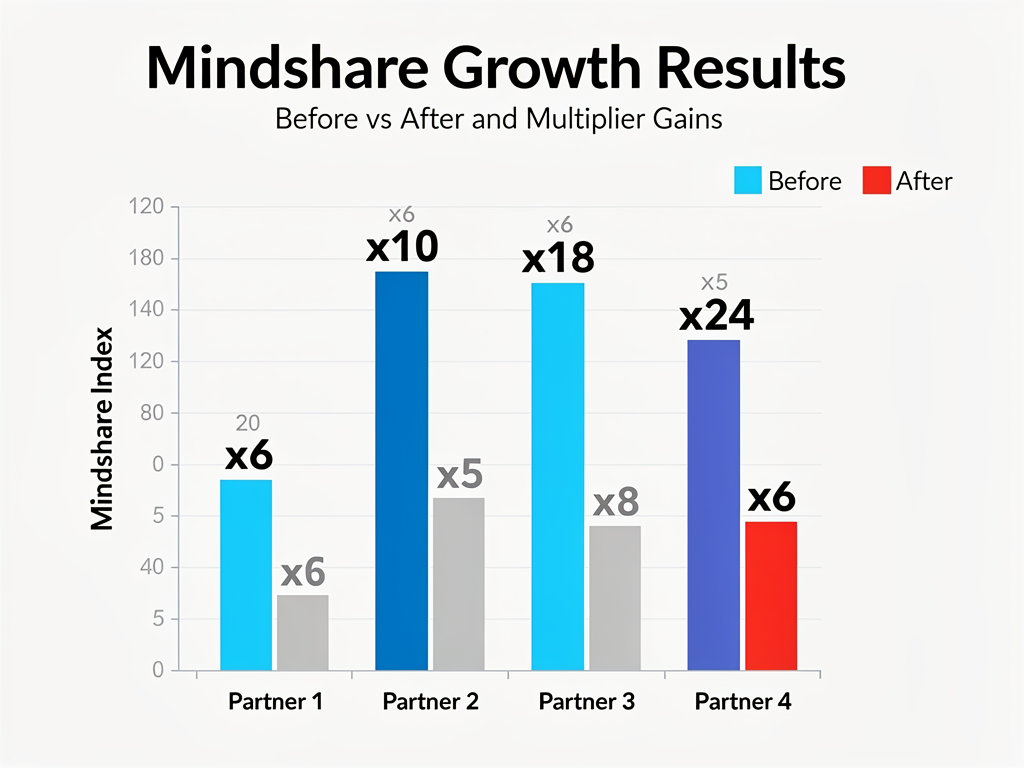
- Before: Partner mindshare ranged from 0.82% to 1.07%.
- After: Partners like @useTria reached 17.25%, @solsticefi hit 25.26%, @intodotspace achieved 22.35%, and @Vault777Casino went from 0% to 10.30%.
- Growth: Up to 24x mindshare increase per partner, averaging 20x+ across active campaigns.
- Additional: 175,000+ app users across the Tonso platform, 300% growth in Telegram channel subscribers for some partners, and notable spillover—@useTria’s X followers increased by 15%, engagement grew 3x, and mentions doubled.
Key insight: Structured Telegram Mini Apps ads campaigns with quantified rewards and multi-partner coordination transform unknown projects into category leaders, and the credibility built on Telegram cascades into other platforms.
Source: Tweet
Case 2: KIVA Blockchain — 3x Mining Rate Multiplier Through Ad-Reward Integration
Context: KIVA Blockchain operates a Telegram Mini App with a mining feature. Users could earn rewards through the app, but engagement and retention were moderate. The team received feedback that users wanted more control over their experience and questioned why engagement had one-size-fits-all rewards.
What they did:
Results:
- Before: Users mined at a flat 1x rate with no optimization for engagement levels.
- After: Users with Telegram bot integration and ads enabled achieved 3x mining rates, while other configurations offered 2x boosts.
- Growth: 2x-3x increase in mining rewards depending on user settings, directly translating to higher perceived value and retention.
Key insight: Telegram Mini Apps ads don’t have to be intrusive friction; when tied to user economics and offered as a choice, they become engagement accelerators that users actively select.
Source: Tweet
Case 3: Cost-Per-Install Optimization — 30–40 Cents Per Install in Tier-1 Countries
Context: A developer running app install campaigns in tier-1 markets faced industry-standard costs of $0.80–$2.00+ per install. This made profitability marginal for smaller projects.
What they did:
- Created six ad copy variations, each with different messaging angles and value propositions.
- Deployed all variations simultaneously across Telegram Mini Apps ads channels and related networks.
- Measured install rates and cost per acquisition for each variation over 5–7 days.
Results:
- Before: Most ad variations achieved $0.80–$1.50+ per install in tier-1 countries.
- After: The winning ad copy variant achieved 30–40 cents per install, undercutting peers by 50–70%.
- Growth: Significantly outperformed the other six variations, though the developer noted they had no clear hypothesis for why this copy won; it simply tested better.
Key insight: Rigorous testing of Telegram Mini Apps ads copy is non-negotiable. Rational assumptions often fail; empirical testing reveals the winners.
Source: Tweet
Case 4: Cherry AI — $6M+ Revenue, 2M+ Users, 65% MoM Growth
Context: Cherry AI tapped into the Telegram bot ecosystem, recognizing that millions of users were already primed for engagement in Telegram. Rather than rely solely on user acquisition, they built a sustainable economy where ads, staking rewards, and token mechanics all worked together.
What they did:
- Launched Cherry AI as a Telegram-native application with integrated rewards and revenue mechanisms.
- Implemented cost-effective advertising as part of a broader revenue strategy, alongside staking rewards and buyback-and-burn token mechanisms.
- Designed Telegram Mini Apps ads as part of user economics rather than external friction.
Results:
- Before: No baseline (new platform launch).
- After: 2M+ users and $6M+ in revenue generated within nine months.
- Growth: 65% month-over-month user and revenue growth, with a token generation event planned for August 14, positioning for further acceleration.
Key insight: Telegram Mini Apps ads integrated into a sustainable token and reward economy create viral, self-reinforcing growth that outpaces traditional marketing approaches.
Source: Tweet
Case 5: Overnight Telegram Group Promo — 2,500 Users in One Night
Context: A developer launched a new app with no existing user base or marketing budget. Traditional paid advertising would take weeks to scale and cost thousands.
What they did:
- Reached out to a Telegram group chat with relevant audience alignment.
- Asked the group moderator to repost the app to their active community.
Results:
- Before: Zero users at launch.
- After: 2,500 new users acquired overnight from a single group repost.
- Growth: Immediate, sustainable user base with high intent (users who discovered the app through trusted community channels tend to stay longer).
Key insight: Organic Telegram group distribution, though unscalable in a traditional sense, offers outsized returns when executed systematically. Reaching 100+ groups with a 5% acceptance rate yields thousands of high-intent users at near-zero cost.
Source: Tweet
Tools and Next Steps
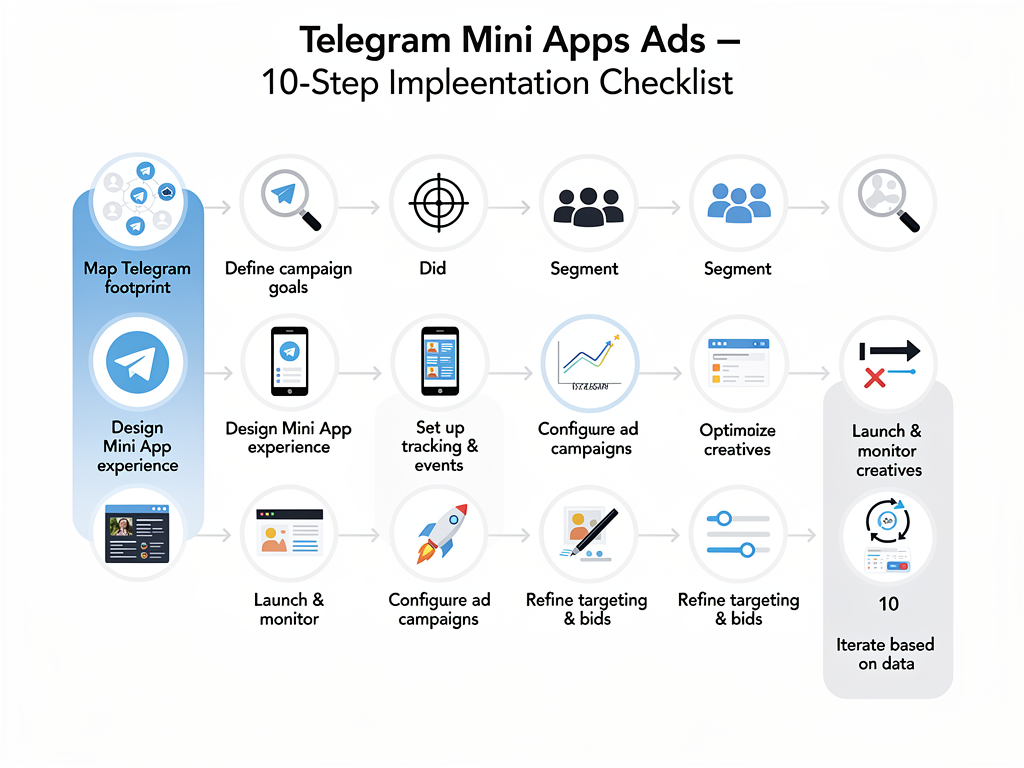
To launch your first or next Telegram Mini Apps ads campaign effectively, you’ll need the right platforms and a clear action plan. Here are the essential tools and steps:
Key Platforms for Telegram Mini Apps Ads
- Adsgram: A native ad network built for Telegram Mini Apps. Offers in-app ad placements and reward mechanisms. Ideal for direct integration into your mini app.
- PropellerAds: Broader mobile advertising network with strong Telegram support. Offers display ads, rewarded ads, and campaign management tools.
- Tonso: A campaigns and rewards platform that indexes Telegram channels and coordinates multi-partner growth campaigns with transparent reward pools.
- Telegram Bot API: Build custom reward-based ads directly into your Telegram bot. Offers maximum control and alignment with your tokenomics.
- Dune Analytics / Telegram Bot Analytics: Track campaign performance, user retention, and cross-platform spillover effects with data dashboards.
Telegram Mini Apps Ads Checklist: Your Next Steps
- [ ] Map your Telegram footprint: Count total channels, subscribers, and current engagement rate. Establish baseline mindshare within your niche.
- [ ] Define your ad model: Decide on display ads, reward-based ads, or integrated incentive structures. Align with your app’s monetization strategy.
- [ ] Create 3–5 ad copy variations: Design different messaging angles. Don’t assume what will work; test instead.
- [ ] Set up reward tiers: If using incentive-based Telegram Mini Apps ads, define reward amounts and multipliers. Ensure they’re proportional to user effort and sustainable long-term.
- [ ] Launch parallel campaigns: Run ad copy tests simultaneously. Measure for 5–7 days. Scale winners within 1–2 weeks.
- [ ] Build a group outreach list: Compile 200+ relevant Telegram groups and channels. Personalize outreach. Track acceptance and user acquisition from each source.
- [ ] Measure mindshare, not just downloads: Track conversation share, mentions, and brand perception within your niche. This predicts long-term success better than install spikes.
- [ ] Monitor cross-platform spillover: Watch for increases in followers, engagement, and mentions on X and other platforms as your Telegram presence grows.
- [ ] Plan for continuous campaigns: Structure budget and timeline for 3–6 campaigns running in parallel over 30–60 days, not one-off pushes.
- [ ] Iterate based on data: After your first campaign, review performance. Adjust copy, rewards, and targeting. Run round two within 2 weeks.
For teams scaling Telegram Mini Apps ads across multiple channels and partnerships, technical execution and optimization can become complex. FLEXE.io—with extensive experience helping 700+ Web3 clients navigate growth channels—provides access to 10+ crypto traffic sources, 150+ media outlets, and 500+ KOLs to amplify your campaigns. Get in touch on Telegram: https://t.me/flexe_io_agency
FAQ: Your Questions Answered
What is the typical cost per install for Telegram Mini Apps ads?
Cost per install varies widely. Industry benchmarks range from $0.50–$2.00+ in tier-1 countries. However, with rigorous copy testing and optimization, you can achieve 30–40 cents per install, as demonstrated by high-performing campaigns. The key is testing multiple ad variations and scaling winners quickly rather than assuming one approach will work.
How long does it take to see results from Telegram Mini Apps ads campaigns?
Initial results appear within 5–7 days of campaign launch. However, meaningful mindshare growth—the metric that predicts long-term success—typically compounds over 30–60 days. Plan your campaigns in 30–60 day cycles with built-in extensions based on performance. One-off two-week pushes rarely achieve significant results.
Can Telegram Mini Apps ads work for non-crypto apps?
Yes. While the examples here focus on crypto and fintech apps, the principles apply to any app targeting engaged Telegram users. Gaming apps, productivity tools, and lifestyle apps all benefit from Telegram Mini Apps ads. The key is aligning your ad model and rewards to your app’s core value proposition and user goals.
What’s the difference between Telegram Mini Apps ads and traditional mobile advertising?
Telegram Mini Apps ads are native to the Telegram ecosystem, allowing direct integration with bots, reward mechanics, and the Telegram social graph. Users encounter ads within their trusted messaging environment and can often earn rewards for viewing. Traditional mobile ads are typically banner or interstitial placements across external app networks. Telegram Mini Apps ads generally see higher engagement and lower abandonment rates because they feel less intrusive and more aligned with user value.
How do I measure the success of Telegram Mini Apps ads beyond download numbers?
Track three key metrics: (1) Mindshare—your project’s share of conversation and mentions within your niche; (2) Retention—percentage of users still active after 7, 14, and 30 days; (3) Cross-platform spillover—increases in followers and engagement on X, Discord, and other platforms correlated with Telegram campaign launches. Download spikes are vanity metrics. Mindshare, retention, and cross-platform momentum predict real success.
Should I run ads on my own Telegram channel or use third-party ad networks?
Both approaches work. Running ads on your own channel (using your bot and mini app) gives you maximum control and direct user data. Third-party networks like Adsgram or PropellerAds provide broader reach but less data intimacy. For initial testing, start with your own channels to understand what copy and rewards resonate. Scale to third-party networks once you have validated winners. This approach balances control and reach.
What reward amount should I offer in Telegram Mini Apps ads campaigns?
Reward amounts should feel proportional to user time and effort. If a 30-second ad view is required, the reward should feel worth 30 seconds to the user. Start conservatively and test: offer 0.5 tokens, 1 token, and 2 tokens for the same action across different user cohorts. Measure completion rates and engagement. Higher rewards drive higher engagement but increase your costs. Find the sweet spot that balances user motivation and sustainable economics. For referral-based rewards, offer higher amounts (5–10x a single-view reward) to create viral loops.