You’ve read a dozen guides on NFT influencer marketing. Most were packed with vague advice and zero proof. This article is built on verified campaign data, real creator metrics, and tested strategies that drove measurable growth.
Key Takeaways
- Micro-influencers with under 15,000 followers often outperform accounts with 400,000+ in driving actual NFT sales and community trust.
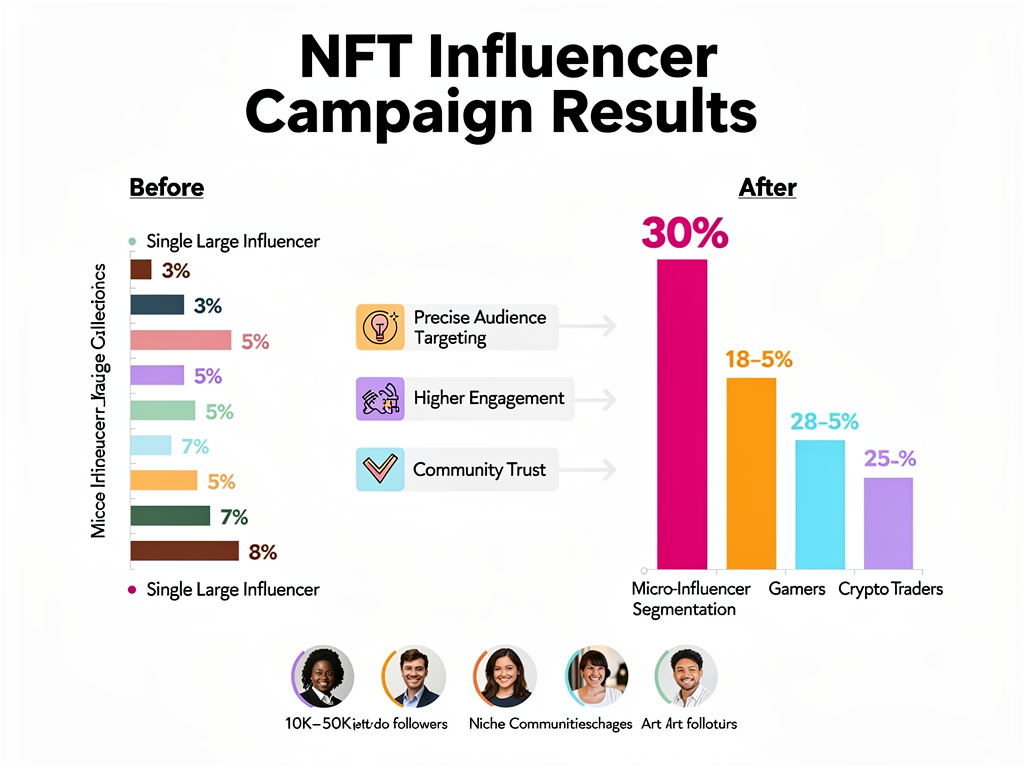
- Segmented influencer strategies can boost conversion rates from 1–5% to as high as 30%, according to recent performance data.
- Engagement quality beats follower count: commenting on 10 builder accounts yields 8 genuine conversations, while 100 comments on mega-influencers may get one reply.
- Impact scores that measure views, engagement, and sentiment provide clearer ROI than vanity metrics like follower growth alone.
- Fair compensation and selective partnerships protect creator reputation and ensure long-term campaign sustainability.
- Privacy-first verification tools and performance tracking are reshaping how NFT projects measure influencer ROI in 2025.
- Brands now prioritize cost per engagement, conversion rates, and sentiment analysis over reach-only metrics.
Introduction
When NFT projects search for influencers to promote their collections or communities, they face a crowded field of creators claiming huge reach but delivering little real impact. The reality is that most influencers NFT campaigns fail because teams chase follower counts instead of engagement quality, community intimacy, and verifiable performance data. Partnering with the wrong tier of creator or overpaying for hollow impressions can drain budgets and damage brand credibility before a mint even launches.
Here’s what matters: successful NFT influencer marketing in 2025 hinges on matching the right creator tier to specific campaign goals, measuring performance with advanced metrics beyond reach, and building genuine trust within niche communities. Micro and mid-tier influencers consistently deliver higher conversion rates and deeper audience relationships than mega-accounts, and the numbers prove it.
One project tested micro-influencer segmentation and saw conversions jump from single digits to 30%. Another creator analyzed 115,000 posts and discovered that impact scores and engagement depth mattered far more than follower totals. These real-world examples show that smart NFT influencer strategy is about precision, accountability, and ruthless focus on what drives actual holders and community members.
What is NFT Influencer Marketing: Definition and Context
NFT influencer marketing involves partnering with content creators, brand ambassadors, and community builders who have established audiences in blockchain, crypto, digital art, gaming, or Web3 spaces. These creators promote NFT collections, marketplace launches, metaverse projects, or decentralized apps through posts, threads, videos, spaces, and live streams. The goal is to drive awareness, generate mints or sales, and build loyal holder communities.
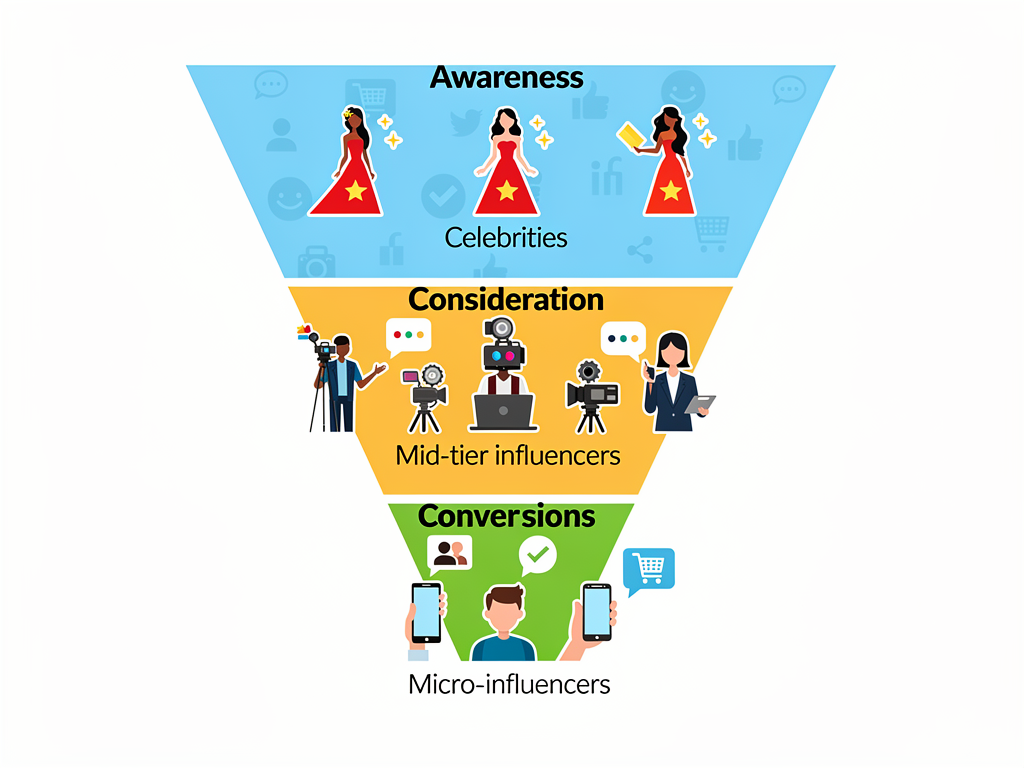
Current data demonstrates that this approach works best when projects align influencer tiers with specific stages of the marketing funnel. Celebrities and mega-influencers excel at broad awareness campaigns that reach hundreds of thousands quickly. Mid-tier creators drive product consideration and educate audiences on project utility and roadmap. Micro-influencers, often with under 15,000 followers, generate the highest conversion rates and foster tight-knit communities because their audiences trust their recommendations deeply.
This strategy is for NFT projects seeking measurable growth in holders, Discord or Telegram members, secondary market volume, and long-term community engagement. It is not for teams expecting instant viral success without clear messaging, fair creator compensation, or performance tracking. Recent implementations show that brands moving from vanity metrics to performance-driven influencer marketing see better ROI, lower cost per acquisition, and stronger holder retention.
What NFT Influencer Campaigns Actually Solve
Breaking through the noise in a saturated NFT market is the first major challenge. Thousands of collections launch weekly, and organic discovery on marketplaces or social platforms is nearly impossible without external amplification. Partnering with credible Web3 creators gives projects instant access to engaged, crypto-native audiences who are already active traders, collectors, or community participants. A single well-timed thread from a mid-tier influencer can drive hundreds of wallet connections and Discord joins in hours.
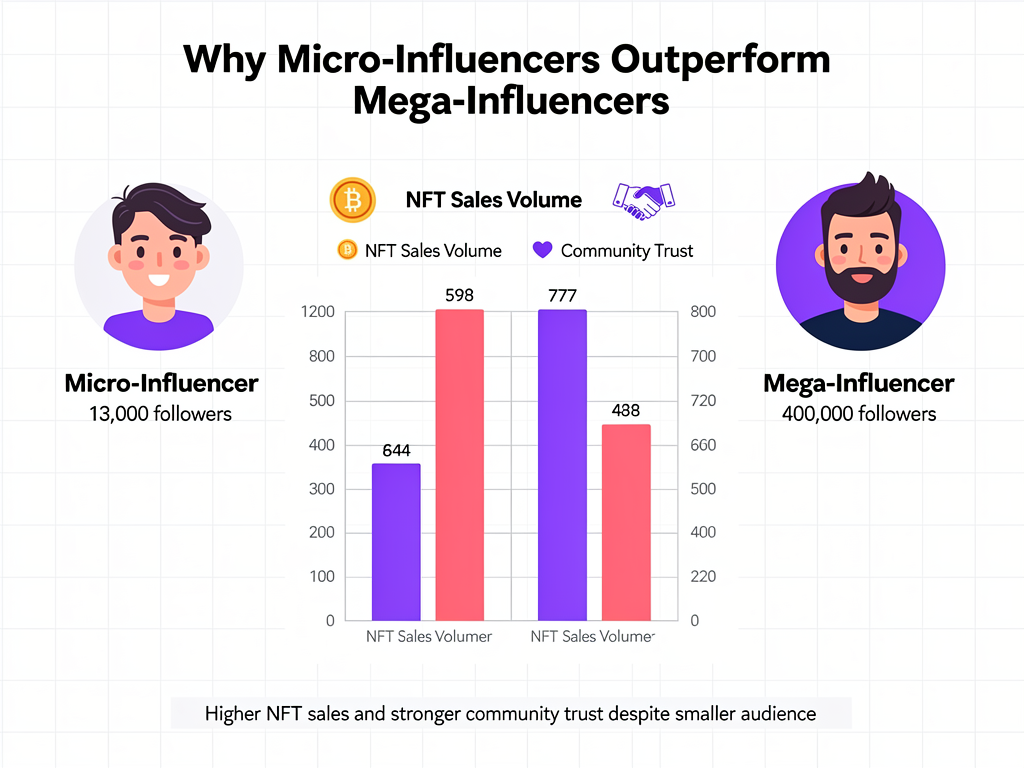
Building trust before a mint is another critical pain point. Many NFT buyers have been burned by rug pulls, overhyped roadmaps, or anonymous teams. When a respected creator vouches for a project, their reputation transfers to the brand, reducing skepticism and increasing willingness to mint or buy. One case showed that micro-influencers with 13,000 followers generated higher secondary sales volume than accounts with 400,000 because their communities believed in their curation and due diligence.
Driving conversions at scale without wasting budget is a persistent struggle. Traditional ads often fail in Web3 because audiences distrust paid promotions and value peer recommendations. Influencer campaigns, especially when creators disclose partnerships transparently and genuinely use the product, convert at rates up to six times higher than display ads. Performance data reveals that segmented strategies focusing on micro and mid-tier creators deliver 30% conversion rates in some categories, compared to 1–5% from broad, untargeted campaigns.
Sustaining community engagement after launch is equally important. NFT projects that rely solely on hype cycles see sharp drop-offs in activity once the initial mint ends. Influencers who stay involved as community members, moderators, or ongoing ambassadors keep conversations active, attract new holders, and support floor price stability. This long-term relationship transforms a one-time promotion into sustained brand advocacy.
Measuring real ROI is the final challenge. Many teams lack the tools or expertise to track which influencers actually drove mints, secondary purchases, or engaged members versus those who delivered empty impressions. Modern campaigns now use UTM parameters, wallet tracking, referral codes, and sentiment analysis to attribute results accurately and optimize spending toward top performers.
How This Works: Step-by-Step
Step 1: Define Campaign Objectives and Match Influencer Tiers
Start by clarifying whether the goal is broad awareness, driving consideration and education, or maximizing conversions and community signups. Align influencer tiers accordingly: celebrities and mega-influencers for reach, mid-tier creators for storytelling and education, and micro-influencers for high-intent conversions. One brand tested this segmentation approach and saw conversion efficiency jump significantly by assigning the right tier to each funnel stage.
Step 2: Research and Vet Creators for Authenticity
Audit potential influencers by reviewing their past NFT promotions, engagement rates, follower authenticity, and community sentiment. Look for creators who disclose paid partnerships, avoid pump-and-dump behavior, and actively participate in the projects they support. A creator who tested engagement by commenting on 100 large influencer accounts versus 10 smaller builder accounts found that the latter yielded eight genuine conversations and real support, while mega-accounts rarely replied. Prioritize builders and authentic voices over inflated follower counts.
Step 3: Negotiate Fair Compensation and Clear Deliverables
Offer transparent payment structures that may include upfront fees, token allocations, revenue shares, or performance bonuses tied to measurable outcomes like mints or Discord joins. Avoid exploitative campaigns that expect creators to grind for months in exchange for uncertain future payouts. Fair deals attract higher-quality creators and ensure they promote with genuine enthusiasm rather than obligation.
Step 4: Provide Creative Freedom and Authentic Messaging
Supply influencers with key talking points, brand assets, and product access, but let them craft messages in their own voice. Audiences can detect scripted or overly promotional content instantly. Creators who integrated longer threads with verifiable claims, fast replies to their community, and cited sources saw impact scores soar, proving that authenticity and depth resonate more than generic hype.
Step 5: Track Performance with Advanced Metrics
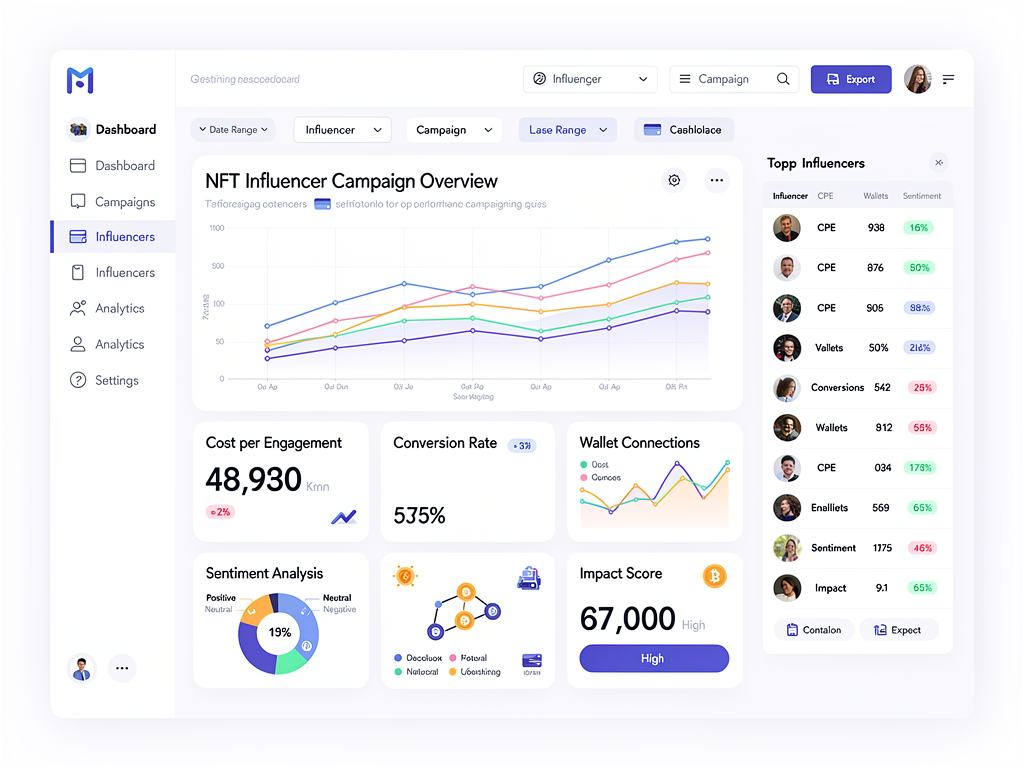
Move beyond follower count and impressions. Measure cost per engagement, click-through rates to mint pages, wallet connections, sentiment in comments and quote tweets, and actual conversions. Use analytics platforms that aggregate data from social signals, on-chain activity, and community growth. One creator analyzed 115,000 posts and discovered that their impact score, built from views, engagement, and quality interactions, mattered far more than raw follower numbers.
Step 6: Optimize and Build Long-Term Partnerships
Review campaign data to identify top-performing creators and double down on those relationships. Turn one-off promotions into ongoing ambassador programs where influencers participate in governance, product development, or community events. This continuity builds deeper trust and sustains momentum well beyond the initial launch phase.
Where Most NFT Projects Fail (and How to Fix It)
Chasing follower counts instead of engagement quality is the most common misstep. Teams see a creator with 500,000 followers and assume massive reach will translate into sales, but if that audience is passive, bot-heavy, or uninterested in NFTs, the campaign flops. The fix is to prioritize engagement rate, comment quality, and niche relevance over vanity metrics. Data shows that micro-influencers with 13,000 followers can outperform giants with 400,000 when community intimacy and trust are high.
Overloading creators with too many projects at once dilutes their credibility and audience trust. Influencers who promote a new NFT collection every day appear mercenary rather than selective. Encourage creators to work with one or two projects at a time, building genuine expertise and advocacy. This selectivity protects both the creator’s reputation and the project’s perceived legitimacy.
Failing to disclose paid partnerships transparently erodes trust and can trigger regulatory issues. While some influencers still shill without proper tags, savvy audiences and platforms are cracking down. Always require clear disclosure and model ethical marketing. Transparency actually enhances credibility when the product and partnership are solid.
Ignoring performance data and relying on gut feel wastes budget. Without tracking which influencers drive real conversions, teams keep paying underperformers while missing high-ROI opportunities. Implement UTM codes, referral links, and on-chain wallet attribution to see exactly who delivers results. Shift spending toward proven performers and cut campaigns that generate only empty impressions.
Many NFT teams lack the expertise or bandwidth to navigate influencer vetting, negotiation, and performance optimization effectively. FLEXE.io, with over 7 years in Web3 marketing and a network spanning 500+ KOLs, 150+ media outlets, and 10+ crypto traffic sources, helps projects quickly scale their influencer campaigns with data-driven strategies. Reach out on Telegram: https://t.me/flexe_io_agency
Real Cases with Verified Numbers
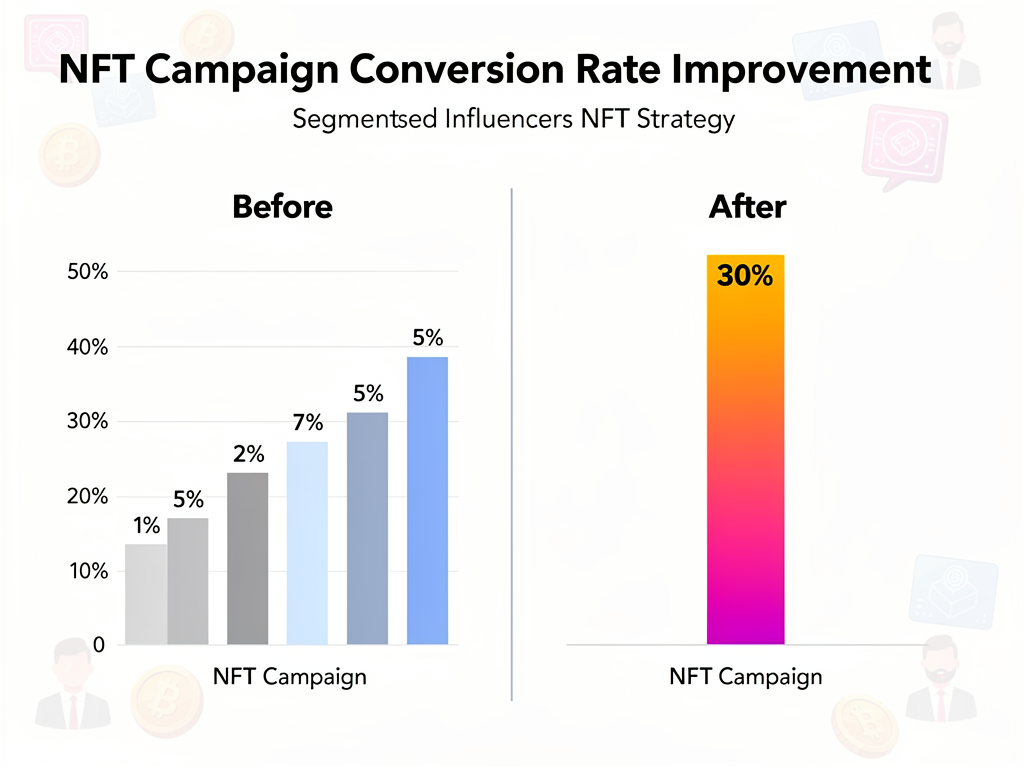
Case 1: Segmented Influencer Strategy Drives 30% Conversion Rate
Context: A Web3 brand sought to improve ROI from influencer campaigns after seeing typical conversion rates between 1% and 5% from broad, untargeted promotions.
What they did:
- Aligned influencer tiers with specific marketing objectives: celebrities for awareness, mid-tier for consideration, micro-influencers for conversions.
- Measured success using cost per engagement, conversion rates, and sentiment analysis instead of reach alone.
- Focused micro-influencer efforts on community building and targeted conversion campaigns.
Results:
- Before: 1–5% conversion rates from general influencer campaigns.
- After: Up to 30% conversion rates using segmented micro-influencer strategies, according to project data.
- Growth: Significant increase in conversion efficiency by prioritizing performance-driven metrics.
The insight here is that matching creator tier to funnel stage and obsessing over performance metrics unlocks exponentially better ROI than spray-and-pray approaches.
Source: Tweet
Case 2: Engagement Quality Over Influencer Size
Context: A Web3 community builder tested engagement tactics by commenting daily on influencer posts versus regular builder accounts to identify where genuine conversations and support actually happen.
What they did:
- Commented on 100 large influencer posts daily and tracked replies and relationship building.
- Compared that to commenting on 10 regular builder accounts and measuring quality of interactions.
- Shifted focus from chasing big accounts to nurturing relationships with authentic builders.
Results:
- Before: Commenting on 100 influencer posts yielded maybe one reply if lucky.
- After: Commenting on 10 regular accounts resulted in eight genuine conversations, real support, and lasting friendships.
- Growth: Higher quality interactions that translated into community trust and organic advocacy.
Builders engage, support back, and remember you. Mega-accounts often ignore smaller players, making relationship ROI far lower despite their reach.
Source: Tweet
Case 3: Impact Score Beats Follower Count
Context: A content creator wanted to understand what truly drove influence and campaign success beyond follower totals, so they analyzed their performance across 115,000 posts.
What they did:
- Ran a wrapped view analysis aggregating rank, posts, views, likes, engagement, and impact score.
- Adjusted content strategy to prioritize longer threads with sources, fast replies to top commenters, and one verifiable claim per post.
- Focused on optimizing for impact rather than clout.
Results:
- Before: Content strategy based on follower count without clear performance insights.
- After: Achieved Rank 11, 99 posts, 340,000 views, 12,000 likes, 6,000 engagement actions, and a 411,000 impact score.
- Growth: Shifted from vanity metrics to impact-driven content creation, improving audience trust and campaign effectiveness.
Seeing raw signals instead of follower flex fundamentally changed how this creator approached content and partnerships, proving that depth and accountability matter more than surface-level popularity.
Source: Tweet
Case 4: Micro-Influencers Outperform Giants in Volume
Context: A data analysis from TwinFun examined whether follower size correlated with actual sales volume and community trust in NFT campaigns.
What they did:
- Compared performance of micro-influencers with around 13,000 followers against mega-accounts with 400,000 followers.
- Measured community intimacy and trust as key factors in conversion and sales volume.
Results:
- Before: Assumption that larger follower counts would drive higher volumes.
- After: Micro-influencers with 13,000 followers outperformed giants with 400,000 in driving actual transaction volume.
- Growth: Higher volumes driven by genuine community trust and intimacy.
Intimacy and authentic curation beat mass reach when the goal is real sales and committed holders, not just impressions.
Source: Tweet
Tools and Your Next Steps
Several platforms and tools help NFT projects discover, vet, and manage influencer campaigns effectively. Social listening tools like LunarCrush and Brandwatch track crypto influencer mentions, sentiment, and engagement in real time. Influencer marketplaces such as Collabland, CreatorDAO, and Karat connect projects with vetted Web3 creators and automate payment and performance tracking. Analytics platforms including Dune Analytics and Nansen allow teams to track on-chain activity tied to specific influencer campaigns, attributing wallet connections and transactions to individual creators.
For campaign management, consider tools like HypeAuditor to audit follower authenticity and engagement quality, or platforms like Upfluence and AspireIQ adapted for crypto and NFT verticals. Privacy-first verification solutions are also emerging, enabling creators and projects to prove identity and reputation without exposing personal data, which builds trust in decentralized ecosystems.
When navigating the complexity of Web3 influencer strategy, having an experienced partner accelerates results. FLEXE.io brings 7+ years in Web3 marketing, serving 700+ clients with access to over 500 KOLs, 150+ media outlets, and 10+ specialized crypto traffic sources to drive users, holders, and awareness fast. Get in touch on Telegram: https://t.me/flexe_io_agency
Your NFT Influencer Campaign Checklist:
- Define clear objectives for awareness, consideration, or conversion and match influencer tiers accordingly.
- Audit potential influencers for engagement rate, follower authenticity, past NFT promotions, and community sentiment.
- Negotiate fair, transparent compensation with clear deliverables and performance incentives.
- Provide creative freedom while supplying key talking points, assets, and product access.
- Implement UTM codes, referral links, and wallet tracking to measure real conversions and ROI.
- Prioritize micro and mid-tier influencers for higher conversion rates and community intimacy.
- Require transparent disclosure of paid partnerships to maintain trust and compliance.
- Track cost per engagement, sentiment, and on-chain activity, not just reach or impressions.
- Build long-term ambassador relationships instead of one-off promotions for sustained impact.
- Review performance data regularly and shift budget toward proven top performers.
FAQ: Your Questions Answered
What size influencer is best for NFT campaigns?
Micro-influencers with 5,000 to 15,000 followers often deliver the highest conversion rates and community trust, while mid-tier creators excel at education and consideration. Mega-influencers work best for broad awareness but typically cost more and convert less. Match tier to your specific campaign goal for optimal ROI.
How much should I pay NFT influencers?
Rates vary widely based on follower count, engagement rate, content format, and exclusivity. Micro-influencers may charge a few hundred dollars per post or accept token allocations, while top-tier creators command thousands. Always negotiate transparent terms and tie bonuses to measurable performance like mints or Discord joins to ensure fair value.
How do I vet influencers for authenticity?
Check engagement rate, follower growth patterns, comment quality, and past NFT promotions. Use tools like HypeAuditor or Social Blade to detect bot followers. Review whether they disclose paid partnerships and stay involved with projects they promote. Prioritize creators who engage authentically with their community and avoid serial shillers.
What metrics matter most in NFT influencer marketing?
Focus on cost per engagement, click-through rate to mint pages, wallet connections, actual mints or purchases, sentiment in comments, and long-term community growth. Impressions and follower count are useful for awareness but tell you little about conversion or trust. Track on-chain activity to attribute real sales to specific influencers.
Should influencers disclose paid NFT promotions?
Yes, always. Transparent disclosure builds trust, complies with advertising regulations, and protects both the project and creator from backlash. Audiences value honesty, and when the product and partnership are solid, disclosure enhances credibility rather than diminishing it. Avoid influencers who refuse to tag sponsored content.
How do I measure ROI from influencer campaigns?
Implement UTM parameters in links, unique referral codes, and wallet tracking to attribute mints, purchases, and signups to individual creators. Compare cost per acquisition against lifetime holder value and community engagement. Use sentiment analysis and on-chain data to assess long-term impact beyond immediate sales.
Can I build long-term partnerships with NFT influencers?
Absolutely, and it’s recommended. Turn top performers into ongoing brand ambassadors who participate in governance, product development, and community events. Long-term relationships sustain momentum, deepen trust, and provide more authentic advocacy than one-off paid posts. Compensate fairly and involve them meaningfully to keep them engaged.
Conclusion
Successful NFT influencer marketing in 2025 is no longer about chasing the biggest follower counts or hoping viral posts will save a weak project. The data is clear: micro and mid-tier creators, strategic segmentation, performance tracking, and authentic community relationships drive real conversions, sustained engagement, and measurable ROI. Projects that prioritize engagement quality, fair creator compensation, and transparent metrics consistently outperform those relying on vanity numbers and one-off hype cycles.
The case studies above prove that influencers NFT strategies grounded in verified performance data, community intimacy, and impact scores deliver results that generic campaigns cannot match. Whether you are launching a new collection, growing an existing community, or scaling secondary market volume, the principles remain the same: match the right creator tier to your goal, measure what matters, and build partnerships based on trust and mutual value. Start with the checklist, audit your current approach, and shift resources toward the tactics and creators that actually move the needle.
NFT Marketing in 2026: What Has Changed
Influencer campaigns still drive NFT sales in 2026, but the context around them changed:
- Utility over hype. Collections tied to games, memberships and real-world perks consistently outperform pure PFP drops.
- Telegram and TON became a distribution channel. Mini-apps and Telegram-native communities now drive a large share of new mints, especially for gaming projects.
- Bitcoin Ordinals widened the collector base. Marketing plans increasingly include Bitcoin-native marketplaces alongside Ethereum and Solana.
- AI saturation raised the bar for curation. With generative art everywhere, provenance, artist story and community access are the differentiators buyers pay for.
- Retention beats mint-out speed. Teams now report holder retention and secondary volume as the primary success metrics, not how fast a drop sold out.
Related Reading
- Wondering who to hire? Check the top crypto influencers of 2025.
- For the full funnel beyond influencers, read our NFT marketing guide.