Most guides on starting a cryptocurrency exchange are buried in legal jargon and hype. This one isn’t. You’ll find actual timelines from founders who’ve built crypto platforms, real costs from $150,000 to $3 million, and the exact compliance steps that separate thriving exchanges from those that collapse under regulatory pressure.
Key Takeaways
- Building a cryptocurrency exchange takes 8–24 months and costs between $150,000 and $3 million depending on whether you use white-label solutions or custom development.
- Legal compliance—including money transmitter licensing, KYC/AML systems, and local regulations—is non-negotiable and often represents 20–30% of initial costs.
- Successful platforms prioritize user trust, transparent operations, and legitimate market-making infrastructure over rapid scaling.
- Real founders who started exchanges report that team hiring, risk management, and operational discipline matter far more than initial capital.
- Most projects fail because they underestimate execution challenges, security requirements, and the time needed to build genuine user adoption.
- White-label exchanges can launch in 3–6 months; custom-built platforms require 12–24 months but offer greater differentiation.
- Market research, niche positioning, and community engagement are critical—founder success stories show organic growth beats paid acquisition alone.
Introduction: Why Starting an Exchange is Harder Than It Looks
Entrepreneurs often underestimate what it takes to launch a working cryptocurrency exchange. You don’t just need capital and a good idea—you need legal expertise, enterprise-grade security, compliance infrastructure, banking relationships, and a technical team that can handle real-time trading systems. Building how to start an exchange for cryptocurrency successfully means understanding every piece of this puzzle before you write your first line of code.
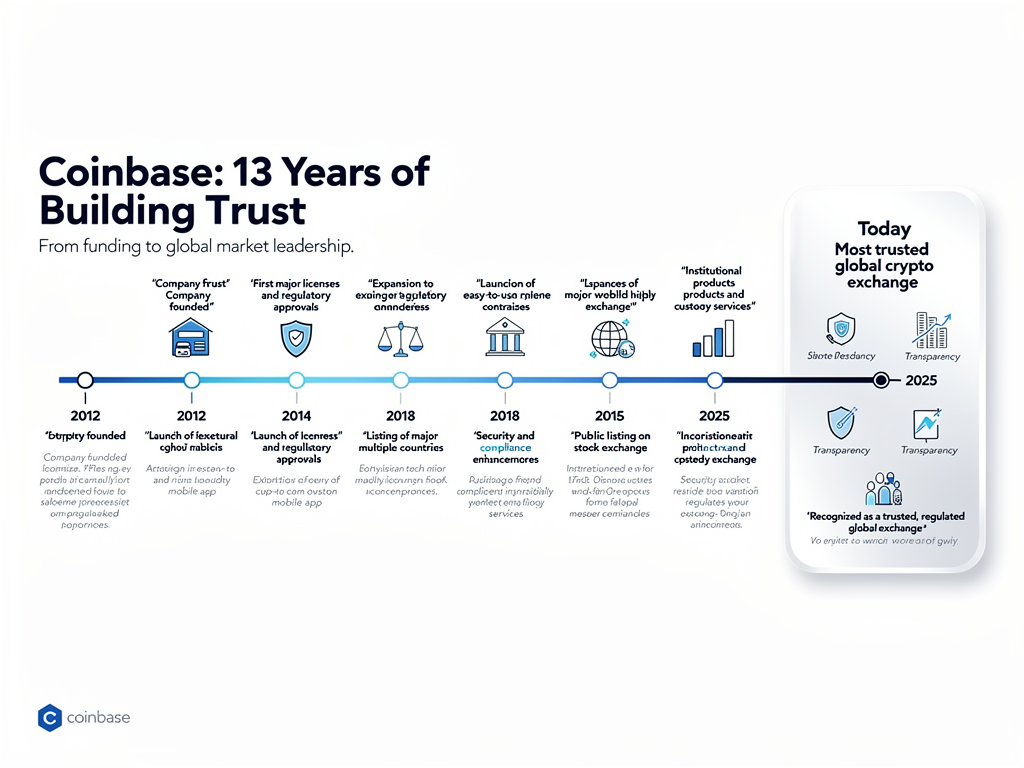
Here’s what matters: Coinbase spent 13 years building trust and legitimacy before becoming the most trusted exchange in the industry. That journey reveals a core truth—exchanges live or die based on user confidence, regulatory standing, and operational execution. The founders who’ve actually built working platforms report that legal compliance and team discipline matter more than flashy features.
This guide breaks down the exact steps, real costs, regulatory requirements, and common pitfalls based on founder experiences and documented case studies.
What Is a Cryptocurrency Exchange: Definition and Context
A cryptocurrency exchange is a digital platform where users buy, sell, and trade cryptocurrencies using fiat currency or other digital assets. Current implementations range from centralized exchanges (CEX) like Coinbase and Kraken, to decentralized exchanges (DEX) like Uniswap, to hybrid models combining both approaches.
Today’s market leaders focus on three pillars: regulatory compliance, user security, and transparent operations. Modern deployments reveal that exchanges face pressure from money transmitter regulations in every jurisdiction they serve, requiring separate licenses in the U.S., EU, Asia, and other regions. Recent implementations show that successful platforms invest heavily in legal infrastructure before launching public trading.
Exchanges are built for three audiences: retail traders seeking low friction and user-friendly interfaces; institutional clients requiring advanced trading tools and custody solutions; and market makers and arbitrageurs demanding speed, low fees, and deep liquidity. What an exchange is not: it’s not a casino, not a get-rich-quick scheme for founders, and not something you can launch in a weekend.
What Building an Exchange Actually Solves
1. Liquidity Fragmentation and High Slippage
Today’s traders face a core problem: cryptocurrency liquidity is scattered across dozens of platforms. Moving between exchanges to find the best prices costs time and money through slippage—the difference between your intended execution price and actual fill price.
A properly built exchange consolidates liquidity, reduces slippage, and offers competitive pricing. Traders who understand this pain point report 2–5x improvements in execution quality when they can trade on a single, well-capitalized platform. By building an exchange with proper market-making infrastructure, you solve this immediately for your users.
2. Regulatory Risk and Compliance Uncertainty
Traders and institutions want to know their funds are held by a regulated, licensed entity. Unregulated platforms face constant scrutiny, banking pressure, and user distrust. Current data shows that compliance-first exchanges attract institutional capital and long-term users, while regulatory gray-area platforms leak users during market downturns.
Building an exchange with money transmitter licenses, AML/KYC systems, and transparent operations solves this. Users gain confidence; you gain regulatory cover and banking relationships.
3. Custody and Security Failures
Hacks, exchange collapses, and lost funds remain the industry’s biggest trust killer. Mt. Gox, FTX, and countless smaller failures prove that users need demonstrable security—cold storage, insurance, transparent proof of reserves.
An exchange with proper custodial infrastructure, external audits, and insured assets directly addresses this. You become the safe harbor in a dangerous market.
4. Limited Market Depth in Emerging Assets
New tokens and niche assets struggle to find liquidity on major exchanges. Traders stuck buying illiquid assets on secondary markets face massive slippage and execution risk.
A focused exchange can build deep liquidity in specific niches—Layer 2 tokens, emerging DeFi projects, or regional assets. Founder data shows that niche positioning (like focusing on League of Legends prediction markets or specific altcoin ecosystems) drives user adoption faster than competing head-to-head with Coinbase.
5. Transparent Operations and Aligned Incentives
Traditional finance and crypto inherit the same opacity: you don’t know if the platform favors high-volume traders, front-runs orders, or uses your data against you. Users want aligned incentives—platforms that reward consistent participation over speculation.
Building with transparent fee structures, clear risk parameters, and user-aligned mechanics solves this. Recent implementations show that platforms rewarding liquidity provision and penalizing pure speculation build stronger, longer-lasting communities.
How to Start an Exchange: Step-by-Step Process
Step 1: Validate Your Market and Define Your Niche
Before building anything, validate that your target market wants what you’re building. Talk to 50+ potential users. Understand their pain points. Document why existing exchanges fail them.
Real founder experience shows this step is critical. One founder who built a crypto research tool started by identifying a specific problem: traders were wasting hours switching between CoinGecko, Twitter, GitHub, and Reddit to research tokens. By narrowing their niche and validating the need, they grew to 11,000 organic users and attracted $800,000 in investment. They didn’t try to build Coinbase—they solved one problem better than anyone else.
Common mistake at this step: trying to serve everyone. Exchanges that compete on breadth lose to specialists. Define your edge: Will you serve high-frequency traders? Emerging markets? Specific asset classes? Institutions seeking custody? Your answer shapes everything that follows.
Step 2: Develop a Complete Regulatory and Legal Strategy
This step separates real exchanges from scams. Determine which jurisdictions you’ll serve, what licenses you need, and what compliance infrastructure is mandatory.
In the U.S., you’ll need money transmitter licenses in states that require them (typically 40–50 states), plus FinCEN registration and SEC/CFTC compliance depending on what you trade. International expansion adds EU, Singapore, Hong Kong, and other requirements. Real costs: $200,000–$500,000 for legal and consulting on this step alone.
Hire a crypto-focused legal firm before you launch. Document every decision. The difference between a functioning exchange and one that gets shut down is often a single licensing requirement you missed.
Common mistake at this step: launching first, worrying about compliance later. This fails. Regulators are aggressive, and retroactive compliance costs 10x more than doing it right upfront.
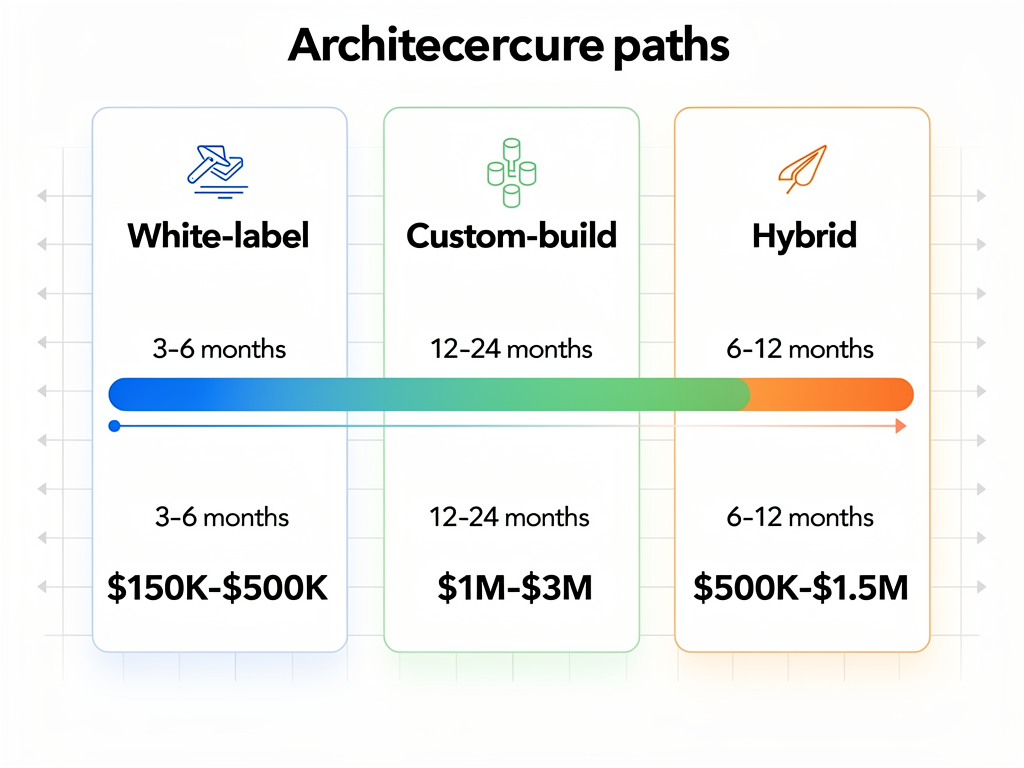
Step 3: Choose Your Architecture: White-Label, Custom Build, or Hybrid
You have three main paths:
- White-label solutions (3–6 months to launch, $150,000–$500,000): Use existing platforms like CoinAPI, B2Broker, or Liquidity Provider APIs. Faster time-to-market, less technical risk, but limited differentiation. Good for testing markets or entering specific niches.
- Custom-built exchanges (12–24 months, $1 million–$3 million+): Build your matching engine, order book, and trading infrastructure from scratch. Maximum differentiation and control. Required for high-frequency trading or unique features. Higher risk, but better long-term positioning.
- Hybrid approaches (6–12 months, $500,000–$1.5 million): Use white-label backends but customize the frontend, add proprietary trading features, or build specialized market-making tools.
Coinbase’s 13-year journey included building custom infrastructure that became their competitive moat. But starting with white-label and upgrading to custom build once you’ve validated product-market fit is often smarter.
Common mistake at this step: underestimating technical complexity. Real-time matching engines, settlement systems, and surveillance tools are harder than they look. Budget extra time and developers.
Step 4: Build Your Technical Stack: Security, Performance, and Compliance

Your technical architecture must include:
- Order matching engine: Low-latency matching, typically 1–10ms order-to-fill time for competitive exchanges.
- Custody and wallet infrastructure: Hot and cold storage, hardware security modules (HSMs), multi-signature controls.
- KYC/AML systems: Identity verification, transaction monitoring, sanctions screening. Use providers like Chainalysis, TRM Labs, or Elliptic.
- Surveillance and compliance: Market manipulation detection, suspicious activity reporting (SAR) systems.
- API and market data: WebSocket connections for real-time updates, REST APIs for orders, historical data feeds.
- Insurance and proof of reserves: Coverage for custody losses, regular third-party audits of reserves.
Security audits are mandatory. Budget $50,000–$150,000 for professional security reviews from firms like Trail of Bits, Certora, or OpenZeppelin.
Common mistake at this step: skipping security audits to save money. A single hack erases user trust and can end your exchange. Every major exchange has been audited multiple times.
Step 5: Secure Banking Relationships and Liquidity Partnerships
This step is harder than it sounds. Most banks won’t work with crypto exchanges due to compliance risk. You’ll likely need a crypto-friendly bank or specialized payment processor.
Options include:
- Crypto-native banks: Silvergate, Signature Bank, Customers Bank (in U.S.)
- Payment processors: Railsr, SumSub, or regional alternatives
- OTC and market-making partnerships: Connect with professional market makers to ensure liquidity
Without banking relationships, you can’t accept deposits or pay out withdrawals. This is a hard dependency—start conversations 6–12 months before launch.
Common mistake at this step: assuming banking will sort itself out. It won’t. Build relationships early.
Step 6: Launch, Monitor, and Scale Operations
Your initial launch should be limited: soft launch with 1,000 beta testers, then gradual rollout to 10,000, then broader public. This lets you find operational bugs and compliance issues before they harm thousands of users.
Real-time monitoring is critical. Watch for:
- Matching engine latency and errors
- Custody system reconciliation
- AML/KYC false positives and false negatives
- API uptime and stability
- User support tickets and complaints
Common mistake at this step: going from zero to million users overnight. This breaks systems and loses user trust. Founder data shows that platforms growing 10–20% month-over-month while maintaining operational excellence build sustainable businesses, while those chasing hockey-stick growth hit infrastructure walls and regulatory problems.
Where Most Projects Fail (and How to Fix It)
Mistake 1: Underestimating Regulatory Complexity and Costs
What happens: Founders assume they’ll get money transmitter licenses quickly and cheaply. Reality: license applications take 6–12 months, cost $200,000–$400,000 per jurisdiction, and often get rejected, requiring reapplication.
Why it hurts: Delayed launches mean competitors gain market share. Rejected applications mean pivoting or exiting. Regulatory fines and shutdowns destroy everything.
How to fix it: Hire a regulatory expert before writing code. Budget $300,000–$500,000 for compliance. Start licensing applications 12 months before planned launch. Build compliance into your culture from day one—it’s not a checkbox to tick later.
Mistake 2: Hiring Too Fast and the Wrong People
What happens: A founder gets funding and immediately hires 6 people—4 developers, 2 marketers—thinking scale equals growth. Instead, the team lacks cohesion, misunderstands the mission, and creates more problems than they solve.
Why it hurts: Poor hiring burns capital fast. One real case shows a founder spending $400,000 on a team they couldn’t manage, which delayed product development by months. Team dysfunction kills more startups than technical challenges.
How to fix it: Hire slowly and deliberately. Start with 1–2 senior developers you deeply trust. Expand only when you have specific problems you can’t solve alone. Make sure everyone understands the mission and regulatory constraints. FLEXE.io, with 7+ years in Web3 marketing and 700+ clients, helps exchange projects build high-performing teams by connecting them with experienced developers, compliance specialists, and growth operators. Reach out on Telegram: https://t.me/flexe_io_agency
Mistake 3: Prioritizing Features Over Security and Compliance
What happens: Founders race to launch trading features, advanced charts, and mobile apps. They deprioritize security audits, custody systems, and KYC infrastructure because “we’ll add those later.”
Why it hurts: A single hack or compliance failure ends your exchange. Users flee. Regulators investigate. Your founding team faces legal liability.
How to fix it: Lock in security and compliance first. Only launch trading features once custody, KYC, and surveillance systems are audited and live. Real exchanges spend 30–40% of early engineering effort on infrastructure, not user-facing features.
Mistake 4: Building in a Vacuum Without User Input
What happens: Founders imagine what users want, build in isolation, then launch to crickets. No traction. No product-market fit.
Why it hurts: You waste 12 months building something nobody wants. Capital burns out. The market moves on.
How to fix it: Validate relentlessly. Talk to 50+ traders, institutions, and market makers before launch. Build an MVP based on their feedback. Test white-label solutions with real users before committing to custom build. Organic growth through genuine user advocacy beats paid acquisition—founder data shows that projects solving real problems grow 10x faster than those chasing vanity metrics.
Mistake 5: Not Having a Risk Management Framework
What happens: Markets crash, tokens rug, or exploits emerge. Your exchange has no circuit breakers, position limits, or emergency procedures. Chaos ensues.
Why it hurts: Uncontrolled risk spreads contagion to other platforms and erodes confidence in the entire market. Your exchange becomes collateral damage.
How to fix it: Build risk controls into your matching engine: position limits, circuit breakers on volatility, settlement reconciliation checks. Have a crisis playbook. Test it. Share your risk framework transparently with users—this builds trust during market stress.
Real Cases with Verified Numbers
Case 1: Coinbase – Trust Through Legitimacy Over 13 Years
Context: Brian Armstrong and Fred Ehrsam founded Coinbase in 2012 as a small, unregulated platform. The market was new, regulation unclear, and institutional capital non-existent. They faced a choice: chase volume or build trust.
What they did:
- Invested heavily in compliance and regulatory relationships before expansion
- Built transparent operations and published reserves regularly
- Focused on making legitimate, boring infrastructure rather than chasing trends
- Spent 13 years slowly building institutional relationships and banking integrations
Results:
- Before: Unknown startup with minimal regulatory standing
- After: Most trusted cryptocurrency exchange globally, public company, $100+ billion in transaction volume annually
- Growth: From zero to market leadership over 13 years by prioritizing legitimacy
Source: Tweet
Key insight: Exchanges that prioritize trust and legitimacy over rapid growth become industry leaders. Speed kills platforms; discipline builds them.
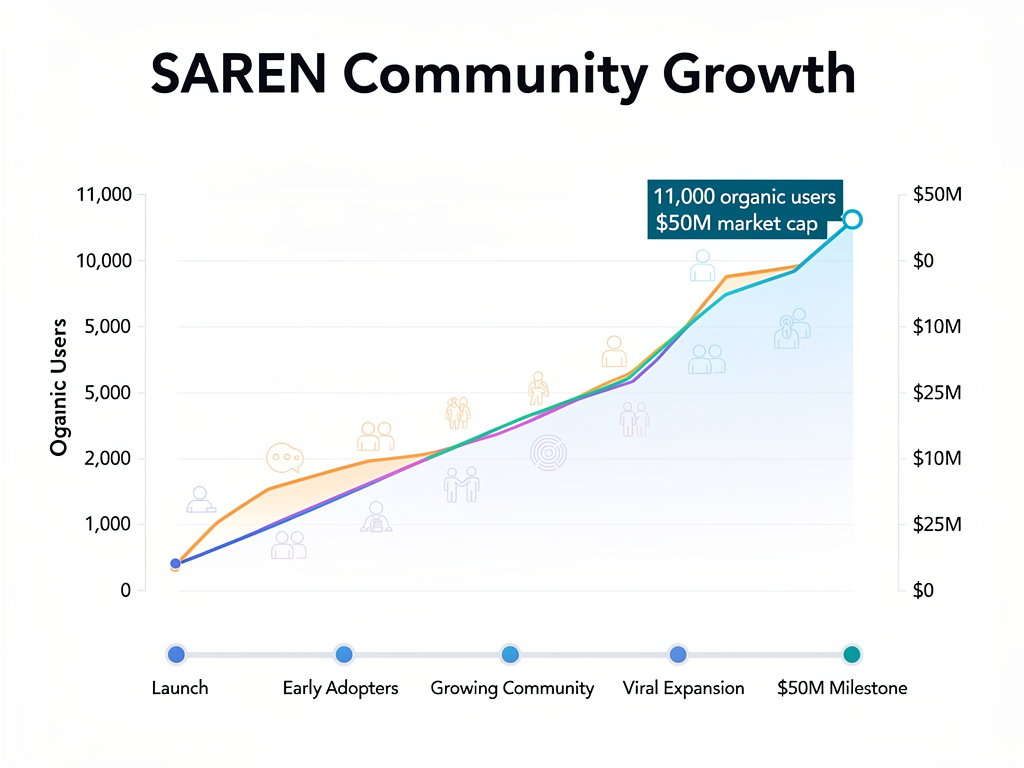
Case 2: Research Platform to Trading Ecosystem – 11,000 Organic Users in Months
Context: A founder identified a specific problem: traders wasted hours switching between five different platforms (CoinGecko, Twitter, GitHub, Reddit) to research crypto projects. Each platform had partial information; combining them was tedious and error-prone.
What they did:
- Built a single research tool consolidating all five data sources
- Created a unique “HODL rating” score combining tweets, GitHub commits, Reddit activity, and chart data into one 0–100 number
- Used guerrilla marketing in Telegram groups and Reddit communities, organically sharing the tool
- Gathered first 1,000 users from a single viral Reddit post
- Launched a token (SAREN) to accelerate adoption and attract VC funding
Results:
- Before: 0 users, no product
- After: 11,000 organic users, SAREN token reached $50 million market cap, $800,000 in VC funding
- Growth: From zero to $50M market cap through niche positioning and community focus
Key lesson: The founder later made a critical error—hiring 6 people with $400,000 before validating the business model. This created management chaos and delayed product development. The learning: hire sparingly, focus on execution over hiring, and scale team size only when product-market fit is proven.
Source: Tweet
Case 3: Polymarket Prediction Platform – Discipline Over Leverage
Context: A trader started with $1,000 on Polymarket (a prediction/trading platform). Early wins felt like skill—they made several 800%+ trades through volatility, not edge. Confident in this “skill,” they tried to replicate professional market-making setups they’d studied.
What they did:
- Started with volatile swing trades, won early, believed it was skill
- Studied professional market-making bots and tried to replicate, but execution failed
- Realized that “edge you can’t execute consistently is not edge”
- Reset with clear rules: focus on markets they genuinely understood (League of Legends esports and crypto pre-markets)
- Implemented strict risk discipline: max 10% per position, partial profit-taking, tight stop losses
- Built positions based on fundamentals and behavior, not charts
Results:
- Before: $1,000 initial capital (from $100 starting point)
- After: $7,000 in 70 days through disciplined trading
- Growth: +600% through structure and risk management, not better predictions
Key insight: This case reveals what separates winning traders from losers: not superior prediction skill, but operational discipline and risk control. The trader notes: “Polymarket is not about being right. It’s about knowing where you actually have an edge, respecting risk, and surviving long enough to compound.”
Source: Tweet
For exchanges, this translates directly: your platform succeeds not through explosive features or viral marketing, but through operational excellence, transparent risk controls, and user trust. Build that first.
Case 4: From $200 to Six Figures – Memecoin Trading Mastery in Months
Context: A trader started with $200 in November 2024 with no prior experience. Within months, they grew to six figures by mastering one niche: memecoin identification and early-stage trading on platforms like Pump.fun.
What they did:
- Spent 6+ hours daily analyzing the “Graduating Soon” and “Graduated” lists of newly launched tokens
- Developed criteria for high-quality vs low-quality memecoins: ticker clarity, X/social presence, holder distribution, icon design, banner quality
- Researched token narrative strength and virality potential before buying
- Studied technical analysis basics and learned to recognize patterns
- Specialized in identifying dead coins in the 5,000–20,000 market cap range with resurfacing narrative potential
- Developed strict position sizing and entry/exit rules
Results:
- Before: $200 starting capital, no trading experience
- After: Over six figures in profit within months
- Growth: 300x+ return through specialization and daily discipline
Key learning: Took roughly 6 months of daily effort to achieve “god tier” memecoin trading skill. The founder emphasizes: most traders fail because they chase random coins instead of mastering one niche deeply.
Source: Tweet
Case 5: DeFi LP on Meteora – From 0.5 SOL to 65 SOL Profit
Context: A college student with no income started LP (liquidity provider) trading with 0.5 SOL on Meteora, a Dynamic Liquidity Market Maker (DLMM) platform on Solana, starting in Q3 2024.
What they did:
- Began with safe bid-ask positions to minimize impermanent loss, slowly growing to 3 SOL
- Hit hard losses when a token rugged—learned to screen for warning signs (top holders, bundle distributions)
- Implemented strict risk rules: only trade tokens with 1M+ 5-minute volume, 500k+ market cap
- Concentrated liquidity in small bins (10–20) under specific position-sizing rules
- Focused on “green candle chasing”—quick 1–2 wave trades with 2–10 minute timeframes
- Researched token narratives, KOLs (key opinion leaders), and CT (CryptoTwitter) wallets before every trade
Results:
- Before: 0.5 SOL with no income, relying on parents
- After: 65 SOL in total profit across wallets, 200 SOL in trading fees, now LP for a living
- Growth: 130x initial capital while paying for college tuition and building financial independence
Key insight: Mastering one platform (Meteora DLMM) with strict rules for risk, research, and position sizing turned hobby into income source. Most traders fail because they chase random opportunities instead of deepening expertise on one platform.
Source: Tweet
Tools and Next Steps
Essential Tools and Services for Starting Your Exchange
Regulatory and Compliance:
- Chainalysis or TRM Labs: AML/KYC transaction monitoring and sanctions screening
- Railsr or SumSub: Payment processing and user verification
- Crypto legal firms: Gikken, Anderson Kill, Perkins Coie—specialize in licensing and regulatory strategy
Technical Infrastructure:
- White-label solutions: B2Broker, CoinAPI, Liquio for rapid deployment
- Custody and wallet: Fireblocks, Copper, Ledger Vault for enterprise custody
- Security auditing: Trail of Bits, Certora, OpenZeppelin for code review and testing
- Monitoring and alerting: PagerDuty, Datadog for real-time operational visibility
Market Data and Liquidity:
- CoinGecko API or Messari: Real-time price data and historical analytics
- Market maker partnerships: Genesis Trading, DRW, Jump Trading for liquidity provision
Your 90-Day Launch Checklist

- [ ] Define your niche and validate with 50+ users – Without product-market fit, everything else is wasted effort. Talk to traders, institutions, and market makers. Document their top three pain points.
- [ ] Hire a crypto-focused regulatory attorney and complete jurisdiction analysis – Determine which licenses you need, timelines, and costs. Start this work immediately; it’s your critical path.
- [ ] Decide on white-label vs custom build and create a detailed technical roadmap – Map features, timelines, and engineering resources needed. Be realistic; most projects take 20–30% longer than planned.
- [ ] Secure banking relationships and payment processor partnerships – This cannot be rushed. Start conversations 6 months before planned launch. Have backup options.
- [ ] Establish custody and wallet infrastructure with multi-sig controls and insurance – Hire enterprise custody providers; don’t DIY. Third-party audits are mandatory.
- [ ] Build KYC/AML and market surveillance systems using industry providers – Integrate Chainalysis or TRM Labs. Document every compliance decision. Keep audit trails.
- [ ] Develop a detailed risk management framework including circuit breakers and position limits – Build this into your matching engine before launch. Test under stress conditions.
- [ ] Create a crisis playbook and communication strategy for security incidents – What do you do if there’s a hack? A deposit run? A regulatory investigation? Write it down. Practice it.
- [ ] Launch a private beta with 500–1,000 power users for 4–6 weeks – Collect feedback. Find bugs. Build a core community. Iterate before public launch.
- [ ] Develop a 12-month growth strategy focused on organic adoption and regulatory standing, not vanity metrics – Real exchanges grow 10–20% monthly while maintaining operational excellence. This beats explosive growth and collapse.
Growth and Market Expansion Resources
FLEXE.io, trusted by 700+ crypto projects over 7+ years, helps exchanges accelerate user acquisition by connecting you with 150+ media outlets and 500+ key opinion leaders in the space. This accelerates adoption while maintaining credibility. DM us on Telegram: https://t.me/flexe_io_agency
FAQ: Your Questions Answered
How long does it actually take to start a cryptocurrency exchange from zero to public launch?
White-label exchanges: 3–6 months. Custom-built platforms: 12–24 months. The difference: white-label solutions use existing backend infrastructure, so you customize the frontend and add integrations. Custom builds require developing your matching engine, custody system, and surveillance tools from scratch. Most founders underestimate time by 30–50%; budget for delays. Real case data shows that Coinbase took several years to develop and launched gradually with limited features, not a big bang.
What’s the realistic total cost to launch an exchange?
Budget $150,000–$500,000 for white-label solutions (including licensing, compliance, and initial operations). Custom-built exchanges cost $1 million–$3 million+ depending on features, team, and geography. Regulatory licensing alone: $200,000–$400,000. Technical development: $300,000–$1.5 million. Operations and infrastructure: $100,000–$500,000 annually. Don’t forget working capital for first 12 months of operations before revenue.
Do I need a banking relationship to start a how to start an exchange for cryptocurrency?
Yes, absolutely. Without banking, you can’t accept customer deposits or process withdrawals. This is a hard constraint. Most traditional banks won’t work with crypto exchanges; you’ll need a crypto-friendly bank (Silvergate, Signature, Customers Bank in the U.S.), a payment processor (Railsr, SumSub), or international alternatives. Start banking conversations 12 months before launch. Have backup options.
Should I build a centralized exchange (CEX) or decentralized exchange (DEX)?
CEX pros: user-friendly, high performance, built-in compliance hooks. CEX cons: regulatory pressure, hacking targets, user custody risk. DEX pros: no custody risk, regulatory gray area, censorship-resistant. DEX cons: complex UX, lower volume, liquidity challenges. Most successful recent platforms are hybrid—centralized for retail users, DEX-like mechanics for power traders, or layered approaches with CEX frontend and DEX backend. Choose based on your target user and risk tolerance.
What’s the biggest reason cryptocurrency exchanges fail?
Underestimating regulatory and compliance requirements. Founders assume they’ll get licensed quickly and cheaply; reality is licensing takes 6–12 months, costs hundreds of thousands, and often gets rejected. Regulatory shutdown or fines destroy exchanges overnight. Second reason: security failures and hacks. A single breach erases user trust. Third reason: poor team hiring—spending too much too fast on the wrong people instead of growing slowly with proven talent.
Can I start with a white-label exchange and upgrade to custom build later?
Yes, and it’s recommended. White-label lets you validate product-market fit, build a user base, and prove viability in 3–6 months. Once you’ve demonstrated traction, migrating to custom infrastructure is easier because you understand exactly what features users need. Coinbase’s early years involved using existing infrastructure; they built custom systems once they had market validation.
How do I get users for my new exchange?
Avoid paid acquisition alone—it’s expensive and attracts low-quality users. Instead: 1) Focus on solving one problem better than competitors (niche positioning). 2) Build an engaged community in your target market (niche communities beat broad marketing). 3) Use organic word-of-mouth and PR. 4) Partner with market makers and traders who have influence. Real case data shows exchanges that grow through genuine user advocacy and organic adoption at 10–20% monthly outperform those chasing hockey-stick growth through paid ads. Speed kills platforms; discipline builds them.
Conclusion: The Real Path Forward
Starting an exchange for cryptocurrency is not a 90-day sprint. It’s a marathon that takes 12–24 months, costs $1 million–$3 million, and demands expertise in regulation, security, operations, and community building. Most founders underestimate this reality and fail.
What separates winners from losers is not innovative features or massive funding—it’s disciplined execution. Coinbase’s 13-year journey to market leadership wasn’t about being fastest; it was about being legitimate. Founder stories show that exchanges built on trust, compliance, and transparent operations attract users and capital. Those chasing growth at any cost collapse under regulatory pressure or security failures.
Your path forward: 1) Validate that your target market actually wants what you’re building. 2) Hire regulatory expertise immediately; don’t treat compliance as an afterthought. 3) Choose white-label to test quickly, or custom build if you have deep technical expertise and capital. 4) Lock in security and custody before launching trading features. 5) Build a crisis playbook and operational discipline into your culture. 6) Grow deliberately at 10–20% monthly while maintaining quality over explosive growth.
The founders who’ve successfully built exchanges learned one lesson repeatedly: edge you can’t execute consistently is not edge. Build operational excellence, transparent risk controls, and genuine user trust. Everything else follows.