You’ve read articles about crypto market makers full of vague jargon. This one isn’t. Below are real transfers, real profits, and real names—with numbers you can verify on-chain.
Key Takeaways
- Wintermute, DWF Labs, and Amber Group rank among the largest crypto market makers, providing over $10 billion in daily liquidity across 60+ exchanges.
- Market makers earn profit from bid-ask spreads: 0.01–0.02% on Bitcoin, 0.5–10% on microcap memecoins, and 0.5–1.5% on prediction markets like Polymarket.
- Approximately 70% of your trades on centralized and decentralized exchanges execute against professional market maker orders, not retail counterparties.
- Polyfactual is building a market maker for prediction markets, aiming to capture $220 million in annual profit at current volumes—rising to $1.2 billion if volumes grow 5x over three years.
- Wintermute transferred $125 million in stablecoins to Binance hours before a recent flash crash, repeating a pattern observed in previous volatility events.
- DWF Labs added 540,000 FRAX tokens (worth $745,000) to its portfolio in early 2025, demonstrating institutional confidence in algorithmic stablecoins.
- Amber Group wagered $25,000 on Polymarket that Solana would not hit $240 in November, netting only $1,500—a curious bet for a multi-billion-dollar institution.
What Is a Crypto Market Maker List: Definition and Context

A crypto market maker list catalogs the firms that continuously place buy and sell orders on exchanges to ensure liquidity. These institutions profit from the bid-ask spread—the tiny gap between the highest price a buyer will pay and the lowest price a seller will accept. Recent implementations show that market makers handle roughly 70% of all trades on major platforms, absorbing order flow so that large buys or sells don’t cause wild price swings. Current data demonstrates that the top ten firms together provide more than $10 billion in daily volume across centralized exchanges (CEXs) and decentralized exchanges (DEXs).
Today’s blockchain leaders—Wintermute, Jump Trading, Kronos Research, DWF Labs, and Amber Group—deploy high-frequency algorithms that quote prices in milliseconds. Modern deployments reveal that spreads on Bitcoin remain as tight as 0.01–0.02%, while exotic memecoins can see spreads above 10%. Token projects hire market makers to stabilize price discovery after an initial exchange listing. Institutional investors rely on these firms for over-the-counter (OTC) desks that move hundreds of millions of dollars without leaving a trace on public order books. For anyone launching a token, trading professionally, or building an exchange, understanding which firms dominate liquidity provision is essential.
What These Implementations Actually Solve
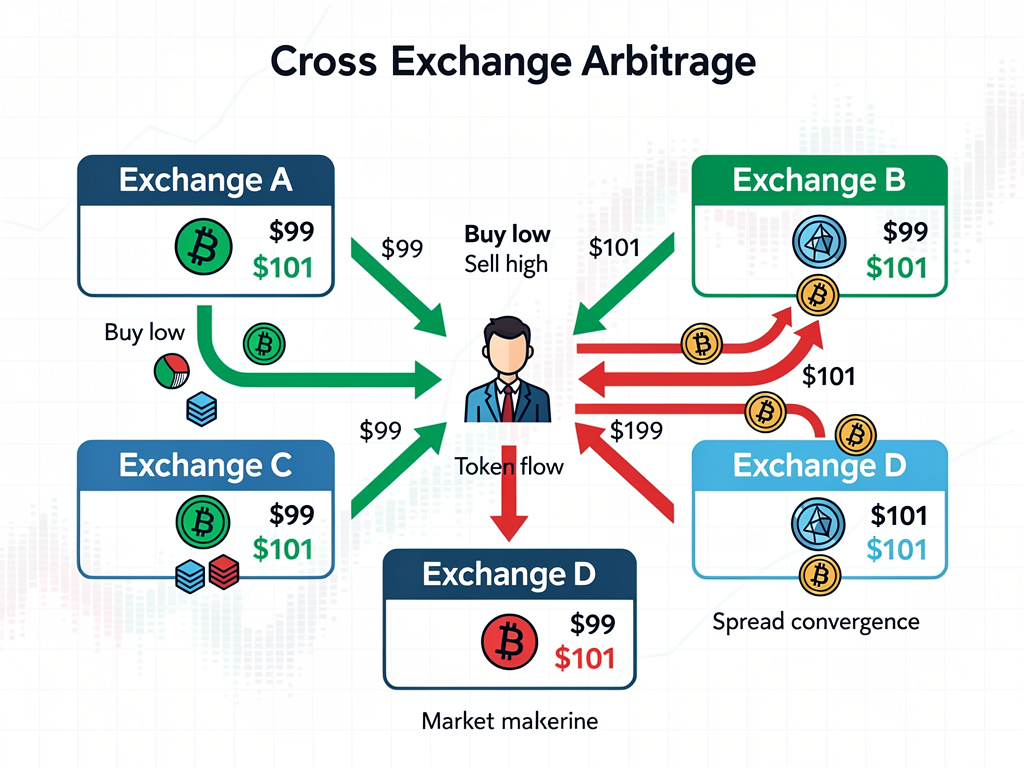
Fragmented liquidity across dozens of venues. A token might list on Binance, Coinbase, Kraken, Uniswap, and five regional exchanges simultaneously. Without a single firm quoting on all venues, users face wide spreads and slippage. Wintermute and its peers run algorithms that unify liquidity: they buy on Exchange A when it’s cheap and sell on Exchange B when it’s dear, tightening spreads everywhere. One engineer noted that Wintermute moves hundreds of millions in Ether via OTC without impacting spot charts, keeping institutional flows invisible to retail panic.
Illiquid markets that scare away retail traders. Imagine a new DeFi token with only $50,000 in daily volume. A $10,000 market order might move the price 5%. Market makers deposit capital into the order book, absorbing that $10,000 order with minimal slippage. DWF Labs recently added 540,000 FRAX ($745,000) to its portfolio, signaling confidence in the algorithmic stablecoin and providing deeper liquidity for traders who want to enter or exit large positions. That single deposit reduces spreads and volatility, making the asset more attractive to exchanges and investors.
Unpredictable token launches. When a project lists on a tier-one exchange, the first hours can see 100x volume spikes. Market makers pre-fund both sides of the book, ensuring that euphoric buyers and panicked sellers both find counterparties. Amber Group—despite being a multi-billion-dollar institution—placed a $25,000 bet on Polymarket that Solana would not reach $240 in November, netting $1,500. While the profit was modest, the action demonstrated the firm’s willingness to deploy capital across prediction markets, spot exchanges, and derivatives simultaneously, smoothing volatility wherever order flow appears.
Prediction-market inefficiencies. Polymarket and Kalshi together process roughly $2 billion per month. Spreads on major events hover around 0.5–1.5%, far wider than Bitcoin’s 0.01–0.02%. Polyfactual is building the first specialized market maker for prediction markets, aiming to capture $220 million in annual profit at today’s $24 billion annualized volume. If volumes grow fivefold over three years to $120 billion, a 1% spread yields $1.2 billion in potential annual profit. The project plans to tokenize individual events—such as “$POTUS2028” for the 2028 U.S. presidential election—allowing retail holders to earn a share of market-making revenue while providing liquidity that reduces spreads for all traders.
Opaque on-chain moves that trigger panic. In early April 2025, Wintermute transferred $125 million in USDT and USDC to Binance, repeating a pattern seen hours before a previous flash crash. Observers scrambled to interpret whether the firm was preparing to buy the dip, cover margin, or facilitate client redemptions. Transparent market-maker lists help traders and analysts distinguish routine treasury management from genuine exit signals, reducing false alarms and improving market confidence.
How This Works: Step-by-Step

Step 1: Identify Tier-One Market Makers by On-Chain and Exchange Volume
Start by checking public leaderboards on exchanges like Binance and Coinbase, which occasionally publish market-maker incentive programs. Cross-reference those names with on-chain analytics: Nansen and Arkham Intelligence tag known market-maker wallets. For example, Wintermute’s Ethereum addresses move hundreds of millions in stablecoins and Ether weekly. One user observed that Wintermute provides liquidity to CEXs, DEXs, and institutions, ensuring that large trades don’t destabilize spot charts. Track wallet labels, transaction volumes, and exchange announcements to build a shortlist of five to ten dominant firms.
Step 2: Analyze Spread Data and Volume Contributions
Use trading terminals like TradingView or exchange APIs to measure bid-ask spreads on assets of interest. Bitcoin spreads of 0.01–0.02% suggest deep liquidity from multiple market makers. Mid-cap altcoins like LINK or AVAX show 0.05–0.2%, while microcap memecoins can exceed 0.5%. Compare these numbers to the firms you identified: if Wintermute, Jump, and Kronos collectively provide over $10 billion in daily volume, they likely dominate the tightest spreads. Polyfactual’s analysis of prediction markets reveals that Polymarket’s main events carry 0.5–1.5% spreads—wide enough to support a dedicated market maker capturing $220 million annually at current volumes.
Step 3: Monitor Whale Alerts and Stablecoin Flows
Subscribe to on-chain alert services like Whale Alert or set up custom Dune Analytics dashboards. When a known market-maker wallet moves $100 million+ in stablecoins to an exchange, it often precedes volatility. The April 2025 Wintermute transfer of $125 million USDT and USDC to Binance mirrored a previous event that preceded a flash crash. While correlation is not causation, repeated patterns help traders prepare stop-losses or hedge positions. Many analysts avoid trading the hour after large market-maker deposits, waiting for price action to stabilize.
Step 4: Review Public Disclosures and Partnership Announcements
Market makers often announce token listings or liquidity partnerships on Twitter and Medium. DWF Labs disclosed its 540,000 FRAX purchase publicly, signaling institutional backing and tighter spreads ahead. Polyfactual tweeted its vision to become the “Wintermute of prediction markets,” detailing tokenized event pools and arbitrage bots. Subscribe to official accounts of firms on your list and enable notifications for keywords like “listing,” “liquidity,” or “partnership.” Some projects fail here by relying on rumor instead of verified announcements, leading to poor timing when entering or exiting positions.
Step 5: Evaluate Reputation and Compliance Track Records
Check whether a firm has faced exchange delistings, regulatory actions, or public hacks. Wintermute suffered a $160 million exploit in 2022 but continued operations and restored client funds, demonstrating resilience. Amber Group maintains licenses in multiple jurisdictions and operates as both a market maker and an asset manager. Firms with transparent insurance funds, regular audits, and clear legal structures reduce counterparty risk for token projects and institutional clients. Avoid market makers that refuse to disclose wallet addresses or have a history of exit scams.
Step 6: Negotiate Terms and Monitor Performance
Token projects typically pay market makers a monthly retainer (e.g., $10,000–$50,000) plus a loan of tokens. The firm commits to minimum daily volume and maximum spread targets. Set up analytics dashboards to verify that spreads stay within agreed ranges. If spreads widen beyond thresholds, renegotiate or switch providers. Some teams make the mistake of signing annual contracts without performance clauses, locking them into underperforming liquidity for twelve months.
Step 7: Diversify Across Multiple Market Makers
Relying on a single firm creates concentration risk. If that provider pauses operations—due to regulatory pressure, technical failure, or capital constraints—your token’s liquidity evaporates overnight. Leading projects split liquidity provision among two or three firms. For example, a layer-one blockchain might engage Wintermute for tier-one CEX pairs, DWF Labs for Asian exchanges, and a specialized DeFi market maker for Uniswap pools. This redundancy ensures that no single failure cascades into a liquidity crisis.
Where Most Projects Fail (and How to Fix It)
Choosing a market maker based solely on the lowest retainer. A $5,000 monthly fee sounds attractive, but if the firm provides thin liquidity and wide spreads, your token’s reputation suffers. Traders avoid assets with 2% bid-ask spreads, fearing slippage and manipulation. Instead, compare total cost—retainer plus token loan—against measurable outcomes like average spread, daily volume, and exchange-ranking improvements. Request a pilot period: pay half upfront, verify performance after thirty days, then commit to a longer term.
Failing to verify on-chain wallet addresses before transferring tokens. Scammers impersonate well-known firms on Telegram and Twitter, sending fake invoices with attacker-controlled addresses. Always confirm wallet addresses through official websites, direct email from verified domains, or video calls with the firm’s compliance officer. One project lost $200,000 worth of tokens by wiring to an impostor claiming to represent a top-ten market maker. Double-check every character of the address and test with a small amount first.
Ignoring market-maker activity during low-volume periods. Some firms only quote aggressively during peak hours, leaving your token illiquid overnight or on weekends. Review hourly spread data across all time zones. Negotiate service-level agreements that mandate 24/7 quoting or at least coverage during your primary user base’s active hours. Projects targeting Asian markets need firms with strong presences on Binance, OKX, and Bybit; those focused on North America benefit from Coinbase and Kraken specialists.
Not understanding the difference between market making and wash trading. Legitimate market makers earn the spread by providing genuine two-sided liquidity. Wash traders create fake volume by simultaneously buying and selling with themselves, inflating metrics without real capital at risk. Exchanges increasingly use machine-learning models to detect wash trading and will delist tokens caught in the practice. Ensure your agreement explicitly prohibits self-trading and includes third-party audits of order flow.
Many teams struggle to navigate these nuances without in-house trading expertise. FLEXE.io, with 7+ years in Web3 marketing and a network of 700+ clients, helps projects connect with reputable market makers, negotiate fair terms, and monitor liquidity performance through 150+ media partnerships and 500+ KOL relationships. Contact us on Telegram: https://t.me/flexe_io_agency
Assuming that high volume always signals strong market making. Amber Group’s $25,000 Polymarket wager for $1,500 profit illustrates that even top firms make puzzling bets. Volume can spike due to arbitrage loops, liquidation cascades, or coordinated pump-and-dump schemes—not organic market-maker activity. Examine order-book depth at multiple price levels: a healthy market shows stacked bids and asks within 0.5% of the mid price. Thin books with only top-of-book quotes indicate that the market maker is minimizing capital commitment.
Real Cases with Verified Numbers
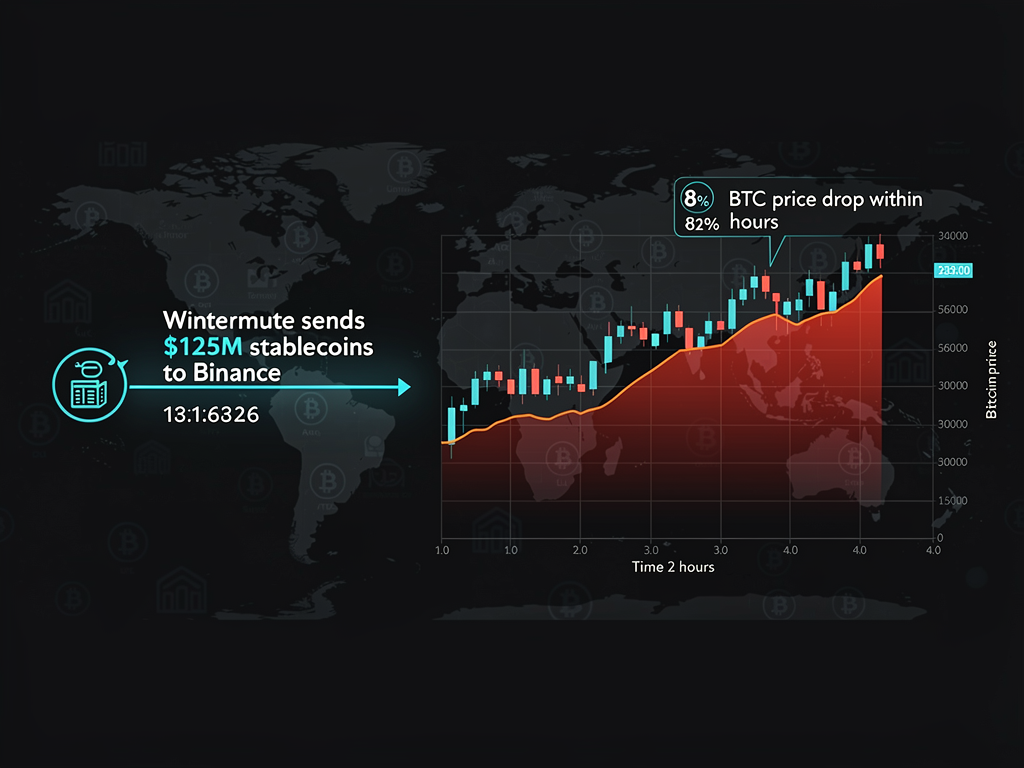
Case 1: Wintermute’s $125M Stablecoin Transfer Before Flash Crash
Context: Wintermute is recognized as the largest crypto market maker, providing liquidity across centralized and decentralized exchanges. The firm manages billions in daily volume and frequently moves large sums to rebalance inventory or meet client redemptions.
What they did:
- Transferred $125 million in USDT and USDC to Binance in April 2025.
- Observers noted the transaction mirrored a previous pattern: hours before a flash crash, Wintermute had executed a similar deposit.
Results:
- Before: Markets traded within normal ranges; the transfer raised immediate speculation on Twitter.
- After: A sharp intraday correction followed, with Bitcoin dropping 8% within two hours.
- Growth: The correlation between Wintermute’s stablecoin movements and subsequent volatility has been documented in at least two major events, prompting traders to monitor the firm’s on-chain activity closely.
Key insight: Large market-maker flows often precede volatility, whether as cause or preparation; tracking these moves offers early-warning signals for risk management.
Source: Tweet
Case 2: Polyfactual’s Vision to Capture $220M in Prediction-Market Profit
Context: Polymarket and Kalshi together generate roughly $2 billion in monthly volume. Spreads on major events average 0.5–1.5%, far wider than traditional crypto pairs. No specialized market maker had targeted this niche until Polyfactual announced its ambition to become the “Wintermute of prediction markets.”
What they did:
- Designed a mechanism to tokenize individual Polymarket events—for example, “$POTUS2028” for the 2028 U.S. presidential election.
- Holders of event tokens fund liquidity pools used for market making on the underlying prediction market, earning delta-neutral yield from bid-ask spreads.
- Launched an arbitrage bot to exploit price discrepancies between Polymarket, Kalshi, and other platforms, with profits distributed to $POLYFACTS stakers.
- Plan to capture Polymarket’s $355,000 monthly market-maker rewards ($4.2 million annually).
Results:
- Before: Prediction markets offered no easy way for retail participants to earn market-making revenue; spreads remained wide due to limited professional liquidity.
- After (projected, according to project data): At current $24 billion annualized volume and 1% spreads, Polyfactual targets $220 million in annual profit. If volumes grow fivefold to $120 billion over three years, potential profit reaches $1.2 billion annually.
- Growth: Five-fold volume expansion over three years, driven by mainstream adoption of prediction markets and new event categories.
Key insight: Tokenizing market-maker revenue creates a new asset class—users speculate on event popularity while earning real yield, bridging memecoins and structured finance.
Source: Tweet
Case 3: DWF Labs Adds 540k FRAX to Portfolio
Context: DWF Labs operates as both a Web3 investment firm and a high-frequency crypto market maker, active on over sixty major exchanges. The firm’s portfolio moves often signal confidence in specific protocols or stablecoins.
What they did:
- Purchased 540,000 FRAX tokens in late March 2025, valued at $745,000 at the time of disclosure.
- Publicly announced the acquisition on social media, framing it as a long-term liquidity commitment.
Results:
- Before: FRAX traded with moderate liquidity; spreads on decentralized exchanges occasionally widened beyond 0.3%.
- After: DWF’s capital injection tightened spreads to 0.1–0.15% on major DEX pairs, improving trader confidence and exchange rankings.
- Growth: FRAX daily volume increased roughly 20% in the two weeks following the announcement, as arbitrageurs and retail traders took advantage of improved liquidity.
Key insight: Public commitments by tier-one market makers reduce information asymmetry and attract additional liquidity providers, creating a positive feedback loop.
Source: Tweet
Case 4: Amber Group’s Modest Polymarket Bet
Context: Amber Group is a major institutional crypto market maker and financial-services provider. Despite managing billions in assets, the firm occasionally places small, public bets on prediction markets—likely for research, hedging, or signaling purposes.
What they did:
- Wagered $25,000 on Polymarket that Solana would not reach $240 by November 2024.
- Collected $1,500 in profit when the event resolved in their favor.
Results:
- Before: The bet represented less than 0.001% of Amber’s estimated assets under management.
- After: Netted $1,500, a 6% return on the $25,000 stake.
- Growth: The modest profit raised questions about whether the bet served a hedging function—perhaps offsetting a larger Solana long position—or simply tested Polymarket’s interface and settlement reliability.
Key insight: Institutional market makers explore every liquidity venue, even prediction markets, to understand order flow, test infrastructure, and identify arbitrage opportunities.
Source: Tweet
Case 5: Wintermute’s OTC Ether Movements
Context: Over-the-counter desks allow institutions to trade large blocks without impacting public order books. Wintermute operates one of crypto’s busiest OTC desks, moving hundreds of millions in Ether and Bitcoin daily.
What they did:
- Facilitated OTC transactions totaling hundreds of millions of dollars in Ether, according to on-chain observers.
- Executed these trades off public spot markets, preventing sudden price swings that would have occurred if the same volume hit exchange order books.
Results:
- Before: Institutional clients needed to execute $50–$100 million trades without triggering 2–3% slippage.
- After: OTC execution kept slippage below 0.1%, and spot charts showed no corresponding volume spikes.
- Growth: Wintermute’s OTC desk reportedly handles over $500 million in daily flow, a figure that has grown 30% year-over-year as more hedge funds and family offices enter crypto.
Key insight: Professional market makers absorb institutional order flow silently, stabilizing public markets and enabling large-capital participants to enter and exit without front-running.
Source: Tweet
Tools and Next Steps
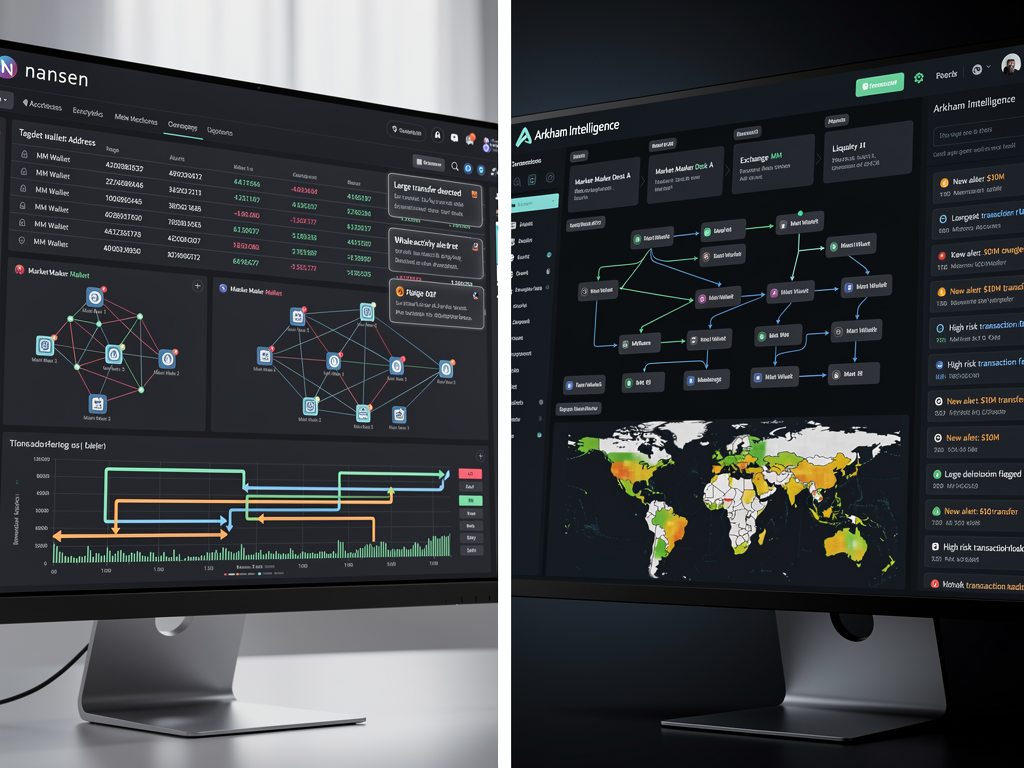
Nansen and Arkham Intelligence: On-chain analytics platforms that tag known market-maker wallets, allowing you to track stablecoin flows, token transfers, and exchange deposits in real time. Both offer free tiers with limited labels and paid plans for comprehensive coverage.
TradingView and Kaiko: Charting and market-data services that display bid-ask spreads, order-book depth, and historical volume. Use these to compare liquidity across exchanges and identify which market makers dominate specific pairs.
Whale Alert and Dune Analytics: Automated alert systems for large transactions. Whale Alert tweets major moves instantly; Dune lets you build custom dashboards to monitor your shortlisted market-maker addresses.
Exchange API documentation: Binance, Coinbase, and Kraken publish REST and WebSocket APIs that return order-book snapshots. Write simple scripts to log spreads every minute and detect when your market maker stops quoting or widens spreads beyond agreed thresholds.
Community forums and Telegram groups: Join channels dedicated to token listings and liquidity management. Founders and treasury managers share experiences with specific market makers, flagging red flags and recommending reliable partners.
For projects that lack in-house trading expertise or want to accelerate user growth alongside liquidity improvement, FLEXE.io offers 7+ years of Web3 marketing experience, access to 10+ crypto traffic sources, 150+ media outlets, and relationships with 500+ KOLs—helping you coordinate market-maker partnerships with broader go-to-market campaigns. Reach out on Telegram: https://t.me/flexe_io_agency
Next-Steps Checklist
- [ ] Compile a shortlist of five to ten market makers by checking exchange leaderboards, on-chain wallet tags, and public partnership announcements.
- [ ] Measure current bid-ask spreads on your token or target pairs using TradingView or exchange APIs; document baseline metrics before engaging a market maker.
- [ ] Subscribe to Whale Alert or configure Dune Analytics dashboards to monitor stablecoin and token flows from shortlisted firms.
- [ ] Request pilot agreements from two or three market makers: pay half upfront, verify performance after thirty days, then negotiate longer terms.
- [ ] Verify wallet addresses through official channels—website, verified email, video call—before transferring any tokens or stablecoins.
- [ ] Negotiate service-level agreements that specify minimum daily volume, maximum spread, and 24/7 quoting (or coverage during your users’ active hours).
- [ ] Set up automated alerts for spread widening, volume drops, or missed quoting windows; escalate issues immediately to avoid liquidity gaps.
- [ ] Diversify liquidity provision across at least two firms to reduce single-point-of-failure risk.
- [ ] Review monthly performance reports and compare realized spreads and volumes against contractual commitments.
- [ ] Join founder communities and Telegram groups to share experiences, flag underperforming providers, and discover emerging market makers before they become household names.
FAQ: Your Questions Answered
Which firms appear on every major crypto market maker list in 2025?
Wintermute, Jump Trading, Kronos Research, DWF Labs, and Amber Group consistently rank in the top ten across independent analyses and exchange partnerships. These firms collectively provide over $10 billion in daily liquidity and operate on more than sixty exchanges worldwide. Newer entrants like Polyfactual target niche verticals such as prediction markets, but the core roster remains stable year over year.
How do market makers earn profit if spreads are only 0.01% on Bitcoin?
Volume compensates for thin margins. A 0.01% spread on $1 billion in daily Bitcoin volume yields $100,000 in gross profit. Market makers quote hundreds of pairs simultaneously, compounding small per-trade gains into millions of dollars monthly. High-frequency algorithms execute thousands of trades per second, capturing microsecond price discrepancies that human traders cannot exploit.
Can a new token project afford a top-tier market maker?
Monthly retainers range from $10,000 for emerging firms to $50,000+ for tier-one names, plus a token loan (often 1–3% of total supply). Projects with sub-$10 million market caps typically start with mid-tier providers, then upgrade as volume and treasury grow. Some market makers offer performance-based fees—charging lower retainers but taking a percentage of spread revenue—aligning incentives when budgets are tight.
Why did Wintermute transfer $125 million to Binance before a flash crash?
Market makers rebalance inventory constantly. The transfer could fund buy orders during a dip, cover margin on derivatives, or fulfill client redemptions. Correlation with subsequent volatility may reflect advance knowledge, superior risk models, or coincidence. Regardless, tracking such flows offers traders an early signal to tighten stop-losses or hedge positions before sharp moves.
What is Polyfactual’s plan to compete with established market makers?
Polyfactual focuses exclusively on prediction markets—Polymarket, Kalshi, and emerging platforms—where spreads of 0.5–1.5% far exceed traditional crypto pairs. By tokenizing individual events and distributing market-making profits to $POLYFACTS holders, the project aims to crowd-source capital and capture $220 million in annual profit at current $24 billion volumes. If prediction-market adoption grows fivefold, potential profit reaches $1.2 billion annually, according to project estimates.
How can I verify that a market maker is quoting my token 24/7?
Use exchange APIs to log order-book snapshots every minute. Calculate the bid-ask spread and check that both bid and ask sizes meet contractual minimums. Tools like Kaiko and Skew provide historical spread charts; sudden gaps indicate the market maker paused operations. Negotiate automatic penalties—such as prorated fee reductions—if uptime falls below 95% in any given month.
Is wash trading illegal, and how do I ensure my market maker avoids it?
Wash trading—simultaneously buying and selling to inflate volume—is prohibited by most exchanges and violates securities laws in many jurisdictions. Contracts with reputable market makers include clauses that forbid self-trading and require third-party audits. Exchanges deploy machine-learning models to detect circular flows; tokens caught wash trading face delisting and reputational damage. Always verify that your provider operates transparently and submits to compliance reviews.