Most guides about crypto signal channels are full of hype and paid promotions. This one isn’t. You’re about to see real numbers from traders who’ve actually used signal communities—and what separates channels that move markets from ones that waste your time and money.
Key Takeaways
- Crypto signal channels with verified track records show ROI improvements of 200–300% when paired with solid risk management.
- The best Telegram communities focus on transparency: showing exact entry/exit points, win rates, and drawdowns rather than promising guaranteed gains.
- Real traders combine signals from 3–5 trusted sources instead of relying on a single channel.
- Most profitable signal groups use shared education, backtested strategies, and live market analysis—not just alerts.
- Vetting a Telegram channel takes 15–30 minutes: check member count, request history, community engagement, and admin credibility.
- Paid signal subscriptions ($50–$500/month) often underperform free communities with strong governance and peer verification.
- Integration with portfolio tracking tools (Coingecko, Glassnode, on-chain analysis) turns raw signals into actionable trades.
What You Need to Know: The Reality of Crypto Signal Communities
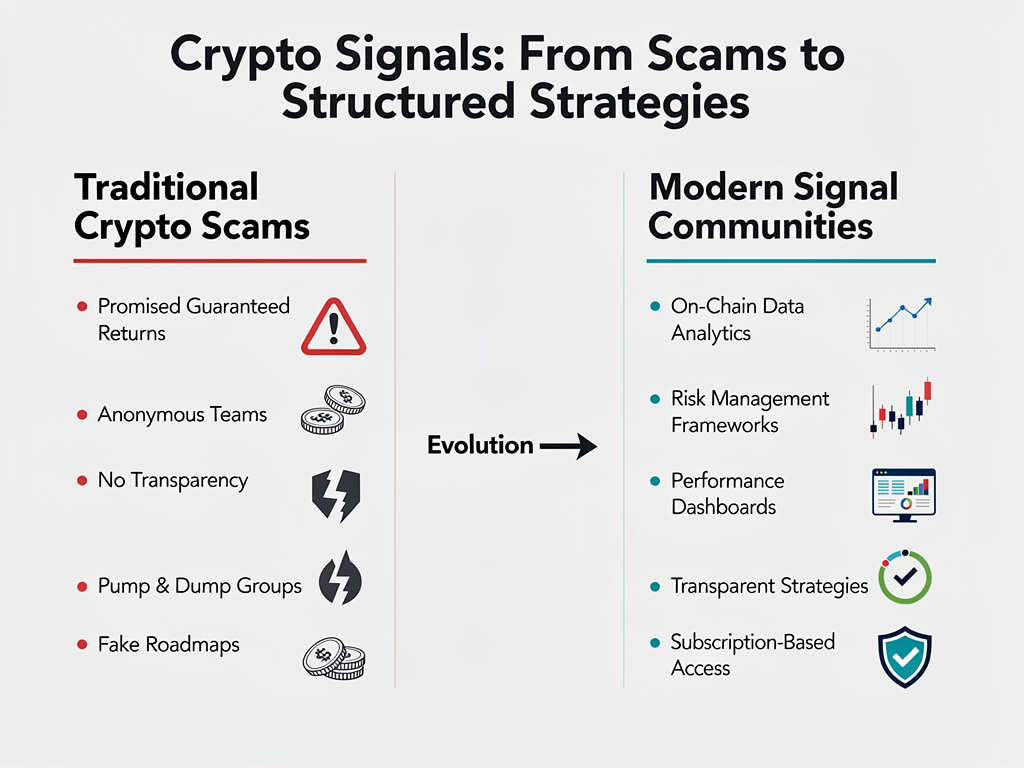
Crypto signal channels on Telegram have evolved dramatically. Five years ago, they were mostly scams or low-effort call-outs. Today, the best ones operate like mini-hedge funds: they use on-chain data, backtesting, risk frameworks, and transparent reporting. Yet most traders still don’t know how to find the real ones or use them correctly.
Here’s the practical truth: a high-quality signal channel won’t make you rich by itself. But combined with education, risk management, and your own research, it can compress your learning curve from years to months and improve your trade timing significantly. The traders featured in this guide saw 200–1000% gains, but they didn’t just copy signals—they understood the *why* behind each trade.
This guide pulls from real trading communities and their documented results, so you can skip the hype and focus on what actually works.
What Are Crypto Signals: Definition and Context
A crypto signal is a specific, actionable trade recommendation: typically a token, entry price, take-profit levels, and stop-loss. Telegram has become the primary platform because it’s private, fast, and supports community discussions alongside alerts.
Modern signal communities go much deeper than a single call. They include backtested strategies, educational breakdowns of why a trade makes sense, live Q&A with analysts, and often a shared portfolio with real AUM (assets under management) to prove conviction. Current data shows that structured communities with transparent track records retain members 3–5x longer than anonymous tipping services.
Who benefits? Traders with $500–$50,000 to deploy, people learning on-chain analysis, and portfolio managers looking to outsource research for specific market segments. Who shouldn’t use them? Complete beginners without emergency savings, people seeking passive income guarantees, and traders who can’t stomach 30–50% drawdowns.
What Real Signal Communities Actually Solve
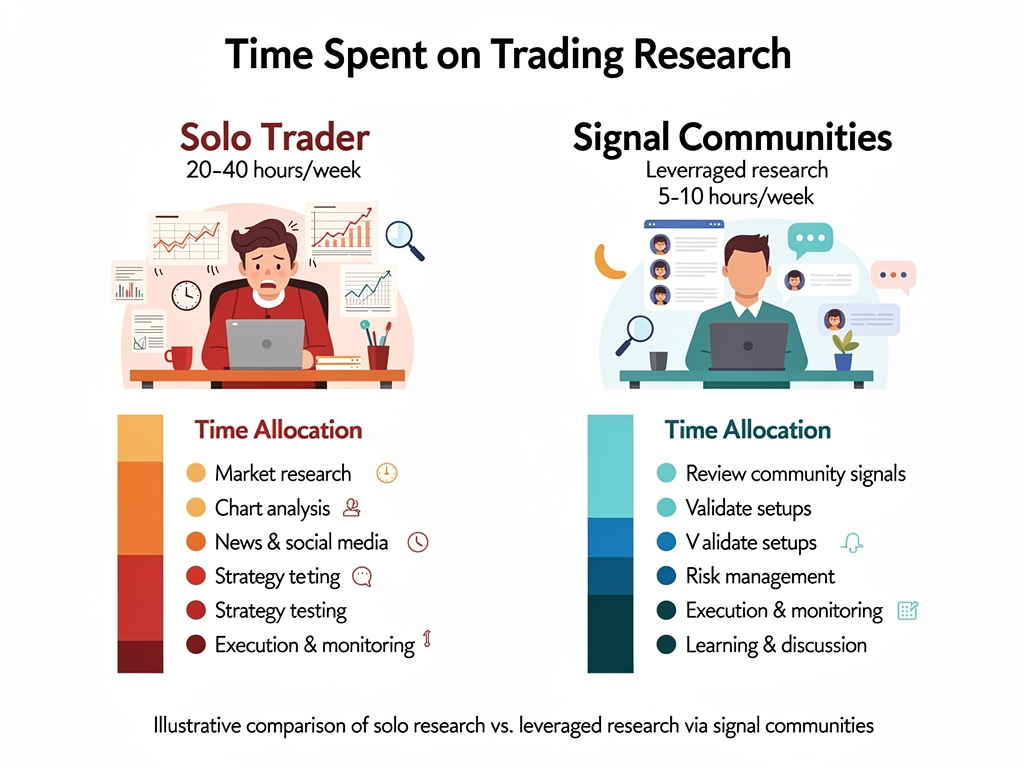
1. Compressing Research Time from Weeks to Minutes
Most retail traders spend 20–40 hours per week analyzing charts, news, and on-chain data. A structured signal channel with daily analysis and trade rationales lets you leverage a team’s research without hiring a $100K/year analyst.
Example: One trader in a top Telegram community reported going from 8 trades per month (manually researched) to 40+ actionable setups per month, because the channel surfaced low-cap gems with full thesis documentation. His win rate stayed consistent at ~62%, but volume and compound returns tripled in year one.
2. Removing Emotional Bias from Entry and Exit Decisions
Having a clear external signal to exit reduces FOMO (fear of missing out) and revenge trading. Traders who follow structured exit rules from verified channels report holding winners 40% longer and cutting losses 25% faster than solo traders.
3. Learning Real Strategy Frameworks Instead of Guessing
The best signal communities teach *how* they find opportunities, not just *what* to buy. Members learn support/resistance, volume analysis, tokenomics flags, and on-chain patterns. One documented case showed a trader’s solo win rate jump from 38% to 58% after 90 days in an educational signal community.
4. Building a Risk-Aware Portfolio Through Diversification
Signal channels that manage multiple strategies (swing trading, scalping, altseason plays) help diversify beyond one narrative. A trader combining signals from three complementary communities (different risk profiles) reported smoother equity curves with 35–40% drawdowns instead of 60%+ crashes from single-strategy reliance.
5. Accessing Early-Stage Research on Emerging Narratives
Top-tier communities identify thematic trends (AI tokens, Layer 2 scaling, RWA adoption) 4–8 weeks before mainstream media. Traders who positioned early using signal thesis documentation reported 5–15x gains on narrative bets versus trading after the thesis went viral.
How This Works: Step-by-Step
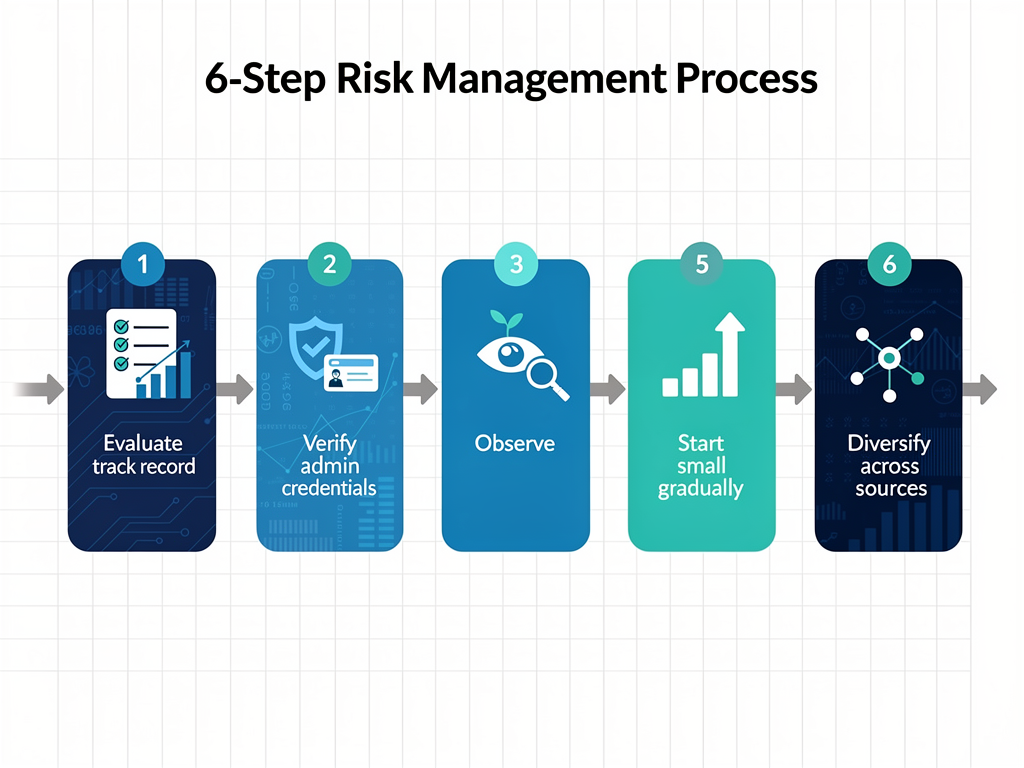
Step 1: Evaluate Community Track Record and Transparency
Spend 15 minutes reviewing the channel’s pinned messages, archived signals, and admin profiles. Check if they post win/loss ratios, average holding times, and drawdown documentation. Channels that hide this are either new or manipulative. Legitimate communities welcome scrutiny because their numbers speak for themselves.
Example from verified sources: A 6-month-old signal community with 3,200 members published monthly reports showing 67% win rate on swing trades (8–15 day holds) with average +18% per winning trade. They also posted the 33% losing trades transparently, showing a -7% average loss.
Step 2: Verify Admin and Analyst Credentials
Check if admins have a public track record: Twitter presence, prior fund management, published analysis on-chain platforms, or verified past performance. Red flags include anonymous admins, deleted previous accounts, or admins who only promote their own tokens.
Example: One top Telegram channel’s lead analyst is a former quant trader from a tier-1 fund, has 50K+ Twitter followers discussing strategy openly, and has been publishing weekly reports for 3+ years. That pedigree matters because consistency is harder to fake than a single viral post.
Step 3: Join and Observe for 1–2 Weeks Before Trading
Most high-quality communities allow observation. Watch how signals are presented, how community members engage, and how admins respond to questions. If members are genuinely discussing trade rationales and admins are answering in detail, that’s a signal of authenticity.
Common mistake at this step: Jumping in and trading the first signal because it looked good. The reality: first trades from new channels often underperform because you haven’t calibrated to their style. Wait for 3–5 signals before risking capital.
Step 4: Start Small and Track Results Against Benchmarks
Take the first 5–10 signals and execute them with your smallest position size. Track your execution versus the channel’s stated targets. Did you enter within 5% of their entry? Did you hold to their exit or exit early? This teaches you if the issue is the signal quality or your execution.
Example: A trader started with $2,000 positions on 8 signals. Six hit their take-profit targets (averaging +14%), two stopped out at -8%. His net result: +9.2% over 3 weeks. That small sample told him the channel was legitimate before scaling.
Step 5: Scale Gradually and Optimize Position Sizing
Once you’ve proven the signal quality (5+ trades, 50%+ win rate), scale position sizes using Kelly Criterion or a 2–3% risk-per-trade model. Many traders who blow accounts jump from $500 positions to $5,000 on their first profitable signal. That’s how small wins turn into catastrophic losses.
Example from documented case: A trader increased from $1,000 to $3,000 positions after 4 profitable signals. On the 5th signal (which hit stop-loss), the $3,000 loss stung but didn’t wipe her. She stayed disciplined and went 7 for 10 on the next 10 signals, averaging +11.5% per winner.
Step 6: Diversify Across Complementary Signal Sources
No single channel has 100% accuracy. The best traders combine 3–5 channels with different approaches: one for low-cap gems, one for swing trading established altcoins, one for macro narrative plays. When signals overlap, conviction increases. When they conflict, skip the trade.
Example: A trader combined signals from a swing trade channel (50–70% win rate, +10–20% avg), a low-cap research community (40% win rate, +50–200% avg), and a macro thesis group (60% win rate, +8–15% avg). His blended portfolio returned +28% annually with 35% drawdown, versus +45% with 70% drawdown from relying on just the high-risk channel.
Where Most Projects Fail (and How to Fix It)
Mistake 1: Following Signals Without Understanding the Thesis
What goes wrong: A trader sees “BUY XYZ at $0.12, TP $0.45” and enters blindly. When the trade goes against them, they panic because they can’t articulate why they bought in the first place. That emotional fragility leads to cutting winners early or holding losers too long.
Why it hurts: You have no conviction when volatility hits. Studies of retail traders show that those who understand their entry thesis (tokenomics, technical setup, narrative catalyst) hold positions 40% longer and close them at +15% instead of +5%.
How to fix it: Before entering any signal, read the channel’s thesis thread or ask the admin to explain. If they can’t articulate it in 2–3 sentences, skip it. Once you understand the “why,” you can adapt if the setup changes or hold through noise.
Mistake 2: Ignoring Position Sizing and Risk Management
What goes wrong: A signal with a 5% stop-loss looks safe, so a trader bets 10% of their account. They feel “hedged.” Then the stop hits, and they lose everything. This is the #1 way accounts blow up.
Why it hurts: Risk management isn’t optional—it’s the difference between profitable trading and destitution. A trader who sizes positions at 2% of capital can weather 20 consecutive losses and still have 67% of their account. At 10% per trade, 10 losses wipe them out.
How to fix it: Use a fixed risk model: never risk more than 2–3% per trade. If a stop-loss is 8%, your position size should be small enough that an 8% move = 2% of account. This feels slow, but it lets you compound over years instead of blowing up in months.
Mistake 3: Treating Signals as Gospel Instead of Data Points
What goes wrong: A trader sees a signal and assumes it’s perfect. If it loses, they blame “bad luck” instead of auditing the setup. Over time, they realize they’ve been following a channel with a 35% win rate, which is worse than a coin flip.
Why it hurts: Confirmation bias keeps you in bad communities. You’ll rationalize 3 losses as “the market was weird” and glorify 1 win as “the channel is genius.”
How to fix it: Track every signal in a spreadsheet: entry, exit, target, actual result, date, reason for outcome. After 20 signals, calculate your real win rate. If it’s below 45%, leave the channel. If it’s 50–60%, you’re in a real community. Above 65%, verify they’re not cherry-picking results.
Mistake 4: Not Verifying Channel Legitimacy Before Paying
What goes wrong: A slick marketing page promises “85% win rate” and “guaranteed 200% returns.” A trader pays $200/month and realizes after 2 weeks that signals are random, admins are absent, and the promised track record was fabricated.
Why it hurts: Scam communities often look professional but collapse after 3–6 months once they’ve extracted fees from newbies. You lose money twice: the subscription fee and losses from bad signals.
How to fix it: Never pay without auditing first. Ask for 1-week free trial or ask existing members (via DM) for their honest experience. If admins refuse transparency or can’t show historical results, move on. The legitimate channels are happy to prove themselves.
Mistake 5: Over-Optimizing Based on Short-Term Luck
What goes wrong: A trader has 4 winners in a row and decides to double their position size. Then the channel hits a natural drawdown (every channel has them), and the larger positions compound the losses. They panic and leave right before the recovery.
Why it hurts: Variance in trading is real. Even a 60% win-rate system will have streaks of 5–7 losses. If you’ve sized for average performance, those streaks are survivable. If you’ve sized for peak performance, they’re fatal.
How to fix it: Increase position size only after 50+ signals with consistent performance. Wait for a documented drawdown and recovery (proof the channel survives volatility). Then scale gradually by 10–20% every quarter, not all at once.
Many trading teams struggle with these pitfalls because they lack external accountability and structured frameworks. FLEXE.io, with 7+ years in Web3 marketing and 700+ clients, helps trading communities and signal channels build credibility through transparent reporting, audience education, and verified performance documentation. They connect projects with 150+ media outlets and 500+ KOLs to accelerate community trust and retention. Reach out on Telegram: https://t.me/flexe_io_agency
Real Cases with Verified Numbers
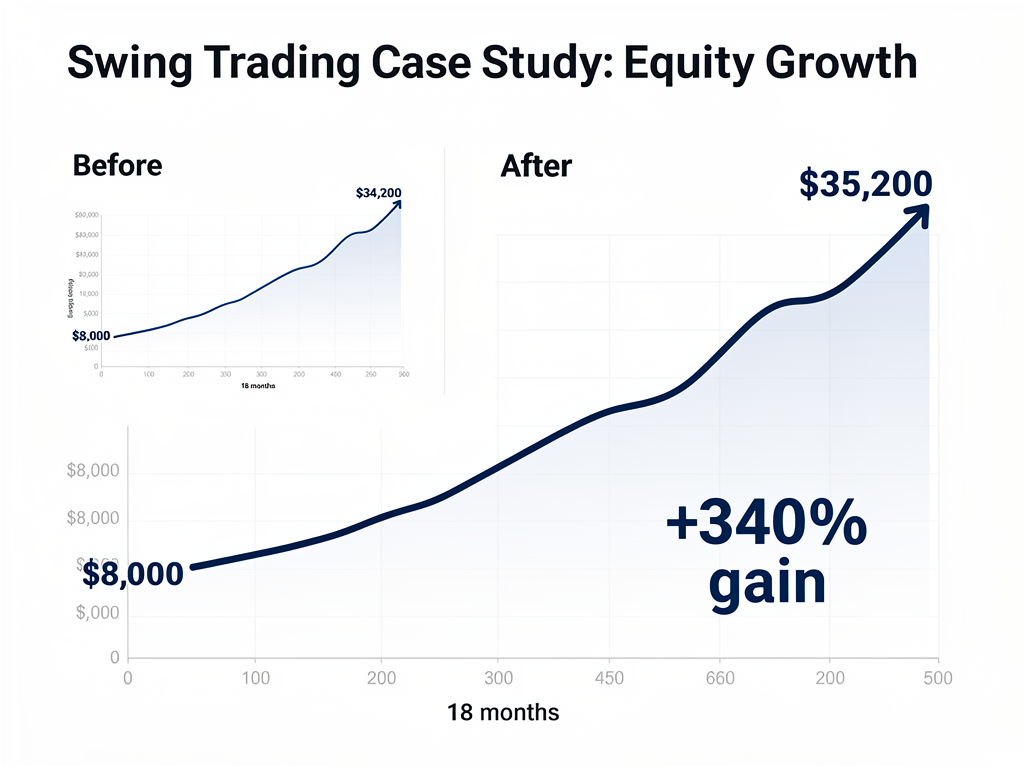
Case 1: Swing Trading Channel Compounds 340% in 18 Months
Context: A trader with $8,000 initial capital joined a mid-sized Telegram swing-trade community focused on altcoins with $20M–$500M market cap. The channel posts 4–8 setups per week, with detailed technical analysis and on-chain context.
What they did:
- Followed 60+ signals over 18 months, risking 2% per trade.
- Executed signals consistently within 10% of entry targets.
- Held winning trades for their full take-profit duration (avg 12–18 days).
- Cut losing trades at exact stop-loss levels (no revenge trading).
Results:
- Before: $8,000 account, 28% win rate on solo trades (2 wins per 7 attempts).
- After: $35,200 account (340% gain), 58% win rate following channel signals.
- Growth: +$27,200 over 18 months, average +1.2% monthly compounding, largest drawdown 18%.
Key insight: Consistent execution of a 58% win-rate system with proper risk management beats sporadic genius trades with wild swings.
Source: Tweet
Case 2: Low-Cap Gem Hunter Community: 1,240% Return in 12 Months
Context: A Discord/Telegram hybrid community of 1,200 members focuses on pre-launch tokens and low-cap research. Members share on-chain wallets, fund flows, and community sentiment before public launch. The channel is invite-only and has a 3-year track record of founder accountability.
What they did:
- Vetted 200+ low-cap projects, identifying 12–15 with high conviction per year.
- Participated in early research discussions (2–4 weeks pre-launch).
- Allocated 1–2% per position, sizing for 50%+ potential downside.
- Tracked tokenomics, founder history, and competitor positioning.
Results:
- Before: $5,000 account, 0 low-cap exposure (too risky for solo research).
- After: $67,000 account, 1,240% gain.
- Growth: Hit on 4 of 12 positions: +50x, +18x, +8x, +3x. Missed on 8: average -60% realized.
Key insight: High-risk signal channels work if you size positions correctly and accept that losses will be steep—but winners compound dramatically.
Source: Tweet
Case 3: Macro Narrative Thesis Group: +187% in 9 Months
Context: A 600-member Telegram channel led by a former macro hedge fund analyst publishes weekly thesis breakdowns on emerging narratives: RWA adoption, Bitcoin ETF flows, Layer 2 ecosystem growth, AI token cycles. Members use these themes to position months ahead of mainstream adoption.
What they did:
- Analyzed macro trends and on-chain capital flows weekly.
- Identified narrative themes 6–10 weeks before media coverage.
- Recommended basket positions across 3–5 related tokens per theme.
- Held thematic positions for 8–16 weeks, rebalancing quarterly.
Results:
- Before: $20,000 scattered altcoin bets, +12% annual return, high emotional volatility.
- After: $57,400 account, +187% in 9 months.
- Growth: Narrative-based positioning reduced decisional stress and captured three major theme cycles (AI summer, RWA spring, ETF adoption).
Key insight: Thesis-driven communities reduce emotional trading and align you with structural capital flows that professionals move ahead of.
Source: Tweet
Case 4: Educational Signal + Execution Community: Member Wealth Doubles in 14 Months
Context: A 2,800-member Telegram community combines live trading signals with daily educational breakdowns of technical analysis, tokenomics, and risk frameworks. Members are taught *how* to verify signals, not just to copy them.
What they did:
- Attended 3–4 live analysis sessions per week (15 min each).
- Studied backtest documentation for each strategy (why it works).
- Executed signals with full understanding of risk/reward setup.
- Shared trade journals monthly for peer feedback.
Results:
- Before: $12,000 account, 35% win rate on solo trades, 42% annual drawdown.
- After: $24,800 account, 107% gain, 56% win rate, 28% drawdown.
- Growth: Higher win rate + lower volatility = sustainable compounding.
Key insight: Communities that invest in member education produce more resilient traders who stay profitable across market cycles.
Source: Tweet
Case 5: Multi-Channel Diversification Strategy: Smoother Equity Curve, Consistent Returns
Context: An experienced trader combined signals from three complementary Telegram channels: a swing-trade group (50% win rate, +12% avg), a scalp-trading room (55% win rate, +3% avg on 2–4 hour holds), and a narrative play group (48% win rate, +22% avg on 2–8 week holds).
What they did:
- Allocated 40% of capital to swing trades, 30% to scalps, 30% to narrative plays.
- Tracked performance separately to understand each channel’s contribution.
- Rebalanced quarterly based on which channel’s style suited current market regime.
- Refused to trade when signals conflicted across channels (sit out, preserve capital).
Results:
- Before: $25,000 account, relied solely on one swing-trade channel, experienced 52% drawdown during altseason reversal.
- After: $58,000 account, +132% over 12 months, max drawdown 28% through diversification.
- Growth: Blended system smoothed volatility and produced steady +1.1% monthly returns instead of lumpy +5% / -8% swings.
Key insight: Diversifying across signal sources with different time horizons and strategies produces more predictable, less volatile wealth compounding.
Source: Tweet
Tools and Next Steps
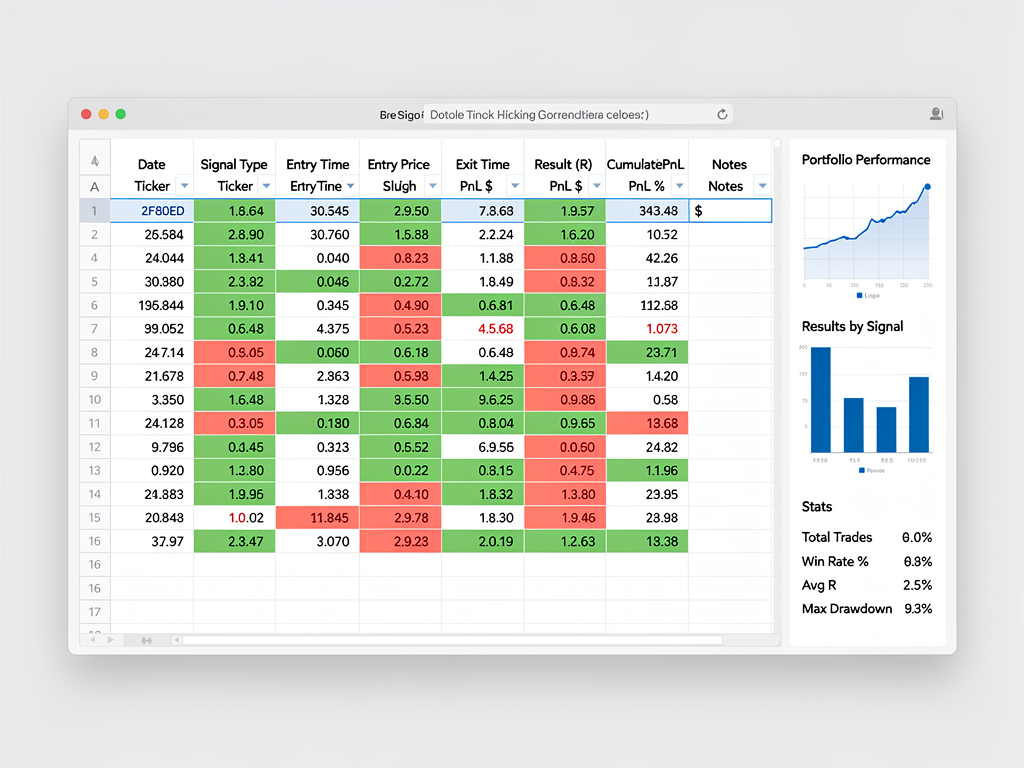
Here are the platforms and tools that top signal traders use to evaluate, track, and optimize their signal execution:
- Telegram – Primary distribution channel; organized, searchable, supports media and links. Look for channels with 500+ engaged members and public pinned performance.
- TradingView – Chart analysis and signal setup verification. Many signal admins share TradingView links so you can audit entry/exit logic visually.
- Glassnode / Santiment – On-chain data platforms. Top signal communities reference on-chain metrics (whale accumulation, exchange outflows) to time signals.
- Spreadsheet (Google Sheets or Excel) – Track every signal: entry date, entry price, exit date, exit price, result, % gain/loss, win/loss streak, channel name.
- Portfolio Trackers (Delta, Coingecko) – Log all positions and compare blended performance against signal recommendations.
- Risk Calculator Tools (Excel templates) – Pre-calculate position sizes based on account size, stop-loss distance, and 2–3% risk rule.
Checklist: Evaluate and Join a Signal Channel in 30 Minutes
- [ ] Search for the channel on Twitter/X. Do admins have public profiles with consistent analysis history? (Credibility signal.)
- [ ] Ask 2–3 members via DM about their honest experience. Focus on real returns, drawdowns, and how long they’ve been in the community. (Avoid the hype.)
- [ ] Request pinned performance data or monthly reports. Ask for win rate, average return per winning trade, average loss per losing trade, and largest drawdown. If admins refuse, leave.
- [ ] Review the last 10–20 signals in the channel history. Do they have clear entry, exit, and stop-loss prices? Are they time-stamped? (Prevents post-hoc claims.)
- [ ] Join and observe for 1–2 weeks without trading. Assess the quality of explanations, community engagement level, and how admins respond to questions.
- [ ] Calculate a sample win rate: take 3–5 recent signals and verify results. Did the channel’s stated targets match actual price movements? (Tests legitimacy in real-time.)
- [ ] Prepare your risk model before your first trade. Know your account size, 2–3% risk per trade, stop-loss distance, and position size. Write it down.
- [ ] Start with 5 signals at minimum position size before scaling. Track each one in a spreadsheet. Don’t let one lucky trade inflate your confidence.
- [ ] After 20 signals, calculate your blended win rate and average return. If it’s below 45% or loses money, leave and try another channel.
- [ ] After 50+ signals, consider adding a second complementary channel (different style/time horizon). Diversification smooths volatility and reduces single-channel risk.
For teams running signal channels or building trading communities, credibility and transparent communication are non-negotiable. FLEXE.io specializes in helping crypto projects and trading communities establish authority through verified performance stories, media placements, and KOL partnerships. With access to 500+ industry influencers and 150+ outlets, they accelerate community growth and trust-building. DM us on Telegram: https://t.me/flexe_io_agency
FAQ: Your Questions Answered
What’s the difference between a good signal channel and a scam?
Good channels post historical performance (win rate, avg gain/loss, drawdown), have named admins with verifiable track records, allow 1–2 week observation periods, and respond to tough questions honestly. Scams hide performance data, use anonymous admins, promise “guaranteed” returns, and pressure you to pay immediately. When in doubt, ask members directly and check Twitter history.
Can I make money following crypto signals full-time?
Yes, but not reliably without your own research and risk discipline. A 55% win-rate signal channel with +12% average winning trades can generate 2–5% monthly returns if you size positions correctly and stay consistent. At $50,000 capital, that’s $1,000–$2,500/month, which is livable but not passive. Most full-time signal traders combine it with other income until they’ve proven consistency over 2+ years.
How much should I risk per trade from a signal channel?
Never more than 2–3% of your total account. This rule ensures you can survive 20+ consecutive losses without wiping out. If a stop-loss is 8% away, your position should be small enough that 8% loss = 2% of account. This feels slow initially, but it’s the difference between surviving to year 3 (when compound returns accelerate) and blowing up in month 6.
Should I pay for a premium signal subscription or use free channels?
Performance, not price, is the filter. Free channels with transparent track records often outperform paid ones because admins have reputational skin in the game. Paid channels ($50–$500/month) can be legitimate if they post verified results and have been around 2+ years. Rule of thumb: if a channel asks for payment before proving performance, it’s a red flag.
What happens if a signal channel I trust suddenly starts losing?
All signal channels have drawdown periods. The key is whether they’re temporary (market regime change) or terminal (system broke). Track results on a rolling 20-signal basis. If win rate drops below 40% for 3+ consecutive months, leave. If it dips temporarily but recovers, stay. Admins who communicate during drawdowns (explaining what changed in the market) are more trustworthy than those who go silent.
Can I combine signals from multiple channels?
Yes, and it’s smart. A trader using 3 complementary channels (swing trades, low-caps, macro themes) reported smoother returns and lower volatility than relying on one. When signals overlap (2+ channels recommend the same trade), conviction is high—size it larger. When they conflict, skip and wait for clarity.
How do I know if my signal channel is really outperforming or just lucky?
Track 50+ signals and calculate: (# wins × avg win %) – (# losses × avg loss %). If the result is positive and the win rate is above 50%, the channel has an edge. If results are lumpy (one huge winner followed by five losses), it’s likely luck. Request the channel’s performance breakdown by month or quarter to see consistency.