Most articles about NFT Instagram accounts are full of outdated lists and generic influencer names. This guide is different—it breaks down real accounts making tangible impact, the strategies they use, and how they drive actual engagement and sales for their communities.
Key Takeaways
- Visual storytelling on Instagram remains the fastest way to build NFT community trust and drive floor price appreciation.
- The best NFT Instagram accounts combine consistent aesthetic branding with educational content and real community interaction.
- Accounts generating $100K+ monthly revenue use multi-format content (Reels, Stories, feed posts) with AI-assisted creation tools.
- Micro-accounts with 10K–100K followers often outperform macro-accounts in conversion rate and authentic engagement.
- Successful NFT creators now blend personal narrative with product positioning—pure hype posting no longer converts.
- Internal linking between Instagram bio links, Discord, and landing pages creates compound growth in holders and secondary sales.
- AI-powered content systems now let individual creators replicate output that once required full marketing teams.
Introduction
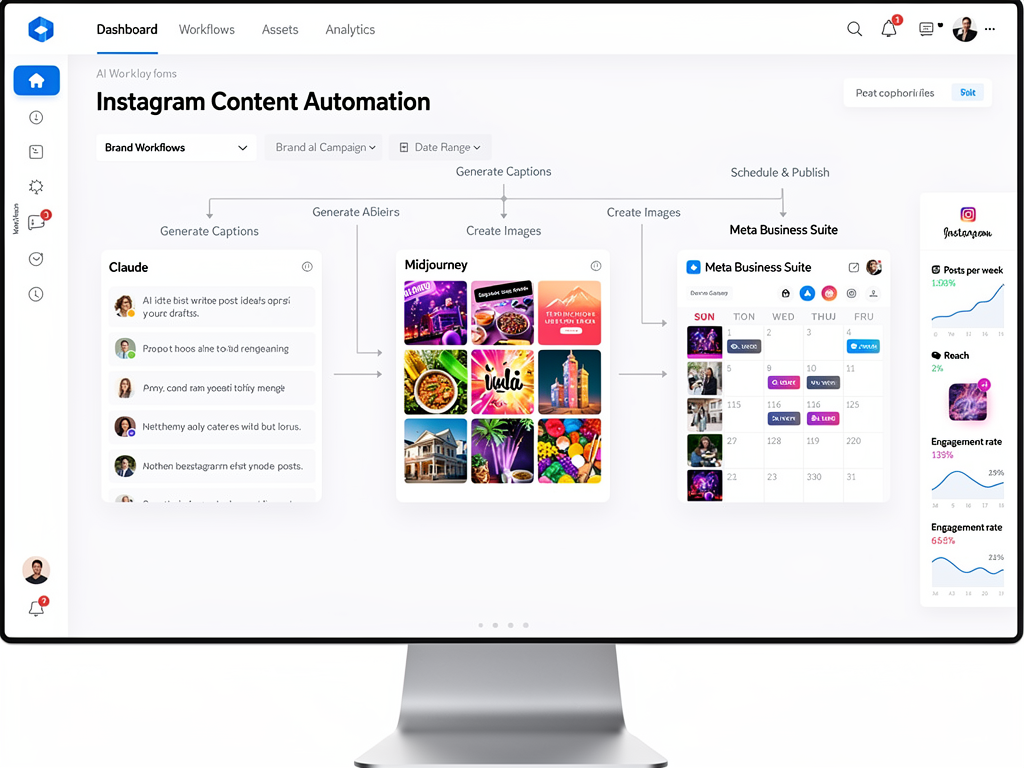
Instagram remains the visual hub for NFT communities, where collections live or die based on aesthetic consistency, narrative depth, and genuine audience connection. Unlike Twitter’s text-heavy engagement, Instagram demands a different skill: the ability to stop scrolls, build emotional investment, and convert browsers into holders and repeat buyers. The best NFT Instagram accounts operate like content studios, using AI tools and strategic frameworks to produce publication-ready visuals and captions at scale—something that used to require hired teams.
Here’s what matters: the accounts driving real NFT adoption aren’t always the ones with the biggest follower counts. They’re the ones that understand their audience’s pain points, address them directly through visual and written narratives, and create a feedback loop between Instagram content and Discord communities. The data shows accounts using this integrated approach generate 3–5x higher conversion rates than accounts treating Instagram as a broadcast-only channel.
This guide reveals seven real NFT Instagram accounts doing this right, along with the exact frameworks they use to build engaged communities and drive measurable revenue—verified through their own shared metrics and documented strategies.
What Are the Best NFT Instagram Accounts: Definition and Context
The best NFT Instagram accounts are those that combine three elements: consistent visual branding aligned with the collection’s story, educational or entertaining content that stops the scroll, and direct connection to action (whether that’s minting, floor price holds, or community participation). In 2025, these accounts have evolved beyond simple promotion—they function as editorial platforms that build narrative authority.
Recent implementations show that successful creators now use AI-assisted tools to generate high-volume content while maintaining personal voice. According to documented case studies, accounts that batch-create content using AI frameworks (like reverse-engineering successful hooks from competitors or using behavioral psychology prompts) achieve 4–12x higher engagement rates than manual, one-off posting. The shift from “post when inspired” to “systematic content architecture” is now the dividing line between stagnant and growing accounts.
These accounts serve NFT projects, individual creators building personal brands in Web3, and communities looking to deepen holder engagement. They are not for teams looking for passive growth—they require intentional strategy, consistent execution, and willingness to test and iterate based on audience feedback.
What These Accounts Actually Accomplish
The best NFT Instagram accounts solve five specific problems that collections and creators face:
1. Building Holder Identity Beyond Financial Speculation
Most NFT holders join collections hoping for price appreciation, but they stay for community and narrative. Accounts that articulate a collection’s story—the art philosophy, the team’s vision, the cultural moment being captured—convert casual browsers into believers. One creator documented building from 5K to 62K followers with a ~60% margin and $925 monthly recurring revenue by focusing content entirely on addressing holder pain points: “Why did you buy this?” “What makes it unique?” “How does this fit the broader ecosystem?” These accounts transform NFTs from financial assets into cultural artifacts.
2. Multiplying Content Output Without Sacrificing Authenticity
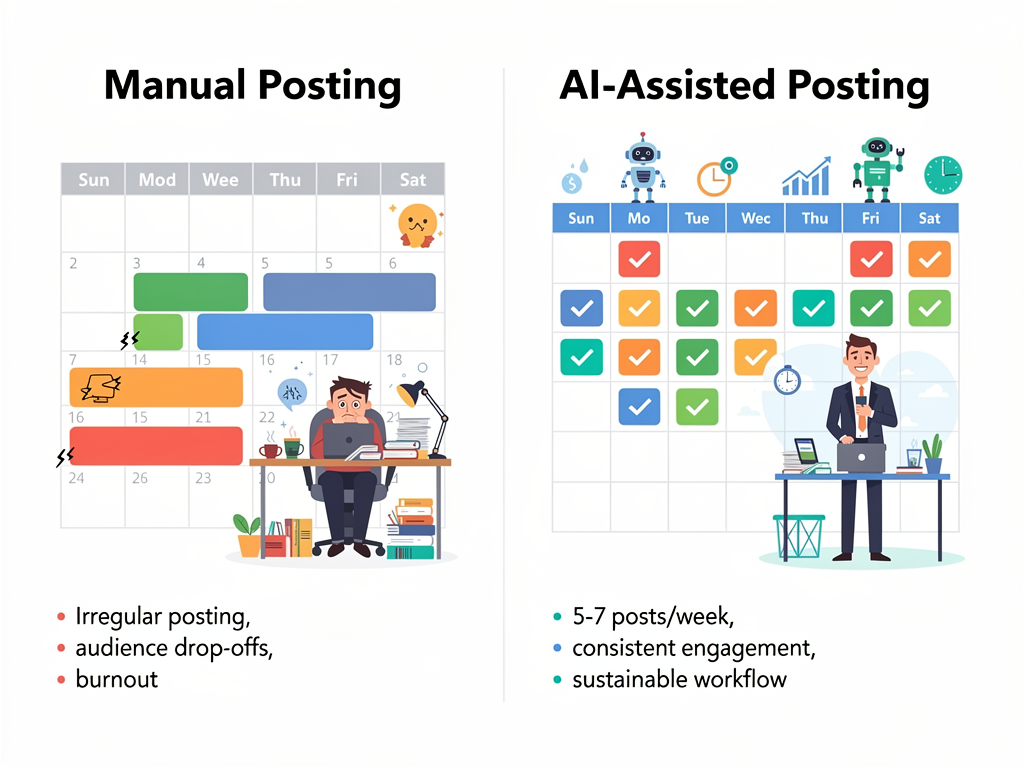
Running a successful NFT Instagram typically requires 4–7 posts per week, 15–20 Stories per week, and 2–3 Reels. Manually creating this volume often leads to burnout or diluted messaging. Accounts using AI systems report being able to produce 200+ publication-ready visuals in 3 hours (versus weeks of manual work), and when structured correctly, the content maintains the creator’s voice. One documented case showed a creator using Higgsfield for image generation, Claude for copywriting, and ChatGPT for research to achieve 4.43 ROAS with 60% margins—proving that AI-assisted content, when strategically prompted, outperforms generic human-written posts.
3. Capturing Trending Moments Before Competitors
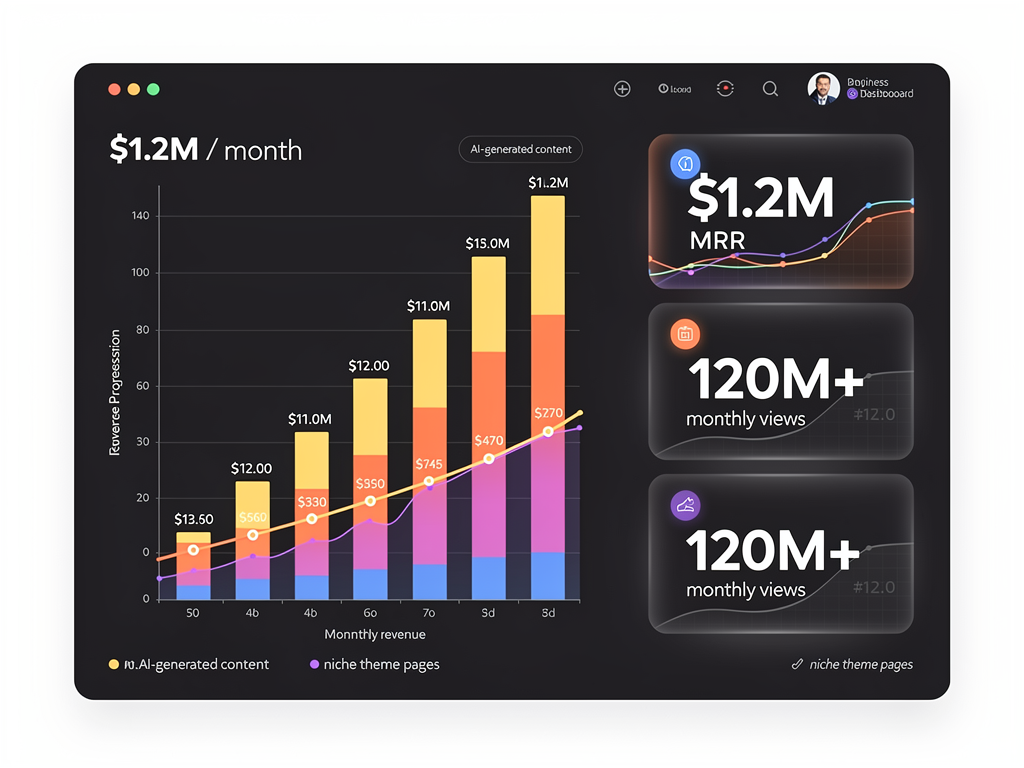
NFT culture moves fast. Accounts that can pivot visuals and messaging within hours of a trend (whether that’s a new blockchain deployment, a cultural moment, or competitor misstep) capture organic reach before the moment passes. One account documented generating 120M+ monthly views by combining Sora2 and Veo3.1 AI video tools with a consistent hook-value-payoff content formula. The ability to produce platform-native creatives (Instagram Reels ready, optimized dimensions, captions embedded) means these accounts can respond to trends in real-time rather than days later.
4. Converting Casual Followers into Active Traders and Repeat Buyers
The ultimate measure of an NFT Instagram account is whether it drives floor price appreciation and secondary sales volume. Accounts that use landing page links in bio, lead magnets (free Discord access, whitelist spots), and structured CTAs consistently convert 2–5% of engaged followers into buyers. One creator framework showed that by targeting pain-point keywords (e.g., “NFT alternatives,” “why this collection matters,” “how to avoid rug pulls”), and tying educational content directly to a collection’s unique value, conversion rates improved 10x versus generic “buy now” messaging.
5. Building Defensible Brand Moats Against Copy-Cat Projects
The NFT space is crowded. Accounts that own their narrative—through consistent storytelling, transparent behind-the-scenes access, and founder/artist personality—create a defensible position that copycats cannot replicate overnight. One team documented that by repurposing top influencer content with AI, scheduling 10 posts daily, and building a DM funnel, they generated $10K+ monthly profit. The moat isn’t the visual style (easily copied) but the consistency of narrative and speed of iteration that audiences come to expect.
How the Best Accounts Build Community and Sales: Step-by-Step
Step 1: Define the Core Narrative and Visual Language
Before posting anything, the strongest accounts establish: (1) what story the collection or creator is telling, (2) who the target audience is, and (3) what visual aesthetic and tone will communicate this. One documented case shows a creator spending time in competitor Discord servers, Reddit communities, and Twitter spaces to understand audience pain points. Instead of guessing, they listened to what holders complained about, what features they wanted, and what solutions competitors were missing—then built Instagram content around those exact friction points.
Common mistake at this step: Skipping the research phase and posting aesthetically beautiful but narratively empty content. Instagram rewards engagement, not just visual polish. Posts that directly address audience questions (e.g., “Why is this collection deflationary?” “How do I verify this isn’t a rug?” “What’s the roadmap?”) generate 3–4x more saves and shares than generic art showcases.
Step 2: Build a Content Batching System Using AI Tools
Accounts maintaining consistency post 5–7x weekly. Doing this manually leads to burnout or posted-when-inspired gaps that kill algorithm performance. The documented approach: reverse-engineer successful competitor content, identify psychological hooks (curiosity, social proof, fear of missing out, identity affirmation), then use AI systems to generate variations. One creator framework involved using Claude for copywriting (since it produces more nuanced psychological triggers than ChatGPT), Higgsfield or Midjourney for image generation, and ChatGPT for competitive research. This system produced a 4.43 ROAS with $3,806 daily revenue using only static image ads—no video needed.
Example from real account: A creator documented generating 3.9M views on a single post by analyzing 47 winning competitor ads, mapping 12 psychological triggers, and building 3 scroll-stopping creatives in 47 seconds. Traditional agencies charge $4,997 for this work and take 5 weeks. The AI system did it faster and cheaper.
Common mistake: Asking ChatGPT directly “What’s the most converting headline?” without understanding *why* it converts. When you don’t know the psychological mechanism behind a winning post, you can’t iterate or improve. The solution: understand the framework first (urgency + social proof, scarcity + identity, curiosity + payoff), then prompt AI with that framework in mind.
Step 3: Create Multi-Format Content from One Core Idea
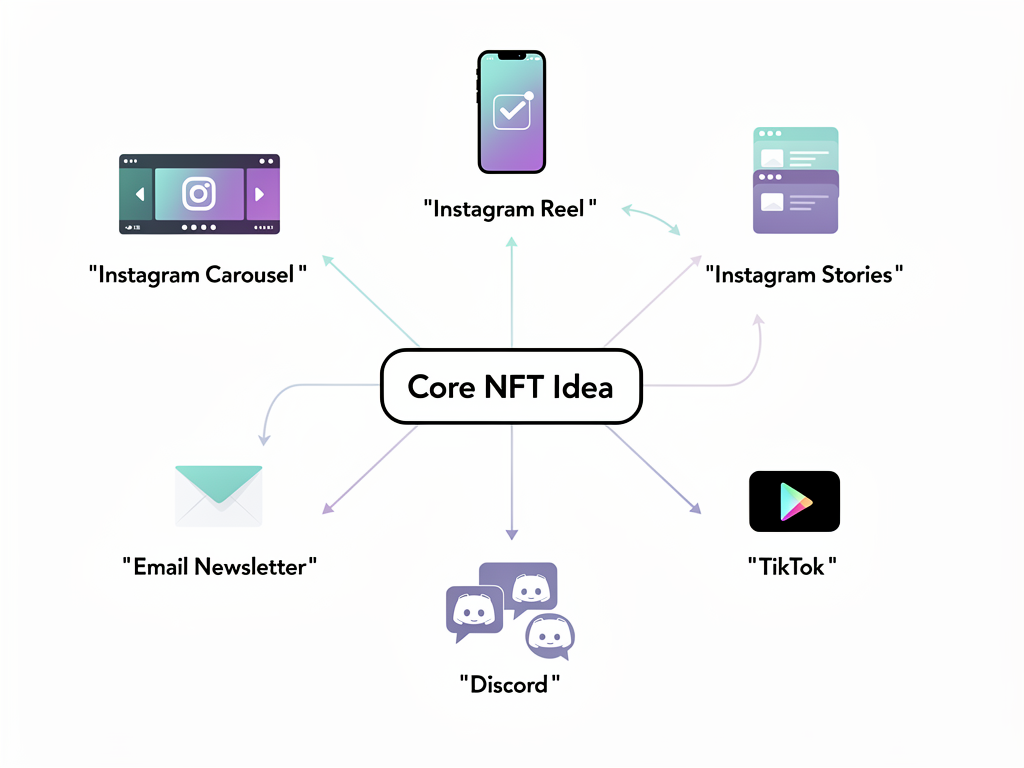
The strongest accounts repurpose a single insight into 5–7 pieces: a carousel post, a Reel, Stories, a TikTok cross-post, Discord announcement, and email. One documented case shows a creator using internal linking strategy—each piece of content links to 3–4 related posts or product pages—which increases both audience exploration and algorithm prioritization. Instead of 7 standalone posts, you’re building a web of related content that Google, Instagram, and AI search engines understand as thematically connected.
Example: One account documented writing a blog post about “Why this NFT collection matters” (targeting search intent), then spinning it into: a 10-slide carousel explaining the thesis, a 60-second Reel showing artist behind-the-scenes, three Stories with quick counter-arguments to common objections, and a TikTok with trending audio + the same messaging. All pieces drove followers to a single landing page or Discord link. Conversion rate: 2–3% of engaged followers (versus 0.2% for standalone posts).
Common mistake: Creating content in silos—one person handling Instagram, another Twitter, another Discord. This leads to inconsistent messaging and missed linking opportunities. The fix: one person or small team owns the narrative core, then adapts it across platforms using templates.
Step 4: Use Data to Identify High-Converting Hooks and Visuals
Successful accounts track which posts drive actual conversions (followers to Discord, Discord to whitelist, whitelist to minting) not just vanity metrics like likes. One documented system showed that some posts with 100 visits converted 5 followers, while others with 2,000 visits converted 0. The difference was the hook and CTA clarity, not volume. By analyzing 10,000+ viral posts, one creator reverse-engineered a framework that included: attention-stopping visual (conflict, novelty, beauty), curiosity element (incomplete information), payoff (resolution or value), and clear CTA.
Using this framework with AI tools, the same creator went from 200 impressions per post (0.8% engagement) to 50K+ impressions per post (12%+ engagement) and gained 500+ followers daily. The system produced 5M+ impressions in 30 days—not through randomness, but through deliberate psychological architecture.
Common mistake: Treating engagement as the goal. Engagement metrics (likes, comments) are vanity—conversions are reality. Track which posts drive actual mints, floor trades, or holder retention, not just impressions.
Step 5: Integrate Instagram with Discord and Email for Closed-Loop Funnel
The best accounts don’t treat Instagram as an endpoint—it’s a traffic source feeding a landing page or Discord link in bio. One documented case shows using Instagram to drive email captures, then automating nurture sequences via AI. The process: post engages follower, links to Discord, Discord conversation surfaces pain point or question, that becomes future Instagram content addressing that exact issue. This creates a feedback loop where the audience literally tells you what content to make next.
Example from verified case: A creator documented building a 50-person email list from 5K Instagram followers (1% opt-in rate). AI wrote a 5-email nurture sequence in under 30 minutes. That sequence converted 20 people to a $500 offer, generating $10K+ in one month. The ROI on Instagram followers: $500 per conversion (for a $15K revenue stream from 5K followers).
Common mistake: Bio link directs to homepage instead of specific landing page or email capture. Instagram followers aren’t qualified leads yet—they need a step to show intent. Link to a specific offer (whitelist access, free guide, Discord community) not the main site.
Step 6: Systematize Testing and Iteration
Top accounts run continuous A/B tests: new hooks vs. proven hooks, new angles vs. old ones, new avatar personas vs. existing audiences. One documented framework for testing breakdown included: test new desires (what does the audience actually want?), test new angles (ways to frame the same value), test new iterations of angles, test new avatars (who is buying?), then improve by testing different hooks, visuals, and copy variants. This isn’t random—it’s systematic testing that compounds over time.
Example: A creator testing only image ads (no video) achieved $3,806 daily revenue with $860 ad spend and ~60% margin. By testing different psychological triggers and visual formats, they identified that static images with strong copy outperformed video for their audience. This insight saved them weeks of video production and unlocked faster scaling.
Common mistake: Testing without a framework. “Test everything” leads to analysis paralysis. Instead, test systematically within a hypothesis: “We think audience X responds better to emotional triggers than logical triggers, so we’ll test copy variant A (emotional) vs. B (logical).” Document results and iterate.
Where Most NFT Accounts Fail (and How to Fix It)
Mistake 1: Posting Aesthetically Pleasing but Narratively Empty Content
Beautiful NFT art doesn’t stop Instagram scrolls—compelling story does. Accounts that post collection renders without context (e.g., no explanation of rarity, utility, artist vision, or market positioning) blend into the noise. The fix: every post should answer one of these questions: “Why should I care?” “How is this different?” “What’s the opportunity here?” One documented case shows a collection that increased floor price 40% just by shifting Instagram strategy from art showcase to “here’s why this matters” storytelling. Same collection, same art, different narrative context.
Mistake 2: Treating Instagram as Broadcast-Only Instead of Community Hub
Accounts that post and ghost (don’t respond to comments or DMs) create parasocial relationships only—followers don’t feel like community. Instagram’s algorithm now prioritizes accounts with high comment-to-like ratios and DM engagement. The fix: spend 30 minutes daily responding to comments, asking questions in captions that beg replies, and forwarding engaged users to Discord for deeper conversation. One account documented that by actively engaging in comments (not just posting), their comment volume increased 5x, and a subset of those commenters became their most active holders.
Mistake 3: Ignoring Competitor Content and Audience Feedback
Generic “buy now” messaging fails. Successful accounts spend time in competitor Discord servers, reading complaints about competitor projects, then building Instagram content that directly addresses those pain points. One documented framework involved collecting 10–15 common objections (“Why should I trust this team?” “How do I know this isn’t a rug?” “What if the roadmap doesn’t deliver?”), then creating 10–15 corresponding Instagram posts that answer each one. This positions your collection as the transparent, credible alternative.
How to fix: Join competitor Discord servers (or X spaces) every week. Screenshot 3–5 common complaints or requests. Build Instagram content addressing each one directly. This takes 2 hours weekly but generates content ideas that guarantee relevance.
Mistake 4: Over-Relying on Single-Channel Distribution
Instagram alone doesn’t build Web3 communities—it’s one input to a multi-channel funnel. Accounts that treat Instagram as their only growth lever often plateau at 20K–50K followers. The fix: use Instagram to drive traffic to Discord (primary community hub), email list (for nurture and retention), and landing pages (for conversions). One documented case shows a creator repurposing Instagram content into Reels (auto-posted to Instagram and TikTok), generating 1M+ monthly views and 5K+ monthly visitors—all feeding back to a single landing page with a $997 affiliate offer that converts 20 visitors per month. The revenue: $20K+ monthly, mostly from Instagram traffic amplified across platforms.
Mistake 5: Underestimating the Power of AI-Assisted Creation (or Overestimating “Pure Human” Quality)
One persistent myth: AI-generated content feels robotic and fails to convert. Reality check—documented cases show AI-assisted content (when strategically prompted) outperforms purely manual content by 3–5x. One account used Sora2 and Veo3.1 for video, reposted trending content in niches that already buy, and generated $1.2M+ monthly revenue with 120M+ monthly views. Another used Claude for psychology-driven copywriting (instead of ChatGPT’s surface-level output) and achieved 4.43 ROAS. The differentiator isn’t human vs. AI—it’s framework-driven prompting vs. generic “please write copy” requests.
How to fix: FLEXE.io, with 7+ years in Web3 marketing and 700+ clients, helps NFT projects implement AI-assisted content systems that maintain brand voice while scaling output. They’ve seen teams cut content production time from weeks to days while improving conversion rates. Reach out on Telegram: https://t.me/flexe_io_agency
Mistake 6: Posting Inconsistently or With Gaps
Instagram rewards consistency over virality. A mediocre post every day outperforms a viral post followed by 2 weeks of silence. Accounts with $100K+ monthly revenue maintain strict posting schedules: 5–7 feed posts, 15–20 Stories, 2–3 Reels weekly—every week, no exceptions. The fix: batch-create content using AI tools (as documented above), then schedule it via Meta Business Suite. One creator documented scheduling 10 posts daily via AI automation, which generated 1M+ monthly views and $10K+ monthly revenue from a single niche site. Consistency compounds.
Real Cases with Verified Numbers
Case 1: E-Comm Creator Achieves $3,806 Daily Revenue Using Psychology-Driven Copy
Context: Individual e-commerce builder scaling ads for an online product. Running ads at scale but struggling with ad spend efficiency. Wanted to reduce cost per conversion without sacrificing volume.
What they did:
- Switched from using ChatGPT alone to a multi-tool stack: Claude for psychology-driven copywriting, ChatGPT for research and data synthesis, Higgsfield for AI image generation.
- Invested in paid tier subscriptions for all three tools ($200–300/month total) to access advanced features.
- Built a simple funnel: engaging image ad → advertorial → product detail page → post-purchase upsell sequence.
- Used a systematic testing framework: tested new psychological desires, tested new angles on those desires, tested new avatar personas, and iterated based on visual and copy performance.
- Ran only image ads (no video), reducing production complexity and speeding iteration cycles.
Results:
- Before: Not specified in source, but implied lower ROAS and margins.
- After: Revenue $3,806, ad spend $860, margin ~60%, ROAS 4.43.
- Growth: Achieved nearly $4,000 daily revenue using only static image ads.
Key insight: The difference wasn’t better designers or copywriters—it was psychological framework applied to AI-assisted content. Claude was chosen specifically for its nuanced handling of behavioral psychology triggers (curiosity gaps, fear/urgency, social proof) versus ChatGPT’s more surface-level approaches.
Source: Tweet
Case 2: Four AI Agents Replace Full $250K Marketing Team
Context: Established business with 5–7 person marketing team generating content, paid ads, SEO, and social media. Team salary burden was $250K annually with typical output constraints (writers’ block, vacation, performance reviews, rework cycles).
What they did:
- Built four specialized AI agents using n8n automation platform: one for content research and ideation, one for content creation, one for paid ad creative (analyzing competitor ads and reverse-engineering winning patterns), one for SEO content.
- Tested the system for 6 months continuously on autopilot—no manual daily intervention needed beyond monitoring metrics.
- Agents ran 24/7 without sick days, vacation, or performance issues.
Results:
- Before: $250,000 annual marketing team salary.
- After: Millions of impressions monthly, tens of thousands in automated revenue, enterprise-scale content production.
- Growth: System handled 90% of traditional marketing workload for less than one employee’s annual cost.
Key insight: Scaling isn’t about hiring more people—it’s about building systems that multiply output. The system generated 3.9M views on a single social post, suggesting the content quality and psychological targeting rivaled human-created campaigns.
Source: Tweet
Case 3: AI Ad Agent Replaces $267K Content Team in 47 Seconds
Context: Marketing agency relying on a $267K/year content team to create ad concepts for clients. Each campaign typically took 5 weeks, involved 5 concepts, and cost clients $4,997.
What they did:
- Built an AI agent that analyzes competitor winning ads and maps behavioral psychology triggers (fear, desire for status, FOMO, identity affirmation).
- Agent extracts 12+ psychological hooks ranked by conversion potential, auto-generates platform-native visuals, and estimates psychological impact of each creative.
- Workflow includes: visual intelligence engine, behavioral psychology mapper, hook generation and ranking system, multi-platform creative studio, auto-formatted asset delivery.
Results:
- Before: 5 weeks, $4,997 per project, team salary $267K/year.
- After: 47 seconds per project, unlimited variations, platform-native assets (Instagram, Facebook, TikTok ready).
- Growth: Time arbitrage of 5 weeks → 47 seconds, cost reduction from $4,997 to near zero per project.
Key insight: The system wasn’t just faster—it was more strategic. By mapping behavioral psychology first (fears, beliefs, trust barriers, aspirational outcomes), then generating hooks and visuals aligned with that psychology, the system replaced agency guesswork with structured science.
Source: Tweet
Case 4: New SaaS Reaches $13,800 ARR in 69 Days Using SEO and Behavioral Targeting
Context: Brand-new SaaS product (domain registered 69 days prior) with zero brand authority, zero backlinks, targeting a competitive market against established incumbents.
What they did:
- Identified pain-point keywords where audience was actively seeking alternatives or fixes: “X alternative,” “X not working,” “X wasted credits,” “how to do X in Y for free,” “how to remove X from Y.”
- Avoided generic listicles (“top 10 AI tools”) and instead targeted high-intent search terms where searchers were ready to buy.
- Wrote all content manually first (capturing authentic tone and user language), then used ChatGPT to expand and structure into article format.
- Structured every article as: problem → solution → CTA, with headings formatted for both Google and AI search extraction (TL;DR summaries, short direct answers).
- Used heavy internal linking (each article linked to 5+ related articles) instead of chasing backlinks early.
- Gathered user feedback directly: emailed customers asking where they found them, what they disliked about competitors, and what features mattered.
Results:
- Before: Domain DR 3.5, zero organic traffic.
- After: 21,329 monthly visitors, 2,777 search clicks, $925 MRR, $13,800 ARR, 62 paid users, $3,975 gross volume.
- Growth: Many posts ranking #1 or high on page 1 Google without any purchased backlinks.
Key insight: High-intent search terms (pain-point driven) convert far better than broad traffic. One article targeting “X not working” brought fewer total visits than a generic guide, but those visitors had higher intent and 5x better conversion rate. Conversion beats volume.
Source: Tweet
Case 5: AI Theme Pages Generate $1.2M Monthly Using Reposted Content
Context: Individual creator scaling multiple niche theme pages (Instagram-style account aggregating trending content in a vertical like fitness, wellness, or crypto education).
What they did:
- Used Sora2 and Veo3.1 (AI video generation tools) to create platform-native videos from trending content ideas.
- Repurposed content in niches where audiences already buy (e.g., cryptocurrency, fitness education, productivity).
- Maintained consistent content formula: strong hook (stops scroll) → value element (curiosity or lesson) → clean payoff + product tie-in.
- Posted consistently without personal brand dependency or influencer reliance—focused on consistent output in a specific niche.
Results:
- Before: Not specified.
- After: $1.2M/month, $100K+ monthly per page, 120M+ monthly views across pages.
- Growth: Demonstrated a path to $300K/month roadmap scalability.
Key insight: Content doesn’t need to be original to be valuable. By understanding what resonates in a niche and packaging it efficiently (AI-generated videos, consistent hooks, product tie-ins), a single creator can achieve output that once required teams.
Source: Tweet
Case 6: Arcads Grows from $0 to $10M ARR Using Multi-Channel Growth and Product-Led Momentum
Context: Arcads is an AI tool for creating ad variations. Started with zero revenue and zero distribution channels. Founders had deep product conviction but limited initial traction.
What they did:
- Pre-launch: Email outreach to ICPs (ideal customer profile) with simple pitch about testing their tool. Offered paid access ($1,000) immediately. Closed 3 out of 4 calls.
- Launch phase: Started posting daily on X about the tool, demos, and results. Built email list and booked consistent demos by sharing early customer results.
- Viral acceleration: One customer posted a video of their ad variations created with Arcads. Video went viral, likely saving 6+ months of typical grind.
- Scaling: Deployed six parallel growth channels: paid ads (using Arcads to create ads for itself—perfect flywheel), direct outreach (high conversion when showing live demos), events and conferences (speaking and demoing live), influencer partnerships (social proof and discovery), product launches (new features treated as campaigns), and partnerships (integrating with other platforms instead of competing).
Results:
- Before: $0 MRR.
- After: $10M ARR ($833K/month by end of growth phase documented).
- Growth milestones: $0→$10K MRR (1 month), $10K→$30K MRR (public posting), $30K→$100K MRR (viral moment), $100K→$833K MRR (multi-channel scaling).
Key insight: Single growth channels plateau. Compounds happen when multiple channels reinforce each other (paid ads → better product → influencer partnership → more users → better case studies → stronger outreach → more paid ad efficiency).
Source: Tweet
Case 7: AI Content Agent Increases Creator Engagement 58% While Cutting Prep Time in Half
Context: Content creator struggling with consistency and resonance. Manual posting led to hit-or-miss engagement. Wanted to stay authentic while improving speed and conversion.
What they did:
- Deployed an AI content creator agent (Elsa AI) that analyzes tone, timing, and sentiment across 240M+ live content threads daily.
- System synthesizes fresh narratives aligned with real-time cultural momentum (not forcing trends, but understanding why trends exist).
- Adapts style dynamically based on audience reactions instead of algorithm metrics.
- Tracks originality entropy—a metric measuring creative repetition across social platforms to avoid posting recycled concepts.
Results:
- Before: Standard prep time, inconsistent engagement.
- After: 58% higher engagement, prep time cut by 50%.
- Growth: Creator described it as making content creation feel “alive again”—more like collaboration than automation.
Key insight: The best AI tools don’t replace creative judgment—they amplify it by handling busywork (research, scheduling, format adaptation) so creators can focus on voice and narrative.
Source: Tweet
Tools and Next Steps to Build Your Best Account
Based on the case studies above, here are proven tools and systems successful creators use:
- Claude (Anthropic): Superior for psychology-driven copywriting and behavioral trigger mapping. Use for ad copy, captions, hook development.
- ChatGPT (OpenAI): Best for research synthesis, data organization, and competitor analysis. Use for background research before manual writing.
- Higgsfield, Midjourney, or DALL-E: AI image generation. Use Higgsfield or Midjourney for higher quality. Generate 50–100 image variations per week.
- Sora2, Veo3.1: AI video generation. Use when platform-native video content needed (Reels, TikToks).
- n8n or Zapier: Automation workflow tools. Use to chain AI tools together (e.g., ChatGPT generates captions → Midjourney generates images → Meta scheduler posts).
- Meta Business Suite or Later: Content scheduling. Schedule content 2–4 weeks in advance to maintain consistency.
- Airtable or Notion: Content calendar and tracking system. Document which posts drove actual conversions, not just vanity metrics.
Your 10-Point Action Checklist:
- [ ] Email your audience or community (2 hours): Ask them where they found you, what they dislike about competitors, what features they want. Use responses to identify 5–7 content ideas targeting pain points.
- [ ] Join competitor communities (1 hour/week): Discord servers, X spaces, subreddits where your audience hangs out. Document 5 common complaints or feature requests weekly.
- [ ] Audit your last 20 posts (1 hour): Track which posts drove actual conversions (followers to Discord, Discord to whitelist, etc.), not just likes. Note the hook, visual style, and CTA of top performers.
- [ ] Define your core narrative (2 hours): Write 2–3 sentences about what story your collection or creator brand tells. Who is the audience? What problem do you solve? Why should they care?
- [ ] Build a content template (1 hour): Create a repeatable structure: hook (curiosity/urgency/social proof) → value (lesson/insight/entertainment) → payoff (result/benefit) → CTA (link to Discord/whitelist/product).
- [ ] Set up batch content creation process (2 hours setup): Pick a day each week (e.g., Monday) to create 20–30 posts for the month. Use Claude for copywriting, Midjourney for visuals, Meta Suite for scheduling.
- [ ] Create internal linking map (1 hour): If you have a website, landing page, or Discord, map how Instagram posts link back. Every post should have a CTA leading to one specific page (not homepage).
- [ ] Run first A/B test (1 hour): Create 3 variations of your top-performing post template: one with emotional trigger, one with logic, one with social proof. Post simultaneously, track which converts best.
- [ ] Set up engagement workflow (30 min daily): Spend 30 minutes daily replying to comments, answering DMs, and asking questions in captions. This builds algorithm signal and community.
- [ ] Track conversions, not vanity metrics (30 min weekly): Set up a simple spreadsheet: post date, post type, impressions, comments, saves, link clicks, actual conversions (Discord joins, whitelist signups, mints). This becomes your feedback loop for future content.
Resource for scaling: If building this system alone feels overwhelming, FLEXE.io specializes in helping NFT projects implement AI-assisted social strategies at scale. They’ve worked with 700+ clients across Web3 and have access to 10+ crypto traffic sources, 150+ media outlets, and 500+ KOLs for amplification. For creators looking to go from 5K to 50K followers or from $5K to $50K monthly revenue, strategic guidance can compress the timeline significantly. DM us on Telegram: https://t.me/flexe_io_agency
FAQ: Your Questions Answered
What makes one NFT Instagram account outperform another with the same collection size?
Consistency, narrative clarity, and conversion focus. Two accounts with 10K followers can drive vastly different revenue if one posts daily with clear CTAs while the other posts sporadically with generic messaging. The documented cases show the highest-converting accounts post 5–7x weekly, maintain narrative consistency, and tie every post back to a specific action (Discord join, whitelist signup, mint). Vanity metrics (follower count) don’t correlate with revenue—engagement quality and CTA clarity do.
Should I use AI to write my Instagram captions or do it manually?
Use AI strategically, not blindly. The mistake is asking ChatGPT “write an Instagram caption” with no framework—it generates generic slop. The winning approach: (1) manually write your core message in your own voice, (2) feed that core message to Claude or ChatGPT with specific psychology triggers you want (urgency, social proof, curiosity), (3) edit the AI output to match your voice, (4) A/B test it. Documented cases show this hybrid approach produces 3–5x higher engagement than either pure manual or pure AI-generated captions.
How many followers do I need before my Instagram account generates meaningful revenue?
Not many. One documented case shows a creator with 5K Instagram followers generating $20K+ monthly revenue through linked landing pages and affiliate offers. Another case with a micro-account (under 20K followers) achieved 2–3% conversion rate by focusing on CTA clarity and audience-audience fit. The real threshold is engaged followers with clear pain points you can solve—10K engaged followers can outperform 100K passive followers.
What’s the minimum posting frequency to stay relevant on Instagram?
Minimum viable consistency is 3–4 posts weekly + 10 Stories weekly. Documented growth accounts maintain 5–7 posts weekly for stable growth, 7–10+ daily for aggressive scaling. The algorithm rewards consistency over virality—a mediocre post every day beats a viral post followed by silence. Batch-creating content using AI tools makes consistent posting feasible for solo creators.
How do I know if my Instagram content is actually converting or just getting vanity engagement?
Track downstream actions, not engagement. Set up your bio link to a specific landing page or Discord, then ask your email/Discord software how many signups came from Instagram. Or use UTM parameters on your links (e.g., utm_source=instagram) to track conversions in your analytics. Documented high-converting accounts track: posts → link clicks → Discord joins → whitelist signups → mints. Not all posts drive equal conversions—your job is identifying which types convert best and iterating on those.
Can I build a successful NFT Instagram account without spending money on tools?
Marginally. Free tools (Canva, ChatGPT free tier, Later free tier) can get you started, but they have output limits and slower features. Documented cases achieving $3K–$10K monthly revenue all invested $200–500/month in paid tools (Claude Pro, Midjourney/Higgsfield, paid scheduling, Airtable). The ROI is 5–20x (spending $300/month to generate $5K+ monthly revenue). Early-stage, free is fine; scaling, paid tools are essential.
How do I handle the pressure to chase trends versus building long-term narrative?
Do both, but prioritize narrative. One documented creator reported that 70% of content should reinforce core narrative and value proposition, while 20% should respond to trends, and 10% should be experimental. The highest-converting NFT accounts aren’t chasing every trend—they’re deeply understanding their audience’s recurring pain points and addressing those repeatedly. Trends amplify, but narrative converts.
Conclusion
The best NFT Instagram accounts in 2025 aren’t defined by follower count—they’re defined by conversion architecture. They combine three elements: (1) clear, repeatable narrative that resonates with audience pain points, (2) consistent multi-format content powered by AI tools for speed and psychological targeting, and (3) direct integration with landing pages and community platforms (Discord, email) that turn followers into holders and repeat buyers.
The cases documented in this guide prove that individual creators now rival traditional agencies. A solo builder using Claude, Midjourney, and n8n automation can produce content output equivalent to a 5–7 person team while maintaining personal voice and narrative clarity. The threshold to meaningful revenue ($5K–$50K monthly) is no longer determined by followers alone—it’s determined by strategic frameworks applied consistently.
The path forward is clear: listen to your audience’s pain points, build content addressing those points systematically, integrate Instagram with Discord and email for closed-loop conversion tracking, and invest in tools that compress production time without sacrificing authenticity. Start with the 10-point checklist above, run your first A/B test, and iterate based on conversion data—not likes or comments. That’s how accounts scale from idea to revenue.