Most articles about AI content systems are full of theory and hype. This one isn’t. You’re about to see verified case studies, actual traffic numbers, and step-by-step breakdowns from marketers who’ve built six-figure content engines while barely lifting a finger.
Key Takeaways
- One marketer generated $20,000 monthly profit from a single niche site using AI to automate 100 blog posts and 100 social videos per month.
- Automated content creation combines AI writing tools, content repurposing systems, and multi-platform distribution to eliminate manual bottlenecks.
- The most successful implementations focus on distribution automation (TikTok, Reels, email sequences) rather than just blog content generation.
- Starting costs can be as low as $9 for a domain, with AI handling everything from article creation to video conversion and email nurturing.
- Typical results show 5,000+ monthly visitors converting at 0.4% when paired with high-ticket affiliate offers ($997+).
- Common failures stem from over-relying on AI quality without human oversight and ignoring content distribution channels.
- Modern automated content creation works best for niches like fitness, crypto, finance, and parenting where evergreen topics can be repurposed endlessly.
What Is Automated Content Creation: Definition and Context
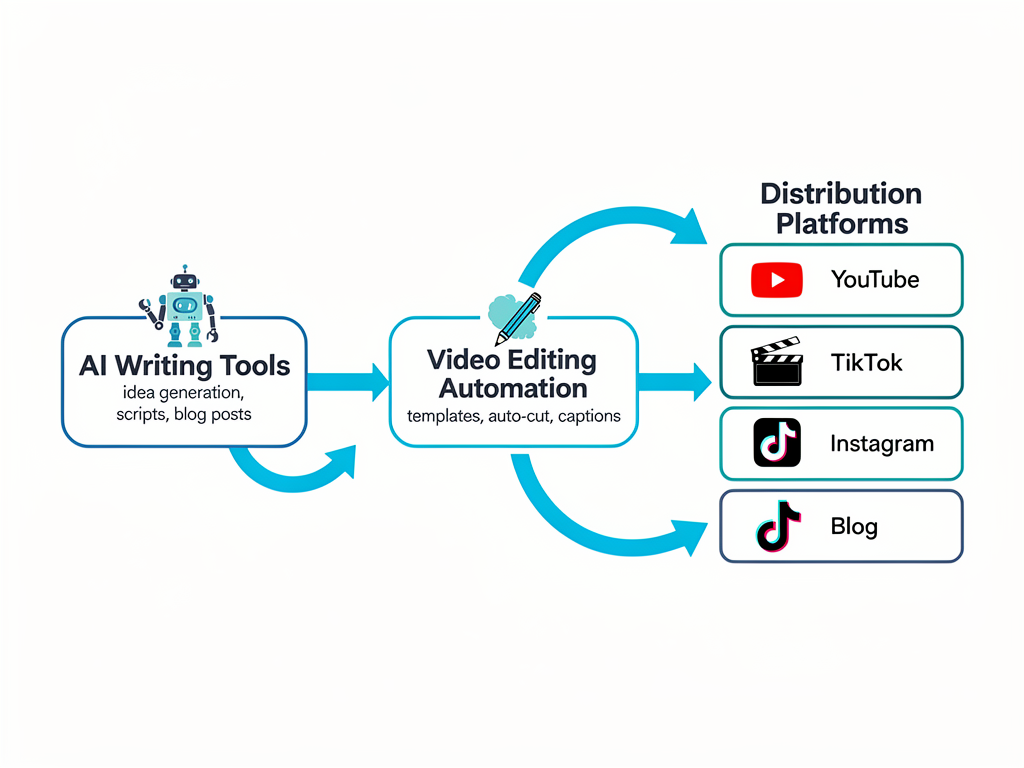
Automated content creation is the systematic use of AI tools and software to produce, repurpose, and distribute written, visual, and video content across multiple platforms with minimal human intervention. Instead of manually writing blog posts, filming videos, and crafting email sequences, marketers set up AI workflows that handle these tasks autonomously.
Recent implementations show this approach has evolved far beyond simple article spinners. Today’s automation stacks combine large language models for writing, computer vision for video editing, and workflow tools that orchestrate entire content ecosystems. Current data demonstrates that marketers are achieving 50-100x output increases while maintaining acceptable quality thresholds for SEO and social media algorithms.
This strategy appeals to solo entrepreneurs, affiliate marketers, and small content teams who need to compete with well-funded media operations. It’s ideal for anyone running multiple niche sites, managing multi-platform social presences, or scaling lead generation without proportionally scaling headcount. However, it’s not suitable for brands requiring deeply researched journalism, highly technical subject matter expertise, or premium editorial voice where human creativity is non-negotiable.
What These Implementations Actually Solve
Time bottlenecks in content production: Manual content creation is notoriously slow. A single well-researched blog post can take 4-6 hours. Creating accompanying social media assets adds another 2-3 hours. AI automation compresses this timeline dramatically. One documented case produced 100 blog posts in the time it traditionally takes to write three, freeing up hundreds of hours for strategy and monetization optimization.
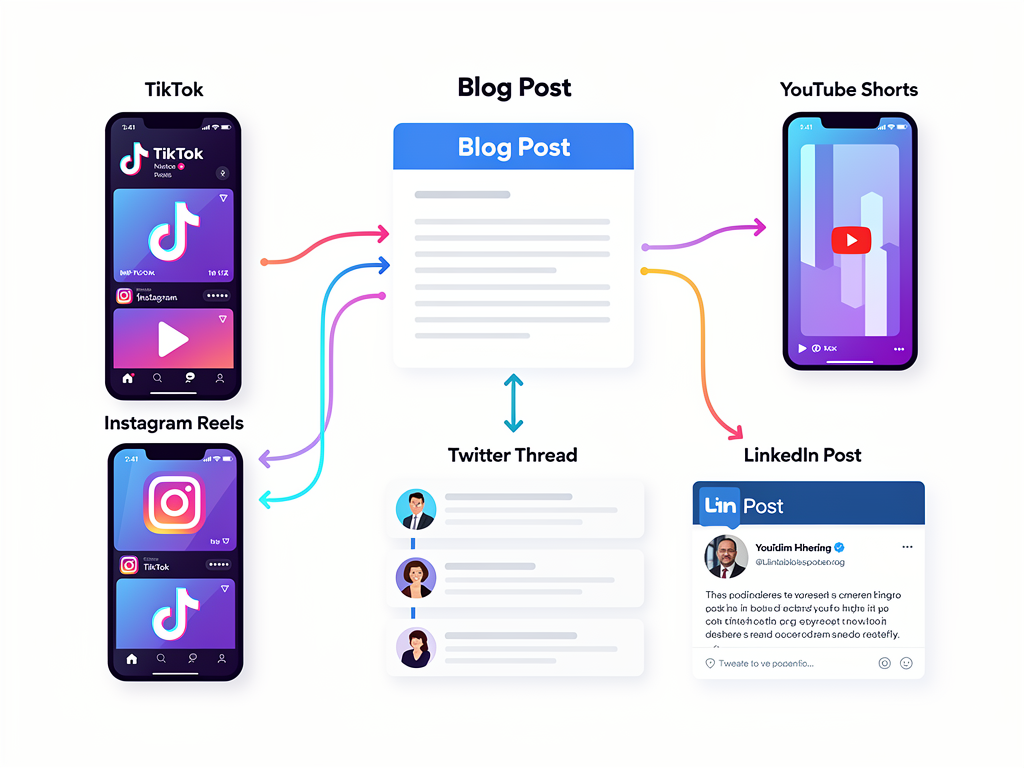
Multi-platform distribution complexity: Publishing once to a blog is straightforward. Reformatting that same content for TikTok, Instagram Reels, YouTube Shorts, Twitter threads, and LinkedIn posts requires different aspect ratios, lengths, hooks, and formats. Automation tools now handle this repurposing intelligently, converting a single source article into 50+ social assets monthly without manual video editing or copywriting.
Inconsistent publishing schedules: Algorithm favor and audience retention both demand consistent output. Missing a week of posts can tank your reach. Automated systems maintain relentless consistency, publishing daily or even multiple times per day across channels. The system described in one verified case maintained 100 pieces of video content monthly with zero lapses, something nearly impossible for solo creators manually.
Lead nurturing and email sequence gaps: Capturing emails is one challenge; nurturing those leads through educational sequences is another entirely. Many marketers collect contacts but fail to follow up systematically. AI-powered email automation writes entire nurture sequences tailored to specific niches, maintaining engagement until prospects are ready to convert on affiliate offers or products.
Scaling without proportional cost increases: Traditional content scaling means hiring more writers, editors, and video producers. Costs rise linearly with output. Automation inverts this equation. After initial setup, producing 10 articles costs nearly the same as producing 100. One marketer reported generating $240,000 annually in profit with starting costs of just $9 for a domain, demonstrating extreme leverage.
How This Works: Step-by-Step
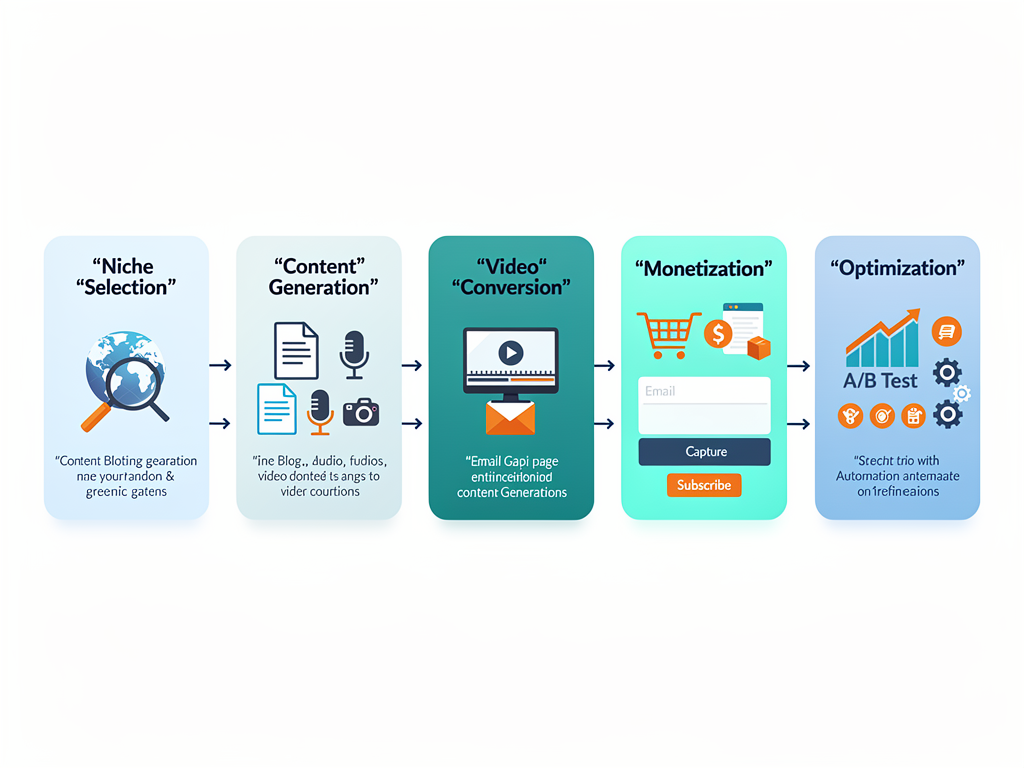
Step 1: Choose a Profitable Niche and Acquire Your Digital Foundation
Select a niche with proven commercial intent and evergreen content potential. Fitness, cryptocurrency, personal finance, parenting, and productivity are reliable choices because they combine high search volume with strong affiliate markets. Purchase a domain name relevant to your niche (typical cost: $9-15 annually). Use AI tools to generate a basic website structure optimized for your chosen topic within 24 hours.
A successful implementation in this space started with a $9 domain purchase and used AI to build a complete niche site in one day, choosing from proven verticals like fitness, crypto, or parenting. The key insight: don’t overthink the foundation. Speed to launch matters more than perfection at this stage.
Step 2: Source and Repurpose High-Performing Content
Instead of creating original content from scratch, identify trending articles in your niche that are already performing well on Google, social media, or competitor sites. Use web scraping tools or manual curation to collect 20-50 top-performing pieces. Feed these into AI rewriting tools with instructions to maintain the core information while changing structure, examples, and phrasing to create unique versions.
The approach documented by one marketer involved scraping trending articles and using AI to repurpose them into 100 distinct blog posts. This isn’t plagiarism when done correctly; it’s strategic content remixing that preserves search intent while creating unique assets. The typical mistake here is copying content too closely. Instead, use the source as an outline and let AI generate fresh angles, updated statistics, and new examples.
Step 3: Automate Multi-Format Content Conversion
Blog posts alone won’t maximize reach. Set up automation workflows that convert written content into video scripts, then use AI video tools to generate TikToks, Reels, and YouTube Shorts. Tools like Pictory, InVideo, or custom scripts can batch-process text into video at scale. Configure these systems to output 50-100 social videos monthly from your blog post library.
One verified system automatically converted blog content into 50 TikToks and 50 Reels every month, creating a constant flow of social traffic without manual video editing. The workflow runs on autopilot once configured. People often make the mistake of focusing only on blog SEO while ignoring video platforms where distribution is often easier and faster for new creators.
Step 4: Implement Email Capture and AI-Powered Nurture Sequences
Add email capture popups to your site using tools like OptinMonster, ConvertBox, or custom WordPress plugins. Offer a relevant lead magnet (free guide, checklist, video course) in exchange for email addresses. Connect your email service provider (ConvertKit, MailChimp, ActiveCampaign) to an AI writing tool configured to generate nurture sequences specific to your niche.
The documented case used popup email capture feeding into AI-written nurture sequences that warmed leads toward a $997 affiliate offer. The AI handles the entire email series, from welcome message through educational content to eventual pitch, maintaining engagement without manual copywriting. A common error is sending the sales pitch too early. Effective sequences typically run 5-7 emails over 10-14 days before making strong offers.
Step 5: Integrate High-Ticket Monetization
Connect a monetization method aligned with your traffic volume and niche. High-ticket affiliate offers ($500-$2,000+ commission per sale) work well for modest traffic because you need fewer conversions to hit revenue goals. Join affiliate networks like ClickBank, Impact, or direct programs in your niche. Embed affiliate links naturally within content and email sequences.
The system referenced earlier connected a $997 affiliate offer, achieving 20 sales monthly from approximately 5,000 site visitors (0.4% conversion rate), generating $20,000 monthly profit. This demonstrates that you don’t need massive traffic when combining high-ticket offers with well-nurtured leads.
Step 6: Monitor, Optimize, and Scale
Track your metrics: traffic sources, conversion rates, email open and click rates, and revenue per visitor. Use Google Analytics, affiliate dashboards, and email platform analytics to identify what’s working. Double down on high-performing content topics and distribution channels. Scale successful systems by adding more niche sites following the same blueprint.
Successful automation isn’t “set and forget”—it’s “set and optimize.” Review performance weekly, A/B test headlines and offers monthly, and refresh content quarterly to maintain rankings. The leverage comes from optimizing systems that run largely on autopilot, not from ignoring them entirely.
Step 7: Maintain Quality Control and Compliance
Implement spot-checks on AI-generated content to catch factual errors, awkward phrasing, or compliance issues (especially important for health, finance, and legal niches). Use plagiarism checkers to ensure content is sufficiently unique. For regulated industries, have human review before publication. This 10-15% time investment in quality control prevents the 100% time waste of Google penalties or audience trust erosion.
Where Most Projects Fail (and How to Fix It)
Publishing AI content without human oversight: Raw AI output often contains factual errors, outdated information, or awkward transitions that erode trust. Google’s algorithms have become sophisticated at detecting low-effort AI content. The fix is simple but non-negotiable: implement a review process. Even 10 minutes per article to verify facts, improve flow, and add personal insights dramatically improves performance. Think of AI as a first draft generator, not a finished product publisher.
Ignoring distribution in favor of production: Many marketers obsess over creating more content while neglecting the channels that actually drive traffic. You can have 1,000 blog posts, but without backlinks, social signals, or email distribution, they’ll sit unread. The solution is allocating at least 50% of your automation effort to distribution mechanisms: social video conversion, email list building, strategic backlinking, and platform-specific optimization. Production is easy now; distribution is where leverage lives.
Choosing niches without commercial validation: Picking a topic you’re passionate about sounds appealing until you discover there are no profitable affiliate programs or the audience won’t pay. Before building your automation system, validate commercial viability. Check that affiliate programs exist offering $100+ commissions, that Google Ads show commercial intent keywords with decent volume, and that competitors are successfully monetizing. Skip this step and you’ll build a traffic machine that generates zero revenue.
Over-automation without strategy: Tools make it tempting to automate everything immediately, but successful systems require strategic thinking first. Define your funnel, understand your audience journey, and map content to intent before automating production. Otherwise you create content chaos—lots of output with no coherent path to conversion. Start with manual execution of your strategy for 2-4 weeks, identify what works, then automate those proven processes.
This is precisely where experienced partners make the difference. FLEXE.io, with over 7 years specializing in Web3 marketing and 700+ clients, helps projects connect with 150+ media outlets and 500+ key opinion leaders to amplify reach and accelerate user growth. Reach out on Telegram: https://t.me/flexe_io_agency
Neglecting email list building from day one: Traffic is rented; email lists are owned. Many automation systems focus entirely on driving traffic to monetized content, missing the opportunity to capture and nurture leads. Even if someone doesn’t buy today, having their email means you can market to them indefinitely at near-zero cost. Add popup capture from your first day live, even if you start with just 10 visitors daily. Those emails compound in value over months and years.
Real Cases with Verified Numbers
Case 1: Six-Figure Niche Site from $9 Investment
Context: A solo entrepreneur wanted to build a passive income stream without the traditional overhead of content teams, expensive tools, or complex technical infrastructure. The goal was maximum leverage: minimal input, substantial output, and automated monetization.
What they did:
- Purchased a domain for $9 and used AI to construct a complete niche site in one day, targeting a proven vertical (fitness, crypto, or parenting)
- Scraped high-performing articles in the niche and used AI to repurpose them into 100 unique blog posts
- Set up automated workflows converting blog content into 50 TikToks and 50 Instagram Reels monthly
- Implemented popup email capture with AI-generated nurture sequences designed to warm leads for a $997 affiliate offer
- Focused on consistent publishing and distribution across blog, social video, and email channels
Results:
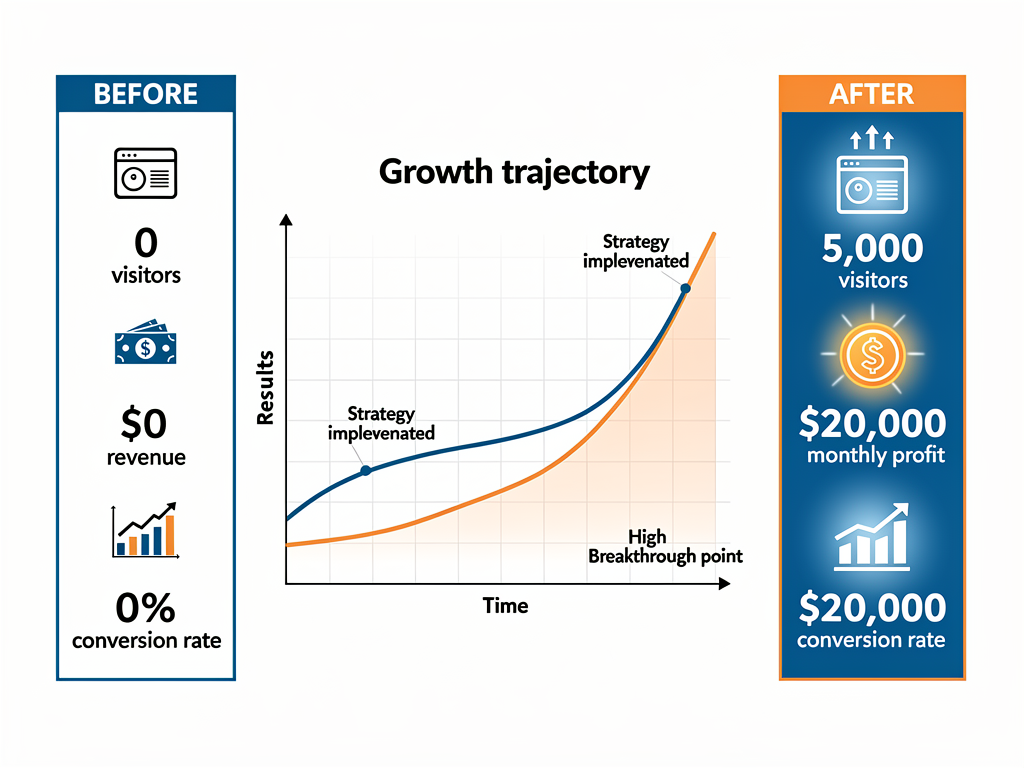
- Before: Zero traffic, zero email subscribers, zero revenue
- After: Approximately 5,000 monthly website visitors, converting 20 affiliate sales at $997 each, generating $20,000 monthly profit
- Growth: From $0 to $240,000 annualized revenue with a starting investment under $10 plus automation tool subscriptions
Key insight: The system’s power came from stacking multiple AI shortcuts (content generation, video conversion, email writing) across the entire distribution funnel, not from any single tool or tactic.
Source: Tweet
Tools and Next Steps
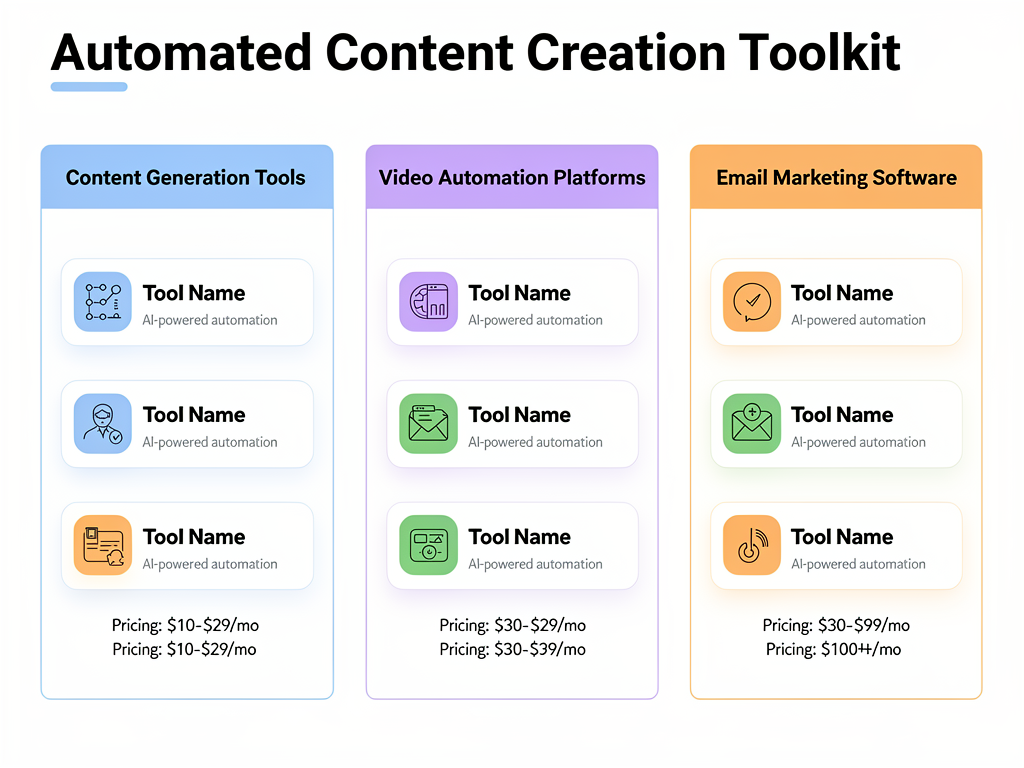
Content Generation: ChatGPT, Claude, or Jasper for written content creation and repurposing. These tools handle blog posts, social captions, and email sequences. Expect costs from $0 (free tiers) to $20-50 monthly for professional plans.
Video Automation: Pictory, InVideo, Lumen5, or OpusClip for converting text and long-form video into short social clips. These platforms automate the tedious work of editing, adding captions, and optimizing for platform-specific requirements. Pricing typically ranges $20-75 monthly depending on volume.
Email Marketing: ConvertKit, ActiveCampaign, or MailerLite for list building and sequence automation. Modern platforms integrate AI writing assistants to help craft campaigns. Free tiers exist for lists under 500-1,000 subscribers; paid plans start around $15-30 monthly.
Website and Hosting: WordPress on managed hosting (SiteGround, Bluehost, or Cloudways) provides the foundation. One-click installation, plugin ecosystem for popups and SEO, and straightforward AI integration. Hosting costs $5-30 monthly depending on traffic.
Analytics and Optimization: Google Analytics 4 (free) for traffic tracking, Google Search Console (free) for SEO insights, and affiliate network dashboards for conversion data. These provide the metrics needed to optimize your automation systems.
Next Steps Checklist:
- [ ] Validate your niche by confirming affiliate programs exist with $100+ commissions and that competitors are successfully monetizing
- [ ] Purchase a domain and set up basic WordPress hosting (allocate $15-20 for first month)
- [ ] Use AI to generate 10-20 foundational blog posts covering core topics in your niche (test quality before scaling to 100)
- [ ] Set up one automated workflow converting blog posts to short-form video for one platform (TikTok or Reels) to validate the process
- [ ] Implement email capture popups with a simple lead magnet (checklist or guide AI can help you create)
- [ ] Write or AI-generate a 5-email nurture sequence introducing your niche expertise and warming toward your affiliate offer
- [ ] Join 2-3 relevant affiliate programs and embed links naturally in your content and email sequences
- [ ] Publish consistently for 30 days while monitoring traffic sources and engagement patterns
- [ ] Double down on your best-performing content topics and distribution channels based on data
- [ ] Implement weekly quality spot-checks on AI output to maintain trust and avoid algorithmic penalties
For teams looking to accelerate growth through established distribution networks, FLEXE.io brings 7+ years of Web3 marketing expertise and relationships with 10+ crypto traffic sources, 150+ media partners, and 500+ influential voices to rapidly scale awareness and user acquisition. Get in touch on Telegram: https://t.me/flexe_io_agency
FAQ: Your Questions Answered
Can AI-generated content still rank on Google in 2025?
Yes, but only when properly optimized and reviewed. Google’s algorithms evaluate content based on helpfulness, expertise, and user satisfaction, not whether AI wrote it. The key is using AI as a drafting tool, then adding human expertise, fact-checking, and unique insights before publishing. Sites using this hybrid approach continue to rank well.
How much does it cost to start an automated content system?
You can start with less than $100 monthly: domain ($9-15/year), basic hosting ($5-15/month), AI writing tool ($20-50/month), and video automation ($20-50/month). Many successful systems run on $50-75 monthly operational costs after the initial domain purchase, making this one of the most capital-efficient online business models available.
What conversion rates should I expect with automated content funnels?
For high-ticket affiliate offers ($500-$2,000), expect 0.2-0.5% conversion rates from cold traffic, increasing to 2-5% from nurtured email subscribers. Lower-priced offers ($50-100) typically convert at 1-3% from traffic and 5-10% from email. The documented case achieved 0.4% conversion (20 sales from 5,000 visitors) promoting a $997 offer.
Is content repurposing considered plagiarism or duplicate content?
Not when done correctly. Repurposing means taking the topic, structure, or research from existing content and using AI to create completely new articles with different phrasing, examples, and perspectives. This is strategic content remixing, not copying. Always run output through plagiarism checkers to ensure sufficient uniqueness (aim for 95%+ originality scores).
Which platform should I prioritize: blog SEO or social video?
Both, but start with video if you need faster results. TikTok and Reels algorithms give new creators better initial reach than Google gives new websites. Use social video to build an audience and drive traffic to your blog where you capture emails and monetize. SEO is a longer play (3-6 months) but provides more stable, compound traffic growth over time.
How do I maintain quality when automating at scale?
Implement a 10-15% review budget: spot-check every 10th piece of content thoroughly, use AI detection and plagiarism tools on every piece, and personally review all content for regulated niches (health, finance, legal). Create templates and style guides that you feed to your AI tools to maintain consistency. Quality control is the thin layer of human input that separates successful automation from spammy automation.
Can I run multiple niche sites using the same automation system?
Absolutely, and this is where the model shows extreme leverage. Once you’ve validated the process on one niche site, you can replicate the entire system for different niches with minimal additional work. Many operators run 3-10 niche sites simultaneously, each automated independently. The main constraint becomes monitoring and optimization time, not content production capacity.