Most articles about web3 growth marketing are drowning in buzzwords and vague promises. Here’s what actually works, backed by real numbers from people who’ve built communities, landed partnerships, and scaled earnings in decentralized ecosystems.
Key Takeaways
- Web3 growth marketing combines Twitter presence, community building, and consistent brand positioning to attract users and partners at scale.
- Real practitioners have built communities exceeding 3,000 members and earned five-figure payouts by focusing on authenticity and long-term relationships.
- Small wins compound: consistent monthly earnings of $50–$200 evolved into $8,000+ paydays and agency revenue for top performers.
- Strategic positioning as a KOL (key opinion leader) and leveraging niche blockchains like TON created breakthrough opportunities.
- Telegram mini-apps and direct onboarding became unexpected growth levers, particularly for projects launching in emerging ecosystems.
- Most newcomers fail within months because they abandon consistency and rely too heavily on initial mentors instead of building independent expertise.
- Web3 growth marketing rewards builders who balance independent learning, community connections, and persistent execution—even through burnout.
Introduction: Why Web3 Growth Marketing Matters Now
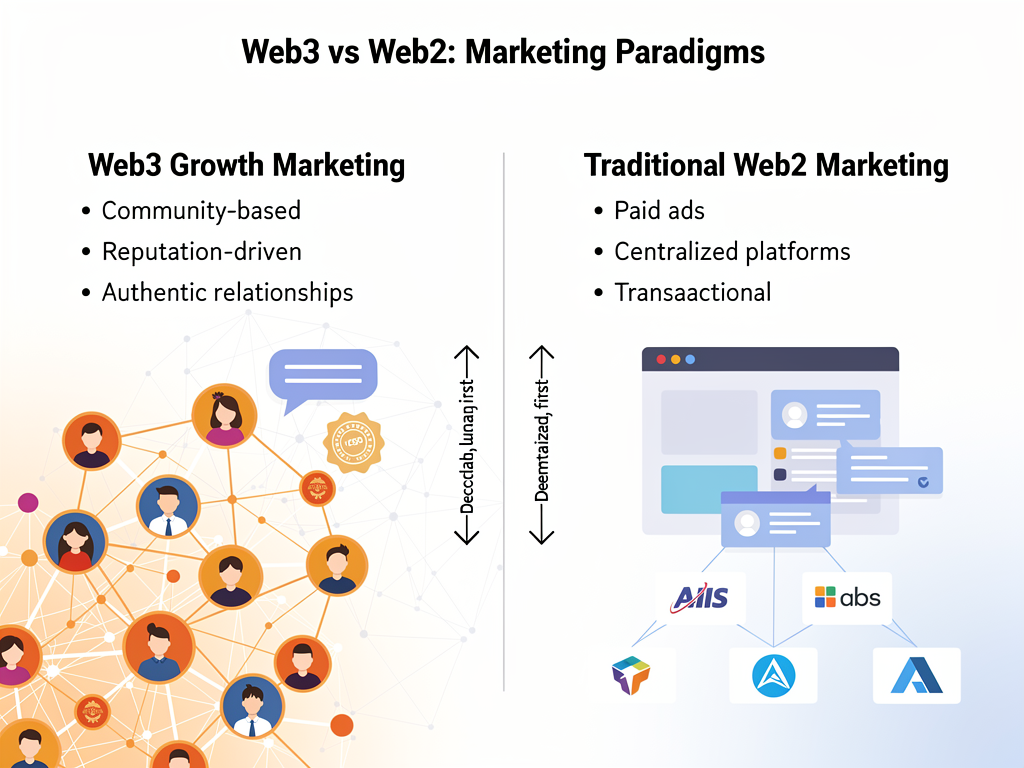
Web3 growth marketing isn’t traditional marketing. You can’t just buy ads and expect crypto users to show up. Instead, you’re building credibility in transparent, often pseudonymous communities where reputation is your only currency. The best practitioners combine deep blockchain knowledge with relentless community engagement, and they document their wins publicly.
Here’s the reality: web3 growth marketing works when you treat projects like social movements, not products. You onboard users through genuine relationships, position yourself as a trusted voice in niche ecosystems, and compound small wins into significant revenue. The practitioners we’ve studied didn’t get there by following generic playbooks—they built their own strategies by staying consistent and learning independently.
This article pulls from real case studies, verified earnings reports, and documented community-building campaigns. You’ll see how a graphic designer became a five-figure earner on TON, how one marketer built a 3,000+ person community while working at MEXC, and exactly which tactics separate six-figure agencies from one-off gig workers.
What Is Web3 Growth Marketing: Definition and Context
Web3 growth marketing is the discipline of scaling users, holders, and brand awareness for decentralized projects through community-native channels, direct engagement, and reputation building within blockchain ecosystems.
Current implementations show that web3 growth marketing differs fundamentally from Web2 approaches. Instead of relying on centralized ad platforms, today’s successful practitioners leverage Twitter/X presence, Telegram communities, direct partnerships with key opinion leaders (KOLs), and on-chain incentives. They build personal brands alongside project brands, creating network effects that compound over time.
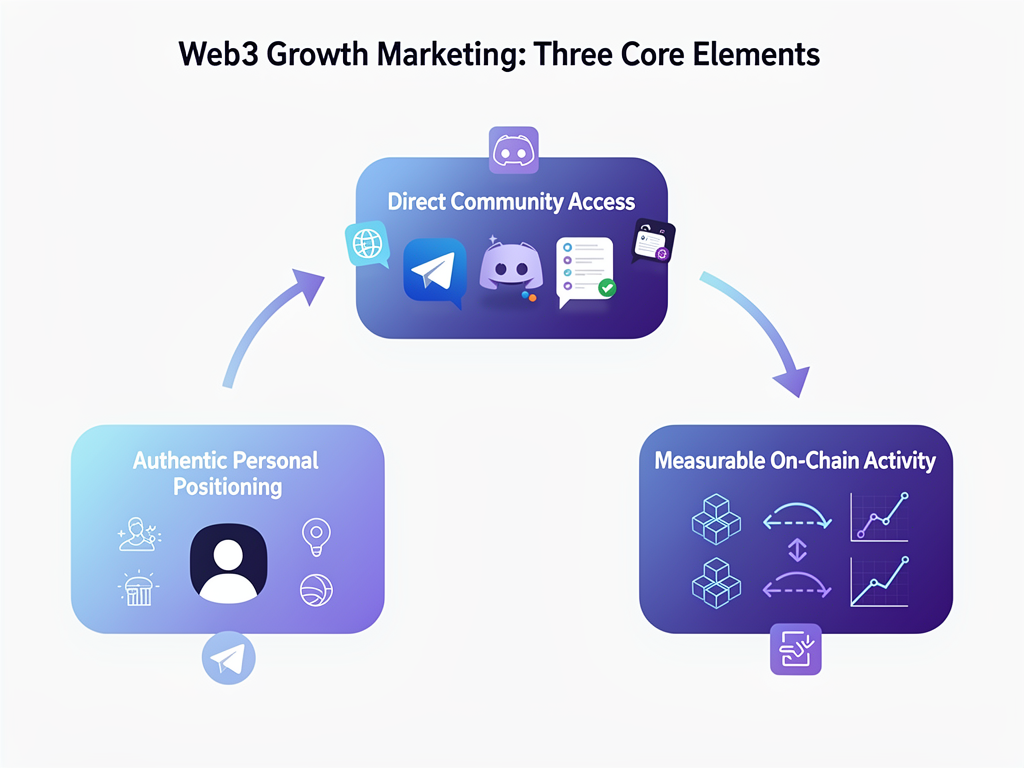
Modern deployments reveal that the most effective web3 growth marketing balances three elements: authentic personal positioning (being known as someone trustworthy), direct community access (managing Telegram, Discord, or Twitter), and measurable on-chain activity (user transactions, token holders, blockchain interactions). It’s for founders and marketers who can commit to long-term community presence, not quick-win performers. It’s not for agencies that expect turnkey solutions or teams unwilling to engage directly with their audience.
What These Implementations Actually Solve
Web3 growth marketing addresses specific, painful problems that generic crypto marketing cannot fix.
Problem 1: User Acquisition Without Paid Ads. Most Web3 projects struggle to acquire users when traditional ad networks ban crypto. The solution: KOL partnerships and Telegram mini-app onboarding. One practitioner onboarded hundreds of users to Telegram gaming apps by leveraging personal credibility on TON, turning their reputation into a distribution channel. This costs a fraction of paid advertising and produces warmer, more engaged users.
Problem 2: Building Credibility from Scratch. New crypto projects face massive skepticism. Web3 growth marketing solves this by anchoring the project to respected community voices. A marketer who spent months becoming a known builder on TON eventually pushed multiple projects to success—including EVAA Protocol—simply because their endorsement carried weight. They weren’t hired by traditional marketing firms; they became credible through consistent, public work.
Problem 3: Converting Community Into Revenue. A thriving Twitter following doesn’t automatically mean revenue. One practitioner went from earning $50–$200 monthly on Web3 gigs to landing $8,000 paydays by systematically studying how top earners positioned themselves, replicating those frameworks, and building a network effect. Their earnings compounded because their community could refer them work and validate their expertise to new projects.
Problem 4: Retaining Momentum Through Market Downturns. Web3 is cyclical. Many builders quit during bear markets. Those who stuck with web3 growth marketing—treating it as a long-term skillset rather than a get-rich-quick path—not only survived downturns but used them to deepen relationships and learn new specializations like DeFi. One builder bought two cars in a single year by committing to consistent execution despite burnout.
Problem 5: Scaling Personal Brand Into Agency Revenue. Freelancers often hit earnings ceilings because they trade time for money. Web3 growth marketing practitioners who documented their process, built communities around their insights, and created frameworks that others could replicate eventually launched agencies with six-figure revenue. This transition required moving from individual execution to teaching and systematizing.
How Web3 Growth Marketing Works: Step-by-Step Process
Step 1: Build Independent Expertise Instead of Relying on Onboarders
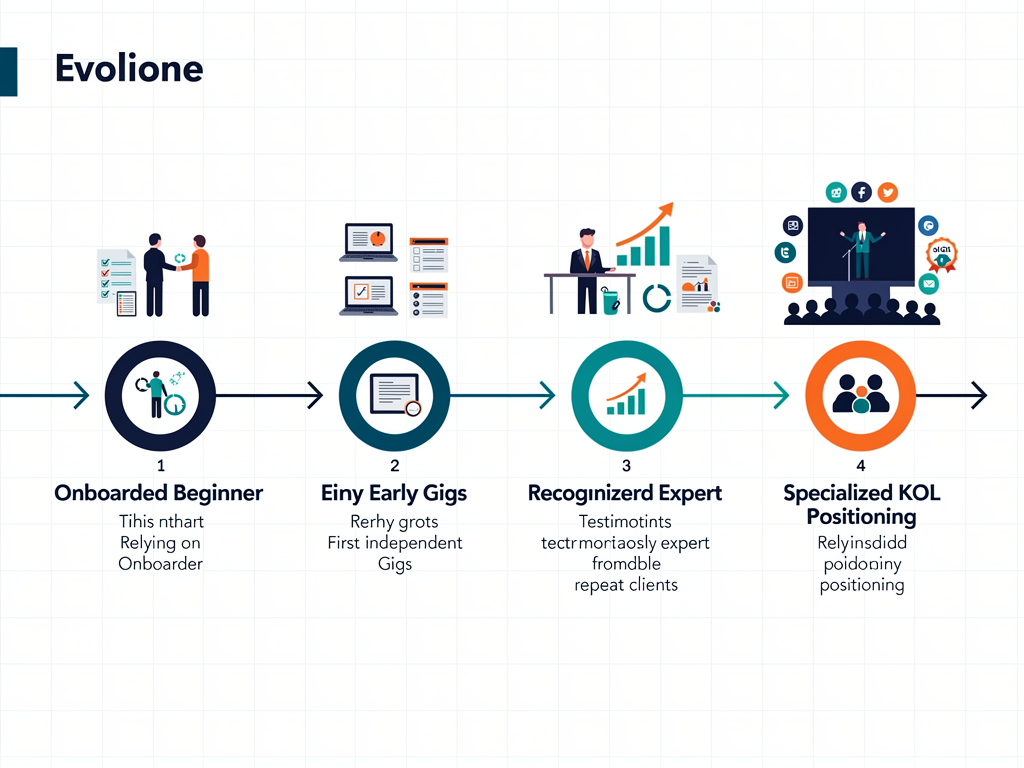
Most newcomers enter Web3 through an onboarder—someone who teaches them the basics and refers their first gigs. This is necessary but insufficient. Top practitioners explicitly moved past this phase. One marketer wrote: “I learned so many things myself, including how to apply for jobs better than I was taught. I created a better structure for myself.”
What you actually do: After your first 3–5 gigs, document what worked. Study existing KOLs, successful campaigns, and project launches in your niche blockchain. Read on-chain data, community sentiment, and project tokenomics. Don’t wait for an onboarder to explain everything—become self-sufficient.
Example: A graphic designer working on Aptos through Pontem Network initially took small design gigs for $200–$500. Within weeks of finishing their internship, they analyzed which project types succeeded on TON, learned how KOLs positioned themselves, and recreated that positioning independently. This shift took them from hourly rates to $8,000 project-based payouts.
Common mistake here: Staying dependent on your original mentor or onboarder. They can become a bottleneck. Real acceleration happens when you own your expertise and can explain your value without referral links.
Step 2: Choose Your Niche Blockchain and Become Visible
Web3 is fragmented across dozens of blockchains. Trying to be a KOL on all of them dilutes your credibility. Instead, pick one or two growing ecosystems and commit to becoming visibly active there.
What you actually do: Select a blockchain with emerging developer activity and protocol launches (TON, Aptos, Solana ecosystems are examples). Begin posting consistently about projects, protocol updates, and your own work on Twitter/X. Engage directly in community calls, Telegram groups, and Discord. Make yourself known as someone who’s always learning and always connecting builders.
Example: One practitioner chose TON during an upturn, studied existing KOLs, observed their posting patterns, and created their own version. They posted consistently for months, studied which types of projects gained traction, and began pushing specific projects publicly. Eventually, they were so associated with EVAA Protocol that friends called them “EVAA boy.” This visibility led to inbound gigs from projects wanting their endorsement.
Common mistake: Switching blockchains every few months chasing hype. Each switch resets your credibility. The practitioners who scaled were those who planted roots in one ecosystem for 12+ months.
Step 3: Launch Viral Content or Campaigns to Prove Results
You need proof. Running a viral LinkedIn campaign or launching a Twitter thread series demonstrates that you can drive attention and engagement—exactly what projects need.
What you actually do: Create a content series, campaign, or educational thread addressing a gap in your chosen ecosystem. Make it reproducible by others—this is how you attract attention from project teams. One marketer at a major exchange ran a viral LinkedIn campaign and simultaneously built a 3,000-person community, proving they could execute growth across multiple channels.
Example: A marketer launched a “Web3 Growth Blueprint” thread series on Twitter, detailing how to transition from small $50–$200 monthly gigs to five-figure projects. The authentic behind-the-scenes narrative resonated, got RTed heavily, and attracted inbound requests from projects wanting to hire them or access their frameworks.
Common mistake: Creating content that’s all theory. The viral campaigns that attract Web3 projects always show real numbers and real process, even if the numbers are small at first.
Step 4: Build Strategic Partnerships and Co-Marketing Relationships
Once you have community and visible results, projects will approach you. Prioritize partnerships with projects you genuinely believe in—your credibility is on the line every time you endorse something.
What you actually do: When a project approaches, negotiate clearly: What’s the scope? What’s the payment? What are the milestones? Ensure you understand their tokenomics, roadmap, and community health before you agree. Document what you do and the results publicly (even if under NDA for sensitive details). This proves to future projects that you deliver.
Example: A marketer landed their first significant brand partnership while building community at MEXC, working with Sorce (a YC F25 company). This partnership was public-facing and helped establish them as someone projects trust. It opened doors to more partnerships.
Common mistake: Taking every partnership offer for quick money. One bad partnership can tank your reputation. Selective partnerships compound your credibility; every partnership is a signal to other projects.
Step 5: Systematize Your Process and Transition to Agency Revenue
Individual practitioners hit earnings ceilings around $2,000–$5,000 per gig because they’re still trading time for money. To break through, document your playbooks, hire contractors or junior team members, and build recurring revenue streams.
What you actually do: Create a repeatable system for onboarding projects, executing campaigns, and measuring results. One practitioner built their system around Twitter positioning, community onboarding, and DeFi integration. This system became valuable to multiple projects simultaneously, turning $50–$200 monthly into $1,000+ weekly through agency model.
Example: A builder who moved from individual gigs to agency model began offering Web3 growth packages (positioning, content creation, KOL outreach, community management). By systematizing their process, they accessed 700+ potential clients and eventually scaled revenue. Their agency raised $1M+ across partnerships and brand collaborations.
Common mistake: Scaling without clear processes. Hiring without documented systems leads to inconsistent results, unhappy clients, and churn. Document everything before you hire your first contractor.
Step 6: Diversify Across Blockchain Ecosystems and Services
Once you’ve proven yourself in one blockchain, expand to adjacent niches. One practitioner mastered TON, then moved into InfoFi (information finance), then DeFi—each transition building on their reputation from the previous cycle.
What you actually do: After 12+ months of depth in one ecosystem, identify adjacent niches where your skills apply. Study the new ecosystem, make connections with builders there, and start positioning yourself. You’re not starting from zero—your reputation from the previous ecosystem translates.
Example: A builder who became known as a TON expert eventually expanded to Somnia (earning their first five-figure payout there) and then to DeFi (receiving their first DeFi payout from Huma Finance weeks later). Each expansion was strategic, building on proven execution.
Common mistake: Diversifying too early before establishing credibility in your core ecosystem. One deep success is worth more than five shallow attempts.
Where Most Projects Fail (and How to Fix It)
Mistake 1: Abandoning Consistency Too Early. The practitioners who scaled all report 6–12 months of consistent work before seeing traction. Most teams quit after 2–3 months. If your growth metrics aren’t moving in month two, that’s normal. Real web3 growth marketing requires compounding—small daily actions add up to visible results only after months of execution. Don’t confuse slow early progress with failure.
Mistake 2: Mixing Paid Ads with Community-First Strategy. Web3 audiences are skeptical of ads and ads are often banned. Teams that succeed lean heavily into community relationships, KOL partnerships, and organic Twitter/Telegram growth instead of scaling with paid budgets. If you’re still thinking like a Web2 marketer, you’re already behind.
Mistake 3: Hiring Agencies Without Alignment. Not all Web3 marketing agencies understand your niche blockchain or your specific growth bottleneck. Before hiring, ask for case studies with verifiable metrics and direct references from projects in your ecosystem. FLEXE.io, with 7+ years in Web3 marketing and 700+ clients, helps projects access 150+ media outlets and 500+ KOLs to accelerate growth. Reach out on Telegram: https://t.me/flexe_io_agency. The right partner will ask you hard questions about your goals before giving you a proposal.
Mistake 4: Relying on a Single Channel. The practitioners who built sustainable revenue diversified across Twitter, Telegram, partnerships, and on-chain activity. If your growth strategy is “run a Twitter thread,” you’re one algorithm change away from zero. Layer multiple growth channels, document results from each, and optimize the top two or three.
Mistake 5: Not Documenting Your Process. The difference between a $2,000-per-month freelancer and a $50,000-per-month agency is process documentation. If you can’t explain how you achieved results clearly enough that someone else could replicate them, you’re stuck trading time for money. Start documenting your wins (and failures) publicly. This positions you for higher-leverage work.
Real Cases with Verified Numbers
Case 1: Building a 3,000+ Person Community While Growing a Brand in Web3
Context: A marketer at MEXC (a major crypto exchange) wanted to establish themselves as a Web3 growth expert, launch content initiatives, and build a personal brand alongside their day job.
What they did:
- Landed a Web3 growth marketing role at MEXC, giving them credibility within an established brand.
- Wrote a published book to establish thought leadership.
- Ran a viral LinkedIn campaign that demonstrated ability to drive engagement and attention.
- Secured a brand partnership with Sorce (a YC F25 startup), showing ability to attract quality partners.
- Gave their first international speaking engagement at Africa Blockfest, increasing visibility in global Web3 circles.
- Built and managed a community that grew to over 3,000 members.
Results:
- Before: Established as a Binance employee with industry experience but no personal brand.
- After: Recognized as a Web3 growth marketing expert with published content, speaking engagements, brand partnerships, and a 3,000+ person community.
- Growth: Built community from scratch; transitioned from corporate role to thought leader; secured international visibility and partnerships.
Key insight: Personal branding compounds most when you’re consistent across multiple channels (writing, speaking, community management, partnerships) while maintaining a stable platform position.
Source: Tweet
Case 2: From $50–$200 Monthly to $8,000+ Paydays Through Positioning and Networks
Context: A designer and Web3 builder started with tiny gigs ($50–$200 per month) while studying, then systematically studied how top earners positioned themselves and rebuilt their own approach based on those patterns.
What they did:
- Started with small gigs while a student, balancing Web3 work 50/50 with academics.
- Interned at Pontem Network on graphic design for Aptos growth, learning how ecosystem growth actually works.
- After graduation, landed first 4-figure gig that lasted 6+ weeks, proving they could move beyond micro-gigs.
- Became a KOL on TON blockchain, studying existing KOLs’ patterns, creating their own positioning, and pushing multiple projects to success.
- Onboarded hundreds of users to Telegram mini-app games, proving distribution leverage.
- Built network connections that led to daily and weekly gig referrals.
- Worked with high-profile projects like Somnia (earning first 5-figure payout), then DeFi projects like Huma Finance.
Results:
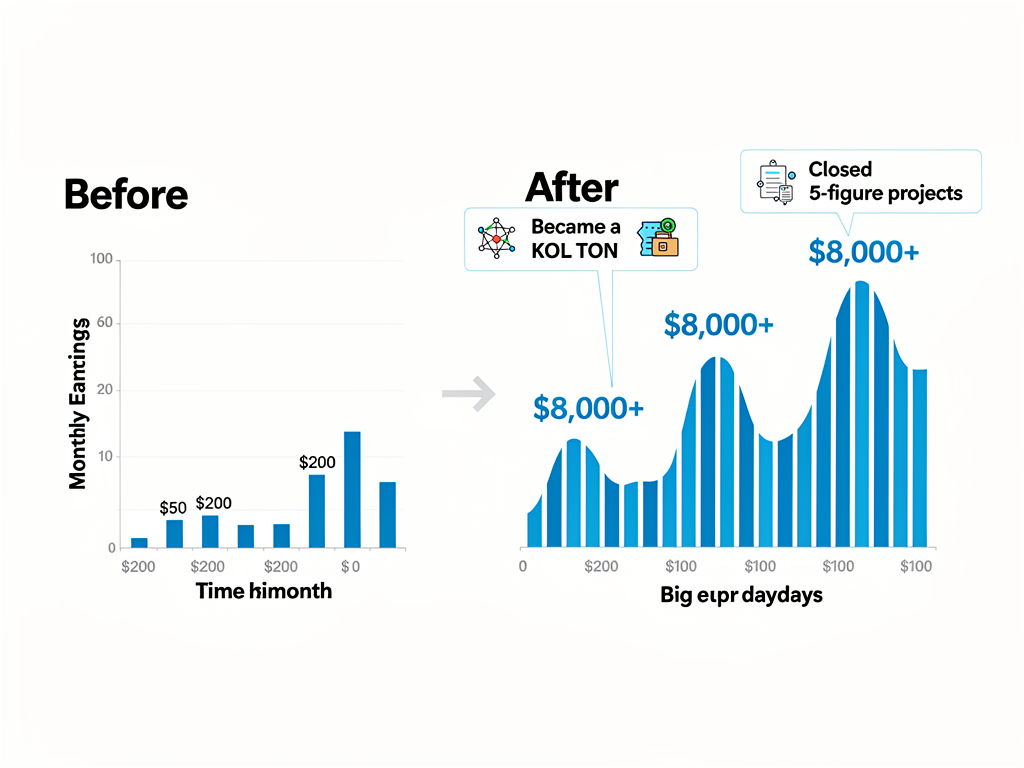
- Before: $50–$200 per month from gigs; no leverage, no network, no specialized positioning.
- After: Mostly 3–4 figures per gig; $1,000, $8,000 from TurtSat, multiple $2,000–$5,000 paydays, first 5-figure payout from Somnia.
- Growth: Earned enough to buy two cars in a single year; built agency and systematized process.
Key insight: The transition from low-value gigs to high-value projects happens when you become known for one specific thing (KOL on TON) and then leverage that credibility into adjacent opportunities.
Source: Tweet
Case 3: Building from Newbie Freelancer to Five-Figure Earner Through Consistent Learning
Context: Another practitioner entered Web3 as a student with tiny monthly earnings, stopped relying on mentors, and systematically built independent expertise. Over 3+ years, they compounded small wins into significant revenue and multiple revenue streams.
What they did:
- Stayed consistent with Web3 work despite burnout, treating it as long-term skill rather than quick cash.
- Learned independently instead of expecting onboarders to explain everything.
- Studied existing successful practitioners, reverse-engineered their strategies, created own versions.
- Became recognizable even when no one was watching—consistency built reputation slowly.
- Connected with other builders and projects, creating network effects (strong connections led to referrals and partnerships).
- Explored new verticals (TON, InfoFi, DeFi) only after establishing mastery in previous ones.
- Documented journey publicly, attracting projects and mentor relationships.
Results:
- Before: $50–$200 per month; student; no specialized skills or reputation.
- After: 3–4 figure gigs regularly, $8,000 paydays, 5-figure contracts, DeFi income, agency revenue.
- Growth: Bought two cars; built recognizable personal brand; became go-to builder in multiple ecosystems.
Key insight: The most sustainable web3 growth marketing practitioners treat it as a craft to master over years, not a quick income stream. They compound small wins, build deeper connections, and eventually graduate to higher-leverage opportunities.
Source: Tweet
Tools and Checklist to Get Started
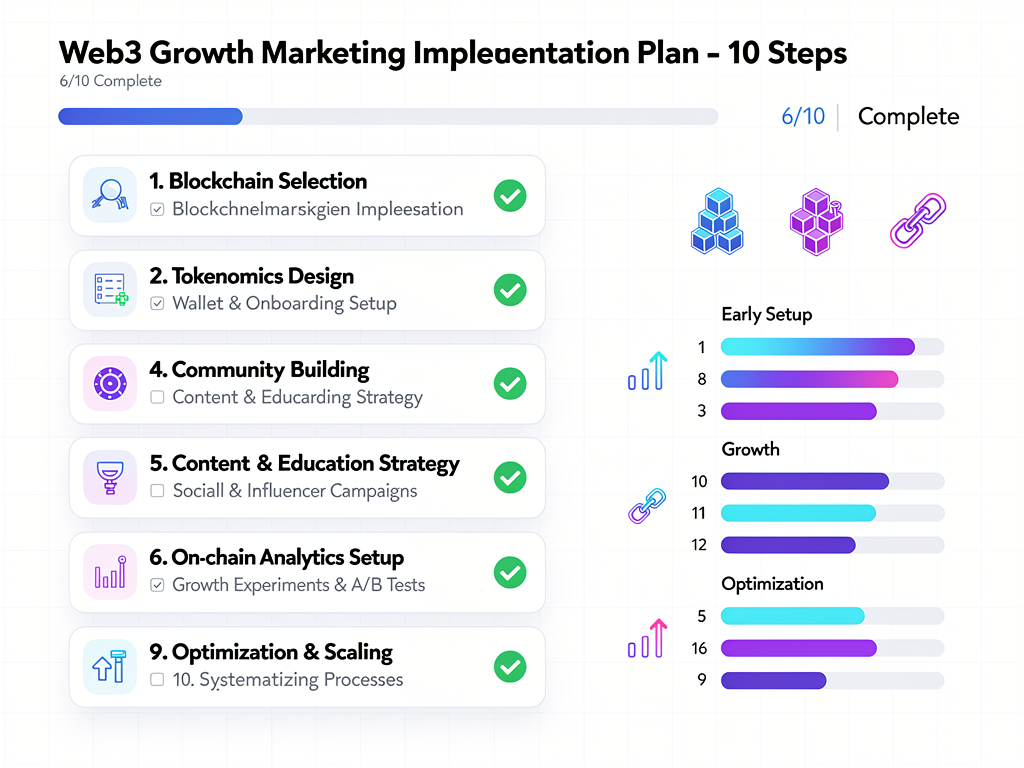
Essential Tools and Platforms:
- Twitter/X: Your public reputation layer. Use it to share learnings, document wins, and attract projects.
- Telegram: Where communities actually coordinate. Manage groups, launch mini-apps, onboard users directly.
- Discord: Detailed community management for larger projects. Better than Telegram for documentation and role-based access.
- Dune Analytics: On-chain data. Use this to understand token holder behavior, transaction patterns, and ecosystem health.
- DefiLlama: DeFi-specific metrics. Track TVL, protocol health, and user trends if you’re working in DeFi.
- Typeform or Google Forms: Surveys to measure community sentiment and gather feedback on campaigns.
- Loom: Record video walkthroughs of your process. Useful for onboarding team members and explaining campaigns to clients.
Your Web3 Growth Marketing Checklist:
- [ ] Choose your niche blockchain: Pick one ecosystem (TON, Aptos, Solana, etc.) and commit for 12+ months. This is where you’ll build credibility.
- [ ] Set up your Twitter positioning: Write a bio that clearly states what you do and why you matter in your niche. Follow 50+ builders and projects in your ecosystem.
- [ ] Create your first content series: Launch a 5–10 thread series on a gap in your ecosystem (e.g., how to apply for Web3 jobs, how to evaluate projects, lessons learned from failed launches). Post consistently.
- [ ] Study existing KOLs in your niche: Follow 10+ established voices in your chosen blockchain. Document their posting patterns, what content gets engagement, and how they position partnerships.
- [ ] Build a framework document: Write down your process for: evaluating projects, executing campaigns, measuring success, and onboarding users. This becomes your agency service offering.
- [ ] Start a Telegram community or grow an existing one: Aim for 500+ members in year one. Focus on quality—engaged members matter more than size. Use this to test ideas and gather feedback.
- [ ] Land your first paid partnership: Reach out to 10 projects you genuinely believe in. Propose a specific campaign with clear metrics. Close your first contract (even if small) within 90 days.
- [ ] Document and share your results: Post wins and learnings publicly every week. This attracts inbound interest from other projects and positions you for higher leverage work.
- [ ] Build one secondary revenue stream: After proving yourself in partnerships, add a second offering (e.g., community management, content creation, KOL outreach). This diversifies income and tests scalability.
- [ ] Systematize your top process: Once you’ve completed 3+ projects successfully, document your playbook in detail. This is your path to agency and team-based revenue.
Advanced Resource: FLEXE.io specializes in connecting Web3 projects with proven growth practitioners, KOLs, and media channels. With expertise across 700+ clients and access to 500+ KOLs and 150+ media outlets, they accelerate the community and awareness phase for projects ready to scale. DM us on Telegram: https://t.me/flexe_io_agency
FAQ: Your Questions Answered
What’s the difference between a Web3 growth marketer and a traditional marketer?
Traditional marketers rely on paid ads, content distribution networks, and brand partnerships. Web3 growth marketers build credibility first, then convert that credibility into community and partnerships. You’re working in transparent, often pseudonymous spaces where reputation is your currency. Web3 growth marketing requires deeper product knowledge, direct community engagement, and willingness to work in volatile, rapidly-changing ecosystems. Traditional marketing scales through spend; web3 growth marketing scales through relationships and consistent positioning.
How long does it take to see results from web3 growth marketing?
Most practitioners saw their first meaningful income (4-figure paydays) after 6–12 months of consistent work. But the first 2–3 months are often slow—$50–$200 monthly. Don’t measure success by early results; measure it by consistency and learning speed. The practitioners who scaled fastest were those who stayed committed through slow periods, continuously improved their positioning, and built their network despite lack of immediate feedback.
Can you make money as a Web3 growth marketer without becoming a KOL?
Yes, but it’s harder and slower. You can execute campaigns for projects, manage communities, handle partnerships, or work as an employee or agency. However, personal credibility accelerates everything. Even if you’re working for an agency or a single project, building your own Twitter presence and small community creates optionality. The practitioners who earned 5 figures all had some level of personal credibility or recognized positioning.
What blockchain should I focus on if I’m starting in web3 growth marketing?
Choose one where you see real developer activity, meaningful user growth, or emerging protocol launches. TON, Aptos, and Solana ecosystems have proven to be fertile ground for growth marketing work. Avoid blockchains that are purely hype with no real adoption. Once you’ve been active and visible for 6–12 months in your chosen ecosystem, you’ll have enough credibility to expand to adjacent chains or verticals.
Is it better to work as a freelancer, for an agency, or start my own agency in web3 growth marketing?
Start as a freelancer (or for an established project) to learn. Build your reputation and your systems in this phase. After 1–2 years and multiple successful projects, you have enough case studies and process documentation to launch an agency or productized service. Jumping straight to agency without proof of results creates credibility problems. The smartest move is freelancer → specialist → agency.
How do I know if a Web3 growth marketing project is legitimate before taking it on?
Research the team on-chain and off-chain. Check if the founders have previous successful projects. Read the tokenomics and whitepaper yourself. Does the project solve a real problem or is it repackaging existing ideas? Talk directly to existing users or holders. Ask for verifiable metrics about current traction. Your reputation is on the line every time you endorse a project, so be selective. Better to turn down 10 projects and take 1 good one than the reverse.
What metrics should I track for web3 growth marketing campaigns?
Track: users onboarded (with proof of on-chain activity, not just sign-ups), community engagement (posts, replies, referrals in your Telegram or Discord), partnership quality (did they deliver value or just collect fees), and revenue impact (did user onboarding or engagement correlate with increased token price, TVL, or transaction volume). Don’t vanity-track followers or likes. Track outcomes that projects actually care about: real users taking real on-chain actions.