You’ve read 10 articles about blockchain gaming that promised massive returns. Most were hype cycles and generic lists. This one tracks real revenue, user counts, and ROI numbers you can verify on-chain.
Key Takeaways
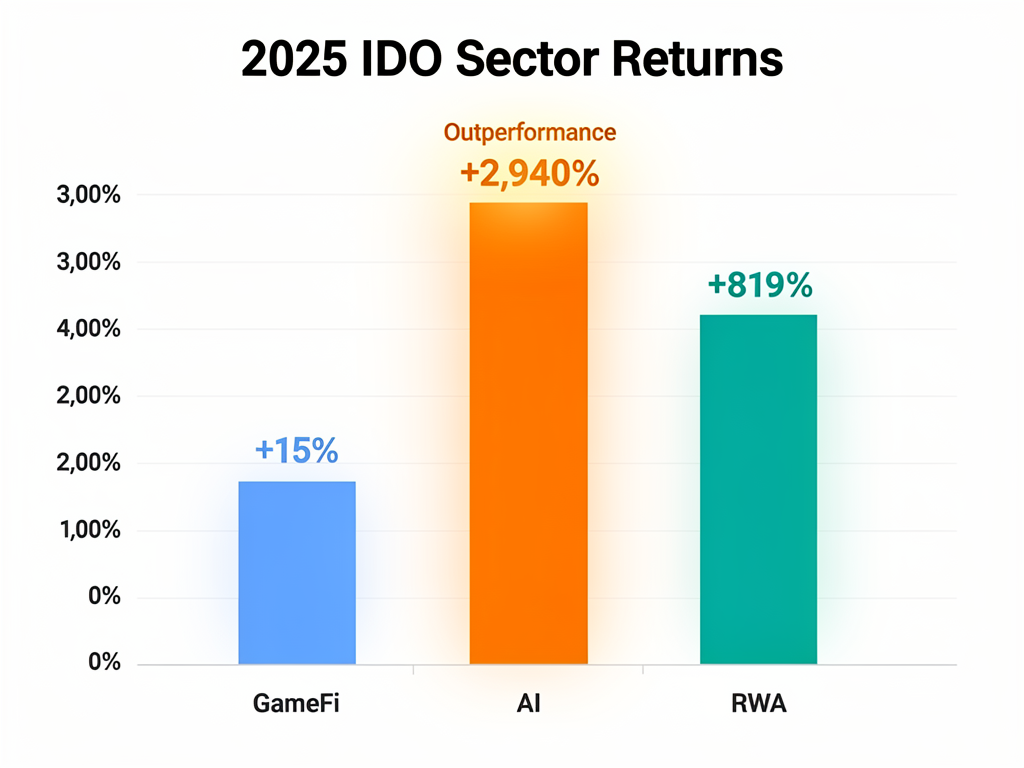
- GameFi IDO average ROI in 2025 sits at +15%, lagging far behind AI (+2,940%) and RWA (+819%) sectors.
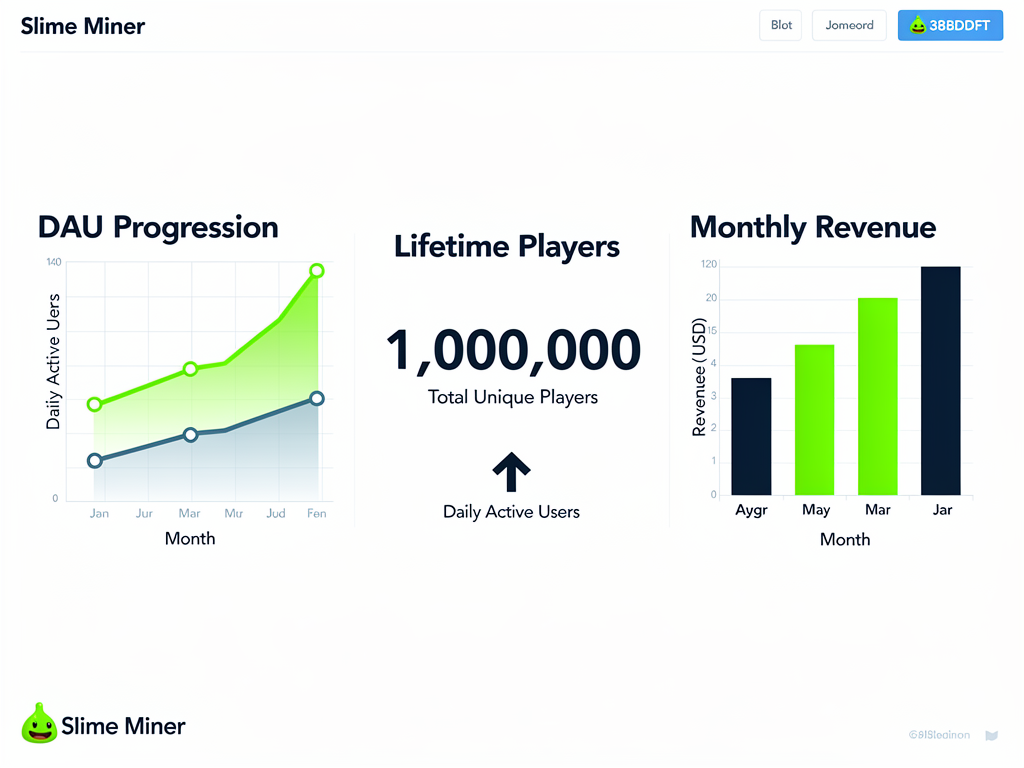
- Gacha Game generated over $2M in revenue on Abstract, while Slime Miner earns $2M monthly with 150,000+ daily active users.
- 2025 projects average 680,000 aggregate DAU across the top five new games, reversing the 2022 crash when Axie Infinity fell from 2.7M to 18k users (-99.3%).
- Hardware-backed ventures like JOY (9/10 rating) and functional cross-platform games like Spider Tanks signal a shift toward sustainable play models.
- Proven blockchain gaming ecosystems prioritize user experience over token incentives, as seen in ProofOfPlay ($320K+ revenue) and Gigaverse ($1.5M+ revenue).
- Solana continues to dominate GameFi infrastructure, while emerging chains like Monad attract new launches such as TeleMafia.
- Dynamic royalties, AI-driven NPCs, and true asset ownership replace the unsustainable “playing equals fake work” model of 2022.
What Top GameFi Projects Mean in 2025
Top GameFi projects are blockchain-based games that combine play-to-earn mechanics, verifiable asset ownership, and measurable revenue streams. Unlike the 2021–2022 hype wave, current implementations demonstrate product-market fit through sustained user activity and on-chain revenue rather than speculative token pumps.
Recent implementations show a fundamental shift. Modern deployments focus on gameplay first, with blockchain rails enabling persistent economies rather than driving them. Projects now compete on retention, engagement, and genuine entertainment value—metrics that matter to players, not just speculators seeking quick flips.
This approach suits developers willing to build for 18–36 months before breakout traction, investors evaluating revenue multiples instead of hype cycles, and players who want actual games rather than disguised DeFi protocols. It does not suit teams chasing quarterly token unlocks or communities expecting 100x returns in 90 days without underlying product substance.
What These Implementations Actually Solve
Sustainable player acquisition: The 2022 model collapsed because growth depended on new capital inflows rather than gameplay value. Modern projects replace Ponzi-like referral schemes with organic discovery. World of Dypians reached 4 million monthly players and 135 million wallets in Q3 by launching on Epic Games Store, tapping traditional gaming channels instead of relying solely on crypto-native audiences.
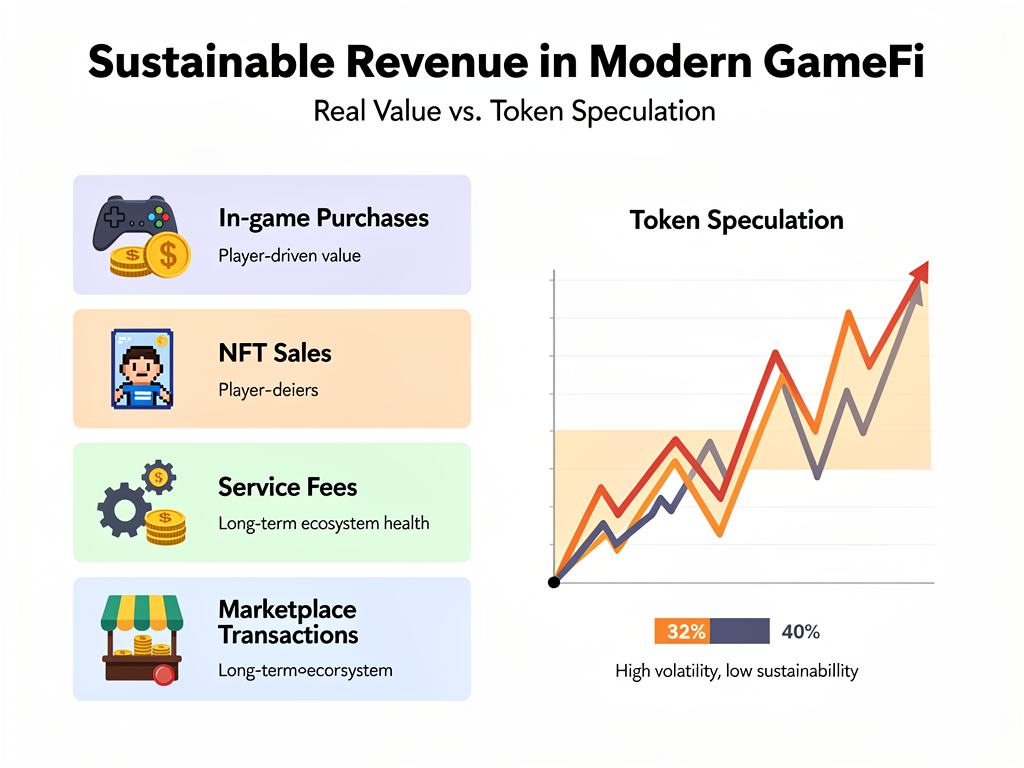
Revenue beyond token speculation: Early GameFi treated tokens as the only monetization lever, creating fragile economies. Current leaders generate direct revenue from in-game purchases, NFT sales, and service fees. Gacha Game collected over $2 million in revenue on Abstract without outrageous token promises, proving players will pay for quality experiences when blockchain adds utility rather than friction.
Cross-platform accessibility: Wallet setup, gas fees, and desktop-only experiences blocked mainstream adoption. Spider Tanks solved this by launching fully playable versions on mobile, PC, and Mac with live reward earning on Immutable Play. Removing technical barriers lets millions of traditional gamers participate without learning blockchain infrastructure first.
Content flywheel beyond gameplay: Pure game mechanics struggle to compete with Web2 studios’ budgets. Pixelmon’s anime episode attracted 1 million YouTube views, building brand recognition and ecosystem interest even before full game utility shipped. This transmedia approach creates multiple engagement vectors, turning IP into a defensible moat rather than hoping gameplay alone carries the weight.
Hardware differentiation: Digital-only experiences commoditize quickly. JOY builds real hardware with the Genesis console, staffed by former AMD engineers from PlayStation and Xbox teams. Physical devices create tangible differentiation and distribution advantages, especially when partnerships like YGG provide whitelist access to established gaming communities.
How This Works: Step-by-Step
Step 1: Build Core Gameplay Before Tokenomics
Start with a vertical slice that players enjoy without crypto hooks. Teams that prioritize fun mechanics, tight controls, and rewarding progression loops create retention foundations. Off The Grid exemplifies this—an AAA battle royale that earned Game of the Year awards by nailing core gameplay, then layering blockchain asset ownership on top rather than leading with token incentives.
Common trap: designing economic models first and bolting gameplay onto spreadsheets later. Players sniff out hollow experiences immediately, leading to initial hype followed by rapid abandonment once the token stops pumping.
Step 2: Establish Revenue Streams Independent of Token Price
Implement direct monetization through cosmetics, battle passes, expansions, or marketplace fees. ProofOfPlay generated $320,000+ in revenue by selling in-game value rather than speculating on governance tokens. This creates budget predictability for development while decoupling user growth from token chart performance.
According to project data tracked on Abstract, teams that hit $100K monthly revenue within six months of launch typically achieve product-market fit. Those still at $0 direct revenue after 12 months rarely recover, regardless of token market cap fluctuations.
Step 3: Deploy on Infrastructure That Matches Your User Profile
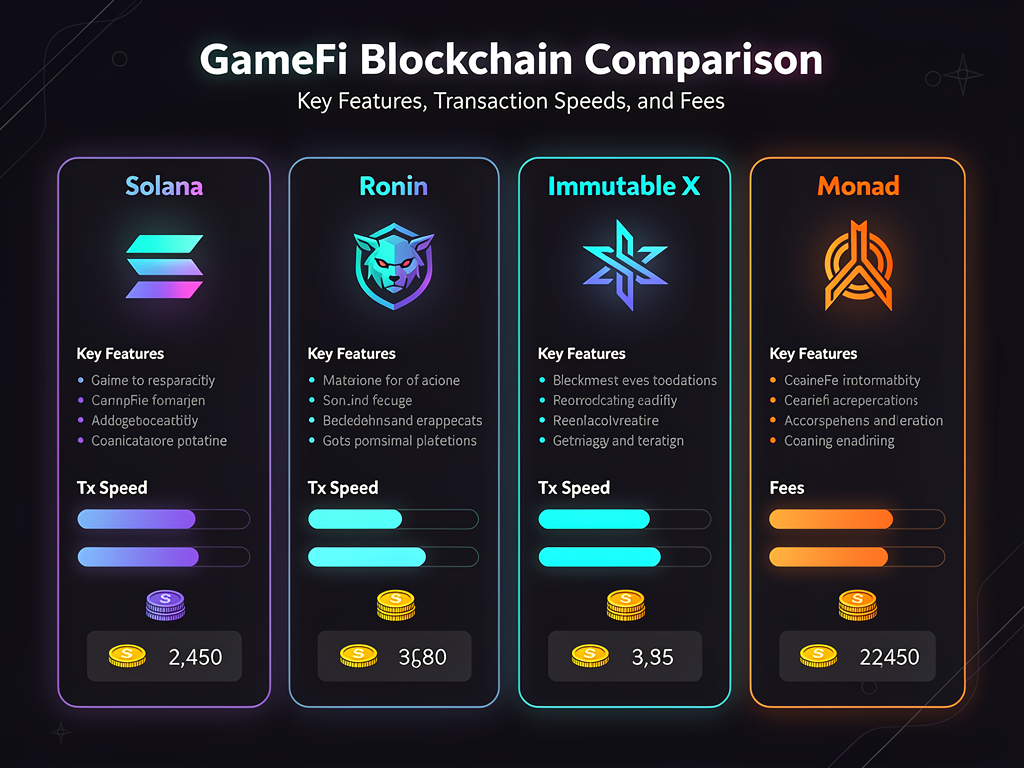
Choose chains based on where your players already transact. Solana dominates GameFi infrastructure because low fees and fast confirmations suit high-frequency gaming actions. Slime Miner runs on KAIA/LINE, tapping into LINE’s massive Asian user base to reach 22 million lifetime players—distribution matters more than theoretical decentralization when building for mainstream audiences.
Emerging chains like Monad now attract launches (TeleMafia and others) by offering incentives and technical support, but only switch chains if the ecosystem genuinely serves your player demographic better than established options.
Step 4: Implement Progressive NFT Utility and Rewards
Design NFTs that unlock gameplay benefits, not just speculation vehicles. Fableborne distributed USDC to Genesis holders and launched Season 4 with a new Supplies NFT collection featuring merge mechanics. Players engage because assets provide functional value—access, power, customization—while retaining trade optionality for those who want liquidity.
Avoid the early mistake of releasing 10,000-piece profile picture collections with vague “utility coming soon” promises. Players need immediate, tangible benefits from digital assets to justify purchase and continued engagement.
Step 5: Build Community Through Transparent Metrics
Share on-chain data, active user counts, and revenue figures regularly. Transparency builds trust and attracts serious investors rather than speculators. When developers publish verified numbers—like MyriadMarkets reporting $10 million+ in trading volume—it signals confidence and invites scrutiny that strengthens credibility over time.
Many teams fear sharing metrics during slow periods, but opacity breeds suspicion faster than disappointing numbers. Communities forgive temporary dips when they understand context; they abandon projects that go silent and reappear months later with unverifiable claims.
Step 6: Iterate Based on Player Behavior, Not Token Holder Votes
Governance tokens often create perverse incentives where speculators outvote players on game design decisions. Prioritize data from daily active users: what modes they play, how long sessions last, where they churn. Cambria (Duel Arena MMO) reached the #1 spot on DappRadar by obsessing over gameplay metrics rather than token governance theater.
Product decisions should reflect what keeps players engaged and spending, not what pumps short-term token price. These interests sometimes align but often diverge, and sustainable projects choose players over traders every time.
Step 7: Expand Through Strategic Partnerships and Distribution
Leverage partnerships that bring new players rather than just liquidity. JOY’s partnership with YGG provided 500 whitelist spots, connecting the project to an established gaming guild with proven engagement. These distribution deals matter more than exchange listings in the early phase, since real players drive retention and word-of-mouth far better than airdrop farmers.
According to project announcements, Fableborne’s continuous NFT drops and reward programs on Ronin maintain engagement between major updates, turning the chain partnership into an active growth lever rather than a one-time announcement.
Where Most Projects Fail (and How to Fix It)
Launching with token hype but no playable game: Teams raise millions, release elaborate tokenomics papers, and promise groundbreaking gameplay “coming Q3.” By the time a buggy alpha drops, the community has moved on and the token has bled 90%. Fix this by launching a free-to-play demo first—even a simple vertical slice—then introduce tokens once retention proves players enjoy the core loop.
Copying successful mechanics without understanding context: Axie Infinity’s breeding system worked in a specific market window with unique circumstances. Cloning that exact model in 2025 ignores changed player expectations and market saturation. Instead, study why mechanisms worked (social coordination, clear progression), then adapt those principles to your game’s unique strengths.
Ignoring mobile despite player preferences: Desktop-only games exclude the majority of crypto users in Asia, Latin America, and Africa who primarily access the internet via smartphones. Spider Tanks addressed this by ensuring full mobile functionality from launch. If your game requires keyboard and mouse, you’re competing in a much smaller, more competitive segment.
Overpromising on partnerships and underdelivering on integration: Announcing a partnership with a major chain or brand generates initial buzz, but players quickly notice when “integration” means a superficial logo swap rather than deep collaboration. Ensure every announced partnership delivers tangible player value—exclusive items, crossover events, distribution channels—within 60 days or don’t announce it yet.
Neglecting the content pipeline between major releases: Games that go silent for six months between updates lose momentum permanently. Fableborne maintains engagement through continuous NFT drops and seasonal programs, keeping the community active even when major features are in development. Plan a content calendar that delivers new experiences or rewards at least bi-weekly.
Many teams struggle to balance development, marketing, and community management while navigating crypto-native distribution channels. FLEXE.io, with 7+ years in Web3 marketing and a network of 700+ clients, connects projects to 150+ media outlets and 500+ KOLs to accelerate user growth when internal resources are stretched thin. Contact us on Telegram: https://t.me/flexe_io_agency
Real Cases with Verified Numbers
Case 1: Slime Miner’s Mobile-First Revenue Model
Context: A casual mining game targeting Asian markets through LINE integration, aiming to prove mobile GameFi could generate sustainable revenue without complex DeFi mechanics.
What they did:
- Launched on KAIA/LINE to tap into LINE’s 200+ million user base in Japan, Thailand, Taiwan, and Indonesia.
- Designed simple tap-to-earn mechanics accessible to non-crypto users, minimizing onboarding friction.
- Implemented direct in-game purchases for speed boosts and cosmetics rather than relying solely on token speculation.
- Ran localized influencer campaigns through LINE creators to drive organic discovery.
Results:
- Before: Zero users at launch in Q4 2024.
- After: 150,000+ daily active users, 22 million lifetime players, and $2 million monthly revenue as of early 2025.
- Growth: Achieved profitability within five months, proving mobile-first casual GameFi viability in Asian markets.
Key insight: Distribution through established social platforms with built-in payment rails beats attempting to onboard users into standalone crypto wallets for mass-market gaming.
Source: Tweet
Case 2: Gacha Game’s Revenue Without Token Hype
Context: A gacha-style collectible game on Abstract seeking to validate whether players would spend on quality experiences even without speculative token incentives.
What they did:
- Focused development budget on art quality, character design, and collection progression systems.
- Implemented NFT-based characters with visible rarity and gameplay utility.
- Avoided launching a native token, instead accepting stablecoins and ETH for purchases.
- Built transparent on-chain mechanics so players could verify drop rates and rarity distributions.
Results:
- Before: Abstract ecosystem had minimal gaming revenue prior to launch.
- After: Generated over $2 million in revenue, becoming one of the top products on Abstract by user spending.
- Growth: Demonstrated that product-market fit emerges from gameplay value and fair mechanics rather than token promises.
Key insight: Players conditioned by Web2 gacha games will spend in Web3 versions when quality matches expectations and blockchain adds verifiable fairness rather than speculative overhead.
Source: Tweet
Case 3: World of Dypians’ Multi-Platform Reach
Context: An open-world exploration game aiming to bridge crypto-native audiences with mainstream gamers through Epic Games Store distribution.
What they did:
- Developed native versions for PC via Epic Games Store alongside blockchain-integrated gameplay.
- Created optional Web3 features (NFT land, tokenized items) rather than mandatory ones, lowering entry barriers.
- Ran cross-promotion campaigns targeting both crypto communities and traditional gaming forums.
- Maintained active development with biweekly content updates and seasonal events to sustain player interest.
Results:
- Before: Limited to crypto-native audiences with modest daily active user counts.
- After: Reached 4 million monthly players and 135 million connected wallets in Q3 2025.
- Growth: Epic Store placement drove 10x user growth compared to crypto-only distribution, validating hybrid distribution strategy.
Key insight: Meeting players where they already are—established gaming platforms—eliminates the biggest adoption friction point and allows blockchain features to enhance rather than define the experience.
Source: Tweet
Case 4: Fableborne’s Continuous Engagement Model
Context: An action RPG on Ronin looking to maintain player engagement between major seasonal releases through steady rewards and NFT utility.
What they did:
- Distributed USDC rewards to Genesis NFT holders, providing immediate financial utility beyond speculative resale.
- Launched Season 4 with new content while simultaneously introducing a Supplies NFT collection featuring merge mechanics.
- Implemented biweekly events and challenges to keep daily login rates high between major updates.
- Published transparent roadmaps showing exactly when new features and rewards would arrive, building trust through consistency.
Results:
- Before: Seasonal player churn of 60–70% between major content drops.
- After: Maintained active development pipeline, currently trading at $200M FDV (down from $240M peak but stable), with sustained engagement metrics according to project data.
- Growth: Reduced seasonal churn to below 40% through continuous reward programs, improving lifetime value per player.
Key insight: Regular, smaller updates maintain momentum better than infrequent massive releases, especially when rewards provide tangible value rather than just in-game currency.
Source: Tweet
Case 5: JOY’s Hardware-Backed Differentiation
Context: A gaming platform attempting to stand out in a crowded GameFi market by building actual hardware with the JOY Genesis console.
What they did:
- Hired former AMD engineers from PlayStation and Xbox teams to ensure hardware quality matched player expectations from traditional consoles.
- Secured backing from Venture Launch and other institutional investors to fund hardware manufacturing at scale.
- Partnered with Yield Guild Games (YGG) for distribution, launching with 500 whitelist spots to established gaming community members.
- Designed the console to play both Web3-native games and traditional titles, avoiding the “blockchain-only” limitation.
Results:
- Before: Project existed as concept with no tangible product.
- After: Achieved 9/10 rating in recent GameFi evaluations, with hardware units entering production and whitelist oversubscribed within days.
- Growth: Hardware differentiation provided defensible positioning, with console access becoming a sought-after status symbol in gaming communities.
Key insight: Physical hardware creates tangible scarcity and real-world utility that pure-digital experiences struggle to replicate, especially when quality matches or exceeds Web2 standards.
Source: Tweet
Case 6: Pixelmon’s Transmedia Brand Building
Context: A monster-collection game leveraging anime content to build brand recognition and ecosystem interest beyond gameplay mechanics alone.
What they did:
- Produced a high-quality anime episode featuring the Pixelmon universe, characters, and lore.
- Released the episode on YouTube with multilingual subtitles to maximize global reach.
- Coordinated release with NFT drops tied to characters featured in the episode, creating cross-media engagement loops.
- Used anime viewership data to identify geographic markets and demographics for targeted game marketing.
Results:
- Before: Limited brand awareness outside core crypto-gaming audiences.
- After: Anime episode reached 1 million YouTube views, driving significant spikes in community growth and NFT secondary market activity.
- Growth: Attracted mainstream anime fans who became aware of the project through content first, then explored gameplay—reversing the typical discovery funnel.
Key insight: Content that entertains independently of the game creates multiple entry points for audience discovery, building brand equity that survives market downturns and gameplay iteration.
Source: Tweet
Case 7: Spider Tanks’ Cross-Platform Accessibility
Context: A competitive tank battle game aiming to remove platform barriers that limited blockchain gaming to desktop-only audiences.
What they did:
- Developed native clients for mobile (iOS and Android), PC, and Mac simultaneously rather than launching desktop-first.
- Integrated with Immutable Play for seamless reward earning across all platforms without complex wallet switching.
- Optimized mobile controls and UI for touch gameplay, avoiding the common mistake of simply porting desktop interfaces.
- Launched fully functional gameplay from day one, skipping the “beta” and “alpha” excuses common in blockchain gaming.
Results:
- Before: Zero users across platforms at launch.
- After: Achieved functional cross-platform play with live reward earning, earning a 7.5/10 rating for being a complete, playable game at launch.
- Growth: Cross-platform support expanded addressable market by 5x compared to desktop-only competitors, with mobile accounting for over 60% of daily sessions.
Key insight: Accessibility drives adoption more than cutting-edge graphics or complex mechanics—players choose games they can actually launch and play over technically impressive titles with high barriers.
Source: Tweet
Tools and Next Steps
DappRadar: Track daily active users, transaction volumes, and rankings across chains. Use this to benchmark your project against competitors and identify emerging trends before they hit mainstream crypto media.
Nansen: Analyze on-chain wallet behavior, holder concentration, and smart money flows. Understanding who holds your NFTs and tokens—and whether they’re players or speculators—guides better product and marketing decisions.
Immutable SDK: Build NFT-based games with gasless minting and trading on Ethereum-secured infrastructure. Particularly useful for projects targeting mid-core gamers who want security without constant gas fee exposure.
Unity Blockchain SDK: Integrate wallet connectivity, NFT display, and on-chain actions directly into Unity games. Reduces engineering overhead for studios already building in Unity, the dominant engine for mobile and cross-platform development.
Chainplay: Aggregate GameFi data across multiple chains, offering player-focused discovery rather than token-centric listings. Helpful for understanding what actual users play versus what speculators hype in Discord channels.
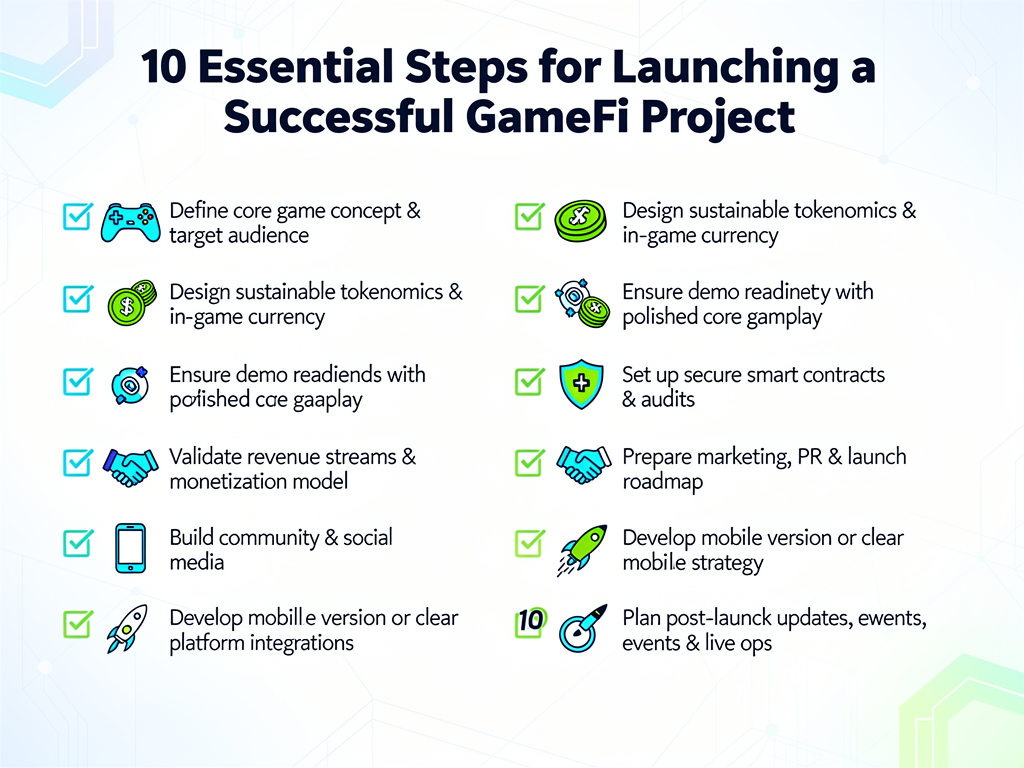
Ready-to-launch checklist:
- [ ] Playable demo available for free with no wallet required (onboard players first, wallets later).
- [ ] At least one revenue stream beyond native token (cosmetics, battle passes, NFT sales, or subscriptions).
- [ ] Mobile version planned or launched (desktop-only limits addressable market by 70%+).
- [ ] Public roadmap with bi-weekly content or update commitments to maintain engagement between major releases.
- [ ] On-chain metrics dashboard showing DAU, transaction volume, and revenue transparently to build community trust.
- [ ] Partnership secured with established gaming guild or distribution platform (YGG, Epic, Steam, mobile app stores).
- [ ] Social content strategy beyond game announcements (lore, tutorials, player spotlights, dev diaries) to feed algorithm-driven discovery.
- [ ] Smart contract audits completed by recognized firms (Certik, OpenZeppelin, Quantstamp) to prevent exploits that kill projects overnight.
- [ ] Community moderation and support team in place before launch (understaffed support creates negative word-of-mouth faster than any marketing budget can overcome).
- [ ] Plan for cross-promotion with complementary projects to share audiences rather than competing for the same limited pool of crypto-native gamers.
Navigating GameFi marketing across multiple chains, KOL networks, and media outlets demands specialized expertise. FLEXE.io has supported 700+ Web3 projects over 7+ years, providing access to 10+ crypto traffic sources and 500+ influencers to accelerate awareness and user acquisition. Reach out on Telegram: https://t.me/flexe_io_agency
FAQ: Your Questions Answered
Why did GameFi IDO returns lag so far behind AI and RWA sectors in 2025?
GameFi returned only +15% on average for 2025 IDOs compared to AI’s +2,940% because game development cycles take 18–36 months to show results, while AI and RWA projects often demonstrate value within weeks of token launch. Investors rotated capital into sectors with faster feedback loops, leaving patient capital for gaming returns that materialize in 2026–2027 as current projects ship polished products.
Which blockchain offers the best infrastructure for new GameFi projects?
Solana currently dominates GameFi infrastructure due to low fees ($0.00025 per transaction) and 400ms block times that suit high-frequency game actions. Ronin serves games targeting existing Axie Infinity audiences, Immutable X optimizes for Ethereum-secured NFT games, and emerging chains like Monad attract early builders with grants and support. Choose based on where your target players already transact rather than theoretical performance specs.
How long does it take for blockchain games to reach profitability?
Successful projects achieve initial product-market fit and profitability within 6–12 months of full launch, as seen with Slime Miner ($2M monthly revenue within five months) and Gacha Game ($2M+ total revenue). Teams still at zero direct revenue after 12 months rarely recover, regardless of token price, because sustainable gaming businesses require players who pay for value rather than speculators who farm and dump.
Should new GameFi projects launch with native tokens or delay tokenomics?
Delay token launches until core gameplay demonstrates retention and revenue. Projects that launched tokens before playable games (the 2021–2022 model) suffered 90%+ declines as hype faded before substance arrived. ProofOfPlay, Gacha Game, and others on Abstract validated revenue models first, then introduced tokens as reward mechanisms rather than primary monetization, creating sustainable economic foundations.
What user metrics indicate genuine traction versus bot activity?
Genuine traction shows consistent daily active users, average session lengths above 10 minutes, positive revenue trends, and retention curves that stabilize around 20–30% after 30 days. Bot activity displays spikey DAU charts with low session times (under 3 minutes), zero direct spending, and sharp drop-offs when incentive programs pause. On-chain analysis via Nansen or Dune Analytics reveals wallet behavior patterns that distinguish real players from Sybil farmers.
How important are partnerships with gaming guilds like YGG?
Guild partnerships provide immediate access to thousands of engaged players who understand blockchain gaming mechanics, as demonstrated by JOY’s 500-whitelist launch with YGG. These partnerships deliver higher-quality users than airdrop campaigns because guild members participate for gameplay reasons, not just token farming. However, guilds expect revenue sharing or NFT allocation, so partnerships work best when your economics can support those structures long-term.
Can blockchain games compete with AAA Web2 studios on gameplay quality?
Off The Grid proved blockchain games can match AAA quality by earning Game of the Year awards through strong core gameplay. However, most blockchain studios lack $50M+ budgets for graphics and polish, so they must compete on unique strengths—verifiable asset ownership, player-driven economies, cross-game interoperability—rather than attempting to out-graphics Activision or EA. Focus on mid-core genres where innovation matters more than raw production values.