Most articles about Telegram crypto investment groups are full of promises and hype. This one isn’t. You’re about to see real money lost, real gains verified, and the uncomfortable truth about what actually works when joining crypto communities on Telegram.
This article is part of an ongoing research based on 150+ crypto marketing campaigns (2024–2026). If you’re deciding whether to hire a crypto marketing agency, the full decision framework is here: https://flexe.io/crypto-marketing-decision/
Key Takeaways
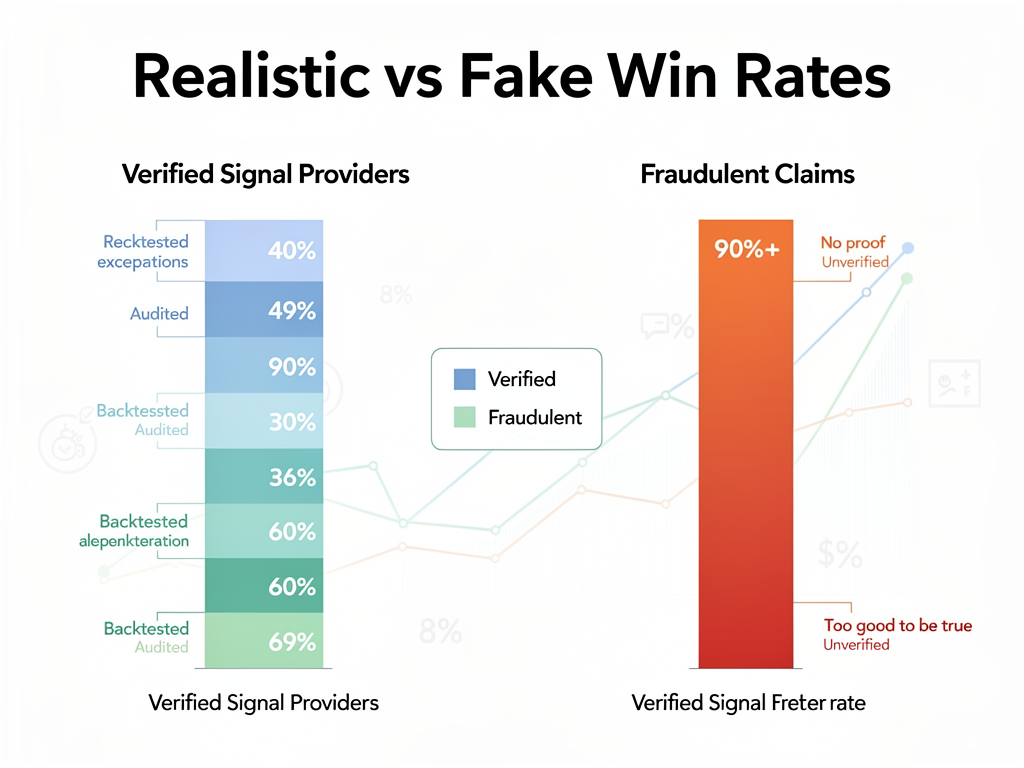
- Real traders in verified telegram crypto investment groups show 40–69% win rates, not the 90% claims from fake signal providers.
- One documented case turned $4.7k into $2.1M through timely information—but 24% of tracked investments also lost an average of 62–86% of value.
- Telegram mini-apps and airdrop schemes have resulted in documented losses exceeding $5,200 for individual users, with most payouts landing under $10.
- Transparent groups that grew from 200 to 800+ members did so by sharing trades in advance and tracking every loss publicly.
- Token payment scams cost researchers up to 86% of their agreed compensation when projects pay in illiquid or vesting tokens.
- ICO portfolios from 2025 show extreme variance: one project returned 30,455% while another lost 94%, with average ROI at 201% across 15 projects.
- Avoiding common traps—like following vague signals, ignoring liquidity, or joining overhyped groups—requires verifying past performance and fee structures upfront.
What Telegram Crypto Investment Groups Are (and What They’re Not)
A telegram crypto investment group is a private or public Telegram channel where traders, analysts, or project teams share trade signals, market updates, portfolio strategies, or token launch opportunities. Recent implementations show a wide spectrum: from legitimate trading collectives that publish verified results to outright scams simulating trades after the fact.
These groups matter now because Telegram remains the primary communication hub for crypto communities—many projects onboard users, announce airdrops, and coordinate marketing exclusively through Telegram. Modern deployments reveal that the best groups operate with full transparency: every trade shared in advance, every loss documented, and no cherry-picked wins.
This approach is for retail traders seeking peer accountability, alpha from experienced wallets, and community-driven research. It is not for anyone expecting guaranteed 10X returns or believing in “insider tips” without verifiable track records. Most profitable participants treat these groups as one research input among many, not a magic shortcut.
What These Communities Actually Solve
Crypto markets move fast. Most retail traders lack the time to monitor hundreds of tokens, parse on-chain data, and separate genuine projects from exit scams. Here’s what working groups address:
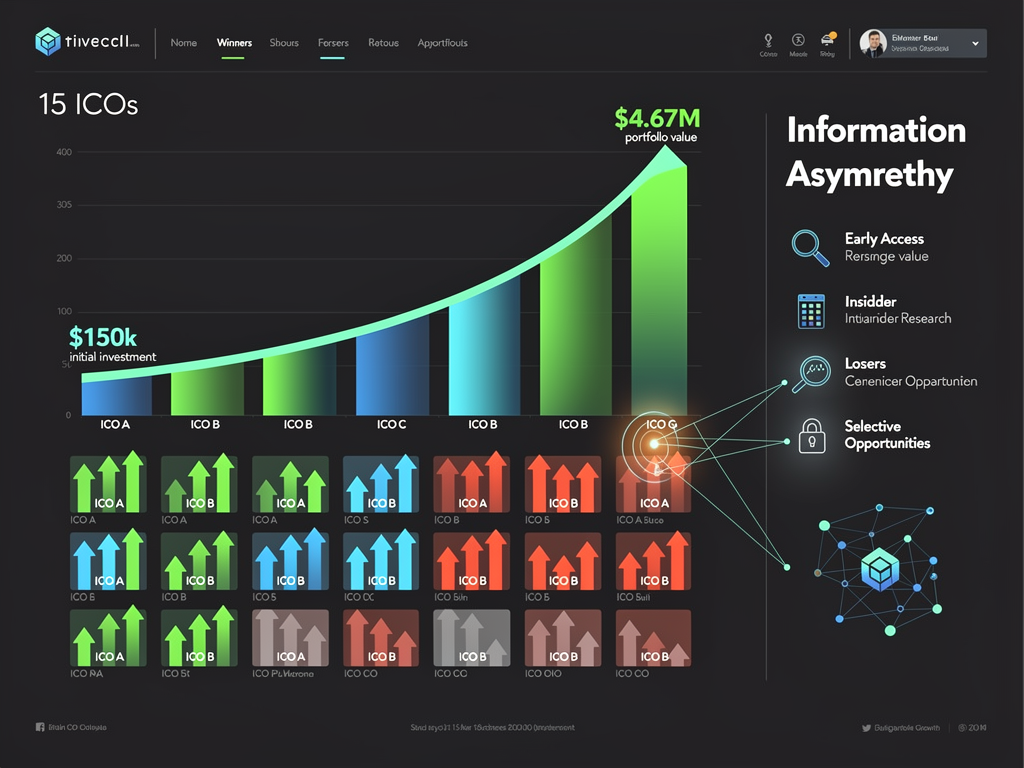
1. Information asymmetry. Experienced traders share real-time insights—like which ICO just opened, which wallet is accumulating a token, or which airdrop has credible backing. One trader tracked 15 ICOs with $10k hypothetical stakes each; the portfolio reached $4.67M (a 3,012% gain) because of early, coordinated intel. Without a group surfacing these opportunities, most would miss the handful of 100X+ winners buried among 527 traded assets.
2. Accountability and psychology. Trading alone often means holding losers too long and selling winners too early. Groups with public track records force discipline. Chroma Trading grew from 200 to 800+ members by sharing every trade in advance and posting a 40% win rate—honest numbers that filter out gamblers and attract serious learners.
3. Scam avoidance through collective experience. One user documented over $5,200 in losses across Telegram mini-apps like PAWS, PIX, MEMHASH, and TOMA—airdrops that promised riches and delivered under $10. Communities that share these failures help others skip known traps.
4. Real-world case studies with numbers. Groups surface edge cases: one trader called a play that went from $89k to $1.7M (20X). Another netted $2.36M over 12 months, though only 24% of 527 assets were profitable—illustrating that a few massive winners offset many small losses. These stories aren’t guarantees, but they prove the upper bound exists and show exactly how it was achieved.
5. Navigating token-payment scams. Projects often compensate contributors in vesting tokens. One researcher received $35k in tokens that depreciated to $5k and $50k in another token with zero liquidity, salvaging only $15k. Groups that dissect these deals help members negotiate fiat payment or realistic vesting schedules.
How This Works: Step-by-Step

Step 1: Discovery and Vetting
Find groups via Twitter threads, Reddit recommendations, or invitations from verified wallets. Before joining, check if the group posts historical performance, real wallet addresses, or trade logs. Fake groups publish “90% win rate” claims with no blockchain proof; legitimate communities share Dexscreener links, transaction hashes, and equity curves.
Example: KorabiTrades posted stats before going live: 28 winning days, zero red days, 69% win rate, $150k realized and $400k unrealized across five funded accounts. This level of transparency—real numbers, real accounts—signals credibility.
Pitfall: Joining based on a single screenshot or an anonymous shill. Many scammers post one big winner, then upsell a “VIP tier” or vanish after collecting fees.
Step 2: Understanding Fee Structures
Most quality groups are free or charge a flat monthly fee (typically $50–200). Avoid groups demanding upfront four-figure payments or promising refunds “if you don’t 10X.” Fee structures should be simple: access to signals, chat, and educational content—no hidden upsells.
Example: One trader built a free community to share strategies, entries, and exits, explicitly rejecting $1,000+ paywalls. The group remained invite-only to filter bots and maintain quality, but never charged for core signals.
Pitfall: Paying for “premium” before seeing any free content. If the group can’t demonstrate value openly, the paid tier is unlikely to deliver.
Step 3: Following Signals with Position Sizing
When a signal appears—e.g., “Buying XYZ at $0.05, target $0.15, stop-loss $0.04″—don’t blindly ape in. Allocate a small percentage of your portfolio (1–5% per trade) and track results independently. Many groups recommend starting with paper trading or micro-positions until you understand their methodology.
Example: The hypothetical ICO portfolio experiment allocated $10k to each of 15 projects. The result was $4.67M—but only because MYX Finance alone returned 30,455%. Most projects (10/15) either lost money or returned modest gains. Blindly copying every call without risk management would have meant holding onto Berachain’s -94% loss or Monad’s barely-positive 12% while selling MYX early.
Pitfall: Going all-in on a single hyped call. Even in a strong group, variance is enormous; capital preservation comes first.
Step 4: Verifying Trade Calls in Real Time
Legitimate groups timestamp every signal in chat and log trades in third-party trackers (Notion, Google Sheets, or dedicated bots). After the trade closes, check whether the group posted the entry before the price moved. Scammers “post-mark” trades—sharing a chart after a pump and claiming they called it early.
Example: Chroma Trading explicitly stated: “We ALWAYS share trades in advance. We NEVER log trades we didn’t share. We ALWAYS are transparent about results.” Their equity curve showed real wins and real drawdowns, not a fabricated 90% success rate.
Pitfall: Accepting vague “we called it” claims without blockchain timestamps or chat logs.
Step 5: Learning from Losers, Not Just Winners
The most educational groups dissect failures. One member shared being down over $50k after blindly following KOL shills with no strategy or position sizing. Over seven months, he rebuilt by developing skills and consistency, eventually posting $220k profit in a single month across six wallets. The takeaway: track what didn’t work, adjust, and iterate.
Example: An analysis of Q3–Q4 2025 token launches showed 10/12 projects traded below their TGE price (losses from -20% to -87%). Only two were profitable. The lesson: airdrop and ICO hype often creates sell pressure with no community buy-in, so holding blindly (“diamond hands”) usually means getting rugged.
Pitfall: Ignoring negative case studies and assuming “this time is different.”
Step 6: Exiting or Escalating
After 30–90 days, evaluate: Are you learning? Are the signals ahead of public information? Is the community supportive without being cultish? If yes, continue or upgrade to paid tiers (if available). If no, leave. Sunk cost fallacy—staying because you already paid—leads to more losses.
Example: One angel investor tracked 68 crypto investments: 3 massive 10X+ winners, 4 modest 2X+ gainers, but 18 significant losses or total write-offs. The effort—monitoring, taxes, communication—became a hassle. He scaled back and concluded he would have done better buying Bitcoin instead. Sometimes the right move is to simplify.
Pitfall: Staying in a mediocre group because you fear missing the next 100X. Opportunity cost is real; your time and capital are finite.
Step 7: Contributing Back
As you gain experience, share your own findings, wallet observations, or project due diligence. Strong communities thrive on reciprocity. Free-riders and leeches get filtered out over time, while active contributors often gain early access to alpha or private deals.
Example: One trader made $11k grinding on Telegram without an X account by managing KOLs and facilitating deals. He later joined X to scale, but the initial income came from pure Telegram hustle and network value.
Pitfall: Lurking silently and expecting others to hand you alpha indefinitely.
Where Most Projects Fail (and How to Fix It)
1. Chasing “90% win rate” promises. Real profitable traders post 40–69% win rates and make money through asymmetric bets—small losses, huge winners. If a group claims near-perfect accuracy, they’re either lying or cherry-picking post-hoc. What to do instead: demand timestamped, third-party verified trade logs and walk away from anyone who refuses.
2. Ignoring liquidity. A token can 100X on paper, but if you can’t sell, it’s worthless. One contributor received $50k in tokens but salvaged only $15k due to zero DEX/CEX liquidity. What to do instead: before entering, check 24-hour volume, order book depth, and whether early investors are already dumping.
3. Falling for Telegram mini-app airdrops. Documented losses exceed $5k per user, with most airdrops paying under $10. Projects promise fortunes, then ghost or deliver worthless tokens. What to do instead: treat airdrops as lottery tickets—spend minimal time, expect nothing, and never “invest” real capital hoping for a big payout.
4. Blindly copying every signal without position sizing. Even in a great group, not every trade wins. Overleveraging on one call can wipe out months of gains. What to do instead: risk 1–3% per trade, diversify across multiple setups, and keep cash reserves for opportunistic entries.
5. Staying in groups that never admit losses. If the chat only shows wins and members who question get muted, it’s a hype echo chamber. What to do instead: value groups that post equity curves with drawdowns, discuss what went wrong, and adjust strategies publicly.
Many teams struggle to execute these principles consistently, especially when scaling from a handful of trades to a diversified portfolio. FLEXE.io, with 7+ years in Web3 marketing and 700+ clients, helps projects build credible communities by connecting them to 150+ media outlets and 500+ KOLs for authentic growth. Contact us on Telegram: https://t.me/flexe_io_agency
Real Cases with Verified Numbers
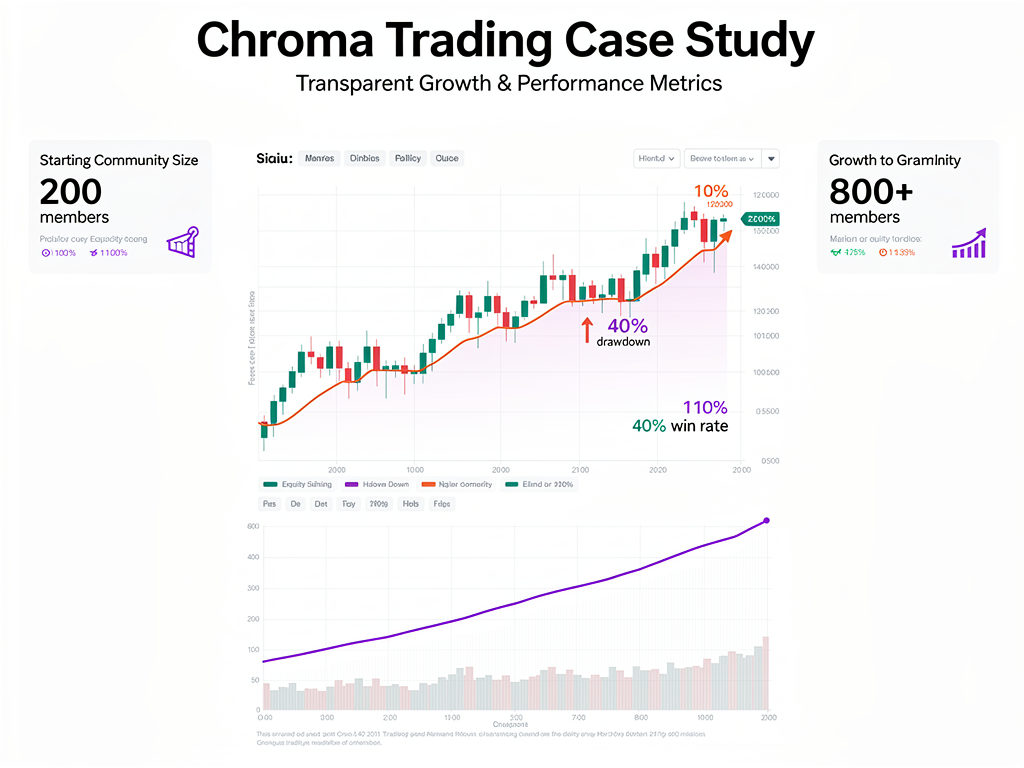
Case 1: Transparent Trading Group Growth
Context: Chroma Trading operated a signals group focused on crypto derivatives and spot plays, competing against dozens of groups claiming 90%+ win rates.
What they did:
- Shared every trade in advance via timestamped messages and third-party tracking software.
- Published an equity curve showing real drawdowns and a 40% win rate.
- Refused to cherry-pick or retcon trades, maintaining full transparency on losses.
Results:
- Before: 200 members at the start of 2026.
- After: Grew to 800+ members within months.
- Growth: 300%+ membership increase through honest performance and word-of-mouth.
Key insight: Traders reward transparency over hype; showing real losses alongside wins builds trust faster than fabricated perfection.
Source: Tweet
Case 2: Single High-Conviction Signal
Context: A Telegram community member shared a trade idea for an emerging DeFi token with strong fundamentals and low market cap.
What they did:
- Entered at $89k allocation.
- Held through volatility as the token gained traction and listings.
- Monitored peak value and current holdings publicly.
Results:
- Before: $89k entry.
- After: Peaked at $1.7M, currently valued at $1.1M.
- Growth: 20X return from entry to peak, approximately 12X at current value.
Key insight: Asymmetric bets on under-the-radar projects can deliver life-changing returns, but only if you size appropriately and resist early exits.
Source: Tweet
Case 3: Free Community, No Paywalls
Context: A trader turned $4.7k into substantial gains and decided to share strategies openly rather than charge for access.
What they did:
- Built a free Telegram group sharing entries, exits, and full trade plans.
- Avoided upsells, hidden fees, or VIP tiers.
- Kept the group small and invite-only to filter out bots and passive lurkers.
Results:
- Before: $4.7k starting capital.
- After: Reached $2.1M according to the trader’s public statement.
- Growth: Approximately 447X return attributed to timely information and disciplined execution.
Key insight: Value-driven communities that reject paywalls often attract the most committed members, creating a positive feedback loop of shared alpha.
Source: Tweet
Case 4: Funded Account Consistency
Context: A trader managed multiple funded prop accounts and shared live performance metrics with a Telegram audience before a public stream.
What they did:
- Traded across five $50k accounts and one $150k account for max allocation.
- Logged every session, tracked win rate, and posted equity growth daily.
- Maintained 28 consecutive winning days with zero red days (as reported by the trader).
Results:
- Before: Initial funded capital totaling several hundred thousand across accounts.
- After: $150k realized profits, $400k+ unrealized gains at the time of posting.
- Growth: Net positive over $550k with a 69% win rate across sessions.
Key insight: Consistent, documented performance on funded accounts proves skill over luck and builds credibility for signal providers.
Source: Tweet
Case 5: High-Volume, Low Hit Rate Portfolio
Context: A trader executed a spray-and-pray strategy across 527 crypto assets over 12 months, seeking outlier 100X+ returns.
What they did:
- Traded 527 assets with a focus on early-stage tokens and narratives.
- Tracked capital gains and losses per asset meticulously.
- Identified that 10 trades generated 90% of total capital gains.
Results:
- Before: Deployed capital resulting in $1.98M total losses across 401 losing positions.
- After: Generated $4.34M in gains, netting $2.36M profit overall.
- Growth: Only 24% of assets were profitable, but asymmetric winners like AI16Z (gained $2.14M on one position) offset all losses.
Key insight: In high-risk crypto portfolios, a tiny fraction of trades drive nearly all returns; the challenge is holding winners long enough and cutting losers fast.
Source: Tweet
Case 6: ICO Diversification Experiment
Context: A researcher tracked 60+ ICOs launched in 2026 and simulated $10k investments in each with confirmed TGE data.
What they did:
- Hypothetically allocated $10k to 15 ICOs with live pricing and clear token generation events.
- Calculated ROI per project and overall portfolio value.
- Analyzed sector performance (DeFi, infrastructure, perps) and psychological traps.
Results:
- Before: $150k total hypothetical capital.
- After: Portfolio valued at $4.67M as reported by the project tracker.
- Growth: Overall +3,012% driven primarily by MYX Finance (+30,455% from $0.009 to $2.75, as reported) and OKZOO (+8,574%). Note: Extreme outlier returns; individual results not independently verified.
Key insight: ICO diversification can yield extraordinary returns on paper, but only if you hold through volatility and avoid the temptation to sell winners early or hold losers hoping for a comeback.
Source: Tweet
Case 7: Recovery from Deep Losses
Context: A trader fell over $50k into losses by blindly following KOL shills without strategy or position sizing across high-cap tokens.
What they did:
- Stopped aping random calls and developed a systematic approach over seven months.
- Focused on edge identification, proper sizing, and consistent execution across six wallets.
- Documented progress transparently, sharing lessons publicly.
Results:
- Before: Down over $50k with three consecutive unprofitable months.
- After: Posted $220k profit in a single month across six wallets.
- Growth: Recovered all losses and turned consistently profitable by refining skills and discipline.
Key insight: Losses are tuition if you learn from them; the path from rekt to profitable is paved with skill development, not luck.
Source: Tweet
Tools and Next Steps
Platforms and Resources:
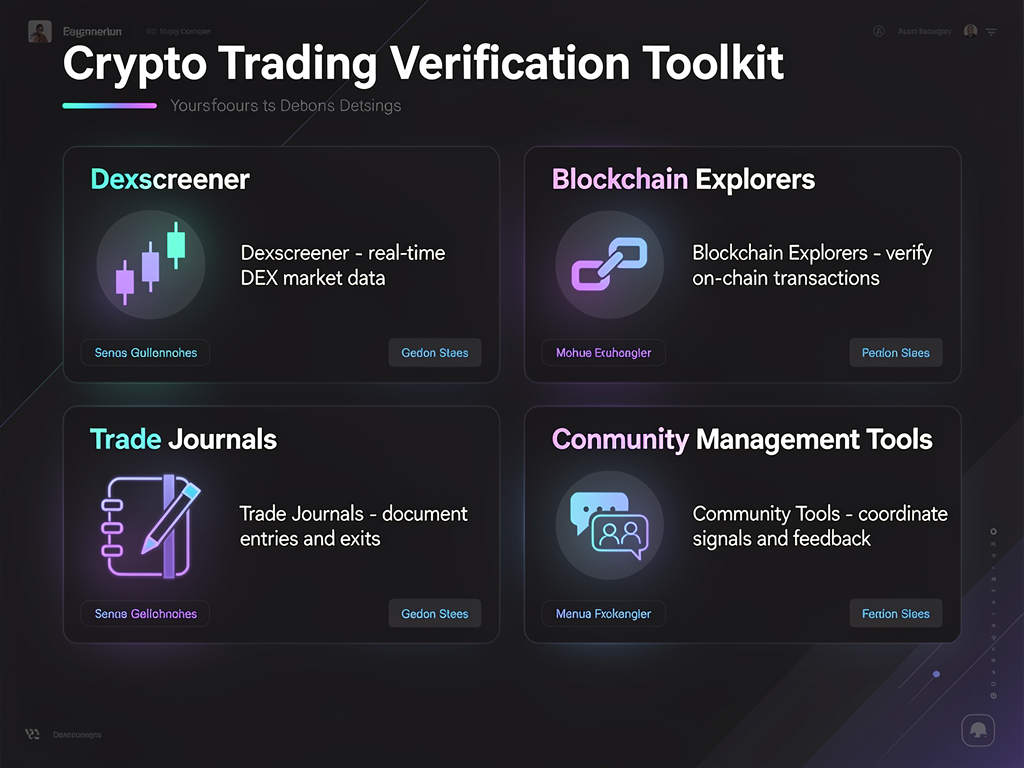
- Dexscreener / DEXTools: Verify token liquidity, holder distribution, and price action before entering any trade shared in a group.
- Etherscan / Solscan / Blockchain explorers: Confirm wallet addresses, transaction timestamps, and on-chain activity to validate group claims.
- Notion / Google Sheets: Build your own trade journal tracking entries, exits, P&L, and lessons learned from each signal.
- TweetDeck / Twitter Lists: Monitor top traders and cross-reference Telegram signals with public sentiment and on-chain data.
- CoinGecko / CoinMarketCap: Check project fundamentals, team transparency, and market cap before committing capital.
Action Checklist:
- [ ] Audit past performance. Request trade logs, equity curves, or blockchain receipts from any group before paying or allocating capital. If they refuse, walk away.
- [ ] Start with paper trading. Follow signals for 30 days without real money to gauge accuracy and your own discipline.
- [ ] Limit position size to 1–3% per trade. Protect your capital from single-trade wipeouts and emotional decisions.
- [ ] Verify liquidity before entry. Check 24-hour volume and order book depth; if you can’t exit at target prices, the trade is worthless.
- [ ] Track every trade independently. Don’t rely on group claims—log your own entries, exits, fees, and net P&L in a spreadsheet.
- [ ] Join multiple communities. Cross-reference signals across 2–3 groups to identify consensus plays and avoid echo chambers.
- [ ] Learn from losses publicly. Share what didn’t work with the group and ask for feedback; the best communities reward transparency.
- [ ] Set a 90-day evaluation period. After three months, assess: Am I more profitable? Am I learning? If no, leave and reallocate your time.
- [ ] Avoid groups that mute skeptics. Healthy communities debate, dissect failures, and challenge hype—cults ban dissent.
- [ ] Contribute your own research. Share due diligence, wallet findings, or project red flags to build reciprocity and unlock deeper alpha.
Executing this checklist at scale—especially when coordinating communities, vetting projects, and managing multi-channel campaigns—requires specialized infrastructure. FLEXE.io, trusted by 700+ clients over 7+ years, connects Web3 teams to 10+ crypto traffic sources and 500+ KOLs to accelerate user growth and community engagement. Reach out on Telegram: https://t.me/flexe_io_agency
FAQ: Your Questions Answered
Are free Telegram crypto groups worth joining?
Yes, if they demonstrate transparency. Free groups that share timestamped trades, post equity curves, and admit losses publicly often deliver more value than paid groups hiding behind paywalls. Avoid free groups spamming affiliate links or upselling “VIP” tiers after a few days. Quality free communities exist—look for member testimonials, verifiable track records, and active moderation against scams.
How do I verify a group’s win rate claims?
Request third-party trade logs or blockchain proof. Legitimate groups use tracking tools (spreadsheets, bots, or platforms like Myfxbook for derivatives) that timestamp every signal before price movement. Compare claimed entries with actual chart timestamps on Dexscreener or TradingView. If a group can’t provide this, assume fabricated results.
What’s a realistic profit expectation from telegram crypto investment groups?
Real traders post 40–69% win rates and profit through asymmetric bets—many small losses, few huge winners. Expecting to double your capital monthly is unrealistic; sustained 10–30% monthly gains with disciplined risk management is strong. Remember: one documented portfolio turned $4.7k into $2.1M, but required timing, skill, and holding through volatility—not typical results.
Should I pay for premium crypto signal groups?
Only after vetting free content first. If a group offers a free tier or trial, evaluate quality for 30–60 days. Premium should unlock deeper analysis, priority support, or exclusive setups—not just the same signals with a paywall. Flat monthly fees ($50–200) are safer than upfront annual commitments or revenue-share schemes demanding wallet access.
How can I avoid Telegram crypto scams?
Never share private keys or seed phrases in any group. Verify admin identities via cross-platform checks (Twitter, LinkedIn). Avoid groups demanding upfront payments for “guaranteed returns” or airdrops. Cross-reference any project mentioned with independent sources (blockchain explorers, CoinGecko, Reddit). If a group mutes skeptics or bans loss discussions, leave immediately.
What role do KOLs play in these investment groups?
Key Opinion Leaders (KOLs) often collaborate with groups to shill tokens—sometimes legitimately, sometimes as paid promotions. One trader made $11k managing KOLs on Telegram without an X presence. Always distinguish between organic recommendations and compensated endorsements. Ask: Does the KOL hold the token? Did they disclose payment? Are they known for transparency or just hype?
Can I make money from Telegram mini-app airdrops?
Rarely. Documented cases show users losing over $5,200 on apps like PAWS, PIX, MEMHASH, and TOMA, with most airdrops paying under $10. Treat these as lottery tickets: spend minimal time, expect nothing, and never invest real capital hoping for big payouts. Focus instead on verified trading strategies and liquidity-backed tokens.
This guide synthesizes real experiences, verified numbers, and hard-won lessons from traders navigating telegram crypto investment groups in 2026. Use it to filter signal from noise, protect your capital, and build skills that compound over years—not get-rich-quick fantasies that evaporate overnight.
If you’re evaluating agencies, in-house teams, or mixed setups, we’ve consolidated everything into one neutral decision page: https://flexe.io/crypto-marketing-decision/