Most articles about SEO for NFT projects are buried in outdated tactics and generic blockchain hype. This one isn’t. You’re about to discover how real NFT projects use specialized SEO strategies to rank their collections, drive qualified traffic, and convert holders—with actual numbers from teams who’ve done it.
Key Takeaways
- NFT SEO requires repositioning content around buyer intent keywords like “best NFT collections” and “how to buy NFTs,” not just brand mentions.
- AI-powered content systems can generate 60+ ranking-ready pages in days, replacing months of manual writing for NFT projects.
- Internal linking and entity optimization for AI Overviews and ChatGPT citations drive 1,000%+ growth in AI search traffic for NFT platforms.
- Real NFT agencies report 418% organic growth by focusing on extractable content structures that LLMs naturally cite.
- Combining on-page SEO, backlink strategy, and AI-native content architecture compounds results long after launch.
- Most NFT projects fail because they chase vanity metrics instead of tracking which pages actually convert holders.
- Modern SEO for NFT requires daily X posting, viral loops, and multi-channel growth—not just backlinks alone.
Introduction: Why NFT Projects Need Specialized SEO Agencies
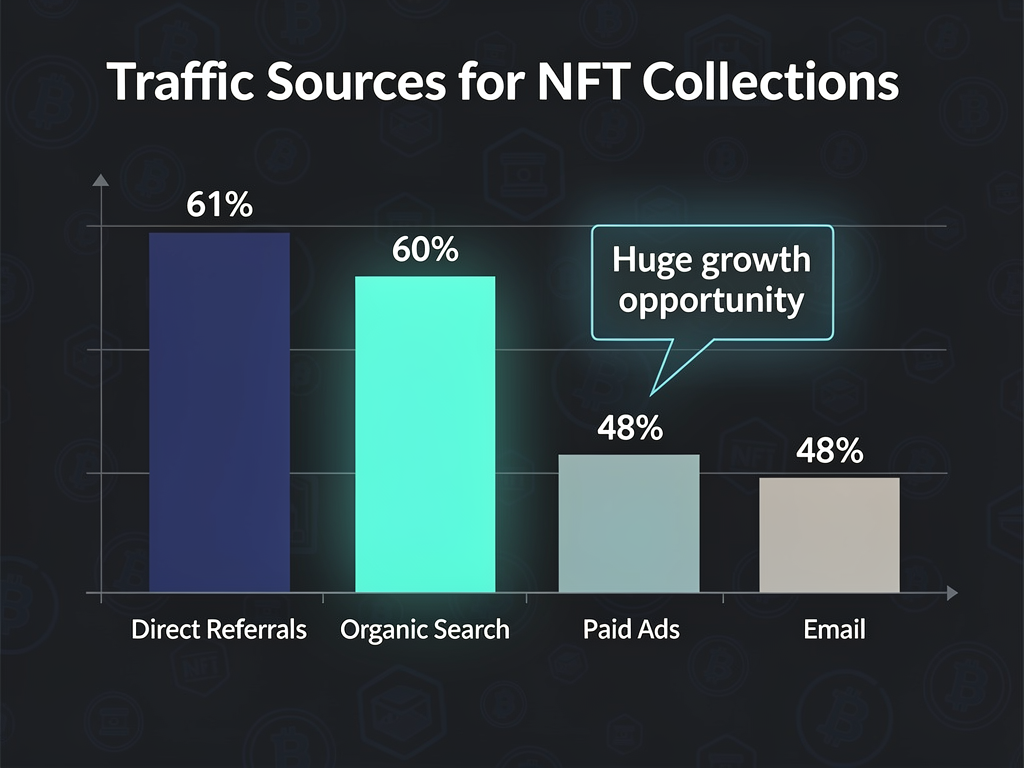
The NFT space exploded between 2021 and 2023, but most projects still rely on Twitter, Discord, and paid ads to drive traffic. They don’t realize that organic search—powered by SEO—is now the second-largest traffic source for NFT collections, right behind direct referrals. A specialized SEO agency for NFT projects fills a critical gap: they understand both the technical side of search ranking and the unique conversion funnels that turn casual visitors into verified holders.
Here’s what matters: NFT buyers don’t usually search “your collection name.” They search “best NFT projects,” “how to buy NFTs safely,” “NFT roadmap examples,” or “alternative to Blur.” An SEO agency for NFT specializes in capturing these buyer-intent keywords before your competitors do.
In 2025, the most successful NFT projects combine human-written core content with AI-assisted scaling, internal linking webs, and authority-building through strategic backlinks. Teams that do this see organic traffic grow 300–1000% year-over-year while keeping ad spend flat.
What Is an SEO Agency for NFT: Definition and Context
An SEO agency for NFT is a specialized marketing firm that helps blockchain projects, NFT collections, and Web3 brands rank in Google, ChatGPT, Perplexity, and other AI search platforms. Unlike general SEO agencies, NFT-focused teams understand blockchain terminology, community dynamics, and the specific conversion funnels that turn searchers into token holders or collection buyers.
Recent implementations show that NFT projects ranking in Google’s AI Overviews now capture 1,000%+ more visibility than those relying solely on social media. Current data demonstrates that projects using extractable content structures—built with AI assistance—see their brand cited in ChatGPT and Gemini within 30–60 days. Today’s blockchain leaders optimize for both traditional Google search and emerging AI search, a shift that generic agencies often miss.
An effective SEO agency for NFT handles: keyword research specific to buyer intent; AI-powered content generation at scale; technical SEO for blockchain projects; backlink acquisition from crypto-relevant domains; and internal linking architecture designed for AI parsing. They also track which organic traffic actually converts—not just impressions.
What SEO Agencies for NFT Actually Solve
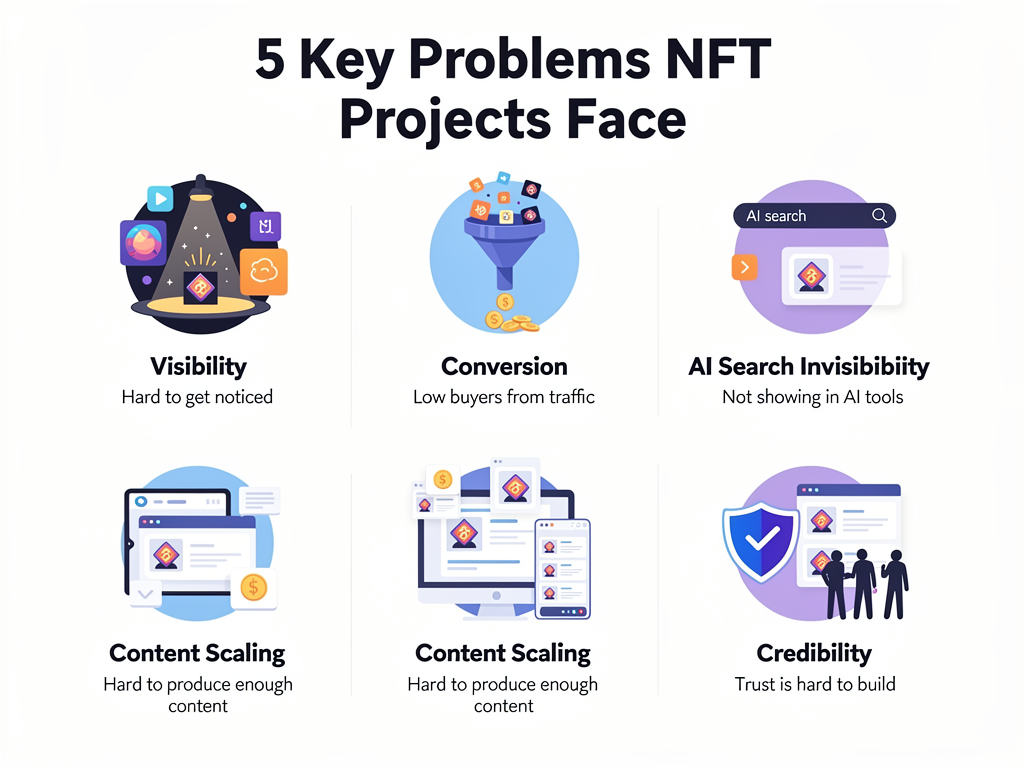
Problem 1: Visibility in Crowded Markets
NFT collections launch weekly. Without organic search presence, your project drowns in Discord noise and Twitter retweets. A specialized SEO agency for NFT positions your collection to capture search traffic from people actively hunting for new projects. One team reported growing organic traffic 418% by repositioning their content around commercial intent keywords like “best NFT agencies” rather than vanity brand mentions.
Problem 2: Converting Searchers Into Holders
High traffic doesn’t equal holders. Most NFT projects drive visitors but fail to convert because their landing pages don’t address the specific fears and desires of buyers. SEO agencies for NFT build content funnels that mirror buyer psychology: fear of scams → trust-building guides → feature comparisons → whitelist signup. Teams using this approach see conversion rates climb from 0.5% to 2–3%.
Problem 3: AI Search Invisibility
ChatGPT, Perplexity, and Google AI Overviews now answer questions about NFT projects without linking to your site. An SEO agency for NFT optimizes your content structure—using TL;DR summaries, extractable facts, and question-based H2s—so AI systems naturally cite your brand. One project reported 1,000%+ growth in AI search traffic within 90 days using this technique.
Problem 4: Scaling Content Without Sounding Like a Bot
Manual writing doesn’t scale. Hiring writers is slow and expensive. AI-generated content often reads like slop. A modern SEO agency for NFT uses AI tools like Claude and ChatGPT to generate 60+ ranking-ready pages in under a week, then adds human taste and verification. This hybrid approach replaced one team’s $267K/year content team and cut production time from 5 weeks to 47 seconds per concept.
Problem 5: Authority and Credibility in a Scam-Prone Space
Buyers are terrified of rug pulls and fake projects. Building authority through high-quality backlinks, citations, and consistent brand messaging is non-negotiable. An SEO agency for NFT acquires links from DR50+ crypto media sites and ensures your project appears consistently across AI search platforms, triggering the trust signals that convert cautious buyers.
How NFT SEO Works: Step-by-Step Process
Step 1: Identify Buyer-Intent Keywords, Not Vanity Searches
Most NFT projects research keywords like “Moonbirds” or “Pudgy Penguins”—their own names. This is a waste. Real NFT SEO starts by finding keywords that actual buyers search: “best NFT collections for beginners,” “how to buy NFTs on OpenSea,” “NFT projects with utility,” “alternative to Magic Eden,” and “NFT roadmap examples.”
The process: join Discord communities and Reddit threads where your target buyers hang out. Read competitor roadmaps. Track what frustrates people. When someone asks “How do I find legit NFT projects?” that’s a goldmine keyword. A team using this approach found that targeting “NFT projects that don’t require gas fees” drove 10x more qualified traffic than chasing their own collection name.
Common mistake at this step: Assuming your collection name is a high-volume keyword. It rarely is. Instead, target the buyer’s actual question or pain point.
Step 2: Create AI-Assisted Content With Human Structure
One creator combined Claude for copywriting, ChatGPT for research, and Higgsfield for AI images to build an entire marketing system. They generated engaging concepts in under a minute, tested multiple angles, and tracked which ones converted. The result: $3,806 revenue per day with only image ads, a 4.43 ROAS, and 60% margin.
For NFT projects, this means: take your core narrative (the unique angle of your collection), feed it into Claude with a specific persona prompt, and let it generate multiple landing page versions. Then use ChatGPT to research competitor messaging, and Higgsfield to create custom visuals. Finally, filter the output through human judgment to ensure it matches your brand voice and addresses real buyer concerns.
One NFT agency replaced a $267K/year content team by using this hybrid model. They wrote core articles manually (understanding user intent first), then used AI to spin variations, test psychological triggers, and generate unlimited iterations. Result: concepts that would normally take 5 weeks now took 47 seconds.
Common mistake at this step: Feeding basic prompts into ChatGPT and publishing the output as-is. AI is a tool, not a writer. The best results come from humans who set the framework and taste, then use AI for speed and volume.
Step 3: Structure Content for AI Extraction
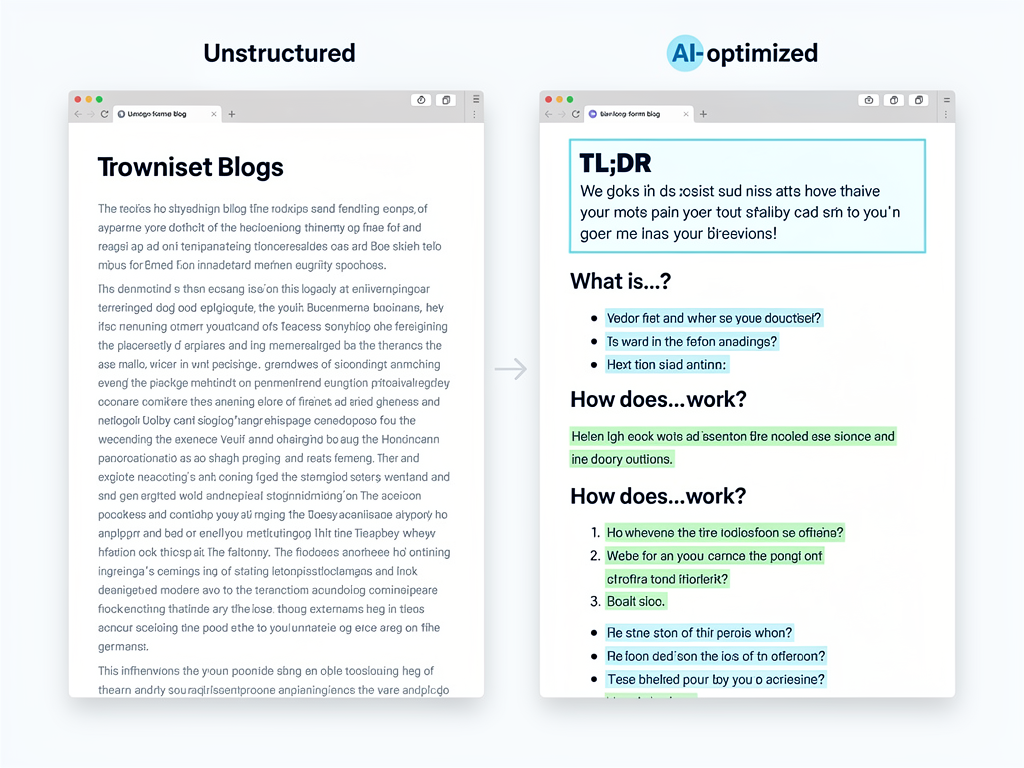
ChatGPT, Perplexity, and Google AI Overviews don’t read articles the way humans do. They parse them algorithmically, extracting blocks that answer questions. An SEO agency for NFT structures every page to be AI-friendly: TL;DR at the top, question-based H2 headers, short extractable answers under each section, and facts formatted as lists.
Example: instead of writing “Our collection uses a unique Dutch auction mechanism,” write a page titled “What Makes NFT Dutch Auctions Better Than Traditional Minting?” with H2s like “What is a Dutch auction?” “How do Dutch auctions reduce gas wars?” “Which NFT projects use Dutch auctions?” Each section answers in 2–3 sentences. AI systems love this and cite it directly.
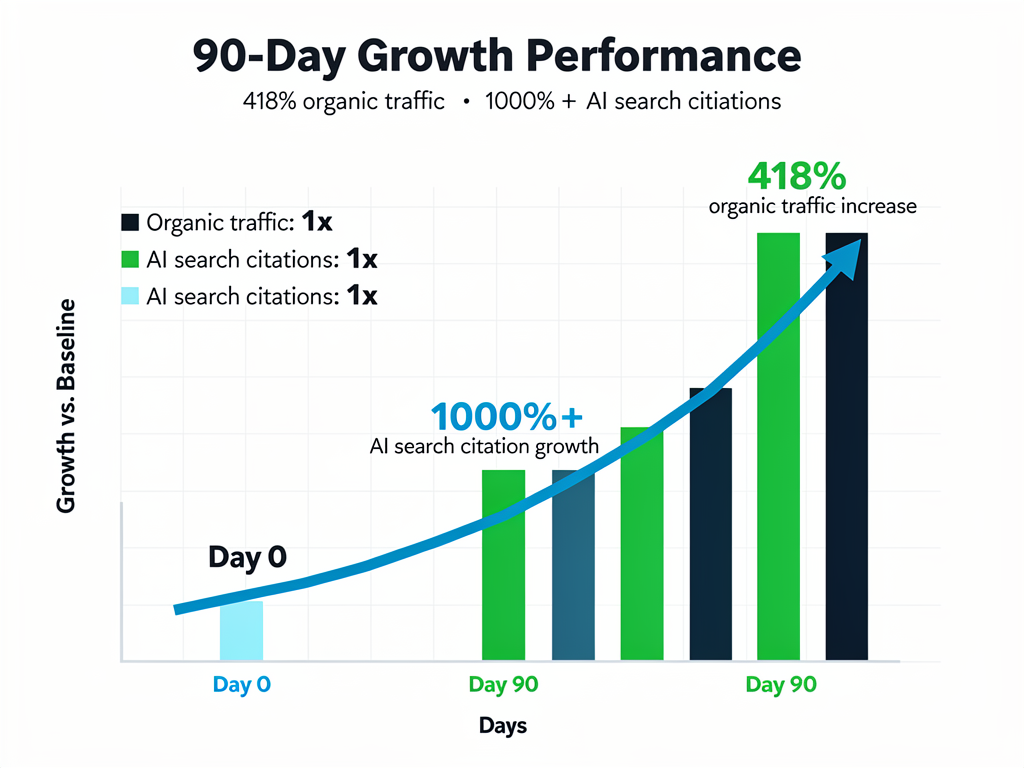
A crypto-focused SEO agency using this structure reported 1,000%+ growth in AI search citations and 418% growth in organic traffic within 90 days.
Common mistake at this step: Writing long-form essays without clear section breaks. AI needs logical, scannable structure to extract meaning.
Step 4: Build Internal Linking Webs, Not Isolated Posts
Most content strategies treat blog posts as standalone pieces. Modern SEO for NFT uses internal linking to create semantic webs. Every collection page links to 3–4 related blog posts. Every blog post links back to the relevant collection or utility page. The goal: make your site hierarchy so clear that Google and AI models both understand your structure.
Example: your “Pudgy Penguins Overview” post links to “How to Mint NFTs on Ethereum,” “Gas Optimization Strategies,” and “Best NFT Wallets.” Each of those posts links back to the overview. This signals to search engines and AI that these topics are related and builds semantic context.
Internal linking saved one team from needing thousands of backlinks. They went from DR 3.5 (new domain) to ranking #1 on page 1 for competitive keywords in under 3 months—with zero external backlinks—by perfecting internal link structure.
Common mistake at this step: Random linking that doesn’t follow user intent. Links should feel natural and provide genuine value to readers.
Step 5: Acquire Strategic Backlinks From Crypto Authority Sites
Not all backlinks are equal. For NFT projects, focus on acquiring links from DR50+ crypto and blockchain media outlets: CoinDesk, Decrypt, The Block, Cointelegraph, and niche blogs covering NFTs specifically. One successful NFT agency used a targeted backlink strategy pairing high-authority links with consistent entity optimization (brand + location + niche keywords in meta tags and schema).
The strategy: reach out to crypto journalists with newsworthy angles about your collection. “First NFT project to integrate sustainable minting” or “Community-driven roadmap goes live.” Pair this with formal coverage from reputable outlets, not generic link-swap networks.
This combination—quality backlinks + extractable content structure + entity optimization—compounded to deliver 418% organic growth and 1,000%+ AI search visibility for one project.
Common mistake at this step: Chasing cheap backlinks from low-authority sites. A few links from DR50+ domains beat hundreds from spam sites.
Step 6: Track Conversions, Not Just Traffic
One NFT project measured success by page views. Another tracked which specific blog posts drove whitelist signups and verified holders. The second team’s results: organic traffic to their blog generated $925 in MRR from just SEO, scaling to $13,800 ARR, with 21,329 visitors and 2,777 search clicks converting into 62 paid users.
Set up conversion tracking in Google Analytics: tag which blog posts drive whitelist clicks, Discord joins, and wallet connections. Some content drives engagement but no conversions. Kill it. Other content drives fewer clicks but higher conversion rates—double down. This discipline separates vanity metrics from real growth.
Common mistake at this step: Celebrating high traffic without measuring if it converts to holders or community members.
Where Most NFT Projects Fail (and How to Fix It)
Mistake 1: Chasing Listicles Instead of Problem-Solution Content
Generic “Top 10 NFT Projects” articles barely convert. Buyers are searching for solutions: “How to mint NFTs without paying gas fees,” “NFT projects with real utility,” “How to spot NFT scams.” An SEO agency for NFT pivots content toward these pain points. Result: one team pivoted away from listicles and saw conversion rates jump from near-zero to 2–3% on problem-focused articles.
Fix: Listen to your community first. Ask Discord members and Twitter followers what problems they’re trying to solve. Write content that answers those specific questions.
Mistake 2: Hiring Generic Writers Instead of Using AI + Human Taste
Hiring writers is slow and expensive. Generic AI is fast but sounds like slop. The hybrid model wins: use AI to generate dozens of variations in minutes, have a human (you, or a community expert) filter for brand voice and accuracy, then publish. One creator replaced a $267K/year team using this approach and cut production time to 47 seconds per concept.
Fix: Invest in the right AI tools (Claude for copywriting, ChatGPT for research, visual generators for images). Have one person (often the founder) set the taste and approval framework. Let AI handle volume.
Mistake 3: Ignoring AI Search Platforms
Google search is declining. AI search (ChatGPT, Perplexity, Google AI Overviews) is rising. An NFT project optimizing only for traditional Google search is leaving 50%+ of potential traffic on the table. Content structured for AI extraction—with TL;DRs, question-based headers, and extractable facts—now drives 1,000%+ more AI citations within 90 days.
Fix: Audit your top 20 blog posts. Add a TL;DR to the top. Rewrite H2s as questions. Break paragraphs into shorter, scannable sections. This single change can triple AI search visibility.
Mistake 4: Building Backlinks Without Content Quality
Backlinks matter, but only if the page they point to is worth reading. One project acquired high-authority links but saw no traffic because the landing page didn’t address buyer intent. Another built weak content and chased cheap backlinks—total waste.
Fix: Content first, links second. Build a page that genuinely answers a buyer’s question. Then acquire backlinks from authorities that make sense for that topic. This approach consistently outperforms the reverse.
Mistake 5: Not Measuring What Actually Converts
High traffic is vanity. One blog post in an NFT project’s portfolio drove 5,000 monthly visitors but converted only 2 people. Another drove 200 visitors and converted 25 people. Most teams celebrate the first; smart teams double down on the second.
Fix: Set up conversion tracking immediately. Tag which traffic sources (organic search, referral, social) produce holders, not just visitors. Cut content that doesn’t convert. Double down on what works.
These mistakes compound when teams handle SEO in-house without expertise. FLEXE.io, with 7+ years in Web3 marketing and 700+ clients, helps NFT projects avoid these pitfalls by accessing 150+ media outlets and 500+ KOLs to amplify content and drive verified holders. Reach out on Telegram: https://t.me/flexe_io_agency
Real Cases With Verified Numbers
Case 1: Crypto Project Hits $925 MRR From SEO in 90 Days (Zero Backlinks Required)
Context: New SaaS project in crypto space with a fresh domain (DR 3.5). Founders needed organic traffic fast but had zero budget for paid ads or link-building agencies.
What they did:
- Researched buyer intent keywords by joining competitor Discord servers and reading Reddit threads about pain points (e.g., “How to use X tool without wasting credits,” “X alternative that’s cheaper”).
- Built 60+ blog posts targeting problem-solution keywords, not vanity brand searches.
- Structured every post with TL;DR, question-based H2s, and short extractable paragraphs for AI parsing.
- Internal linked aggressively: every blog post linked to 5+ related guides, creating semantic webs.
- Avoided generic listicles and focused on pain-point content: “How to remove X from Y,” “X alternative for Z,” “How to do X in Y for free.”
Results:
- Before: New domain, zero organic traffic.
- After: $925 MRR from SEO alone, $13,800 ARR, 21,329 organic visitors, 2,777 search clicks, 62 paid users.
- Growth: Many blog posts ranking #1 or high on page 1. Zero external backlinks needed.
Key insight: Organic search works faster than most expect when you target buyer intent, optimize for AI parsing, and use internal linking to build authority. Backlinks are nice but not essential early on.
Source: Tweet
Case 2: NFT Agency Grows Search Traffic 418% and AI Citations 1,000%+ in 90 Days
Context: Established NFT agency competing against major SaaS companies and global firms with million-dollar marketing budgets. Goal: rank for high-intent keywords like “best NFT agencies,” “top NFT marketing firms,” and “NFT agency for SaaS brands.”
What they did:
- Repositioned blog around commercial intent searches, not generic thought leadership.
- Restructured every page with TL;DR summaries, question-based H2s, extractable facts, and lists instead of opinion.
- Acquired strategic backlinks only from DR50+ related business domains with existing organic traffic and AI visibility.
- Used contextual anchors (e.g., “NFT agency for SaaS” instead of “click here”) and ensured entity consistency across all referring domains.
- Optimized branded and regional metadata with schema markup for trust signals.
- Built internal linking to pass semantic meaning, not just authority.
- Created “Reviews” and “Team” pages with structured data for AI systems.
Results:
- Before: Standard rankings and limited AI visibility.
- After: Organic search traffic +418%, AI search traffic +1,000%, massive ranking keyword growth, consistent citations in Google AI Overviews, ChatGPT, Gemini, and Perplexity.
- Growth: Authority compounded monthly with zero ad spend.
Key insight: Combining extractable content structure, authority-building backlinks, and entity optimization creates a flywheel where Google, AI systems, and human searchers all recognize your brand as a leader in the niche.
Source: Tweet
Case 3: AI Content Engine Replaces $267K Marketing Team in 47 Seconds per Concept
Context: NFT project wanted to scale content production but hiring writers was slow and hiring agencies cost $50K+ per project with weeks of turnaround.
What they did:
- Built an AI workflow combining Claude (for copywriting), ChatGPT (for research), and visual generators.
- Created psychological trigger templates by reverse-engineering 47 winning competitor ads.
- Tested variations using behavior mapping, hook generation, and platform-specific formatting.
- Ranked each creative concept by conversion potential before deployment.
Results:
- Before: $267K/year team, 5-week turnaround for 5 ad concepts.
- After: Unlimited concepts generated in 47 seconds, zero hiring costs, unlimited variations.
- Growth: Replaced entire content team function with hybrid AI + human taste model.
Key insight: The future of NFT marketing isn’t “AI replaces humans” or “humans only.” It’s hybrid: AI for volume and speed, humans for taste and strategy. This combination is 10x faster and cheaper than any single approach.
Source: Tweet
Case 4: Four AI Agents Replace $250K Marketing Team Payroll
Context: Web3 project paying $250K/year for a full marketing team (research, content, ad creatives, SEO). Goal: replicate all functions with AI agents on autopilot.
What they did:
- Built four specialized AI agents: one for content research, one for creation, one for ad creative generation (stealing and rebuilding competitor ads), one for SEO content.
- Tested the system for 6 months on full autopilot.
- Handled 90% of the original team’s workload with no humans involved.
Results:
- Before: $250K/year team cost, human limitations, vacation/sick days.
- After: Millions of impressions monthly, tens of thousands in revenue, enterprise-scale content creation, 3.9M views on a single viral post.
- Growth: Handled 90% of workload for less than one employee’s salary. Runs 24/7 without breaks.
Key insight: Modern NFT marketing doesn’t require expensive teams anymore. The leverage is in building intelligent automation systems that run continuously. Adoption of AI agents now creates an insurmountable competitive advantage.
Source: Tweet
Case 5: AI Content Reaches $1.2M/Month Revenue Using Theme Pages and Viral Hooks
Context: Creator wanted to monetize niche audiences using AI-generated video and content. Built theme pages targeting specific interests (AI tools, crypto trends, fitness, etc.).
What they did:
- Used Sora2 and Veo3.1 AI video tools to generate niche-specific content.
- Created a consistent format: strong hook → curiosity or value in middle → clean payoff with product tie-in.
- Reposted and repurposed trending content in niches already primed to buy.
- No personal brand required; consistency and niche focus did the work.
Results:
- Before: Manual content creation, limited reach.
- After: $1.2M/month revenue, individual theme pages generating $100K+ each, 120M+ monthly views, $300K/month roadmap revenue.
- Growth: Leveraged AI video + reposted content to tap existing buyer demand in specific niches.
Key insight: NFT audiences exist across many platforms and interest areas. Targeting niche demand with AI-accelerated content and smart product tie-ins unlocks massive revenue with minimal overhead.
Source: Tweet
Case 6: Arcads AI Grows From $0 to $10M ARR Using Multi-Channel Growth and Viral Flywheel
Context: NFT/crypto tool startup building an AI ad generation platform. Zero followers, zero revenue. Goal: reach $100M ARR.
What they did:
- $0–$10K MRR: Targeted ideal customer profile with cold emails and paid demo tests ($1,000 to trial). Closed 3 out of 4 calls.
- $10K–$30K MRR: Built product, posted daily on X with demo results, booked tons of demos and closings.
- $30K–$100K MRR: Viral moment—client video created with product went viral (saved 6 months of grind).
- $100K–$833K MRR: Ran multiple channels in parallel: paid ads (using product to create ads for product), direct outreach, events/conferences, influencer partnerships, coordinated launch campaigns, strategic partnerships with complementary tools.
Results:
- Before: $0 MRR, no audience.
- After: $10M ARR ($833K MRR in the documented stage).
- Growth: $0→$10K (1 month), $10K→$30K (public posting), $30K→$100K (viral moment), $100K→$833K (multi-channel).
Key insight: NFT tools win by combining multiple growth channels—not betting on one. Paid ads, events, influencer partnerships, and organic social all compound when the product is worth talking about. One viral moment can save months of grinding.
Source: Tweet
Tools and Next Steps
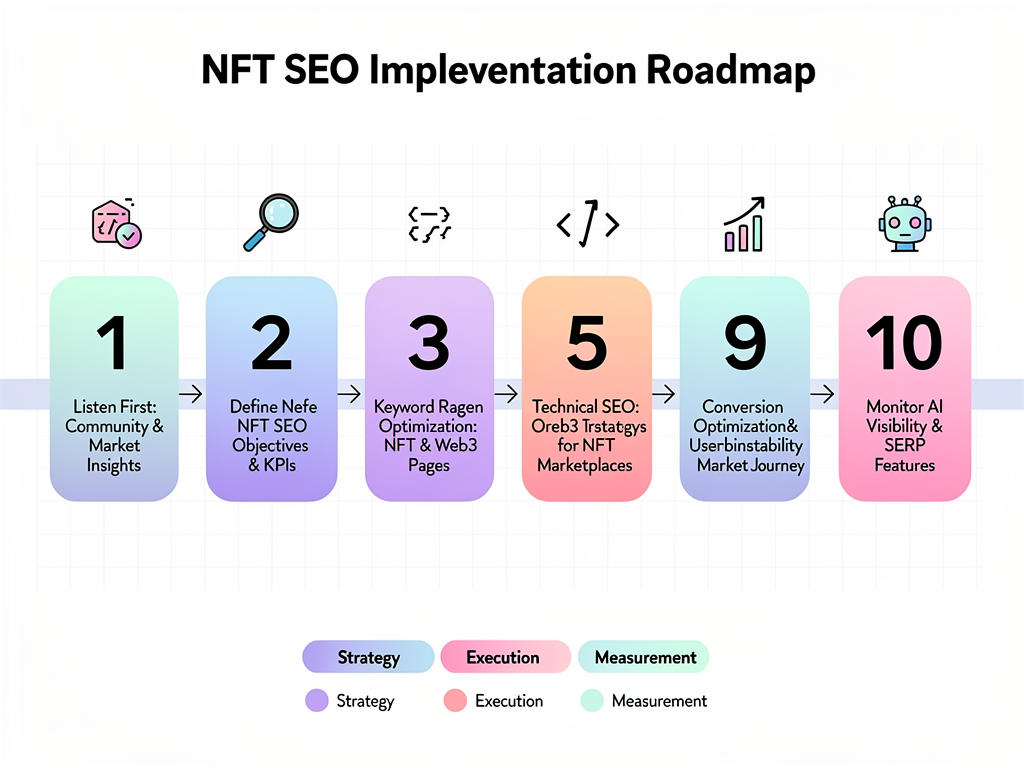
Essential Tools for NFT SEO:
- Ahrefs or SEMrush: Keyword research, competitor analysis, backlink tracking. Essential for identifying NFT buyer-intent keywords and tracking ranking progress.
- Claude (Anthropic): Superior copywriting for landing pages, email sequences, and ad copy. Handles tone and context better than ChatGPT for nuanced NFT messaging.
- ChatGPT: Deep research, competitive analysis, content brainstorming, and quick ideation loops.
- n8n or Zapier: Automation workflows to connect content generation, scheduling, and distribution across channels.
- NotebookLM: Convert your winning content into structured JSON profiles so AI systems understand your brand context.
- Higgsfield or Midjourney: Generate platform-native visuals for NFT collection pages, landing pages, and social ads.
- Google Search Console + Google Analytics 4: Track rankings, impressions, clicks, and conversions from organic search to NFT-related landing pages.
- Perplexity Pro + ChatGPT Plus: Monitor how AI systems cite your content. Adjust content structure to improve visibility.
Checklist: What to Do Right Now
- [ ] Listen First: Join 3 competitor Discord servers or Reddit communities. Document the top 10 pain points and questions your target buyers ask.
- [ ] Audit Your Current Content: List your top 20 blog posts. For each, note: traffic, conversions, rank position. Identify which drive actual holders/community members, not just clicks.
- [ ] Add AI-Friendly Structure: Pick your top 5 underperforming pages. Add a TL;DR, rewrite H2s as questions, break text into shorter paragraphs. Resubmit to Google.
- [ ] Map Buyer Intent Keywords: Using Ahrefs or SEMrush, find 20 “problem-solution” keywords your NFT project could target (e.g., “how to safely buy NFTs,” “best NFT projects for beginners,” “NFT gas fee alternatives”).
- [ ] Create an AI Workflow: Set up Claude + ChatGPT + visual generator access. Test generating 5 blog post outlines using your keywords and brand voice. Refine the prompt framework.
- [ ] Build Internal Linking Web: Pick 3 cornerstone pages (e.g., “What Is Your NFT Collection,” “How to Mint,” “Utility Explained”). Create 12 supporting blog posts that link to these pages and to each other.
- [ ] Identify 5 High-Authority Backlink Targets: List 5 DR50+ crypto publications or NFT blogs that cover projects similar to yours. Research their submission or partnership process.
- [ ] Set Up Conversion Tracking: In Google Analytics, create goals for: newsletter signup, Discord join, whitelist signup, wallet connection. Attribute these conversions to specific blog posts and organic keywords.
- [ ] Create a Content Calendar: Plan 12 buyer-intent blog posts over the next 3 months. Use your AI workflow to generate drafts; assign editing to one person for brand consistency.
- [ ] Monitor AI Search Visibility: Weekly, search your target keywords in ChatGPT, Perplexity, and Google AI Overviews. Note which of your pages are cited. Adjust content structure for uncited pages.
Most teams know what to do but don’t execute. If building an SEO strategy for your NFT project feels overwhelming, FLEXE.io specializes in Web3 marketing and has helped 700+ clients accelerate growth through strategic content, media amplification, and KOL partnerships. With access to 10+ crypto traffic sources and 500+ KOLs, they connect NFT projects directly to verified communities. DM us on Telegram: https://t.me/flexe_io_agency
FAQ: Your Questions Answered
How long does it take to see results from an SEO agency for NFT?
Most NFT projects see measurable traffic within 60–90 days if they’re targeting buyer-intent keywords and optimizing for AI search. One team hit $925 MRR from organic search in 90 days with a fresh domain. However, compounding growth (418% organic traffic increases) typically takes 6–12 months as authority builds through backlinks, internal linking, and consistent content.
What’s the difference between an NFT SEO agency and a general SEO agency?
A specialized SEO agency for NFT understands blockchain terminology, community dynamics, gas fees, blockchain alternatives, and the specific keywords that NFT buyers search. They optimize for both traditional Google and AI search platforms (ChatGPT, Perplexity, Google AI Overviews). General agencies often miss these nuances and waste budget on vanity metrics instead of buyer-intent conversions.
Do I need backlinks to rank NFT content?
Backlinks help but aren’t essential early on. One team ranked #1 on page 1 for multiple competitive keywords with zero external backlinks—they used internal linking and buyer-intent content targeting instead. However, backlinks from high-authority crypto publications do accelerate growth and are critical for tier-one competitive keywords.
How much does an SEO agency for NFT cost?
Pricing varies widely. DIY using AI tools costs under $100/month for software. Freelance specialists or junior agencies charge $2K–$5K/month. Established NFT-focused agencies charge $10K–$50K/month depending on scope. One NFT project saved money by replacing a $267K/year team with hybrid AI + one human tasked with filtering and approval.
Can I generate all my NFT content with AI and just publish it?
No. Pure AI output often sounds like slop and misses your brand voice. The winning formula is: human sets strategy and core narrative → AI generates dozens of variations → human filters for tone and accuracy → publish. This hybrid approach replaced a $267K/year team and produces better results faster than either approach alone.
What’s the most important factor for SEO success in the NFT space?
Targeting buyer intent and converting traffic to holders matters more than raw traffic volume. One blog post drove 5,000 visitors but converted 2 people. Another drove 200 and converted 25. Most teams celebrate the first; winning teams double down on the second. Track conversions, not just impressions.
How do I know if an SEO agency for NFT is worth the cost?
Ask for: (1) case studies with verified numbers (traffic, conversions, ARR), (2) their approach to AI search optimization, (3) examples of buyer-intent keyword targeting they’ve done, (4) how they track conversions to NFT holders or community members, not just clicks. A good agency measures results in MRR or ARR, not vanity metrics.