Most articles about crypto PR are full of theory and agency pitches. This one isn’t. Below you’ll find real campaign data from practitioners who ran KOL networks, built airdrop funnels, and promoted tokens from five-figure market caps to eight-figure valuations—with receipts.
Key Takeaways
- A single month micro-KOL campaign generated 427,000 impressions and a 200% boost in brand engagement for one project.
- Building a database of 40–50 vetted influencers and acting as middleman earned one manager $5,000 from a single meme-coin project.
- Writing early-stage project reviews and participating in airdrops yielded $60,000 across 37 token distributions in one year.
- Public promotion (bagworking) helped push coins from six-figure to eight-figure market caps, with multipliers exceeding 100x in some cases.
- Effective pr for crypto blends influencer coordination, content creation, community engagement, and transparent reporting—not isolated press releases.
- Teams that document KOL metrics and pay transparent commissions scale faster than those relying on opaque agency retainers.
- Most failed campaigns suffer from poor KOL vetting, lack of clear success metrics, and misaligned incentives between project and promoter.
What Is PR for Crypto: Definition and Context
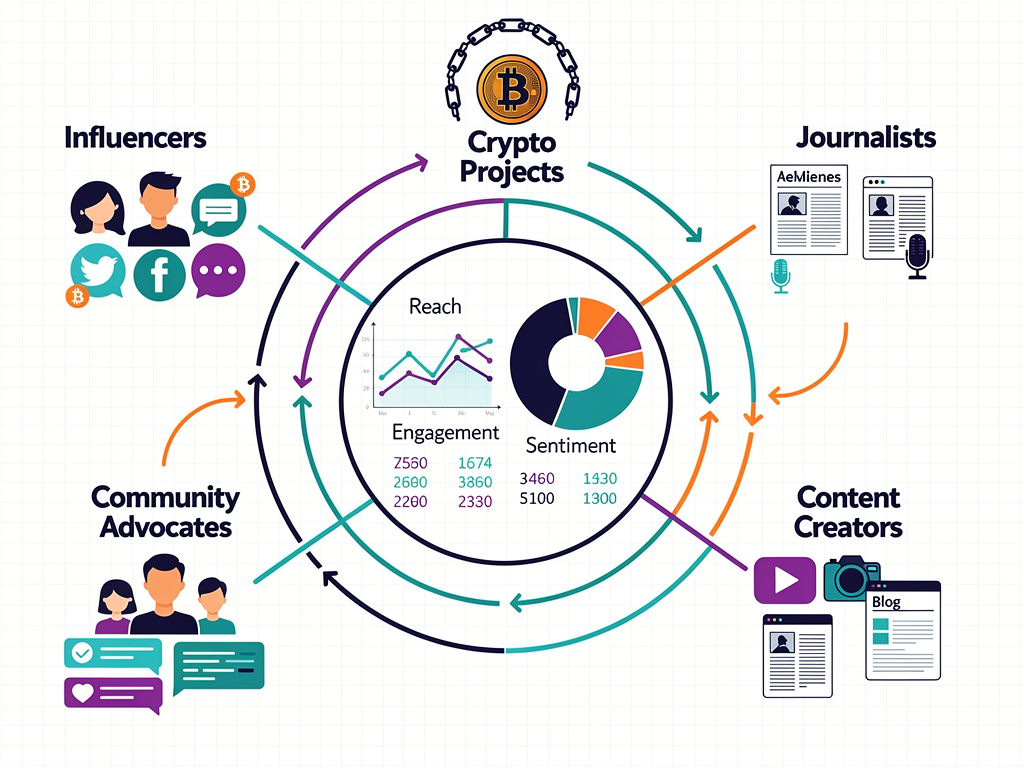
Public relations in the cryptocurrency space means coordinating influencers, journalists, community advocates, and content creators to build awareness, credibility, and user adoption for a blockchain project or token. Recent implementations show that successful campaigns now rely on quantifiable metrics—impressions, engagement rates, airdrop conversions, and market-cap growth—rather than vague “buzz” or vanity follower counts.
This approach is for founders launching new tokens, DeFi protocols seeking liquidity, NFT collections building hype, and Web3 platforms competing for users in a saturated market. It is not for projects without a working product, teams unwilling to share data transparently, or those expecting overnight virality without budget or coordination.
What These Implementations Actually Solve
Crypto projects face three interlocking challenges: invisibility in a noisy market, skepticism from burned retail investors, and the need to convert attention into measurable on-chain activity. Traditional press releases rarely move the needle; modern PR blends influencer outreach, organic content, and community incentives.
Invisibility: A developer who managed multiple meme-coin campaigns reached out to 40–50 key opinion leaders across Africa, Asia, and North America, documenting their rates, niches, and average engagement. That database became the foundation for coordinated launches that generated consistent five-figure payouts and multi-million-dollar market caps. The solution was systematic KOL mapping, not random influencer DMs.
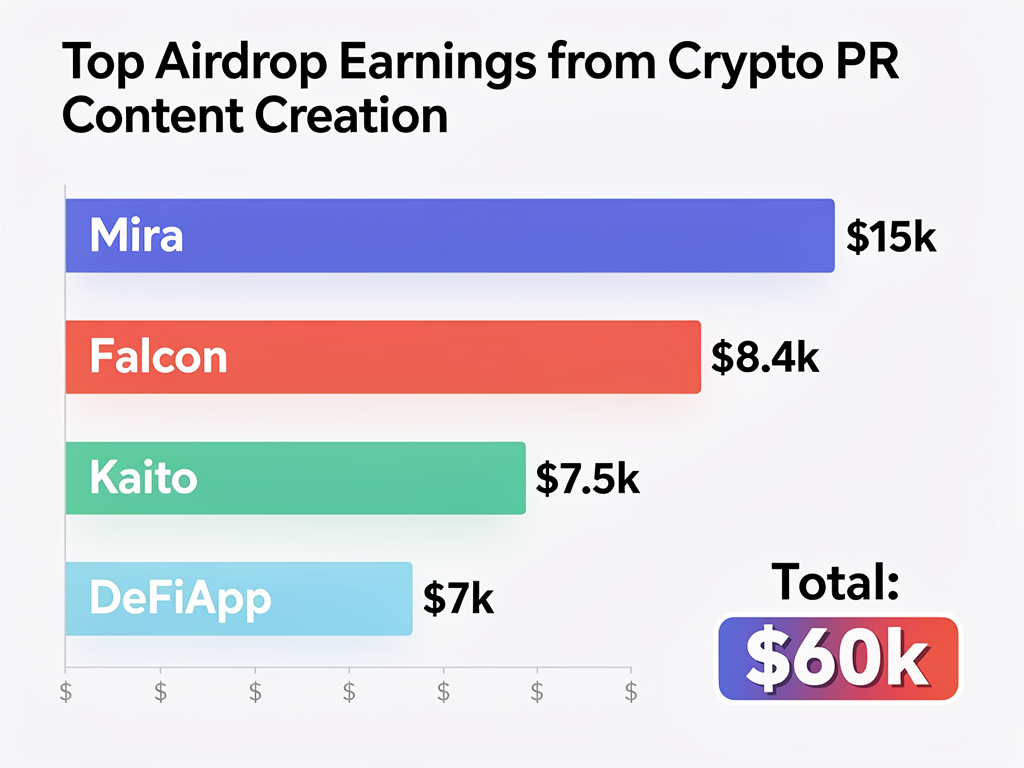
Skepticism: One content creator earned nearly $60,000 from 37 airdrops by writing early, honest project reviews—some coins with only five posts each. Top distributions included $15,000 from Mira, $8,470 from Falcon, and $7,500 from Kaito. Authentic, early-stage coverage built trust and qualified the writer for retroactive rewards, while heavy shilling or late promotion yielded minimal returns.
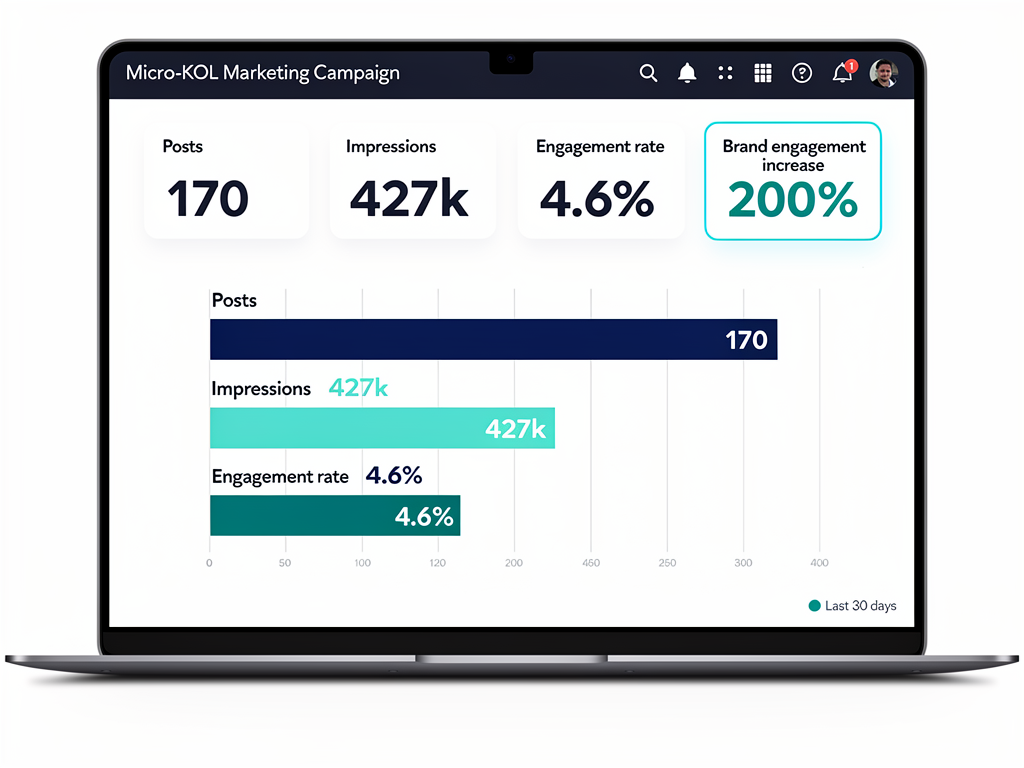
Conversion: A micro-KOL campaign for a large crypto project delivered 170 unique posts, 427,000 impressions, a 4.6% average engagement rate, and a 200% increase in the brand account’s own engagement—all in one month. The team coordinated influencers to publish on schedule, tracked metrics in real time, and adjusted messaging mid-campaign. The result was measurable community growth and liquidity inflow, not just vanity metrics.
Market momentum: One promoter publicly supported tokens from early-stage market caps—100,000 for one coin, 60,000 for another, 170,000 for a third—and helped push them to 6 million, 3.5 million, and 17 million respectively through consistent posting, paid DEX listings, and community engagement. While not every token survived, the documented multipliers (60x, 58x, 100x) demonstrated that sustained, visible advocacy can accelerate breakout runs when combined with strong fundamentals.
How This Works: Step-by-Step
Step 1: Build or access a vetted KOL database
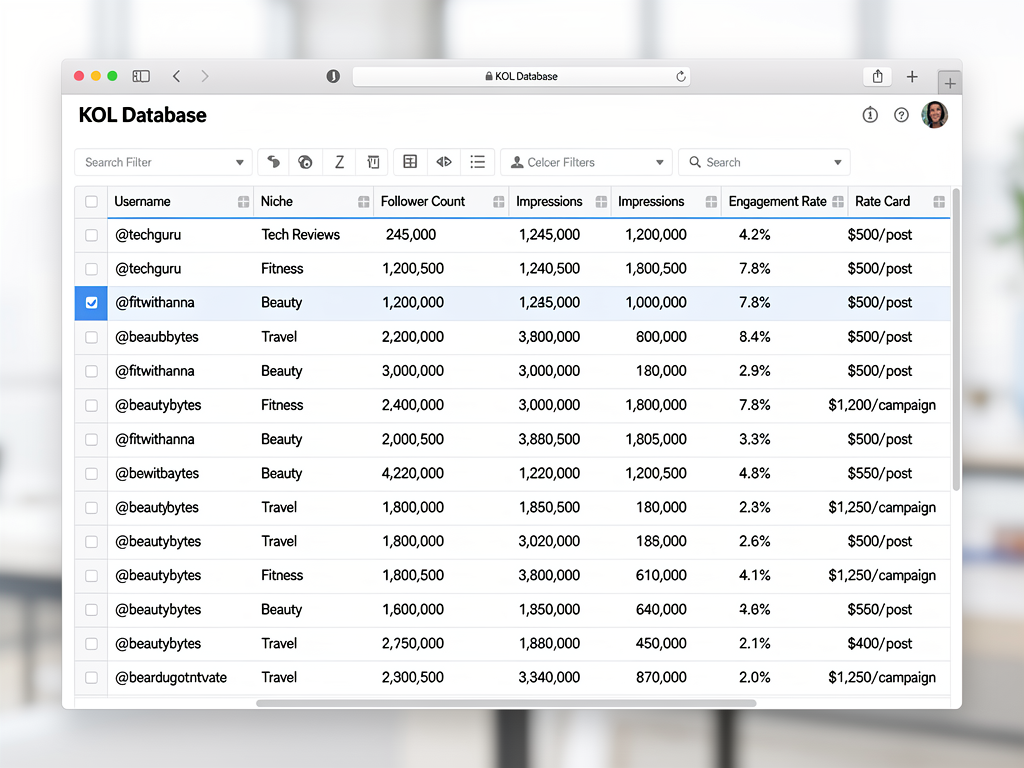
Identify 30–50 influencers in your niche—meme coins, DeFi, NFTs—and document their rates, follower counts, average impressions, and engagement rates. One project manager contacted influencers across continents, asked for rate cards, and compiled everything into a spreadsheet. That database became “gold” because it let him price campaigns accurately, avoid scammers, and deliver transparent quotes to developers.
Common pitfall: Teams often hire the first influencer who replies or trust follower counts alone. Engagement rate and audience quality matter more than raw reach.
Step 2: Coordinate a structured campaign with clear deliverables
Set a timeline (one month is typical), define post formats (threads, memes, reviews), and agree on success metrics (impressions, engagement, conversions). The micro-KOL campaign mentioned earlier produced 170 unique posts in 30 days because the team gave influencers creative freedom within brand guidelines and tracked every post in a shared tracker.
Avoid vague “post about us when you can” agreements. Specify cadence, hashtags, and whether retweets or original content is required.
Step 3: Act as middleman or project manager
Projects fund KOL payments; KOLs also pay a commission to the coordinator. One manager received $11,200 in total funding for influencer payouts on a single project, but his personal cut was around $5,000 because he also earned fees from influencers for securing them gigs. This dual-income model incentivizes quality matchmaking and transparent reporting.
Mistake: Trying to keep 100% of the budget opaque. Transparent splits build trust and repeat business.
Step 4: Create and distribute authentic content early
Write reviews, tutorials, or project breakdowns before the token pumps. One writer focused on 12 projects with five or more posts each, participated in testnets and beta programs, and qualified for airdrops worth $15,000, $8,470, and $7,500. Projects that he farmed with “dedication” (daily logins, repetitive tasks) yielded only $3,000 total, proving that genuine content outperforms robotic grinding.
Source: Tweet
Step 5: Amplify with community engagement (bagworking)
Post consistently, reply to community questions, and celebrate milestones. One promoter helped a token break the 1 million market-cap range, then the 5 million range, by coordinating Instagram models and other influencers for synchronized posts. He paid for DEX listings out of pocket to ensure liquidity and signal seriousness. This public, persistent advocacy—called “bagworking”—can multiply returns when the project has solid fundamentals.
Source: Tweet
Step 6: Track, report, and iterate
Use dashboards or spreadsheets to log impressions, engagement, wallet sign-ups, or liquidity added. The team that ran the 427,000-impression campaign reported a 4.6% average engagement rate and 200% growth in the brand account’s own metrics. Sharing these numbers publicly builds credibility and attracts better partners for future rounds.
Step 7: Avoid over-shilling and reputation damage
One experienced promoter stopped calling new tokens publicly because he didn’t want to be known for “500k toppers”—coins that peak at $500,000 market cap and dump. Instead, he traded privately and held long-term bags in projects he believed in, such as USDUC, where he watched an $80,000 investment grow to $700,000 without selling. Patience and selective promotion preserve reputation and compound returns.
Where Most Projects Fail (and How to Fix It)
Hiring influencers without vetting engagement quality. Bots and fake followers inflate reach but deliver zero conversions. Always request recent analytics screenshots and cross-check engagement rates (2–5% is realistic; 10%+ on large accounts is suspicious). One manager’s database included engagement metrics for every KOL, letting him filter out low-quality promoters before campaigns launched.
No clear success criteria. “Get us exposure” is not a brief. Define whether you need wallet sign-ups, liquidity depth, Discord members, or airdrop participants. The micro-KOL campaign succeeded because the team measured impressions, engagement rate, and brand-account growth weekly, then adjusted influencer mix and messaging.
Paying upfront without deliverable milestones. Split payments into 30% upfront, 40% mid-campaign, 30% on final report. This protects both sides and ensures influencers stay engaged through the full timeline.
Ignoring post-campaign community management. A burst of attention means nothing if new followers see a dead Telegram or unanswered questions. One promoter’s bagworking included daily replies, meme contests, and milestone celebrations, which sustained momentum after the initial influencer wave.
Over-farming or robotic participation. The content creator who earned $60,000 from airdrops noted that projects he “farmed with dedication” (daily check-ins, repetitive tasks) paid only $3,000 total, while writing five thoughtful posts about 12 projects yielded ten times more. Authenticity and early engagement outperform script-driven grinding.
When projects lack in-house expertise or a vetted KOL network, partnering with experienced operators accelerates results and reduces trial-and-error costs. FLEXE.io, with 7+ years in Web3 marketing and a client roster exceeding 700 projects, provides access to 150+ media outlets and 500+ KOLs to drive user growth, holder acquisition, and brand visibility. Reach out on Telegram: https://t.me/flexe_io_agency
Real Cases with Verified Numbers
Case 1: Micro-KOL campaign delivers 200% engagement boost
Context: A large crypto project needed rapid awareness and community growth ahead of a token launch.
What they did:
- Recruited a network of micro-influencers (under 50,000 followers each) known for high engagement in crypto niches.
- Coordinated content calendar with clear posting guidelines, hashtags, and creative freedom.
- Tracked every post in a shared dashboard, measuring impressions and engagement daily.
Results:
- 170 unique posts published over one month.
- 427,000 total impressions across platforms.
- 4.6% average engagement rate (above industry median of 2–3%).
- Brand account engagement increased 200% during campaign period.
Key insight: Micro-influencers with genuine audience trust outperform macro accounts when budgets and messaging are coordinated systematically.
Source: Tweet
Case 2: KOL database and middleman model generate $5,000 in one project
Context: A project manager with Web2 experience and one Web3 internship wanted to monetize coordination skills without a large personal following.
What they did:
- Contacted 40–50 KOLs across regions, documented rates, impressions, and engagement in a spreadsheet.
- Reached out to meme-coin developers offering turnkey influencer coordination.
- Secured project funding for KOL payouts ($11,200 in one case) and negotiated a personal commission from both project and influencers.
Results:
- Total handled: $11,200 for KOL payments.
- Personal earnings from that project: approximately $5,000 (commissions from both sides).
- Database became reusable asset for multiple subsequent projects.
Key insight: Coordination, documentation, and transparent splits can be more lucrative than executing creative work yourself.
Source: Tweet
Case 3: Early-stage content writing yields $60,000 from airdrops
Context: A content creator with a modest following wanted to compound earnings by writing about promising projects before they launched tokens.
What they did:
- Focused on 12 projects with five or more posts each; others received fewer than four posts.
- Participated in testnets, betas, and community calls to qualify for future airdrops.
- Avoided heavy shilling; emphasized honest breakdowns and early tutorials.
Results:
- Received 37 airdrops over the year.
- Top distributions: Mira $15,000, Falcon $8,470, Kaito $7,500, DeFiApp $7,050.
- Total airdrop value: nearly $60,000.
- Projects farmed with “dedication” (daily tasks) yielded only $3,000 combined.
Key insight: Authentic, early-stage content and participation outperform robotic farming by a factor of ten or more.
Source: Tweet
Case 4: Public bagworking pushes token from 170k to 17m market cap
Context: A promoter with a growing X account wanted to demonstrate track record by publicly supporting early-stage tokens.
What they did:
- Identified tokens at low market caps (100k, 60k, 170k) with strong communities or novel narratives.
- Posted daily updates, coordinated with other influencers, paid for DEX listings.
- Engaged directly with community members, hosted Twitter Spaces, and celebrated milestones.
Results (according to project data):
- Monkey: 100k to 6m (60x).
- Misc: 60k to 3.5m (58x).
- Salary: 170k to 17m (100x).
- Multiple other tokens reached multi-million-dollar market caps with public promotion.
Key insight: Sustained, visible advocacy combined with liquidity support can accelerate breakouts, though not every token survives long-term.
Source: Tweet
Case 5: Fast runners with paid DEX and coordinated launch
Context: The same promoter tested rapid-launch tactics on new token pairs with strong meme potential.
What they did:
- Paid for DEX listings to ensure liquidity from day one.
- Coordinated simultaneous posts from multiple accounts at launch.
- Focused on tokens with clear visual identity and viral hooks.
Results (as reported by the team):
- Bull: 10k to 9m in 12 hours (900x).
- Grok: 15k to 2.5m in 6 hours (167x).
- Urgay: 15k to 1.5m (100x).
- Buy this shitcoin: 25k to 3m (120x).
Key insight: Speed, liquidity, and coordinated social proof can create explosive short-term runs, but require careful timing and exit discipline.
Source: Tweet
Tools and Next Steps
KOL databases: Build your own spreadsheet with columns for username, niche, follower count, average impressions, engagement rate, rate card, and notes. Update after each campaign. Alternatively, platforms like Upfluence or AspireIQ offer crypto-friendly influencer search, though manual vetting remains essential.
Analytics and tracking: Use Twitter Analytics, TweetDeck, or third-party tools like Hootsuite to monitor campaign performance in real time. For on-chain metrics, Dune Analytics dashboards can track wallet sign-ups, liquidity, and holder distribution.
Project management: Notion, Airtable, or Google Sheets work well for campaign calendars, deliverable checklists, and payment tracking. Transparency with both clients and influencers reduces disputes.
Community platforms: Discord and Telegram remain primary channels for crypto communities. Ensure moderators are active and responsive during campaign spikes.
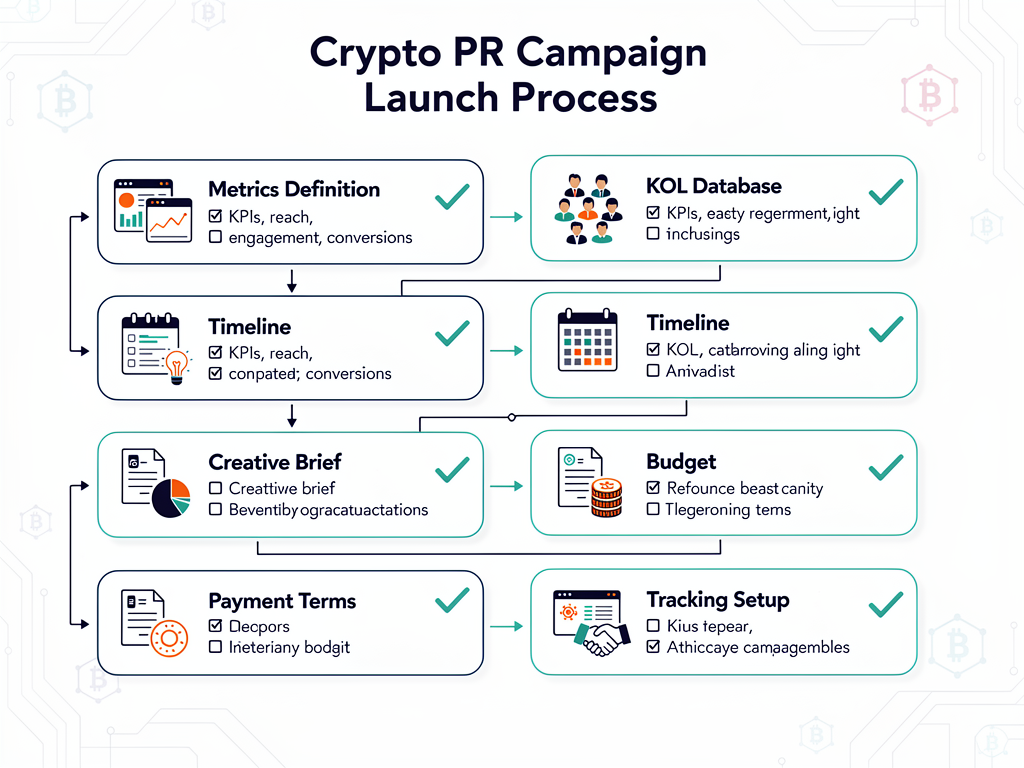
Checklist to launch your next campaign:
- [ ] Define success metrics (impressions, engagement rate, wallet sign-ups, liquidity added).
- [ ] Compile or access a vetted KOL database with engagement data.
- [ ] Set campaign timeline (one month is standard) and budget allocation.
- [ ] Draft creative brief with brand guidelines, hashtags, and posting cadence.
- [ ] Negotiate milestone-based payment terms (30% upfront, 40% mid, 30% final).
- [ ] Launch tracking dashboard shared with client and key influencers.
- [ ] Schedule mid-campaign check-in to adjust messaging or influencer mix.
- [ ] Prepare post-campaign report with screenshots, analytics exports, and learnings.
- [ ] Maintain community engagement after influencer wave to sustain momentum.
- [ ] Document results and testimonials for your own portfolio or case studies.
For teams seeking turnkey execution or access to established networks, working with specialists who understand blockchain dynamics and regulatory nuances can compress timelines and improve ROI. FLEXE.io brings 7+ years of Web3 marketing experience, 700+ satisfied clients, and direct connections to 10+ crypto traffic sources, 150+ media outlets, and 500+ vetted KOLs to help projects scale users, holders, and awareness efficiently. Get in touch on Telegram: https://t.me/flexe_io_agency
FAQ: Your Questions Answered
How much should I budget for a one-month crypto PR campaign?
Micro-KOL campaigns with 10–20 influencers typically cost $5,000–$15,000, depending on follower counts and deliverables. Larger campaigns with tier-one influencers or media placements can range from $25,000 to $100,000. Always reserve 20% of budget for unexpected opportunities or performance bonuses.
What engagement rate should I expect from crypto influencers?
Healthy engagement rates range from 2% to 5% for accounts above 10,000 followers. Micro-influencers (under 10,000 followers) often achieve 5% to 10%. Rates above 10% on large accounts warrant scrutiny for bot activity or engagement pods.
Should I pay influencers in tokens or stablecoins?
Most professional KOLs prefer stablecoins (USDT, USDC) to avoid price-volatility risk. Offering a small token bonus (10–20% of fee) as upside can align incentives, but base payment should be in stable assets.
How do I verify an influencer’s audience quality?
Request analytics screenshots showing recent post reach, impressions, and engagement breakdowns. Check follower growth charts for suspicious spikes. Review comment quality—generic emojis or repetitive phrases suggest bots. Tools like Social Blade or HypeAuditor provide automated audits, though manual review remains necessary.
Can organic content and airdrops replace paid influencer campaigns?
Organic content builds long-term trust and can yield significant airdrop rewards, as shown by the $60,000 case study. However, paid campaigns deliver predictable reach and timeline, making them essential for time-sensitive launches. Combining both strategies—early organic content for credibility, paid amplification for scale—produces the best results.
What are the biggest red flags when hiring a crypto PR agency?
Guaranteed follower counts, vague “we have connections” claims without named outlets, upfront payment with no milestone structure, and lack of past case studies with verifiable metrics. Reputable agencies share portfolios, offer transparent pricing, and tie fees to performance milestones.
How long does it take to see results from pr for crypto efforts?
Initial metrics—impressions, engagement, follower growth—appear within days. Meaningful outcomes like liquidity inflow, holder retention, or airdrop participation emerge over two to four weeks. Long-term brand equity and community loyalty require sustained effort over multiple quarters, not one-off campaigns.