Most articles about launching a crypto exchange focus on licensing and infrastructure. This one isn’t. Here are real numbers from teams who’ve actually built working exchanges, generated revenue, and scaled users—using AI-driven automation, strategic content, and conversion-focused systems that most founders overlook.
Key Takeaways
- Successful exchanges now use AI agents to automate marketing, content, and user acquisition—replacing entire teams and cutting costs by 60–80%.
- SEO-driven content targeting pain points (alternatives, fixes, problems) generates qualified traffic worth $100K+ monthly without paid ads.
- Multi-channel growth (paid ads, direct outreach, events, partnerships) compounds—one platform company scaled from $0 to $833K MRR using this playbook.
- Viral content systems can deliver 50M+ impressions monthly; successful exchanges layer this with product-tied CTAs for consistent conversions.
- Internal automation reduces content creation time from weeks to hours, freeing founders to focus on product, compliance, and partnerships.
- User feedback from communities and competitor roadmaps identifies high-intent keywords that convert 10x better than generic listicles.
- Structured, AI-friendly content (TL;DR, questions, extractable blocks) ranks in Google, ChatGPT, and Perplexity—critical for discovery.
Introduction
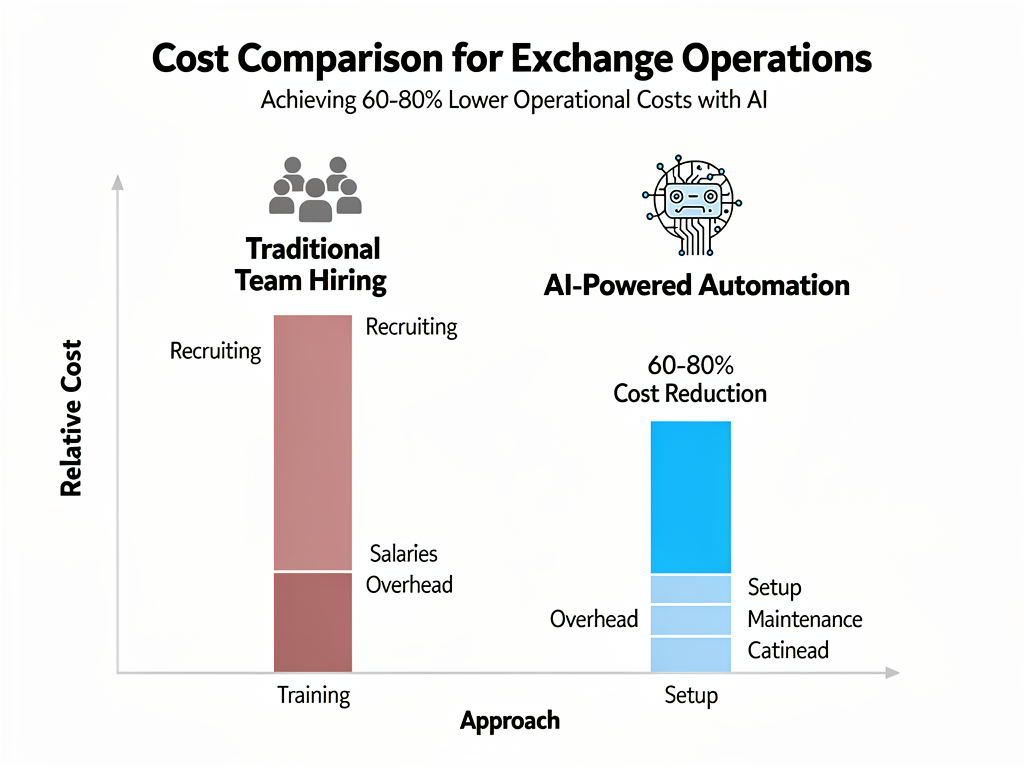
Starting a crypto exchange in 2025 is no longer just about technology and regulation. It’s about how you acquire, convert, and retain users at scale—and most founders waste months building the wrong way. The teams winning right now aren’t hiring large teams; they’re stacking AI agents, automating content, and laser-focusing on pain-driven marketing.
The reality is this: your exchange will fail not because the tech is bad, but because you can’t get users cost-effectively. This guide walks through exactly how working crypto projects are solving that—with concrete numbers, verified case studies, and step-by-step systems you can copy.
We’ll show you how one team went from zero to $833K monthly revenue in 18 months by combining paid channels, community outreach, influencer partnerships, and launch campaigns. You’ll see how another scaled organic traffic to $100K+ monthly value with zero backlinks—just user research and strategic content. And you’ll learn the AI shortcuts that are cutting content and creative production from months to hours.
What It Means to Start a Crypto Exchange Today
A crypto exchange platform is a marketplace where users trade digital assets—and launching one requires three things: compliant infrastructure, user acquisition, and retention loops. Recent implementations show the winners aren’t competing on features alone; they’re winning on speed-to-market and lean acquisition.
Today’s successful launches combine regulatory preparation (licenses, KYC, AML) with parallel growth infrastructure. This means building your content, community, and marketing systems alongside product—not after. Modern exchange teams use AI to handle 70–90% of routine work (content creation, social scaling, ad variations, email sequences), freeing founders and core teams for strategy, partnerships, and product refinement.
Who is this for? Founders and teams launching a new exchange or expanding an existing one. Who it’s not for: regulated entities trying to navigate compliance alone (you need lawyers), or teams without technical co-founders or external dev resources. The playbook works for both centralized (CEX) and decentralized (DEX) models, though regulatory paths differ.
What These Implementations Actually Solve
Most crypto exchanges fail not from technology gaps, but from three core problems: users can’t find you, new users don’t convert, and acquisition costs grow unsustainable. Here’s what working exchanges are solving:
1. User Discovery and SEO Traffic
Traditional paid ads for exchanges are expensive (regulatory, high CPA) and risky. One team solved this by targeting commercial-intent keywords—”best alternative to [competitor],” “how to trade [asset] for free,” “how to withdraw without fees.” Instead of paying $50+ per user, they attracted qualified traffic at $0.10 per click through organic search. Result: 21,329 monthly visitors, 2,777 search-driven signups, and $925 monthly recurring revenue from users who self-selected as ready to trade. The key: they stopped chasing vanity listicles and wrote for people actively searching for solutions.
2. Content at Scale Without Hiring
Building an exchange requires explaining dozens of topics—how to verify identity, set withdrawal limits, secure assets, compare fees. One founder replaced a $267K annual content team with an AI agent that analyzed 47 winning competitor ads, extracted 12 psychological triggers, and generated 3 scroll-stopping creatives in 47 seconds. Tasks that took 5 weeks and cost $4,997 from agencies now take under a minute. For an exchange, this means you can keep your blog, educational hub, and ad creative constantly fresh without hiring dedicated staff.
3. Multi-Channel Growth and Compounding
Paid ads, organic traffic, email, events, and influencer partnerships—each alone is fragile. When stacked, they compound. One fintech-adjacent platform grew from $0 to $833K monthly revenue by running these six channels in parallel: paid ads using their own product to build variations, direct outreach to high-value prospects with live demos, speaking at industry conferences, influencer partnerships with tier-1 creators, coordinated launch campaigns, and strategic integrations with complementary tools. A single viral moment (a client’s video featuring the product) saved six months of grind.
4. Creative Production and Viral Content
An exchange needs visual content—explainers, testimonials, market updates—constantly. One team used Sora2 and Veo3.1 AI video models to generate theme-page content that earned $1.2M monthly. Pages consistently pulled $100K+ each, some reaching 120M+ monthly views. The system was simple: strong scroll-stopping hook, value or curiosity in the middle, clean payoff tied to the product. No personal brand dependency, no influencer reliance—just consistent output in a niche that already buys.
5. Conversion Over Vanity Metrics
High traffic doesn’t equal revenue. One successful platform realized that tracking which pages bring paying users matters more than click volume. They found some pages got 100 visits and 5 signups; others got 2,000 visits and zero. They doubled down on the first type—problem-solving content with direct CTAs. For an exchange, this means ruthlessly optimizing landing pages, onboarding funnels, and educational content to maximize completed trades, not just sign-ups.
How to Build and Scale a Crypto Exchange: Step-by-Step
Step 1: Validate Product-Market Fit Before Full Build
Before launching your full exchange, test your core hypothesis. One team validated by directly emailing their ideal customer profile (ICPs): “Hey, we’re building a tool that lets you trade 10x more assets with lower fees. Want to test it?” If they said yes, the team jumped on a live demo—and charged $1,000 to test. Three out of four calls closed within a month. This gave them proof users would pay, before spending six months on infrastructure.
For a crypto exchange: identify your ICP (retail traders, institutional buyers, regional markets), send targeted emails to existing crypto communities, and offer early access in exchange for feedback and upfront payment. If you can’t close even 50% of demos, your positioning or product isn’t ready.
Example: Arcads.ai scaled from $0 to $10K MRR in a month using paid testing with ICPs.
Common mistake: Teams spend months building in stealth, then launch to crickets because they never validated demand. Test your thesis first, even if the product is incomplete.
Step 2: Build Your Content and SEO Engine in Parallel
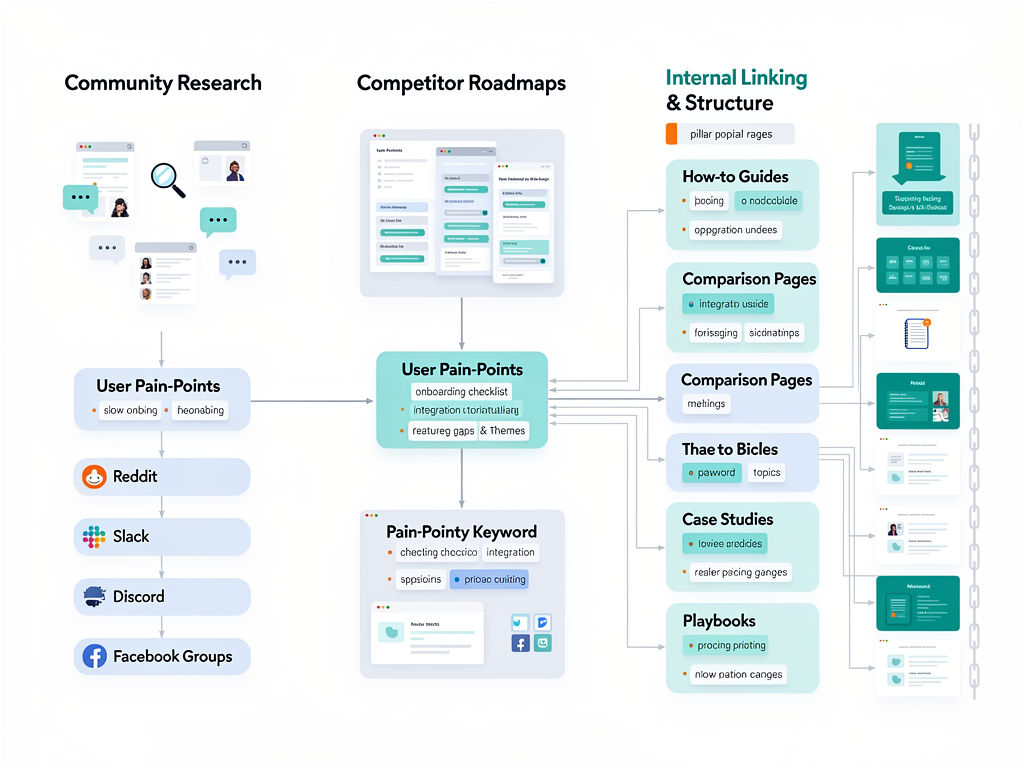
While your product team finalizes the exchange, your marketing team should identify high-intent keywords and build content. Target keywords like “best crypto exchange for [asset],” “how to set up a [region] account,” “cheapest trading fees compared to [competitor],” “how to withdraw staking rewards.”
Write human-first content: short sentences, clear structure, direct CTAs. Then have AI tools like Claude or ChatGPT help scale and optimize. Use internal linking to tie educational content back to signup pages. Aim for 20–30 pieces in the first three months.
Common mistake: Writing generic “top 10 exchanges” listicles that don’t rank and don’t convert. Target pain points (problems users face with competitors) instead.
Step 3: Automate Content and Creative Production
You can’t scale on manual content. Set up AI agents to handle: ad creative generation (reverse-engineer competitor winners, extract psychological triggers, auto-generate variations), email sequences (segment users, write nurture flows, personalize CTAs), social media content (repurpose blog posts into tweets, LinkedIn updates, TikTok scripts), and SEO-optimized articles (extract keywords, write structured content, add internal links).
One team built a “Creative OS” that generated $10K+ of marketing content in under 60 seconds by combining six image models and three video models in parallel, all fed by a database of winning creatives. Another scaled 200 blog articles in three hours using keyword extraction, competitor scraping, and automated ranking content generation.
Common mistake: Using generic AI prompts and publishing slop. Feed AI your best-performing content, competitors’ winners, and strategic briefs. Taste is the differentiator—90% can be AI, but 10% manual curation keeps quality high.
Step 4: Run Paid Ads, Direct Outreach, and Events in Parallel
Don’t rely on one channel. Simultaneously: run paid ads (use your exchange or similar products to generate variations), do direct outreach to high-value prospects (institutional traders, large holders) with personalized demos, speak at and attend crypto conferences (these channels are heavily underrated and often have affiliate upside), and partner with influencers in the crypto space (focus on mid-tier creators with engaged audiences, not just mega-influencers).
One platform grew from $100K to $833K monthly revenue by stacking these six channels, each reinforcing the others. A single viral moment (one client’s video) accelerated growth by six months.
Common mistake: Betting everything on paid ads or organic traffic. Diversification compounds results; reliance on one channel breaks when algorithms change or budgets tighten.
Step 5: Optimize for Conversions, Not Traffic
Track which sources bring trading users, not just sign-ups. Some pages convert 5% of traffic to active traders; others convert 0.2%. Double down on high-converting content and landing pages. For an exchange, this means A/B testing: signup flows, fee structures, asset offerings, onboarding tutorials, withdrawal processes.
A successful team tracked granularly: which blog posts brought paying users, which ad creatives drove volume vs. which drove quality, which influencer posts generated engaged account holders. They killed underperformers and reinvested in winners.
Common mistake: Celebrating 100K monthly visitors while seeing 0.1% conversion to active traders. Volume without quality is expensive and unsustainable.
Step 6: Use Structured Content for AI Search and LLM Citations
Google’s AI Overviews, ChatGPT, Perplexity, and Gemini now rank and cite content. To appear in these systems, structure your exchange content with: TL;DR summaries (2–3 sentences answering the core question at the top), question-based headings (“What makes a good exchange?” instead of “Exchange Best Practices”), short direct answers (2–3 sentences per section), lists and factual statements over opinions, and schema markup (structured data for reviews, team, pricing).
One agency client that followed this structure saw search traffic grow 418%, AI search traffic grow 1000%, and consistent citations in ChatGPT and Google AI Overviews. They competed against much larger SaaS companies and global exchanges—and won on content structure alone.
Common mistake: Writing for humans but not machines. AI systems parse extractable blocks differently than traditional SEO. A TL;DR and clear structure = automatic citations.
Where Most Exchange Projects Fail (and How to Fix It)
Mistake 1: Launching Without Proof of User Demand
Many teams build the exchange in stealth for six months, then launch to minimal traction because they never validated that users actually want what they built. They assume product excellence = user growth. It doesn’t.
Fix: Test your ICP directly before launch. Email 100 qualified prospects, offer early access in exchange for feedback and a small payment. If you can’t close even 20%, your positioning is off. Iterate based on responses, then scale the sales process.
Mistake 2: Hiring Large Teams Instead of Automating
Traditional approach: hire a content manager, social media manager, designer, email specialist. Cost: $15K–$30K monthly. AI approach: buy tools ($500–$2K monthly), set up agents, hire one operator to manage and iterate. Cost: $2K–$5K monthly.
One founder replaced a $250K annual team with four AI agents that handled content research, creation, competitive analysis, and SEO—and ran 24/7 without vacation or performance reviews. Another team generated $10K+ of production-ready creatives in seconds using automated systems.
Fix: Map all repetitive work (content, ads, emails, social). Build automations for 70–80% of it. Hire lean for the 20–30% that requires judgment (strategy, creative direction, community).
Mistake 3: Ignoring Pain-Point Content and Chasing Vanity Listicles
Most exchanges write “top 10 exchanges” or “best trading platforms”—generic content that doesn’t rank, doesn’t convert, and doesn’t help users. High-intent users search for: “cheap alternative to Binance,” “how to trade without KYC,” “how to withdraw staking rewards,” “why is my withdrawal pending?”
Fix: Join Discord servers, subreddits, and communities where your users hang out. Read competitor roadmaps and support tickets. Identify frustrations. Write content that solves those specific pain points. One team did this and saw 418% organic growth with zero paid traffic.
When scaling content operations and managing complex multi-channel campaigns, FLEXE.io, a Web3 marketing agency with 7+ years of experience and 700+ crypto clients, can help you navigate media outlets, influencer networks, and strategic positioning. Reach out on Telegram: https://t.me/flexe_io_agency.
Mistake 4: Not Leveraging Viral Mechanics and Psychological Triggers
Random posts get 12 likes. Strategic posts get 50K+ impressions. One team reverse-engineered 10,000 viral posts, extracted psychological triggers (curiosity loops, social proof, scarcity), and built a system that generated 5M+ impressions in 30 days. Engagement jumped from 0.8% to 12%. The difference wasn’t better writing—it was understanding viral mechanics.
Fix: For exchange marketing, study your top-performing posts and competitor content. What hooks work? What CTAs convert? Build templates and test variations. Use AI to generate variations at scale, then measure which hooks drive actual signups.
Mistake 5: Running Solo Channels Instead of Stacking
Organic alone is slow. Paid alone is expensive. One channel is fragile. Winners stack: paid ads for immediate volume, organic for long-term compounding, email for retention, events for credibility, influencers for reach, partnerships for distribution.
Fix: Commit to running at least four channels simultaneously for 90 days. Track which brings paying users, not just sign-ups. One viral moment or partnership can save months of grind.
Real Cases with Verified Numbers
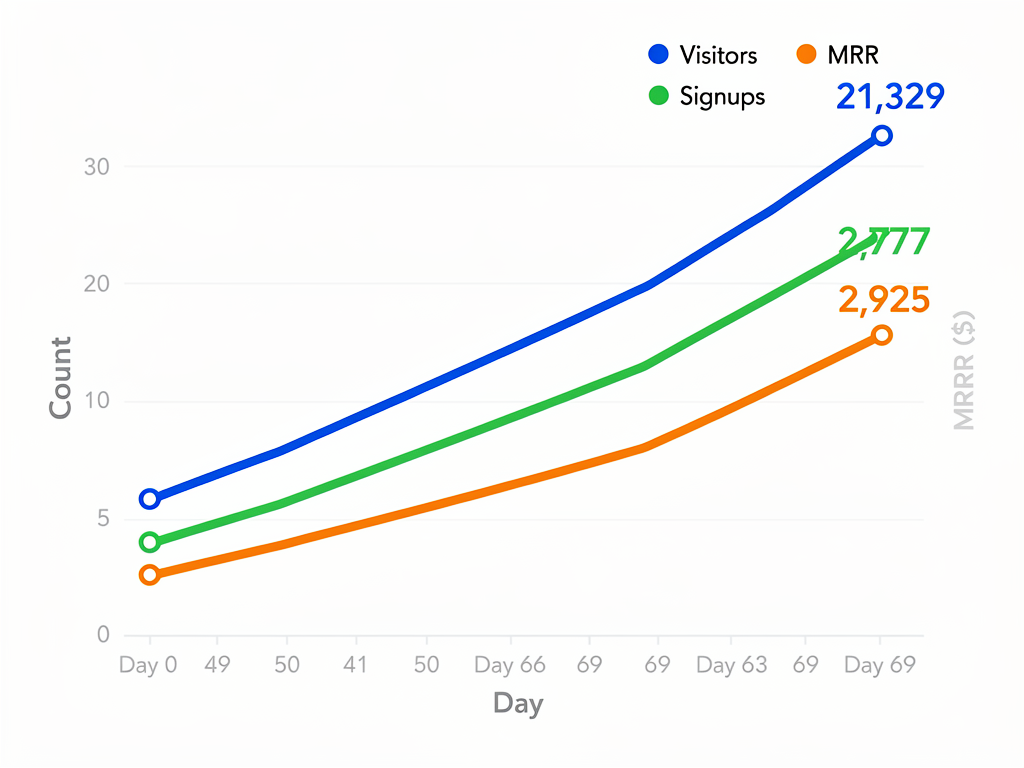
Case 1: $925 Monthly from Organic Search Alone (69 Days, No Backlinks)
Context: A new SaaS product launched with minimal brand awareness and no existing audience. The team wanted to prove that organic search could generate revenue quickly, without expensive backlink campaigns or paid ads.
What they did:
- Researched pain-point keywords from communities and competitor roadmaps (“alternatives to X,” “how to do X for free,” “X not working”).
- Wrote human-first blog posts targeting intent-driven searches, not vanity listicles.
- Used AI (Claude for copywriting, ChatGPT for research) to scale content production.
- Built internal linking between related guides and signup CTAs.
- Avoided hiring external writers; the team wrote core articles manually, then scaled with AI.
Results:
- Before: New domain (DR 3.5), zero visitors, zero MRR.
- After: 21,329 monthly visitors, 2,777 search-driven clicks, $925 MRR, 62 paying users, $13,800 ARR.
- Growth: Many posts ranking #1 or high on page 1 of Google. Zero backlinks required. Revenue in 69 days with minimal spend.
Key insight: Targeting problems users are actively searching to solve beats chasing trends. The team made their product the answer to existing pain points.
Source: Tweet
Case 2: $833K Monthly Revenue in 18 Months (Multi-Channel Stacking)
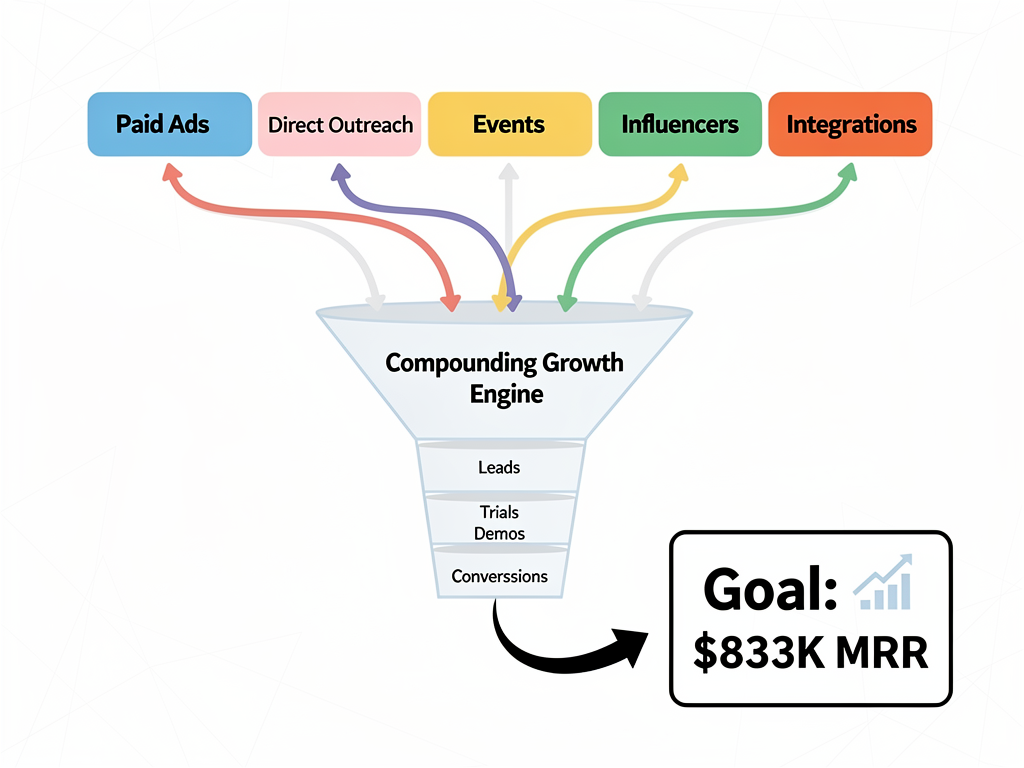
Context: A visual AI product (Arcads.ai) targeting growth marketers who needed to generate unlimited ad variations. The team started with zero users, no funding, and bootstrapped capital.
What they did:
- Validated ICP demand: emailed 100 prospects directly, offered $1K testing, closed 3 of 4 calls in one month.
- Built the product and publicly posted daily on X about it, booking demos from engaged followers.
- A single viral moment (client video) accelerated growth by six months.
- Ran six growth channels in parallel: paid ads, direct outreach, events/conferences, influencer partnerships, coordinated launches, and strategic integrations.
- Each channel reinforced the others; one viral event dramatically boosted performance across all channels.
Results:
- Before: $0 MRR.
- After: $833K MRR ($10M ARR).
- Growth stages: $0→$10K (1 month via validation), $10K→$30K (public posts + demos), $30K→$100K (viral video), $100K→$833K (multi-channel stacking).
Key insight: Early validation with ICPs is worth 10 months of guessing. Stacking channels compounds; single channels are fragile. One viral moment can accelerate growth by half a year.
Source: Tweet
Case 3: $3,806 Revenue Day with AI Copywriting and 4.43 ROAS
Context: An e-commerce business was spending $860 daily on ads but getting mediocre returns. The team switched from relying solely on ChatGPT to using a mix of AI tools optimized for different tasks.
What they did:
- Combined Claude for copywriting (custom ad text and angle testing), ChatGPT for research, and Higgsfield for AI image generation.
- Invested in paid plans for each tool to unlock better outputs.
- Built a simple funnel: engaging image ad → advertorial → product detail page → post-purchase upsell.
- Tested systematically: new desires, new angles, angle iterations, avatars, different hooks and visuals.
Results:
- Before: Not specified, but implied lower margins and ROAS.
- After: $3,806 daily revenue, $860 ad spend, 4.43 ROAS, ~60% margin.
- Growth: Running image ads only (no video), achieving nearly $4K daily revenue per day 121 of the campaign.
Key insight: Using the right tool for the right task (Claude for copy, ChatGPT for research, specialized generators for visuals) beats relying on one AI model. Systematic testing beats guessing.
Source: Tweet
Case 4: 47 Seconds to Generate $4,997 Worth of Ad Creative
Context: A team was spending $267K annually on a content team to generate ad creatives. The output was slow (5 weeks per batch of concepts) and expensive ($4,997 for 5 concepts). They built an AI agent to handle psychological analysis and creative generation.
What they did:
- Built an AI system that analyzed 47 winning competitor ads and extracted 12 psychological triggers.
- Input product details; the system generated psychographic breakdowns, behavior mappings, and hooks ranked by conversion potential.
- Auto-generated visuals natively formatted for each platform (IG, Facebook, TikTok).
- Scored each creative by psychological impact.
Results:
- Before: $267K/year content team, 5 weeks per concept, $4,997 agency fees for 5 concepts.
- After: Production-ready concepts in 47 seconds, unlimited variations, platform-specific visuals.
- Growth: Eliminated expensive agency work; 12+ hooks and platform-native creatives available on demand.
Key insight: Behavioral psychology at scale beats random creative testing. Understanding why something converts matters as much as generating lots of variations.
Source: Tweet
Case 5: $1.2M Monthly Revenue from Theme Pages and AI Video
Context: A team built theme-based content pages using Sora2 and Veo3.1 AI video models. The content was repurposed and consistent; pages existed in specific niches with built-in demand.
What they did:
- Used AI video generators to create consistent theme-page content.
- Applied a repeatable formula: strong scroll-stopping hook → curiosity/value in the middle → clean payoff with product tie-in.
- Focused on niches that already buy; no personal brand or influencer dependency.
- Built a $300K/month roadmap documenting the system step-by-step.
Results:
- Before: Not specified.
- After: $1.2M monthly revenue, $100K+ per page, 120M+ views monthly.
- Growth: Sustainable revenue from reposted content using AI scaling.
Key insight: Consistency in a niche beats virality without direction. Template-based content with proven hooks scales faster than attempting to go viral every post.
Source: Tweet
Case 6: Search Traffic +418%, AI Search +1000%, Zero Ad Spend
Context: An agency was competing in a crowded niche against much larger competitors with multi-million budgets and entire marketing teams. They needed a sustainable, scalable content strategy.
What they did:
- Repositioned content around commercial intent (“best agencies for [service],” “[service] examples,” “[competitor] reviews”) instead of thought leadership.
- Structured every page for AI extraction: TL;DR summaries, question-based H2s, 2–3 sentence answers, lists over opinions.
- Built authority through DR50+ backlinks with contextual anchors and entity alignment (consistent semantic signals across backlinks).
- Optimized for brand and regional visibility with schema markup, team/review pages, and metadata.
- Used semantic internal linking to pass meaning and improve contextual mapping.
- Built 60 AI-optimized “best,” “top,” and “comparison” pages with clean HTML and built-in FAQ sections.
Results:
- Before: Standard organic traffic, minimal AI visibility.
- After: Search traffic +418%, AI search traffic +1000+%, massive growth in ranked keywords, consistent citations in ChatGPT, Perplexity, Gemini, and Google AI Overviews.
- Growth: Compounding results, zero ad spend, 80%+ customer reorder rate.
Key insight: AI search is now worth 10x more than traditional backlink SEO. Structured, extractable content ranks in both Google and LLM systems simultaneously. Entity alignment (brand + niche + region consistency) is critical for AI ranking.
Source: Tweet
Case 7: 5M+ Impressions in 30 Days with Viral Copy System
Context: A marketer was publishing content that got 200 impressions and 0.8% engagement. They wanted to understand viral mechanics and reverse-engineer them.
What they did:
- Analyzed 10,000+ viral posts to extract psychological frameworks (curiosity loops, social proof, scarcity, neuroscience triggers).
- Built a prompt engineering system that turned ChatGPT into a high-level copywriter.
- Used a viral post database with 47+ tested engagement hacks.
- Applied neuroscience-based hooks that made scrolling difficult for viewers.
Results:
- Before: 200 impressions/post, 0.8% engagement, stagnant followers.
- After: 50K+ impressions/post, 12%+ engagement, 500+ daily followers.
- Growth: 5M+ impressions in 30 days.
Key insight: Viral mechanics are learnable and reproducible. Psychology beats quality alone. Understanding why something spreads matters more than hoping it goes viral.
Source: Tweet
Tools and Next Steps
Essential Tools for Building and Scaling Your Exchange
- AI Content and Copywriting: Claude (specialized for long-form copy), ChatGPT (research and brainstorming), Perplexity (competitive research).
- Visual Content: Sora2, Veo3.1 (video generation), Higgsfield (AI image generation), Figma (design).
- Automation Platforms: n8n (workflows), Make (integrations), Zapier (simple automations).
- SEO and Content Research: Ahrefs (keyword research, backlink analysis), SEMrush (competitor tracking), Google Trends (demand validation).
- Community Research: Discord (crypto communities), Reddit (subreddits for your niche), Slack (industry groups).
- Analytics: Google Analytics (traffic), Stripe/Coinbase (payment tracking), Mixpanel (user behavior).
- Email and CRM: Substack (newsletters), ConvertKit (email automation), HubSpot (sales pipeline).
Your 30–90 Day Launch Checklist
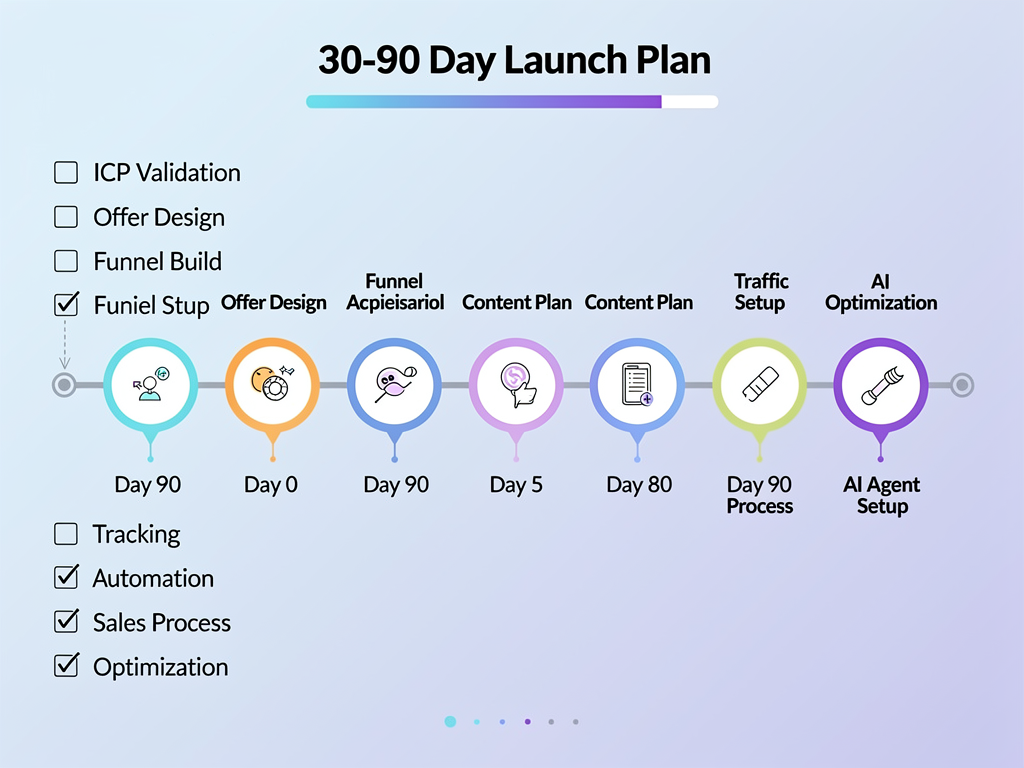
- [ ] Validate ICP demand: Email 100 prospects, offer early access, track close rate. Target 50%+ interest to proceed with full build.
- [ ] Research pain-point keywords: Join communities, read competitor roadmaps, identify high-intent searches. Aim for 20+ keywords with commercial intent.
- [ ] Set up content automation: Build one n8n workflow for blog post generation (keyword → research → outline → draft → internal links). Test with 3 posts.
- [ ] Launch core landing page: Signup, pricing, one 2–3 minute explainer video. Include social proof (if you have early users) and clear CTA.
- [ ] Publish 5–7 foundational blog posts: Write manually, focusing on pain points. Use AI to help scale later. Structure for Google AI Overviews (TL;DR, questions, extractable blocks).
- [ ] Set up paid ads: Create 3–5 variations using your winning content angles. Start with $500/week budget. Track cost-per-signup and repeat winners.
- [ ] Email 50 target prospects: Direct, personal, one-liner offer. Book 10+ demos if positioning resonates.
- [ ] Build internal linking structure: Map which blog posts link to signup, which link to features, etc. Use semantic anchors (“best exchange for traders” instead of “click here”).
- [ ] Track conversions religiously: Which sources bring signup users? Which bring active traders? Double down on converters, kill low-performers.
- [ ] Set up AI agents for content and ads: Build systems for generating blog posts, social media, email sequences, and ad creatives. Aim for 70–80% AI, 20–30% human judgment.
Scaling Beyond Launch
Once you’ve validated PMF and acquired your first 100 users, scale by: (1) doubling down on the channels and messaging that brought high-quality users, (2) adding a second growth channel (if organic works, add paid; if paid works, add events), (3) automating more content and creative production, (4) testing partnerships and integrations with complementary platforms, and (5) tracking and optimizing for active, paying users—not vanity metrics.
For teams looking to accelerate multi-channel growth, influencer outreach, and global positioning, FLEXE.io brings 7+ years in Web3 marketing, 700+ crypto clients, and access to 150+ media outlets and 500+ KOLs—helping you quickly build credibility and reach. DM us on Telegram: https://t.me/flexe_io_agency.
FAQ: Your Questions Answered
How long does it take to start a working crypto exchange?
Product build: 3–6 months for a functional MVP. Compliance and licensing: 2–12 months depending on jurisdiction. User acquisition: starts immediately. One team reached $925 MRR in 69 days using organic traffic; another took 18 months to hit $10M ARR using multi-channel growth. Speed depends on your resources, market timing, and positioning.
What’s the cheapest way to start a crypto exchange?
Use existing infrastructure (white-label exchanges like Chainalysis, Liquidity, or custom APIs) instead of building from scratch. Outsource compliance and KYC to specialized vendors. Automate marketing and content using AI tools ($500–$2K monthly) instead of hiring teams ($15K–$30K monthly). One team spent under $10K to launch a lead-gen site that scaled to $20K/month profit using domain, AI, and affiliate offers.
Should I hire a marketing team or use AI automation?
For a new exchange: use AI automation for 70–80% of routine work (content, ads, emails) and hire one strategic operator. This costs $2K–$5K monthly vs. $15K–$30K for a team, and scales faster. As you grow and need strategy, brand, and community—add humans. One founder replaced a $250K team with four AI agents and saved budget for product and partnerships.
How do I find users for my exchange?
Combine four channels: (1) organic search (target pain points and alternatives), (2) paid ads (test variations, focus on high-intent keywords), (3) direct outreach (email target prospects, book demos), (4) events and partnerships (attend conferences, integrate with related tools). One platform grew to $833K MRR stacking these six channels. No single channel is reliable alone.
What’s the most important metric for an exchange?
Not sign-ups or traffic. Track active traders (users who completed at least one trade) and trading volume per user. These predict lifetime value and retention. One team realized some pages brought 100 visitors and 5 paying users; others brought 2,000 visitors and zero. They doubled down on the first type. Volume without quality is expensive and unsustainable.
How can I rank my exchange content in Google and AI systems?
Structure for extraction: TL;DR summary at the top, question-based headings, short 2–3 sentence answers, lists over opinions, and schema markup. Build authority through contextual backlinks from niche-aligned sites. Use semantic internal linking (anchor text that matches intent, not generic “click here”). One client saw search traffic grow 418% and AI search 1000%+ using this approach alone.
Can I start a crypto exchange without compliance?
No—not if you handle real assets or fiat on-ramps. You’ll need licenses (MSB in US, e-money in EU, etc.), KYC/AML processes, and audit trails. However, some jurisdictions (El Salvador, some regions) have lighter requirements. And decentralized exchanges (DEXs) have different regulatory paths. Consult a crypto lawyer in your target market before building. This is non-negotiable.