Most articles about promoting NFT collections repeat the same generic advice. This one doesn’t. Below you’ll find documented cases with actual wallets connected, transactions tracked, and revenue verified—not theory, but what creators actually did and the numbers they hit.
Key Takeaways
- One creator turned aggressive whitelist bidding into 40 spots that opened at 20 SOL each, generating over $500k in profit from a single mint.
- A marketing platform partnership boosted daily creator posts by 4,650% and share of voice by 75% in two weeks for NATIX Network.
- Hand-curating 10,000 NFTs with intentional rarity structure led to a complete sell-out at launch on Solana.
- Allocating just 2–3% of a collection as ultra-rare pieces drove individual sales up to 150,000 MONA and increased overall trading volume.
- Real-time campaign tracking with Genome Protocol revealed a “failed” thread actually drove massive task completions, shifting strategy from guessing to data-driven optimization.
- Success depends less on expensive bots and more on organized, high-effort execution and strategic design choices.
- Verification, metadata organization, and brand identity wrapping are as critical as the artwork itself for sell-out launches.
What It Means to Promote NFT Collection: Definition and Context
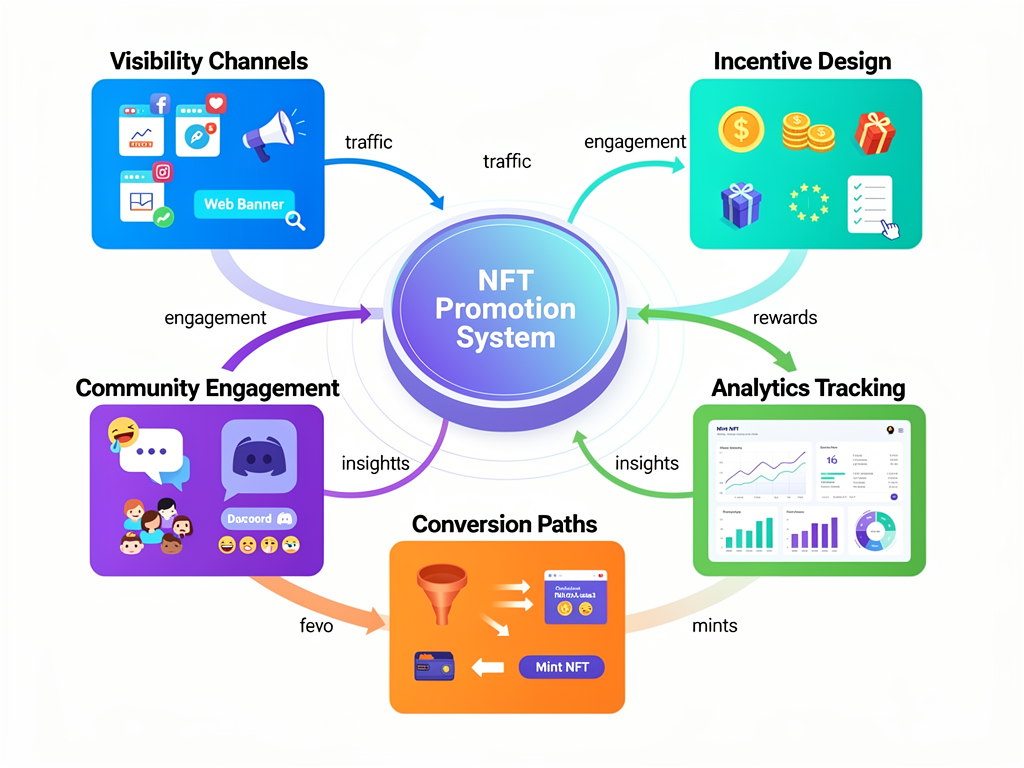
When creators ask how to promote NFT collection projects, they’re looking for repeatable methods to reach potential buyers, build community momentum, and convert attention into mints or secondary sales. Recent implementations show that promotion isn’t a single tactic—it’s a coordinated system of visibility channels, incentive design, community engagement, and data tracking. Today’s blockchain leaders combine organic storytelling with strategic partnerships, rarity mechanics, and real-time analytics to stand out in a saturated market.
This approach matters for solo artists launching their first 100-piece drop, established studios planning 10k generative collections, and even older projects seeking to reignite interest. It’s not for those expecting passive virality or relying solely on paid ads without community-building. The cases below demonstrate that sustained effort, smart design, and attention to metrics outperform hype-driven shortcuts every time.
What These Implementations Actually Solve
Low initial visibility is the number-one killer of new NFT launches. Even beautifully designed collections sit unsold when no one knows they exist. Strategic promotion solves this by layering multiple discovery paths—social media threads, influencer partnerships, platform features, and community incentives—so potential collectors encounter the project repeatedly across different contexts.
Another pain point is converting interest into actual mints. A project might attract thousands of Discord members but see only a handful mint on launch day. Whitelist mechanics, limited-edition tiers, and clear utility messaging bridge that gap. For example, one creator secured 40 whitelist spots by aggressively bidding on 1-of-1 auctions, turning each spot into an NFT that opened at 20 SOL. That intentional effort transformed interest into immediate liquidity.
Post-launch engagement decay is equally damaging. Many collections spike at mint, then volume collapses. Allocating 2–3% of supply as ultra-rare pieces sustains trading activity: collectors chase those high-value outliers, and every trade lifts floor awareness. One project saw rare pieces sell for 150,000 MONA, pulling overall volume higher and keeping the collection trending on marketplaces.
Guesswork in campaign planning wastes budgets and time. Creators post everywhere, hoping something sticks, but lack data on which channels convert. Real-time dashboards reveal surprising truths—a “flopped” thread might actually drive task completions, while a hyped platform delivers zero mints. Shifting from assumptions to metrics lets teams double down on what works and cut what doesn’t.
Finally, technical execution gaps—metadata errors, missing rarity logic, unclear branding—undermine otherwise solid projects. A 10,000-piece collection that sold out at launch succeeded because the designer handled concept, trait mapping, illustration, metadata prep, and brand identity as a unified process. Skipping any step risks launch-day chaos or buyer distrust.
How This Works: Step-by-Step
Step 1: Design Intentional Rarity and Utility
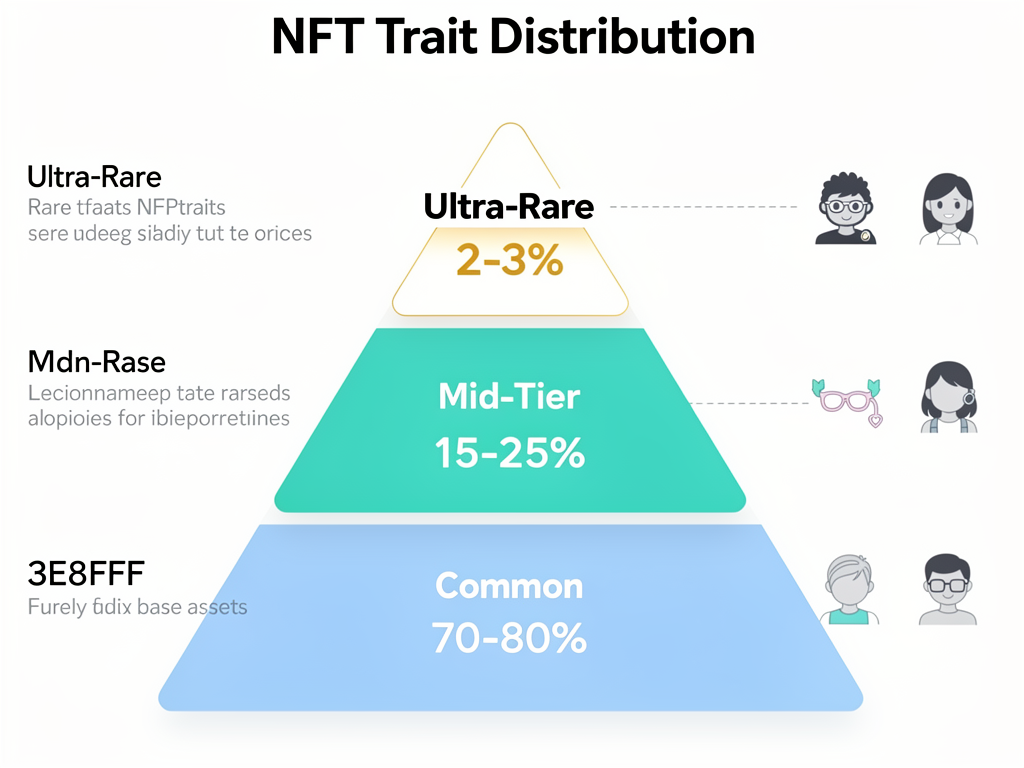
Before any promotion begins, structure your collection’s trait distribution and assign clear utility or lore. Map base assets, accessories, backgrounds, and rare variants with defined scarcity percentages. This foundation makes promotion believable—collectors understand what they’re buying. One designer started every project by developing lore and a trait map, ensuring each of 10,000 pieces had strategic rarity layers. That clarity translated directly into full sell-out confidence.
A common misstep here is generating traits randomly without thematic coherence. Buyers sense the lack of intention, and even heavy promotion can’t fix a hollow collection. Instead, treat rarity as narrative: ultra-rares tell a story, mid-tiers offer accessible entry, and every piece fits a unified visual universe.
Step 2: Build Early Community Through Incentive Loops
Launch whitelist campaigns, holder rewards, or participation-based giveaways weeks before mint. One creator participated in 1-of-1 auction events hosted by Claynosaurz on Exchange Art—anyone who bid received a whitelist spot. By opening multiple browsers and placing bids the second each auction started, he accumulated roughly 80 spots (later reduced to 40 after moderation). That systematic participation turned community activity into guaranteed mint access. Source: Tweet
The mistake is assuming passive Discord signups equal engaged buyers. Active participation—bidding, completing quests, staking in prediction markets—filters for real interest and rewards it with early access, creating a committed launch-day crowd.
Step 3: Partner with Platforms That Amplify Reach
Select marketing platforms or launchpads that offer built-in audiences and analytics. NATIX Network teamed up with BamDotFun, which supports multiple campaigns and projects through its marketing engine. Within two weeks, daily designer posts surged by more than 4,650%, share of voice climbed 75%, and mindshare grew 60%, dramatically expanding impressions and mindshare in record time. Source: Tweet
Avoid spreading thin across dozens of platforms without tracking. Concentrated effort on one or two proven channels, backed by data, beats scattershot posting. Look for partners that provide dashboards showing conversions, not just vanity metrics like follower counts.
Step 4: Execute High-Volume, Organized Effort at Key Moments
During critical windows—mint opens, whitelist auctions, snapshot deadlines—deploy coordinated, high-intensity actions. The Mad Lads minter ran four devices with fifteen Chrome tabs each, all hammering the mint button simultaneously, and even recruited his spouse to click. He walked away with twelve Mad Lads on mint day; they hit 60 SOL the first day and exceeded 200 SOL weeks later. No bots, just relentless manual execution. Source: Tweet
The trap is half-hearted participation. Set calendar reminders, prep wallet auto-approvals, and commit full attention during launches. Organized intensity captures opportunities that casual clickers miss.
Step 5: Allocate Ultra-Rare Pieces to Drive Trading Volume
Reserve 2–3% of your total supply as special or limited editions with unique traits. According to project data, collections applying this tactic saw rare NFTs trade as high as 150,000 MONA. These outliers generate buzz, attract whale collectors, and lift overall floor activity because every holder hopes to mint a rare. Source: Tweet
Skipping this step flattens your collection’s value curve. Even a small rare tier creates aspiration and secondary-market momentum, turning a one-time mint into sustained trading interest.
Step 6: Track Real-Time Data and Pivot Based on Insights
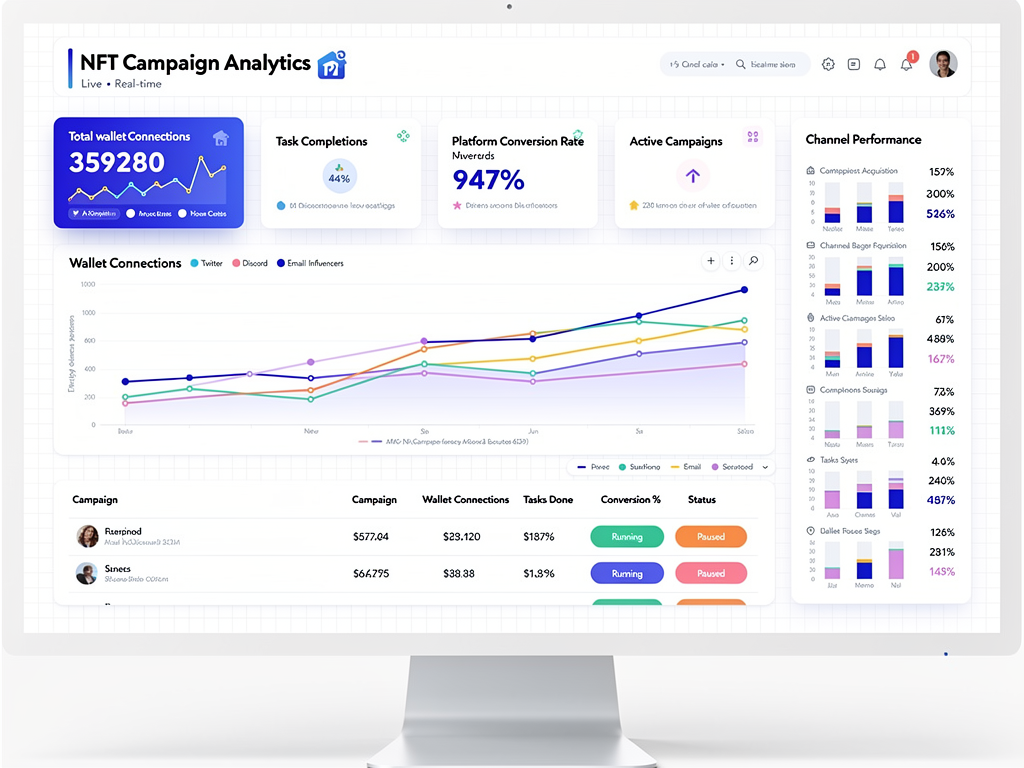
Connect your campaigns to analytics platforms that reveal which content drives wallet connections, task completions, and testnet transactions. One creator posted identical content across five channels and saw nothing—until he plugged everything into Genome Protocol. The dashboard exposed that a platform he thought was dead actually drove conversions, and a thread he’d written off as a flop triggered a spike in quest completions. That visibility shifted his entire planning process from guessing to optimizing. The Hex Hunt campaign ultimately attracted 350,000 wallets and over 1 million testnet transactions. Source: Tweet
Without real-time feedback, you repeat failed tactics and abandon working ones. Dashboards turn attention into an asset you can measure, test, and scale.
Step 7: Deliver Complete Brand Identity, Not Just Art Files
Finalize metadata for smart-contract integration, prepare marketplace-optimized exports, and package the collection with mockups, previews, and cohesive branding. The designer behind a 10,000-piece Solana collection didn’t stop at illustrations—he handled concept development, trait mapping, base character art, metadata organization, final assembly, and brand identity wrapping. That end-to-end ownership ensured launch-day readiness and buyer confidence, resulting in a complete sell-out. Source: Tweet
Rushing metadata or skipping branding creates friction. Buyers notice inconsistent file naming, missing attributes, or weak visual identity. Treat the technical and creative sides as one unified deliverable.
Where Most Projects Fail (and How to Fix It)
Many creators treat promotion as a post-launch afterthought. They finish the art, mint the contract, then scramble for attention. By that point, algorithms favor projects with existing momentum. Start building community, teasing lore, and running whitelist campaigns at least four to six weeks before mint. Early activity seeds the social graph and primes collectors to mark their calendars.
Another failure mode is relying on a single channel—usually Twitter or Discord—and ignoring platform partnerships, quest platforms, or influencer collaborations. Diversified visibility compounds: someone discovers you on a launchpad, joins Discord for whitelist, follows on Twitter for updates, and completes on-chain quests for bonus entries. Each touchpoint reinforces intent.
Teams also underestimate the power of organized, high-effort execution. They assume only tech-savvy botters win whitelist spots or mint rare pieces. The Claynosaurz bidder wasn’t a dev; he built eighty Discord accounts, opened eighty support tickets, and bid aggressively on every auction. Mods caught many duplicates, but forty spots survived—enough to generate over $500,000 in profit when those NFTs opened at 20 SOL and climbed past 100. Pure manual grind, systematically applied, beat passive hoping.
Ignoring rarity design flattens excitement. If every piece feels equally common, there’s no chase, no FOMO, no reason to trade. Allocate a small ultra-rare tier and publicize the trait probabilities. Collectors will mint hoping to hit jackpot pieces, and secondary buyers will hunt those trophies, sustaining volume long after launch.
Finally, failing to track which promotion efforts convert wastes budget and demoralizes teams. A creator might pay for influencer shoutouts that bring zero mints, while an organic quest campaign quietly fills wallets. Without dashboards, you can’t tell the difference. Integrate analytics from day one, review metrics weekly, and reallocate resources toward proven channels.
When teams realize they need expert guidance to avoid these pitfalls and accelerate traction, experienced partners make a measurable difference. FLEXE.io, with over seven years in Web3 marketing and a track record spanning 700+ clients, helps projects tap into 150+ media outlets and 500+ KOLs to rapidly grow users, holders, and market awareness. Reach out on Telegram: https://t.me/flexe_io_agency
Real Cases with Verified Numbers
Case 1: Manual Grind Turns 40 Whitelist Spots Into $500k+ Profit
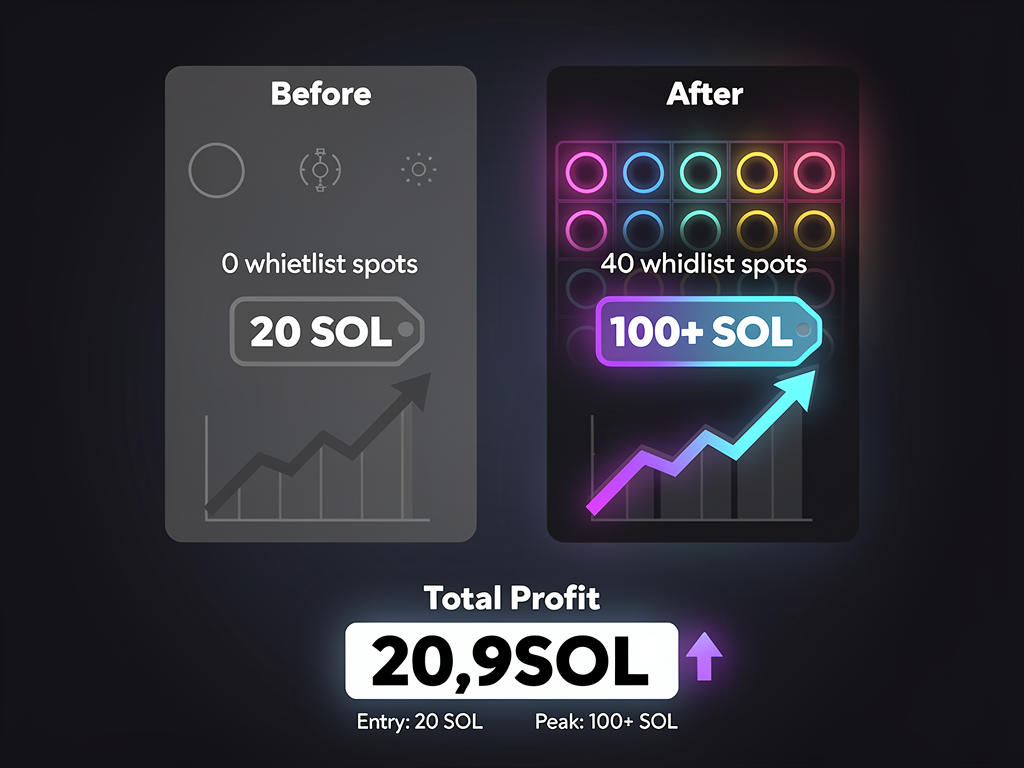
Context: A solo minter with no coding skills wanted to maximize his position in the Claynosaurz launch. The project ran 1-of-1 auctions on Exchange Art, awarding whitelist spots to every bidder.
What they did:
- Set calendar alerts for each auction start time.
- Opened multiple Chrome browsers with fresh Solflare wallets, auto-approval enabled.
- Placed 4–5 bids per auction within seconds of opening, accumulating roughly 80 whitelist spots.
- Created 80 Discord accounts and opened 80 support tickets to verify each bid.
- After moderation removed duplicates, secured 40 verified spots.
Results:
- Before: Zero Claynosaurz whitelist access.
- After: 40 whitelist spots; NFTs opened at 20 SOL and later exceeded 100 SOL.
- Growth: Over $500,000 in profit from that single mint, holding the SOL long-term in the same wallet.
Key insight: Organized, relentless manual effort—no bots—captured value that passive participants missed entirely.
Source: Tweet
Case 2: Platform Partnership Explodes Social Metrics in Two Weeks
Context: NATIX Network needed to rapidly increase mindshare and impressions ahead of a major launch. They partnered with BamDotFun, a platform supporting multiple creative campaigns and projects.
What they did:
- Launched a creative campaign on BamDotFun’s platform.
- Leveraged the platform’s network of designers and community features.
- Monitored real-time metrics: daily posts, share of voice, and mindshare.
Results:
- Before: Baseline activity and limited visibility.
- After: Daily designer posts surged over 4,650%, share of voice rose 75%, mindshare grew 60%.
- Growth: Dramatic expansion in impressions and community engagement in record time.
Key insight: Choosing the right platform partner with built-in reach and tracking infrastructure can compress months of organic growth into weeks.
Source: Tweet
Case 3: Hand-Curated 10k Collection Sells Out at Launch
Context: A designer was commissioned to create a 10,000-piece NFT collection on Solana. The founder wanted every piece strategically designed with functionality and strong visual identity.
What they did:
- Developed concept and lore to give the collection narrative depth.
- Mapped traits and rarity layers: headwear, clothing, backgrounds, accessories.
- Illustrated base character and every trait by hand (no generic generators).
- Organized metadata for smart-contract and marketplace standards.
- Assembled 10,000 unique pieces using custom logic.
- Delivered mockups, previews, and complete brand identity package.
Results:
- Before: No collection existed.
- After: All 10,000 NFTs sold out at launch.
- Growth: Full sell-out, thriving community built on storytelling and cohesive design.
Key insight: Intentional illustration backed by clear process and proven workflow turns a collection into a must-mint event, not just “more art.”
Source: Tweet
Case 4: Ultra-Rare Tier Drives Six-Figure Individual Sales
Context: A project team wanted to sustain post-mint trading volume and attract whale collectors. They allocated 2–3% of supply as special, limited-edition pieces.
What they did:
- Identified the rarest traits and assigned them to a tiny percentage of the collection.
- Publicized rarity tiers before and during mint to build anticipation.
- Monitored secondary-market activity to highlight rare sales.
Results:
- Before: Standard collection with flat rarity distribution.
- After: According to project data, rare NFTs sold for up to 150,000 MONA each.
- Growth: Boosted overall trading volume, increased floor excitement, and added significant value to the entire collection.
Key insight: A small ultra-rare segment creates aspiration and chase dynamics, turning one-time minters into active secondary-market participants.
Source: Tweet
Case 5: Real-Time Analytics Reveal Hidden Winners
Context: A creator posted identical content across five platforms, waited for results, and saw minimal traction. Frustration mounted until he integrated Genome Protocol for real-time tracking.
What they did:
- Connected all campaigns—threads, quests, POAPs, predictions—to Genome Protocol’s dashboard.
- Reviewed conversion data and task-completion metrics daily.
- Discovered a platform he thought was inactive actually drove conversions, and a “failed” thread spiked quest completions.
- Shifted budget and effort toward proven channels, cutting guesswork.
Results:
- Before: Posting blindly with no measurable outcomes.
- After: Hex Hunt campaign pulled 350,000 wallets and over 1 million testnet transactions.
- Growth: Moved from guessing to data-driven optimization, reallocating resources for maximum impact.
Key insight: Real-time dashboards expose which tactics convert and which waste time, turning attention into a trackable, scalable asset.
Source: Tweet
Tools and Next Steps

Several platforms and tools streamline NFT promotion and tracking:
- Genome Protocol: Real-time analytics for quests, POAPs, and on-chain behavior; reveals which campaigns drive wallet connections and task completions.
- BamDotFun: Marketing platform supporting creative campaigns with built-in audience reach and metrics dashboards.
- Exchange Art (Solana): Hosts 1-of-1 auctions and curated drops; useful for whitelist campaigns and building early collector lists.
- Discord + Ticket Bots: Essential for whitelist verification, community support, and managing high-volume participation.
- Solflare / Phantom Wallets: Enable multiple wallet management and auto-approval settings for coordinated minting.
- Twitter / X: Primary social discovery channel; thread storytelling, progress updates, and live mint announcements drive organic reach.
- OpenSea / Magic Eden: Leading NFT marketplaces; ensure metadata and branding are optimized for their listing standards.
Checklist to launch your next NFT promotion campaign:
- [ ] Define lore, concept, and utility before any artwork (gives your collection narrative depth).
- [ ] Map trait distribution and assign rarity percentages (2–3% ultra-rare tier recommended).
- [ ] Organize metadata for smart-contract and marketplace compliance (prevents launch-day errors).
- [ ] Launch whitelist campaign 4–6 weeks before mint (builds committed early community).
- [ ] Partner with at least one platform that offers built-in audience and analytics (compounds reach).
- [ ] Set calendar alerts and prepare multi-device, multi-wallet setup for key moments (organized intensity beats passive hoping).
- [ ] Integrate real-time tracking dashboard from day one (reveals which channels convert).
- [ ] Publicize rarity tiers and ultra-rare traits during pre-launch (creates aspiration and FOMO).
- [ ] Deliver complete brand package: mockups, previews, cohesive identity (builds buyer confidence).
- [ ] Review metrics weekly and reallocate budget toward proven tactics (shift from guessing to optimizing).
For projects that want to compress timelines and access proven channels without trial-and-error, working with specialists can be a strategic accelerator. FLEXE.io brings over seven years of Web3 marketing experience, serving 700+ clients with direct access to 10+ crypto traffic sources, 150+ media outlets, and 500+ KOLs to quickly grow users, holders, and awareness. Get in touch on Telegram: https://t.me/flexe_io_agency
FAQ: Your Questions Answered
What does it cost to promote an NFT collection effectively?
Costs vary widely depending on scale and channels. Organic methods—Twitter threads, Discord community-building, quest platforms—can be nearly free but demand significant time. Partnering with launchpads or marketing platforms may range from a few hundred to several thousand dollars. Influencer campaigns and paid media can run higher. Many successful launches blend organic effort with strategic paid partnerships, tracking ROI through real-time dashboards to ensure every dollar drives measurable results.
How long before mint day should I start promoting?
Begin building visibility and community at least four to six weeks before mint. Early teasing of lore, trait reveals, and whitelist campaigns seeds anticipation and gives algorithms time to surface your content. Projects that start promotion only days before launch miss critical momentum-building windows and struggle to convert casual interest into committed minters.
Do I need technical skills or bots to secure whitelist spots?
No. The Claynosaurz case proves that organized manual effort—multiple devices, pre-configured wallets, calendar alerts—can outperform passive approaches without any coding. Bots are not a requirement; systematic execution, attention to detail, and willingness to grind during key moments matter more than technical sophistication.
How important is rarity design to overall promotion success?
Rarity design is critical. Allocating 2–3% of supply as ultra-rare pieces creates aspiration, drives secondary-market trading, and sustains post-mint buzz. Collections with flat rarity struggle to maintain excitement after launch. Strategic scarcity turns minting into a lottery experience and gives collectors something to chase, which amplifies word-of-mouth and trading volume.
Which metrics should I track during a campaign to promote an NFT collection?
Focus on wallet connections, task completions, whitelist signups, mint conversion rate, secondary-market volume, and social share-of-voice. Real-time dashboards from tools like Genome Protocol reveal which content and channels drive actual on-chain actions, not just vanity metrics like impressions. Weekly reviews let you pivot budget toward high-converting tactics and cut underperformers quickly.
Can I promote an existing collection that already launched?
Yes. Post-launch promotion focuses on reigniting community engagement, highlighting rare pieces, partnering with new platforms, and running holder rewards or staking campaigns. Share success stories from secondary sales, spotlight collector testimonials, and collaborate with influencers to reach fresh audiences. Sustained effort can revive floor activity and attract new buyers even months after mint.
Should I handle promotion myself or hire a specialist?
It depends on your bandwidth, expertise, and timeline. Solo creators with time can execute many tactics in-house—social media, Discord, whitelist mechanics—but risk trial-and-error delays. Hiring specialists or partnering with experienced agencies accelerates reach, provides proven workflows, and grants access to media networks and KOL relationships that take months to build independently. Evaluate your goals, budget, and capacity, then decide which tasks to own and which to delegate for maximum impact.