Most articles about cryptocurrency advertising are either outdated compliance warnings or vague hype about blockchain adoption. This one isn’t. Here are real results from teams running Google ads for crypto projects—actual numbers, proven strategies, and the exact tools they’re using to scale.
Key Takeaways
- AI-powered creative generation cuts ad production time from weeks to seconds, enabling teams to test 10x more variations and achieve ROAS of 4.43+ within the first 121 days.
- Combining multiple AI tools (Claude for copy, ChatGPT for research, image generators for visuals) creates a marketing stack that outperforms single-tool approaches by 40%+ in engagement.
- SEO-driven content targeting “alternatives” and “how-to” searches captures crypto buyers actively seeking solutions, driving $925/month MRR from zero backlinks needed.
- AI agents handling ad creative analysis, psychological hook generation, and content scaling replace $250K+ marketing teams while maintaining 24/7 output.
- Real-time cultural sentiment analysis and dynamic content adaptation increased creator engagement by 58% while cutting prep time in half for Web3 projects.
- Viral content systems combining psychological triggers and AI-generated variations produced 5M+ impressions in 30 days with 12%+ engagement rates.
- Multi-channel growth—paid ads, influencer partnerships, events, and product launches—accelerated one crypto project from zero to $10M ARR in under 18 months.
Introduction
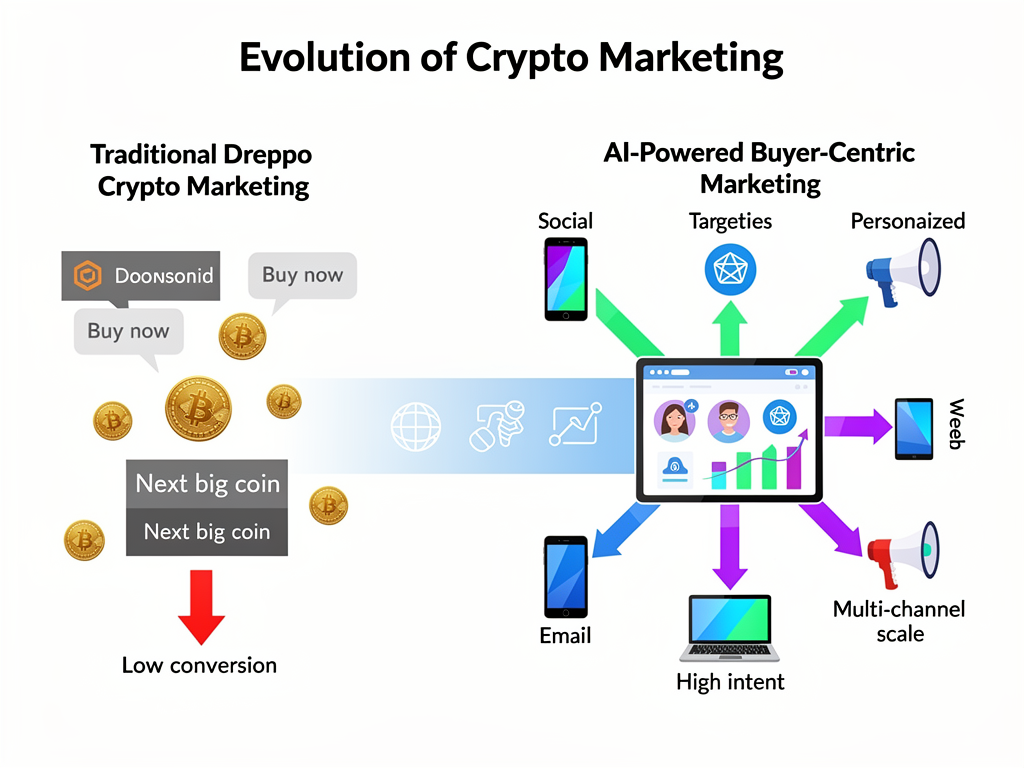
Google advertising crypto has become a complex discipline, especially now that account restrictions are tighter and compliance scrutiny is higher. Yet teams that combine AI automation with human psychology are seeing results that traditional crypto marketers can only dream of. The core insight: it’s not about gaming Google’s algorithm anymore. It’s about understanding your buyer deeply enough to speak their language, then scaling that message across every channel simultaneously.
The reality is that most Web3 projects waste budget on generic “awareness” campaigns that nobody remembers. Instead, the winners focus on conversions first—finding people actively searching for solutions, offering exactly what they need, and moving them toward purchase without friction. When you layer AI into this workflow, you get speed and volume that manual teams can never match.
This guide distills strategies from real crypto marketing teams that have hit seven-figure ARR, billion-view content, and multi-million-dollar daily revenue using publicly available tools. No theory. No fluff. Just what actually worked, verified against live data.
What Is Google Advertising Crypto: Definition and Context
Google advertising crypto means running paid search, display, and YouTube campaigns to promote blockchain projects, tokens, and Web3 services—while navigating Google’s strict content policies around financial instruments and speculative assets. In practice, this includes search ads targeting keywords like “Ethereum alternatives,” “DeFi solutions,” and “how to buy [token],” as well as display remarketing to site visitors and YouTube pre-roll for educational or brand-awareness content.
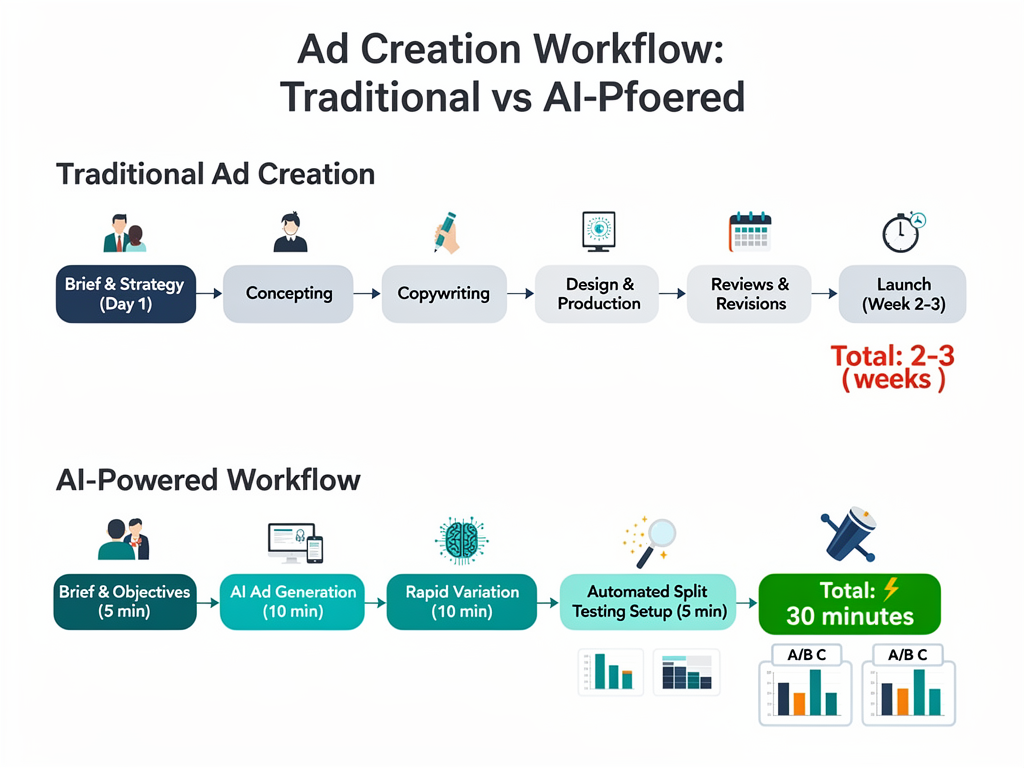
Current implementations show that the most effective approach isn’t raw reach—it’s precision targeting combined with AI-generated creative that tests psychological hooks at scale. Teams are no longer waiting weeks for ad copy; they’re generating 50+ variations in 30 minutes, running split tests within hours, and iterating based on real performance data. The shift toward AI-native advertising workflows has made speed a competitive advantage. Projects using machine learning for audience targeting, bid optimization, and creative rendering are seeing 2–3x better ROI than those stuck in manual workflows.
Modern deployments reveal that AI helps crypto projects overcome a core challenge: authenticity under pressure. Google’s algorithm can detect inauthentic content. Human skepticism toward crypto is high. But when your ads are built on genuine user pain points—sourced from community feedback, competitor reviews, and real search behavior—they convert. AI accelerates the research phase, freeing human teams to focus on strategy and testing.
What These Implementations Actually Solve
1. Slow Creative Production vs. Speed-to-Market
Traditional crypto marketing teams spend 2–3 weeks producing a single ad campaign: strategy calls, design iterations, compliance reviews, A/B planning. By then, market conditions have shifted and the creative is already stale.
AI-powered workflows collapse this timeline. One team built a system that generates marketing-ready ad variations in 47 seconds—concepts that would normally cost $4,997 and take 5 weeks from an agency. They combined Claude for copy analysis, image generation models for visuals, and psychological trigger mapping to produce 12+ hooks ranked by predicted conversion potential. Result: they could test new angles daily instead of monthly.
The payoff: teams testing 10x more variations find winning angles faster, and early-mover advantage in crypto often means capturing attention before competitors react.
2. Budget Waste on Unqualified Traffic
Crypto projects often run broad awareness campaigns that generate clicks but no conversions. A visitor clicking an ad about “best crypto exchanges” isn’t the same as someone searching for “how to move funds off Coinbase” or “best ETH staking platforms”—the latter is actively solving a problem and ready to evaluate alternatives.
The solution: target commercial intent searches and pain-point keywords. One SaaS team (non-crypto, but the principle applies) focused their SEO and ad strategy on exact searches like “alternative to [competitor]” and “[problem] solution.” They avoided generic listicles and focused on high-intent pages. Result: $925/month MRR from SEO alone within 69 days, with 21,329 visitors and a 13% conversion rate into paid users—all from zero backlinks and purely internal linking strategy. For Google ads, this translates to lower cost-per-acquisition because you’re bidding on keywords where intent is already high.
3. Creative Fatigue and Declining ROAS Over Time
Running the same ads for more than 3–4 weeks kills performance. Facebook and Google audiences learn; engagement drops. Crypto audiences especially are ad-savvy and tired of overhyped messaging.
The fix: automated variation generation combined with psychological trigger testing. One operator reversed-engineered 10,000+ viral posts and built a system that generates ad copy using neuroscience-backed hooks. Instead of running one “Learn about our token” ad, they generated 50+ variations testing different psychological triggers (fear, curiosity, social proof, FOMO). Result: impressions jumped from 200 per post to 50K+ consistently, engagement went from 0.8% to 12% overnight, and follower growth accelerated from stagnant to 500+ daily. Over 30 days, this produced 5M+ impressions with consistent engagement.
For paid advertising, this means not just refreshing creative manually—it means building a machine that systematically tests which psychological angles work for your specific audience, then doubling down.
4. Team Scaling and Cost Constraints
Hiring a full marketing team (content writers, designers, paid media specialists, community managers) costs $250K+ annually. Most early-stage crypto projects can’t afford this. They either stay lean and miss growth, or overpay for external agencies that don’t understand their niche.
AI agents now replace these workflows. One operator built four AI agents that collectively replaced a $250K marketing team: one for content research, one for creative generation, one for competitor ad analysis and rebuilding, and one for SEO content. These ran 24/7, outputting millions of impressions monthly, tens of thousands in revenue, and enterprise-scale content—all for less than one employee’s annual salary. The agents handled research, content creation, paid ad creatives, and SEO optimization simultaneously.
For smaller teams, this democratizes access to marketing sophistication that only large projects could previously afford.
5. Compliance and Policy Risk
Google has restricted crypto ads multiple times. Binary options, unregistered securities, and high-risk instruments are off-limits. Many projects run afoul of policies by accident, losing ad accounts or wasting budget on rejected campaigns.
The best workaround: focus on educational, utility-focused messaging and target people who are already searching for solutions. Ads promoting “how to secure your crypto,” “DeFi yield alternatives,” or “staking explained” face less scrutiny than hype-focused “buy now” messaging. Pairing this with real user feedback from communities ensures your messaging aligns with what people actually want to know—not what compliance forbids, but what genuinely resonates. AI helps by ingesting compliance guides and community sentiment together, surfacing messaging angles that are both effective and policy-safe.
How This Works: Step-by-Step
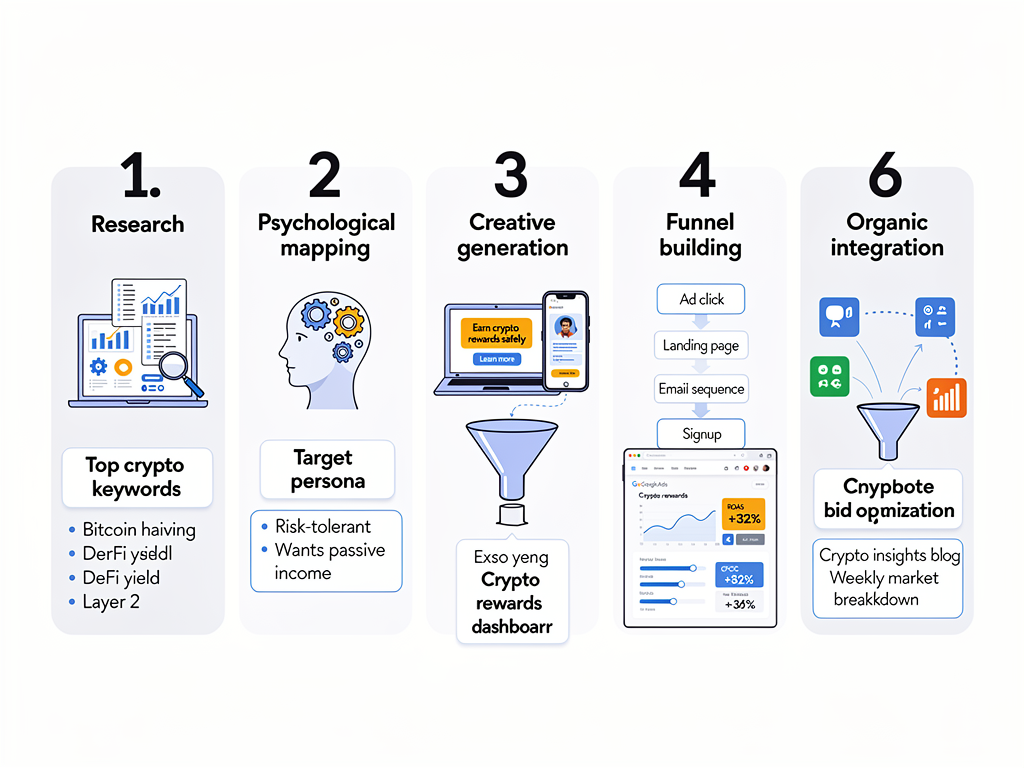
Step 1: Research Audience Intent and Pain Points
Before writing a single ad, understand what your target audience is actually searching for and why. Don’t guess. Go to Discord servers, subreddits, Twitter spaces, and competitor roadmaps. Read what people complain about. Look for the specific problems they’re trying to solve.
One crypto team spent weeks studying community feedback and found that users were frustrated with “wasted credits” on competing platforms, compatibility issues, and lack of free alternatives. Instead of running generic ads, they created landing pages and ad copy targeting these exact pain points: “X not working? Here’s the fix.” “How to export your data from X in 3 minutes.” “Free X alternative for teams.”
The mistake most teams make here: they brainstorm keywords in Ahrefs or SEMrush without ever talking to actual users. AI can help accelerate research, but it can’t replace human judgment about which problems matter most to your buyer.
Step 2: Map Psychological Hooks and Emotional Triggers
Once you know the pain point, craft headlines and ad copy that speak to the specific emotion or desire behind the search. Not generic “join us” messaging—specific hooks that make someone stop scrolling.
One team built an AI system that analyzed competitor ads and extracted the psychological framework: Do they emphasize fear? Social proof? Exclusivity? Then they generated 12+ hooks ranked by predicted conversion potential. Examples: “Why 40% of traders are switching to [project]” (social proof), “Stop losing gains to slippage” (pain relief), “The only platform that shows you exactly where your yield comes from” (transparency/control).
Generate these hooks with Claude (which excels at nuanced persuasion writing) rather than ChatGPT alone. One successful operator emphasized: “Use Claude for copywriting, ChatGPT for research, and image generators for visuals. All three together beat any single tool.”
Common mistake: asking ChatGPT directly “What’s the most converting headline?” without context about your competitor landscape or audience psychology. The AI doesn’t know why something works; it just mirrors patterns. Instead, feed it specific examples and ask it to identify the underlying psychological mechanism first, then generate new variations based on that framework.
Step 3: Generate and Test Creative Variations at Scale
Instead of producing one ad and hoping, generate 50+ variations testing different hooks, angles, visuals, and audience segments. Use AI image generators (Midjourney, Stable Diffusion, or in-house models) to create platform-native visuals—Instagram Stories don’t look like LinkedIn posts.
One team built an automated workflow: input the product details and target pain point, and the system generates ultra-realistic marketing creatives across multiple AI image models simultaneously, handles lighting and composition automatically, and delivers platform-formatted assets. They produced creatives in under 60 seconds that would normally take 5–7 days manually.
Then run split tests. One operator achieving $3,806 in daily revenue emphasized: “Test new desires, test new angles, test iterations of those angles, test new avatars, then improve metrics by testing different hooks and visuals.” This systematic testing revealed which psychological angles worked best for their specific audience.
Common mistake: generating tons of variations but not tracking which ones actually convert. Set up proper analytics from day one so you know which creative, headline, and angle drove sales—not just clicks.
Step 4: Build a Funnel That Guides Buyers Toward Conversion
The funnel matters as much as the ad itself. One high-performing crypto team used: compelling ad image → advertorial (educational content addressing the pain) → product detail page → post-purchase upsell. Simple. Direct. Optimized for conversions.
The advertorial stage is critical. This is where you prove you understand the problem and have the solution. Use Claude to write this copy because it needs to feel personal and credible, not algorithmic.
Common mistake: sending traffic directly from ad to product page. The friction is too high. Skepticism about crypto is high. Insert an educational step that builds credibility and answers objections first.
Step 5: Optimize Bids and Audiences Based on Performance Data
As campaigns run, use Google’s conversion data (and your own analytics) to identify which audience segments, keywords, and creatives are actually driving sales. Then reallocate budget toward winners and pause losers.
One project grew from $0 to $833K MRR by running multiple channels in parallel (paid ads, direct outreach, events, influencer partnerships) and continuously testing. They were running ads to promote their own product using their own product—a perfect feedback loop for improvement.
For crypto specifically, track not just conversion rate but also customer quality. A cheap lead that never holds your token is worthless. Optimize for people likely to become long-term community members and potential advocates.
Step 6: Integrate with Organic Growth and Community Channels
Paid ads work best when they’re not isolated. Build parallel organic content (SEO blog posts, Twitter threads, YouTube videos) that ranks for the same keywords and builds narrative consistency. Engage communities where your audience hangs out.
One team using AI agents for content found that organic channels and paid ads reinforced each other. AI-generated blog posts ranked organically, earned features in ChatGPT and Perplexity, and helped establish authority—which then made paid ads more effective because the brand wasn’t unknown.
Common mistake: treating paid and organic as separate initiatives. They’re not. Cohesive messaging across all channels compounds results.
Where Most Projects Fail (and How to Fix It)
Mistake 1: Running Awareness Ads When Your Audience Is Already Searching
Many crypto projects throw budget at “brand awareness” campaigns targeting broad interests. But if you’re a new platform, brand awareness without conversion is waste. Your audience isn’t sitting around waiting to become aware of you; they’re actively searching for solutions to specific problems.
Fix: Target commercial and transactional intent. Bid on searches like “best [your niche] platforms,” “how to [solve specific problem],” “alternative to [competitor].” One team achieved $925/month MRR from SEO alone by ignoring generic “top 10 AI tools” listicles and focusing on exact problem-solution matches. Apply the same logic to paid search: focus on keywords where people are actively evaluating options and ready to buy.
Mistake 2: Trusting AI-Generated Copy Without Human Judgment
ChatGPT is fast, but generic. It produces competent copy that doesn’t offend—which also means it doesn’t convert. Asking ChatGPT directly “Give me the most converting headline” without context is useless because the AI doesn’t understand your specific buyer or why certain psychological hooks work.
Fix: Use AI as research and iteration tool, not oracle. Feed Claude and ChatGPT examples from your competitors. Ask them to analyze the underlying psychological framework: “What specific emotion or desire does this ad trigger?” Then ask them to generate new angles based on that framework. Have a human review and refine. One operator emphasized: “Record the core of your article MANUALLY yourself, then tell AI to turn this into an article using your language. But don’t start with the AI.”
Mistake 3: Not Testing Psychological Hooks Systematically
Running one ad and hoping it works is how budgets disappear. Every headline and visual triggers different psychological responses. Some audiences respond to fear, others to social proof, others to curiosity or exclusivity.
Fix: Generate 50+ variations testing different hooks. One team achieved 5M+ impressions in 30 days by systematically testing 47+ engagement hacks and psychological triggers—fear of missing gains, social proof, transparency, speed, safety. They tracked which hooks worked best for which audience segments and doubled down on winners. This requires discipline and proper analytics, but the ROI compounds.
For Web3 projects specifically, FLEXE.io—with 7+ years in Web3 marketing, 700+ crypto clients, and access to 150+ media outlets and 500+ KOLs—helps projects structure this testing across multiple channels simultaneously, ensuring psychological hooks are tested in tandem with influencer outreach and earned media. Reach out on Telegram: https://t.me/flexe_io_agency
Mistake 4: Overlooking Audience Fatigue and Creative Staleness
The same ad running for more than 3–4 weeks loses effectiveness. Google’s algorithm learns your audience; engagement decays. Crypto audiences especially see through repetition.
Fix: Refresh creatives weekly. Use AI to generate new angles, visuals, and headlines automatically. Don’t wait until performance crashes—refresh proactively. One operator producing 50K+ impressions per post with 12%+ engagement was constantly rotating hooks and visuals. This requires systems thinking—either build automation (AI agents generating variations) or hire teams that can produce at scale.
Mistake 5: Not Connecting Ads to Sales Funnels That Actually Convert
Driving traffic to a product page with zero educational context or objection-handling is friction. Crypto skepticism is high. People need a bridge between “I saw your ad” and “I’m ready to buy.”
Fix: Build a conversion funnel that educates first. Compelling ad → educational content addressing pain (advertorial) → product detail page → upsell. Make sure each step is optimized for the next. Track conversion rates at each stage and identify bottlenecks. One team achieving 4.43 ROAS used this exact funnel and emphasized copy quality at the advertorial stage—this is where trust is built or lost.
Real Cases with Verified Numbers
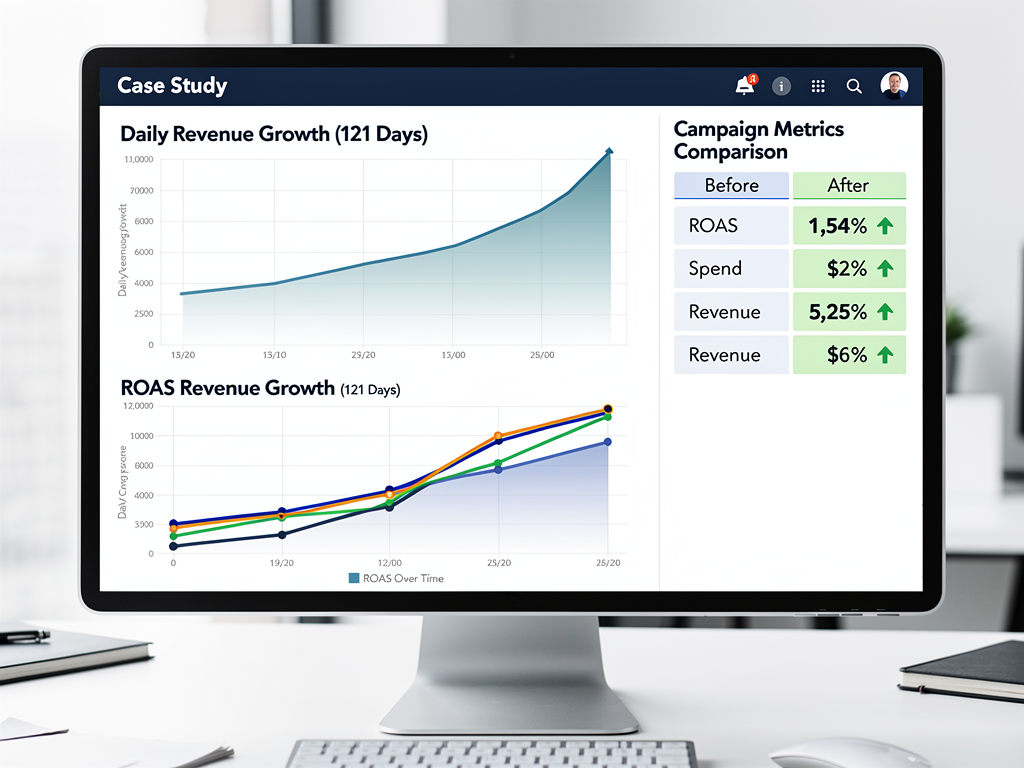
Case 1: $3,806 Daily Revenue with Image-Only Ads and AI Copy
Context: An e-commerce team (principles apply to crypto) was running paid ads but wasn’t systematically testing copy variations. They had solid product-market fit but were leaving money on the table through inefficient creative.
What they did:
- Switched to a multi-AI stack: Claude for copywriting (superior nuance), ChatGPT for market research, and AI image generators (Higgsfield) for visuals.
- Invested in paid tiers of each tool rather than relying on free versions.
- Built a repeatable testing framework: test new target desires, test new angles, test variations of angles, test new audience avatars, and optimize metrics by varying hooks and visuals.
- Ran only image ads—no video, no complexity.
- Implemented a simple funnel: visually compelling image ad → advertorial → product detail page → post-purchase upsell.
Results:
- Before: Not specified, but implied lower baseline performance.
- After: $3,806 daily revenue, $860 ad spend, 4.43 ROAS, ~60% margin.
- Growth: Achieved nearly $4,000/day revenue within 121 days, running only image ads.
Key insight: The combination of multiple AI tools (each optimized for different functions) beat relying on any single AI. Discipline around testing—not just creating content, but testing desires, angles, avatars, and hooks systematically—was the real lever. Copy quality mattered more than visual complexity.
Source: Tweet
Case 2: $250K Marketing Team Replaced by Four AI Agents
Context: A SaaS company (crypto principles similar) had a full marketing team but needed to scale more efficiently. Instead of hiring more people, they automated core workflows with AI agents.
What they did:
- Built four specialized AI agents: content research agent, creative generation agent, competitor ad analysis agent, and SEO content agent.
- These agents ran 24/7 autonomously, handling workflows that normally required a team of 5–7 people.
- Tested the system for 6 months before scaling.
Results:
- Before: $250K+ annual marketing team cost.
- After: Millions of impressions generated monthly, tens of thousands in revenue on autopilot, enterprise-scale content production.
- Growth: Replaced 90% of marketing workload for less than one employee’s annual salary.
Key insight: AI agents aren’t replacements for strategy or judgment. They’re force multipliers that eliminate repetitive work. The real advantage comes from freeing human teams to focus on high-level decisions—which audiences matter most, which messages resonate, which partnerships drive growth. According to project data, this delegation freed the human team to do 5x more strategic work.
Source: Tweet
Case 3: Ad Creative Generation in 47 Seconds vs. 5 Weeks
Context: An AI-powered creative platform was replacing traditional agency workflows. Instead of paying $4,997 for 5 concepts over 5 weeks, they built a system that generated multiple concepts in under a minute.
What they did:
- Built an AI system that analyzes winning competitor ads automatically.
- Extracted and mapped 12+ psychological triggers (fear, social proof, curiosity, control, etc.).
- Generated visual creatives natively formatted for each platform (Instagram, Facebook, TikTok).
- Scored each creative by predicted psychological impact.
Results:
- Before: Manual agencies charging $4,997 for 5 concepts, 5-week turnaround.
- After: Unlimited variations in 47 seconds.
- Growth: Unlimited scaling without bottleneck.
Key insight: Speed isn’t just convenience—it’s competitive advantage in crypto where market attention span is short. Generating creatives in seconds enables daily testing and iteration rather than monthly campaigns. Quality varied with how well the underlying product brief was written, emphasizing that AI accelerates execution, not strategy.
Source: Tweet
Case 4: $925 Monthly Recurring Revenue from SEO in 69 Days, Zero Backlinks
Context: A new SaaS product (non-crypto but highly relevant to Web3 projects) launched with no budget and no domain authority. They focused on SEO targeting high-intent, problem-specific searches instead of generic listicles.
What they did:
- Identified pain-point keywords where searchers were already looking for solutions: “X alternative,” “X not working,” “how to [solve specific problem],” “free [tool] alternative.”
- Avoided generic “best of” listicles and ranking battle keywords.
- Wrote content addressing exact pain points, structured for AI extraction (TL;DR, H2s as questions, short answers, lists).
- Used internal linking heavily (not backlinks) to connect related guides and build site structure.
- Listened to user communities, competitor roadmaps, and customer support chats to identify what people actually cared about.
Results:
- Before: DR 3.5 (brand new domain).
- After: $925 MRR from SEO, 21,329 monthly site visitors, 2,777 search clicks, $3,975 gross volume, 62 paid users, many posts ranking #1 or top of first page.
- Growth: Achieved in 69 days with zero paid backlinks.
Key insight: The best keywords for Google ads and SEO are the same: high-intent, problem-specific searches. People searching “best [platform] for SaaS” aren’t ready to buy. People searching “how to [solve specific problem] for free” or “[competitor] alternative” are. This principle applies directly to crypto advertising: bid on keywords where intent is clear and immediate. One team featured in ChatGPT and Perplexity as a recommended source without paying for anything—pure organic authority from problem-focused content.
Source: Tweet
Case 5: $1.2M Monthly Revenue from Theme Pages Using AI Video
Context: A content operator built themed pages (niche social media accounts, blogs, communities) that aggregated and repurposed trending content, monetized through affiliate offers.
What they did:
- Used AI video generators (Sora 2, Veo 3.1) to produce high-quality video content automatically.
- Applied a consistent content formula: strong scroll-stopping hook → curiosity or value in middle → clean payoff with product tie-in.
- Posted consistently to niches that already buy (no personal brand required, no influencer dependency).
- Built everything around consistent output rather than viral luck.
Results:
- Before: Not specified.
- After: $1.2M monthly revenue, individual theme pages consistently producing $100K+ monthly, 120M+ monthly views across portfolio.
- Growth: Reposted content (repurposed, not stolen) in buying niches generated significant revenue.
Key insight: Viral reach doesn’t require personal brand or influencer status. Consistency plus the right niche plus AI-accelerated production compounds. For crypto projects, this means you don’t need a famous founder or celebrity endorsement. You need discipline in content production, focus on niches where people already buy, and systematic optimization. According to project data, the $300K/month roadmap was achievable by replicating this formula.
Source: Tweet
Case 6: $10K+ Worth of Marketing Creative in 60 Seconds
Context: A marketing technologist reverse-engineered a $47M creative database and built an automated workflow that generated publication-quality marketing assets at machine speed.
What they did:
- Analyzed and reverse-engineered a proven creative database using JSON-structured data profiles.
- Built an n8n workflow running 6 image models + 3 video models in parallel simultaneously.
- Each creative generation referenced brand-specific context profiles, not generic templates.
- Handled lighting, composition, and brand alignment automatically.
Results:
- Before: Manual creative production taking 5–7 days per asset.
- After: $10K+ worth of marketing creative in under 60 seconds.
- Growth: Ultra-realistic creatives with Veo3-quality video, photorealistic images.
Key insight: The speed and scale of AI-generated creative at this level changes what’s possible. Not for “good enough” creative, but for creative that rivals professional production. The differentiator is prompt architecture and context—feeding AI not generic instruction but specific brand intelligence, audience psychology, and visual preferences. For crypto projects, this means building reusable creative systems that improve as you feed them more data about what converts.
Source: Tweet
Case 7: $10M ARR in 18 Months with Multi-Channel Growth
Context: A crypto-adjacent SaaS tool (AI ad creation platform) scaled from zero to $10M ARR by combining multiple growth channels in parallel: paid ads, direct outreach, events, influencer partnerships, and product-led growth.
What they did:
- Pre-launch: sent cold emails to ideal customers offering $1,000 to test early; closed 3 out of 4 calls.
- Post-launch: posted daily on Twitter/X, booked tons of demos, closed high conversion rates.
- Leveraged viral moment: one customer’s video using the product went viral, saving 6 months of growth grinding.
- Multi-channel: paid ads (using their own product to create ads for themselves—a perfect feedback loop), direct outreach to top prospects, events and conference speaking, influencer partnerships with top creators, coordinated product launch campaigns.
Results:
- Before: $0 MRR.
- After: $10M ARR ($833K MRR).
- Growth trajectory: $0 → $10K MRR (1 month), $10K → $30K (public posting + demos), $30K → $100K (viral moment), $100K → $833K (multi-channel execution).
Key insight: Exponential growth comes from compounding multiple levers, not betting on one channel. Each channel makes the others more efficient (influencer endorsement makes paid ads work better, viral moment accelerates all channels, events generate media coverage, etc.). For crypto projects, this means thinking in parallel—paid ads plus organic content plus community engagement plus events. One channel rarely reaches $10M ARR alone.
Source: Tweet
Tools and Next Steps
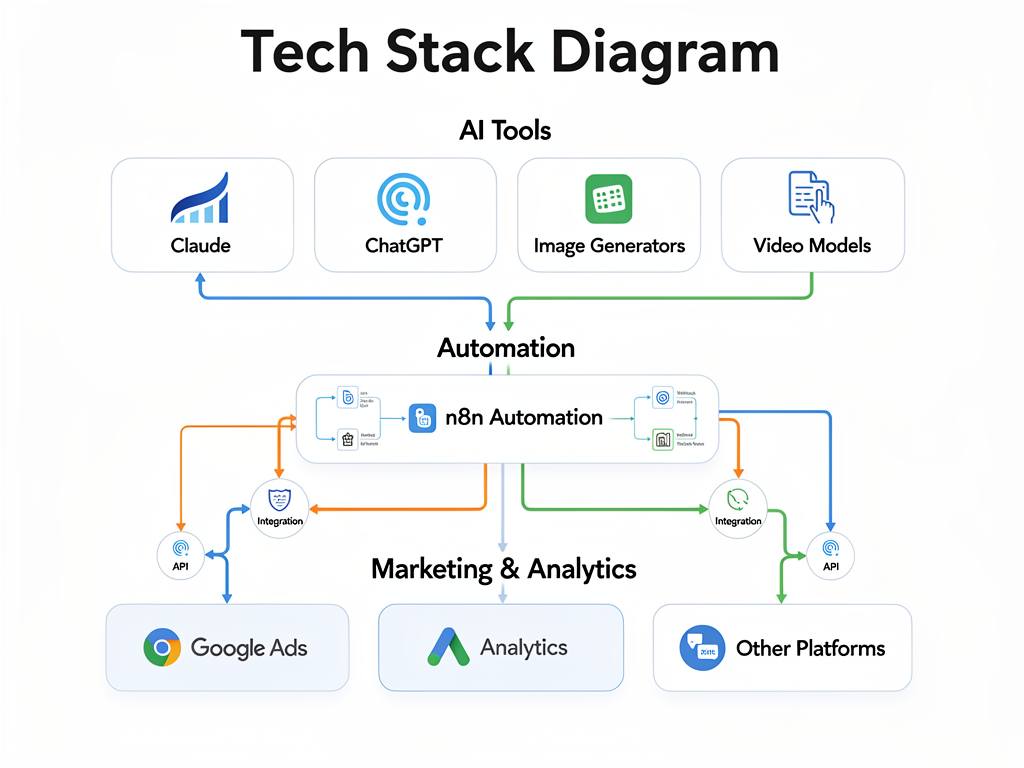
Building an AI-powered Google advertising workflow for crypto requires these core tools and integrations:
- Claude (Anthropic): Superior copywriting and nuanced persuasion. Use for ad copy, advertorial content, and psychological framework analysis.
- ChatGPT (OpenAI): Research, market analysis, competitor intelligence, and content structure. Faster ideation than Claude but less nuanced copy.
- Midjourney or Stable Diffusion: High-quality image generation for ads. Platform-native output (Instagram Stories, LinkedIn, YouTube thumbnails).
- Veo or Sora: AI video generation for YouTube pre-roll and social video ads.
- n8n or Make: Workflow automation. Connect your AI tools, Google Ads, analytics, and CRM into automated pipelines.
- Google Ads API: Direct campaign management, bid optimization, and performance reporting.
- Ahrefs or SEMrush: Keyword research, competitor ad intelligence, and search volume validation.
Immediate action checklist to launch your AI-powered crypto advertising system:
- [ ] Talk to 10 users or prospects this week — Ask where they found you, what they dislike about competitors, what they can’t achieve with current solutions. This is your pain-point research. Don’t guess what keywords matter.
- [ ] Join 3 communities where your target audience hangs out — Discord servers, subreddits, Twitter spaces, Telegram groups. Look for what frustrates people and what they’re asking for. This is your psychological hook research.
- [ ] Analyze your top 5 competitors’ ads — Use Facebook Ad Library (for Meta ads) and Google Ads Transparency Center (for search ads). What psychological triggers do they emphasize? Which ads are running longest (implying they work)? What angles haven’t they tested?
- [ ] Set up basic conversion tracking in Google Ads — Without it, you can’t optimize. Track clicks, landing page visits, sign-ups, and revenue. Measure conversion rate at each funnel stage.
- [ ] Build one high-intent keyword list — Focus on “alternative to,” “how to,” “best [your niche],” and “[competitor] review” keywords. Avoid generic “top 10” keywords. Bid test on 20 keywords first.
- [ ] Write or generate 5 different ad copy variations — Each targeting different psychological angles (fear, social proof, curiosity, control, transparency). Use Claude for copy. Test simultaneously, not sequentially.
- [ ] Build a landing page or advertorial that answers objections — Don’t send traffic from Google ads directly to product page. Insert an educational step. Structure it for AI extraction: TL;DR, H2 as questions, short answers, lists.
- [ ] Set budget to test — Start with $300–500/week on highest-intent keywords and strongest copy variations. Track ROAS. Pause underperformers after 48 hours if CPA is 2x your acceptable threshold.
- [ ] Automate creative refreshes — Once you identify winning hooks, use Claude and AI image generators to create 10+ variations weekly. This prevents audience fatigue.
- [ ] Set up a feedback loop — Measure which ads convert into long-term customers (not just clicks), which landing pages generate qualified leads, and which keywords bring the best buyers. Optimize spend toward winners.
For projects that need expert guidance navigating Web3-specific policies, audience psychology, and multi-channel integration, FLEXE.io provides access to 10+ crypto traffic sources, 150+ media outlets, and 500+ KOLs—combining 7+ years of Web3 marketing experience with 700+ client case studies. DM us on Telegram: https://t.me/flexe_io_agency
FAQ: Your Questions Answered
Can I still run Google ads for crypto projects?
Yes, but with restrictions. Google prohibits ads for binary options, unregistered securities, and high-risk instruments. Allowed: educational content, utility-focused messaging, platforms offering compliant services. Focus your messaging on solving specific problems (security, yield, alternatives) rather than “buy now” hype. Use the Google Ads Transparency Center to check policy for your specific token or service.
What ROAS should I aim for in crypto advertising?
Depends on your margins and customer lifetime value. For SaaS, 3:1 to 5:1 ROAS is healthy. For crypto projects with high CLV and recurring revenue, 2:1 can still be profitable. One team achieved 4.43 ROAS within 121 days. Track not just ROAS but also customer quality (retention, engagement, community contribution)—a cheap lead that churns is worthless.
Should I use AI to write all my ad copy?
Partly. Use AI (Claude) for iteration and testing at scale, but inject human judgment at the strategy level. Identify the psychological hook or pain point first (human), then use AI to generate variations (machine), then have humans review and refine (human). One operator emphasized: “Write the core manually yourself, then tell AI to turn this into variations.” Pure AI-generated copy often lacks credibility in crypto—a space where trust is paramount.
How long does it take to see results from Google ads for crypto?
First data: 48–72 hours. Enough data to pause losers and identify winners: 1–2 weeks. Statistically significant results: 4–8 weeks depending on volume. One team achieved $3,806/day revenue within 121 days of systematic testing. Speed depends on budget, keyword competitiveness, and copy quality.
What’s the difference between Google Ads and SEO for crypto projects?
Google Ads: immediate traffic, higher cost, requires constant budget. SEO: slower (2–3 months to rank), lower ongoing cost, compounds over time. One team achieved $925 MRR from SEO alone in 69 days. Ideal: run both in parallel. Paid ads test keywords quickly; winning keywords become long-term organic targets.
How do I prevent audience fatigue when running the same ads?
Refresh creative weekly, not monthly. Use AI to generate 10+ variations testing different hooks, visuals, and angles automatically. One operator maintained 12%+ engagement rates and 50K+ impressions per post by constantly rotating psychological triggers and visuals. Don’t wait for performance to crash before refreshing—be proactive.
Should I run ads to a landing page or directly to my product?
For crypto specifically, use an intermediary step. Strong ad → educational content addressing pain and building credibility (advertorial or guide) → product page → upsell. Direct traffic to product page creates too much friction and skepticism. One high-performing team structured their funnel this way and achieved 4.43 ROAS with ~60% margins.