Most content about guest posting in crypto is promotional spam disguised as advice. This guide focuses on what actually works: finding legitimate platforms, crafting pitches that get accepted, and building backlinks that move your domain authority.
Key Takeaways
- A cryptocurrency guest post on a high-authority site typically delivers a dofollow backlink, referral traffic, and brand credibility in a competitive niche.
- Top-tier crypto publications like CryptoSlate, BeInCrypto, and Cointelegraph accept submissions but enforce strict editorial standards and often remove or nofollow links.
- Effective guest posting requires original research, data-driven insights, or unique founder stories—generic “what is Bitcoin” content gets rejected immediately.
- Paid placements range from $200 for mid-tier blogs to $2,000+ for established outlets; free submissions demand exceptional quality and relevance.
- Track metrics beyond backlinks: measure referral sessions, time on site, and conversions from each placement to identify which publications deliver ROI.
- Common failures include mass pitching, ignoring editorial guidelines, and over-optimizing anchor text—all of which damage sender reputation and waste budget.
Introduction
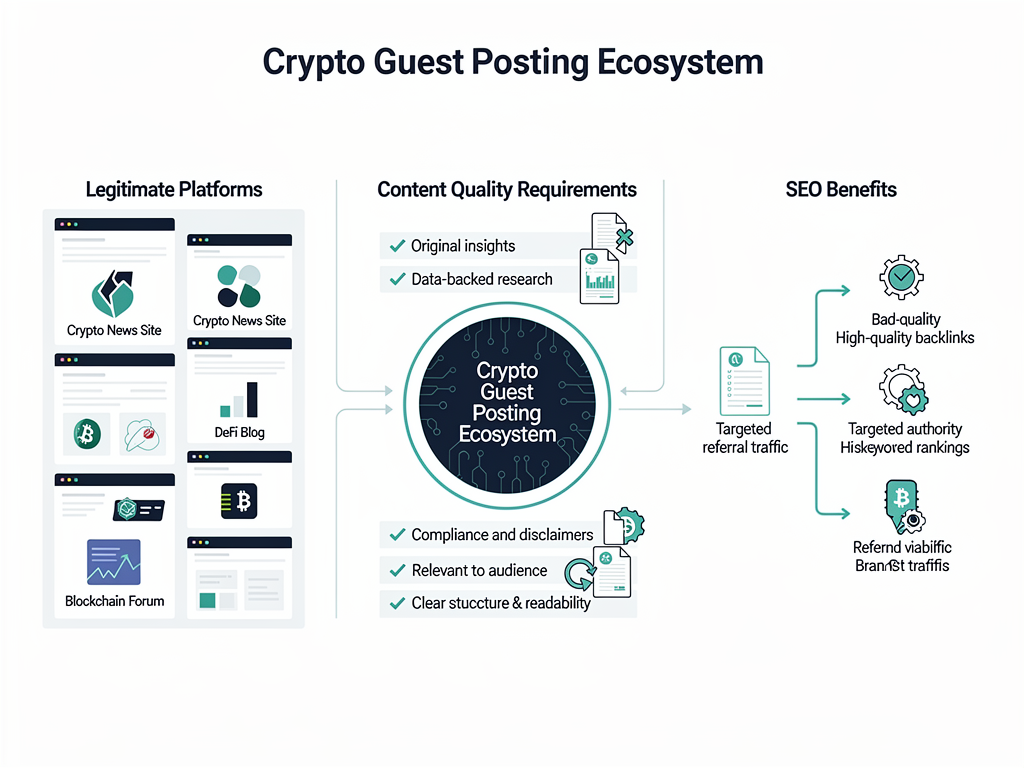
The cryptocurrency guest post market is crowded with link-building agencies, SEO resellers, and low-quality content farms. Most searchers want one of three things: a list of sites that accept crypto articles, guidance on getting published without paying thousands of dollars, or vetted services that handle outreach and placement. The challenge lies in separating legitimate editorial opportunities from pay-to-play schemes that offer little SEO value.
Here’s what matters: high-authority placements in crypto media can accelerate organic growth, but only when the content adds genuine value and the backlink profile looks natural. A single well-placed article on a domain authority 70+ site can drive hundreds of targeted visits and signal topical relevance to search engines.
This guide walks through the platform landscape, the step-by-step process for securing placements, and the common pitfalls that waste marketing budgets. Whether you’re promoting a DeFi protocol, an NFT marketplace, or a Web3 analytics tool, the framework below applies.
What Is a Cryptocurrency Guest Post: Definition and Context
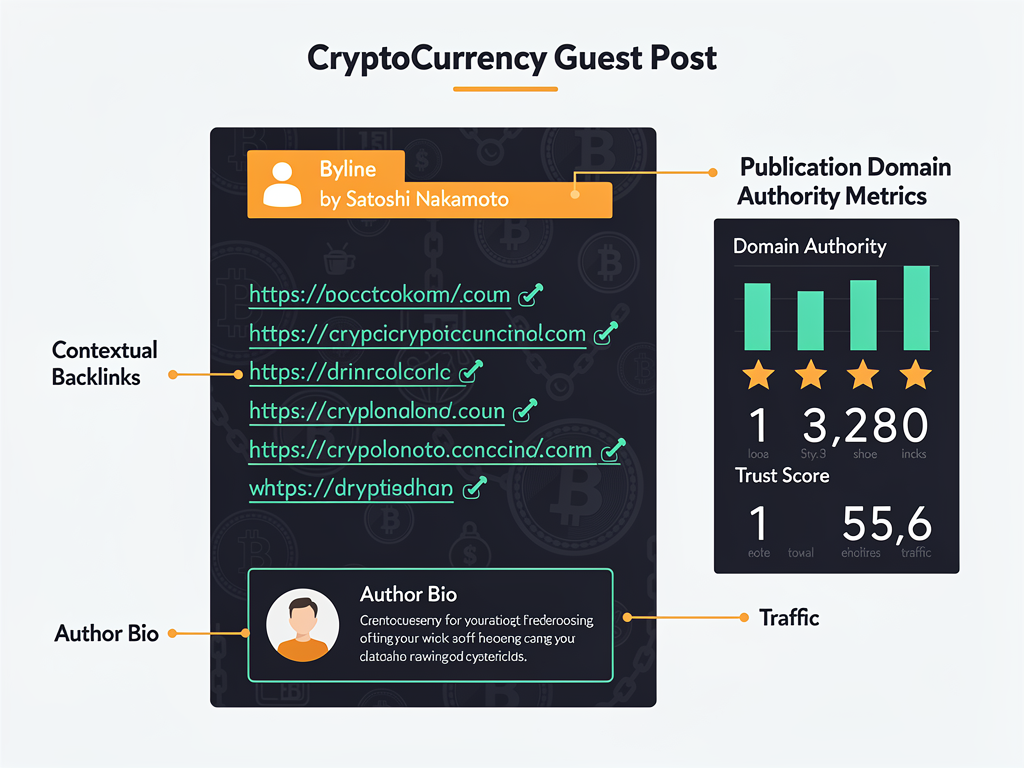
A cryptocurrency guest post is an article you write and publish on someone else’s crypto-focused blog, news site, or industry publication. The primary goal is to earn a backlink to your project, improve search rankings, and reach an audience already interested in blockchain topics.
Recent implementations show that editorial placements outperform paid advertorials when it comes to referral engagement and link equity. Google’s algorithms favor contextually relevant, naturally placed links within high-quality content, which is why top-performing Web3 projects invest in thought leadership rather than bulk link buys.
This strategy is for founders, growth marketers, and SEO specialists in the blockchain space who need to build domain authority quickly. It’s not for projects looking for instant token pumps or those unwilling to produce original, well-researched content. Publications with strict editorial standards reject 80–90% of pitches, so success requires effort and expertise.
What These Placements Actually Solve
Building authority in crypto search results is notoriously difficult. New projects compete against established exchanges, news outlets, and aggregator sites with years of backlink history. A single high-quality placement can provide the initial trust signal that unlocks organic visibility.
Cold start problem for new domains: A freshly launched DeFi protocol or NFT project has zero referring domains and minimal organic traffic. Publishing on a DA 60+ crypto blog immediately places your brand in front of thousands of engaged readers and creates a foundational backlink that search engines recognize as topically relevant.
Referral traffic from qualified audiences: Unlike generic link-building tactics, a well-targeted cryptocurrency guest post reaches readers who are actively researching wallets, trading strategies, or emerging protocols. A single article on a site like BeInCrypto can drive 200–500 sessions in the first week, with visitors spending 2–3 minutes on your landing page.
Brand credibility and founder visibility: Being published on recognized crypto media signals legitimacy. For early-stage projects, this third-party validation helps overcome skepticism and positions the founder as a thought leader. Many investors and partners discover projects through these editorial features.
Long-term SEO compounding: Unlike paid ads that stop delivering when the budget runs out, a published guest article continues to generate backlink value and referral traffic for months or years. Evergreen topics like “how to secure a hardware wallet” or “comparing Layer 2 scaling solutions” attract steady search volume.
Diversified backlink profile: Relying solely on press releases, directory listings, or forum signatures creates an unnatural link pattern. Editorial placements add diversity and demonstrate that real humans find your content worth citing.
How This Works: Step-by-Step
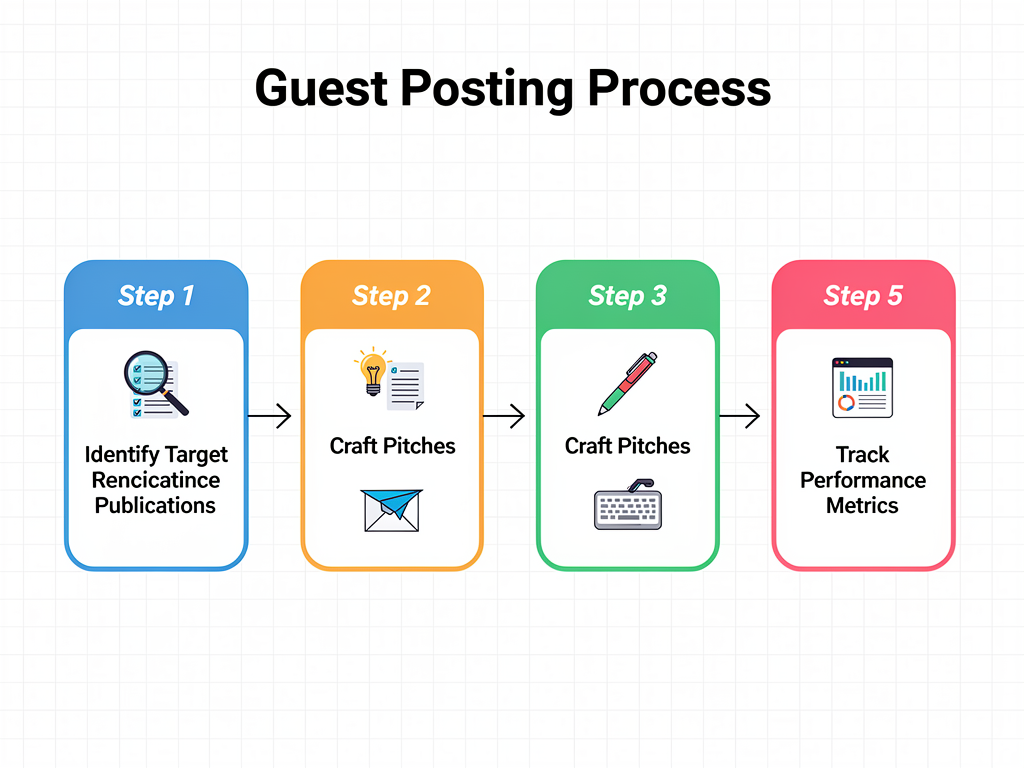
Step 1: Identify Target Publications and Their Editorial Standards
Start by building a list of 20–30 crypto blogs, news sites, and niche communities that accept outside contributions. Prioritize publications with domain authority above 50, active social media audiences, and clear editorial guidelines. Check their existing guest authors: do they publish promotional fluff or in-depth analysis?
Use tools like Ahrefs or Semrush to verify each site’s backlink profile, organic traffic trends, and spam score. A site with 10,000 monthly visits and a clean link profile is more valuable than a DA 70 blog that trades links indiscriminately. Review their “Write for Us” or “Contribute” pages to understand topic preferences, word count expectations, and link policies.
Avoid pitching to link farms that publish dozens of low-quality articles daily with obvious keyword stuffing. These placements can trigger manual penalties or algorithmic devaluation.
Step 2: Research High-Performing Topics and Angles
Generic explainers about Bitcoin or Ethereum are oversaturated. Instead, pitch data-driven pieces, original research, founder journey stories, or contrarian takes on trending topics. Analyze which articles on your target publication receive the most social shares and comments.
For example, if you’re promoting a crypto tax tool, pitch “7 IRS Reporting Mistakes DeFi Traders Make (With Real Audit Examples)” instead of “Why Crypto Tax Software Matters.” The former promises specific, actionable insights; the latter reads like a sales page.
Check Google Trends and Twitter discussions to identify emerging narratives. Topics like zkEVM adoption, real-world asset tokenization, or regulatory clarity in specific jurisdictions gain traction before they become crowded.
Step 3: Craft a Personalized Pitch Email
Editors receive dozens of generic pitches daily. Stand out by referencing a recent article they published, explaining why your proposed topic fills a gap in their coverage, and including a 3-sentence outline with your unique angle.
Your pitch should be 100–150 words maximum. Include your credentials (founder of X, previously published on Y, expertise in Z) and a link to one or two writing samples. Avoid attachments in the first email; link to a Google Doc or published article instead.
Personalization is non-negotiable. A pitch that begins “Dear Editor, I have a great article about blockchain” gets deleted immediately. A pitch that says “Hi Sarah, I noticed your recent piece on Arbitrum’s sequencer decentralization—I’d like to propose a follow-up analyzing Optimism’s approach with data from the past 6 months” gets read.
Step 4: Write and Format the Article to Editorial Standards
Once your pitch is accepted, write the article in the publication’s house style. Match their tone (technical vs. beginner-friendly), structure (use of subheadings, bullet points, data visualizations), and citation practices (do they link to primary sources, whitepapers, or on-chain data?).
Include 1–2 natural backlinks to your project within the body text, typically in the author bio or a contextual mention. Avoid exact-match anchor text; use branded anchors or natural phrases like “according to data from [YourProject]” or “tools like [YourProject] help users track…”
Submit the article in the requested format (Google Doc, WordPress draft, plain text) with suggested images, charts, or screenshots. High-quality visuals increase acceptance rates and social shares.
Step 5: Follow Up and Track Performance Metrics
After submission, give the editor 5–7 business days before sending a polite follow-up. If accepted, ask about the publication timeline and whether you can share a preview with your community (some outlets prefer to publish first).
Once live, set up UTM parameters to track referral traffic in Google Analytics. Monitor backlink indexing in Search Console and Ahrefs. Measure referral session duration, bounce rate, and conversion events (email signups, wallet connections, downloads) to assess ROI.
Republish or syndicate the article on your own blog with a canonical tag pointing to the original publication. This maximizes visibility while preserving SEO credit for the host site.
Where Most Projects Fail (and How to Fix It)
Mass pitching the same article to 50 sites: Editors talk to each other and recognize copy-paste outreach. Duplicate content also triggers plagiarism filters. Tailor each pitch and article to the specific publication’s audience and editorial focus.
Ignoring link policies and over-optimizing anchors: Many top-tier crypto publications limit guest authors to one or two links, often nofollow or in the bio only. Trying to sneak in five keyword-stuffed backlinks gets your article rejected or edited down. Focus on one high-value placement instead.
Submitting promotional content disguised as education: Articles that read like press releases—”Our revolutionary AI-powered blockchain is changing the world”—get rejected instantly. Provide actionable insights, data, or frameworks that help readers make better decisions.
Neglecting to research the publication’s audience and voice: Pitching a highly technical zkSNARK explainer to a beginner-focused blog wastes everyone’s time. Conversely, oversimplifying concepts for a developer-focused outlet signals lack of expertise.
Failing to build relationships before pitching: Cold outreach works, but engagement improves response rates. Comment thoughtfully on the publication’s articles, share their content, or participate in their community before asking for a placement. Editors remember helpful contributors.
Many teams struggle to balance content quality, outreach volume, and performance tracking. FLEXE.io, with 7+ years in Web3 marketing and a network of 800+ clients, helps projects secure placements across 150+ crypto media outlets and measure the impact on traffic and conversions. Reach out on Telegram: https://t.me/flexe_io_agency
Platform Criteria and Realistic Expectations
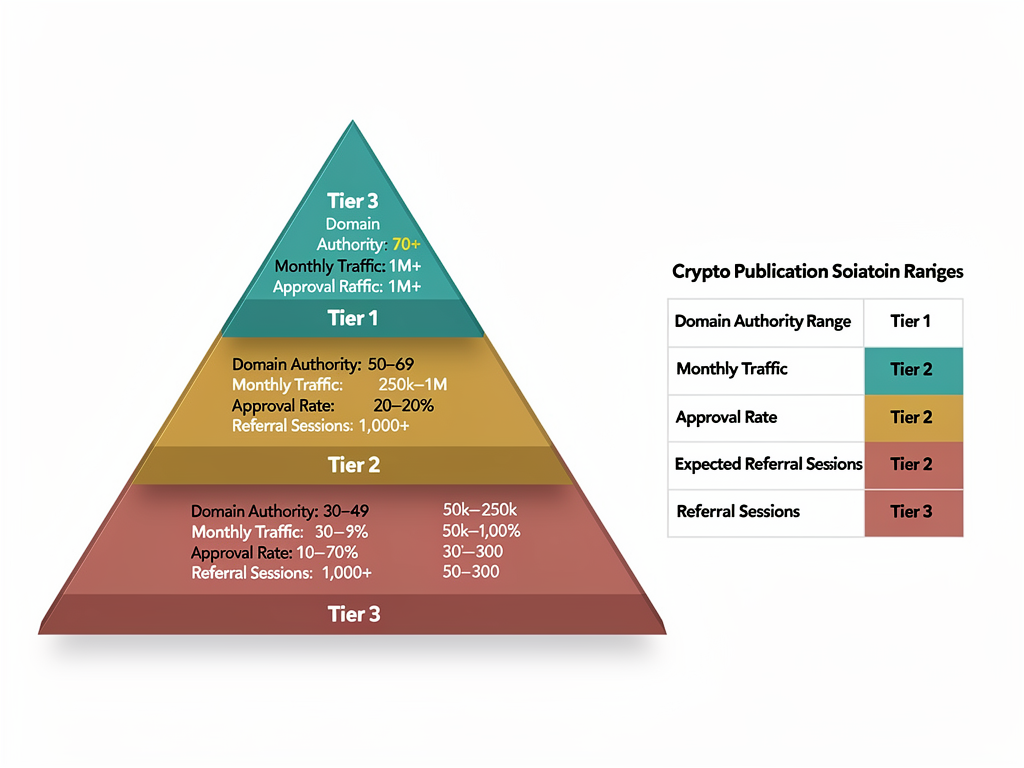
Understanding which publications offer genuine SEO value versus vanity metrics requires evaluating several factors. Domain authority alone does not guarantee results; editorial integrity, audience engagement, and topical relevance matter just as much.
Tier 1: Premium Editorial Placements
Examples: CryptoSlate, BeInCrypto, Cointelegraph, Decrypt, The Defiant.
Criteria: Domain authority 65+, 100,000+ monthly organic visits, strict editorial review, limited or no guest post slots.
What to expect: These outlets rarely accept unsolicited guest posts. When they do, they demand original research, exclusive data, or high-profile founder bylines. Links are often nofollow or limited to the author bio. Approval rates hover around 5–10% for cold pitches.
Value: Even a nofollow link from Cointelegraph drives significant referral traffic and brand credibility. A single mention can generate 500–1,000 sessions in the first 48 hours and attract investor attention.
Tier 2: Established Niche Blogs
Examples: Crypto Briefing, AMBCrypto, CoinGape, CoinCodex, Cryptopolitan.
Criteria: Domain authority 45–65, 10,000–100,000 monthly visits, active “Write for Us” programs, moderate editorial standards.
What to expect: These sites accept quality guest posts but require original content and adherence to guidelines. Approval rates range from 20–40% depending on topic relevance and writing quality. Most allow 1–2 dofollow backlinks within the content or bio.
Value: A well-written piece can drive 100–300 referral sessions, pass meaningful link equity, and improve rankings for mid-competition keywords. Publication timelines range from 1–3 weeks.
Tier 3: Emerging and Sponsored Platforms
Examples: Newer crypto blogs, regional publications, DeFi-specific communities, paid placement marketplaces.
Criteria: Domain authority 25–45, 1,000–10,000 monthly visits, flexible editorial processes, often accept paid placements ($200–$800 per article).
What to expect: These sites publish guest content quickly with minimal editorial friction. Links are typically dofollow, and you may be allowed multiple backlinks. Quality and audience engagement vary widely.
Value: Useful for building a diversified backlink profile and testing content angles. Referral traffic is modest (20–100 sessions), but cumulative impact across multiple placements can boost domain authority by 5–10 points over 6 months.
Benchmark Outcomes Based on Industry Standards
While individual results vary, the following benchmarks reflect typical performance for well-executed campaigns:
- Referral traffic: Tier 1 placements average 300–1,000 sessions in the first month; Tier 2 placements deliver 50–300 sessions; Tier 3 placements generate 10–100 sessions.
- Backlink indexing: 70–90% of dofollow links from reputable crypto sites are indexed within 2–4 weeks.
- Domain authority impact: Securing 5–10 high-quality placements over 3–6 months can increase DA by 8–15 points, assuming a starting DA below 40.
- Conversion rates: Referral traffic from editorial placements converts at 1.5–3%, compared to 0.5–1% for general display ads, because readers arrive with higher intent and trust.
Tools and Next Steps

Executing a successful outreach campaign requires the right tools for prospecting, tracking, and measuring impact. The following platforms and workflows streamline the process:
Ahrefs or Semrush: Identify crypto blogs that link to competitors, analyze their domain authority, and export lists of target sites. Use Content Explorer to find high-performing topics.
Hunter.io or Apollo.io: Find verified email addresses for editors and content managers. Avoid generic contact@ addresses; personalized pitches to named individuals improve response rates by 40–60%.
Google Sheets or Airtable: Build a CRM to track outreach status (pitched, accepted, published, indexed), publication dates, backlink URLs, and performance metrics. Tag each entry with tier, niche, and UTM parameters.
BuzzSumo: Research trending crypto topics, identify high-engagement articles, and discover which publications drive the most social shares in your niche.
Grammarly or Hemingway Editor: Polish your writing before submission. Editors reject articles with grammar errors, passive voice overload, or unclear structure.
For teams that need end-to-end execution—from media list building to content creation and placement tracking—FLEXE.io provides access to 150+ vetted crypto outlets and 500+ KOLs, backed by 7 years of Web3 marketing experience across 800+ projects. Get in touch on Telegram: https://t.me/flexe_io_agency
Guest Posting Checklist: 10 Actions to Launch Your Campaign
- [ ] Build a target list of 20–30 crypto publications with DA 40+ and clear editorial guidelines (ensures quality and relevance).
- [ ] Analyze top-performing articles on each site to understand preferred topics, formats, and word counts (increases acceptance rates).
- [ ] Draft 3–5 article outlines with unique angles, data points, or exclusive insights (editors prioritize original research).
- [ ] Find and verify contact emails for editors or content managers (personalized outreach boosts response by 50%+).
- [ ] Send personalized pitch emails referencing recent site content and explaining your unique value (generic pitches get ignored).
- [ ] Write accepted articles to exact editorial specs, including citations, visuals, and natural backlinks (speeds publication and preserves link placements).
- [ ] Set up UTM tracking codes for each published link to measure referral traffic and conversions (proves ROI and informs future targeting).
- [ ] Monitor backlink indexing in Search Console and Ahrefs within 2–4 weeks of publication (confirms SEO value).
- [ ] Repurpose published articles into social posts, email newsletters, and internal blog content with canonical tags (maximizes content ROI).
- [ ] Review performance data monthly and double down on publications that drive the highest engagement and conversions (optimizes budget allocation).
FAQ: Your Questions Answered
How much does a cryptocurrency guest post cost?
Prices range from free (for high-quality, editorial submissions) to $200–$500 for mid-tier crypto blogs and $1,000–$2,000+ for premium placements on established outlets. Free placements require exceptional content and strict adherence to editorial standards; paid options offer faster publication and guaranteed link placement.
Do guest posts on crypto sites actually improve SEO?
Yes, when executed correctly. Dofollow backlinks from high-authority, topically relevant crypto publications signal trust and expertise to search engines. A single placement on a DA 60+ site can improve rankings for mid-competition keywords within 4–8 weeks, especially for newer domains with limited backlink profiles.
Which crypto publications accept guest posts for free?
CryptoSlate, BeInCrypto, Crypto Briefing, and several niche DeFi blogs accept unsolicited submissions, but approval rates are low. You need original research, data-driven insights, or unique founder stories to pass editorial review. Review each site’s “Write for Us” page for specific guidelines.
How many backlinks can I include in a guest post?
Most reputable crypto publications allow 1–2 contextual backlinks within the article body or author bio. Attempting to insert 5+ links or using exact-match anchor text triggers editorial flags and reduces acceptance chances. Focus on one high-value, naturally integrated link.
How long does it take to see results from guest posting?
Referral traffic begins within 24–48 hours of publication. SEO benefits—improved rankings and domain authority—typically manifest in 4–12 weeks as search engines crawl, index, and evaluate the new backlink. Consistent campaigns with 5–10 placements over 3–6 months deliver compounding returns.
Should I use paid guest post services or do outreach myself?
DIY outreach works for teams with time, writing skills, and relationship-building capacity. Paid services or specialized agencies save time and leverage existing editor relationships but cost $500–$5,000 per placement depending on quality. Evaluate based on your budget, content production capability, and speed requirements.
What metrics should I track for each published guest post?
Monitor referral sessions, bounce rate, average session duration, and conversion events (signups, downloads, wallet connections) in Google Analytics using UTM parameters. Track backlink indexing in Search Console and Ahrefs. Compare cost per acquisition from guest posts to other channels to optimize budget allocation.
Update: June 2026 Snapshot
Guest posting still works in June 2026 — but the rules changed:
- Google devalued mass guest posts. Spam updates hit sites selling bulk placements; one relevant post on a site with real traffic beats ten directory-grade links.
- Traffic and topical fit beat DR. Smart buyers now check organic traffic and audience overlap before metrics like DR/DA.
- AI-content disclosure is standard. Major crypto media require human editing and disclosure; pure AI drafts get rejected.
- Prices moved up for editorial quality. Budget for fewer, better placements with original data or expert commentary.
How to Vet a Crypto Guest Post Site in 2026
Most lists of guest post sites are sold, not researched. Before paying anyone, run the same five checks we run, in this order, because each one eliminates cheaper than the next.
- Is the site indexed at all? Search a distinctive sentence from a recent article in quotes. If nothing comes back, the domain is deindexed and every link on it is worthless.
- Does it get search traffic, or only metrics? A high DR with almost no organic traffic is the signature of a domain built for link sales. Traffic above a few thousand a month, spread across many pages, is the signal that matters.
- Who else has published there recently? Open the last twenty posts. If they span casinos, CBD, forex and crypto with no editorial thread, you are buying a placement on a link farm.
- Are the links dofollow and in the body? Author-bio links and nofollow attributes are worth a fraction of the price usually charged. Ask before, not after.
- Trust Flow against Citation Flow. A ratio below roughly 0.5 means the domain has many links but little trust behind them. This single check removes most of what is offered in bulk.
One caution that costs projects more than a bad placement ever does: buying links at volume from the same network leaves a footprint across your whole profile. A handful of genuinely editorial placements beats fifty paid ones, and it does not need cleaning up later.
What does a crypto guest post cost in 2026?
Ranges have not moved much: small niche blogs sit in the low hundreds, established crypto media in the high hundreds to low thousands, and tier-one outlets rarely sell placements at all, which is precisely why coverage there is worth pursuing on merit instead. Prices quoted far below the range for a supposedly high-authority domain almost always indicate a network selling the same slot to everyone.
Coverage that survives scrutiny takes relationships and a checkable claim. We handle both, and package the supporting material: whitepapers and promo video that give a journalist something to work with.