You’ve read ten articles about Web3 marketing. Most were theory, hype, or recycled advice from 2021. This one walks through what’s actually working right now, with numbers you can trace back to the source.
Key Takeaways
- One creator earned over $50,000 in six months spending just one hour per day on content creation using a trend-following approach.
- A SaaS tool scaled from $0 to $10 million ARR by validating with paid demos before writing code, then layering growth channels in parallel.
- Click-through rates are falling across Web3 advertising, but conversion quality is rising when campaigns focus on context and trust over vanity metrics.
- The best crypto marketing tips emphasize shareable brand interactions, native formats, and daily engagement over roadmaps and long-form threads.
- Teams that avoid common mistakes—like spamming reposts, overusing spaces, or chasing 95% scam partnership offers—see measurably higher engagement.
- Building in public on X, running live demos, and timing product launches as coordinated events can compress months of growth into weeks.
- Successful Web3 marketers track deliberate actions and quality conversions, not just surface-level clicks.
What Marketing Strategies Work in Web3
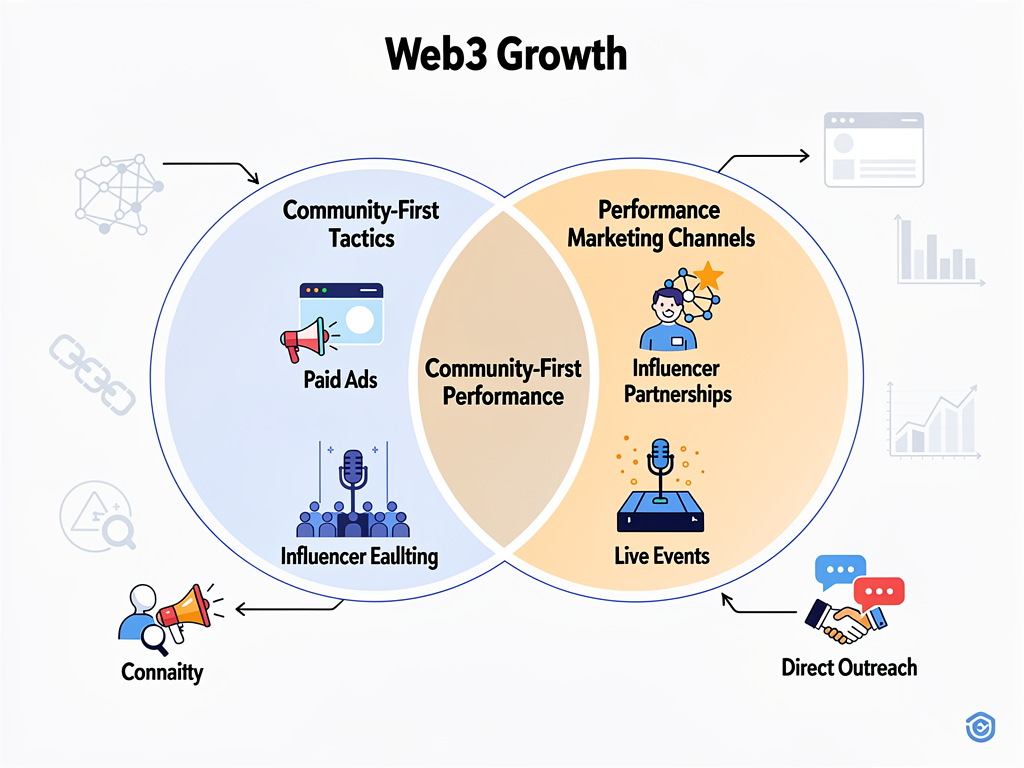
Crypto marketing tips are tactical methods for building awareness, attracting users and investors, and scaling blockchain projects in a market where trust is scarce and attention spans are ruthlessly short. Unlike traditional SaaS or e-commerce playbooks, Web3 campaigns must navigate pseudonymous audiences, global regulatory uncertainty, and a culture that rewards transparency and punishes hype.
Recent project data shows that founders who combine community-first tactics with measurable performance channels—paid ads, influencer partnerships, live events, direct outreach—grow faster and retain users longer. The shift happening now is away from vanity metrics like total followers or tweet impressions toward quality signals: wallet connections, token holders who stay past ninety days, and repeat participation in governance or product launches.
These strategies matter for early-stage token projects hunting for their first thousand holders, for NFT collections trying to sustain floor price, for DeFi protocols competing in saturated verticals, and for enterprise blockchain platforms that need credibility with institutional partners. They are less relevant for projects that rely exclusively on airdrop farming or algorithmic growth hacks without a real product.
What These Strategies Actually Solve
Breaking through the noise in oversaturated markets. Thousands of new tokens, NFT drops, and DeFi forks launch every month. Generic Twitter threads and paid shill posts get ignored. Campaigns that pair authentic storytelling with concrete deliverables—live demos, visual content, real user testimonials—cut through. One AI ad tool grew from $30,000 to $100,000 in monthly recurring revenue overnight after a client’s video went viral, proving that shareable, visual content can compress six months of traditional growth into a single moment.
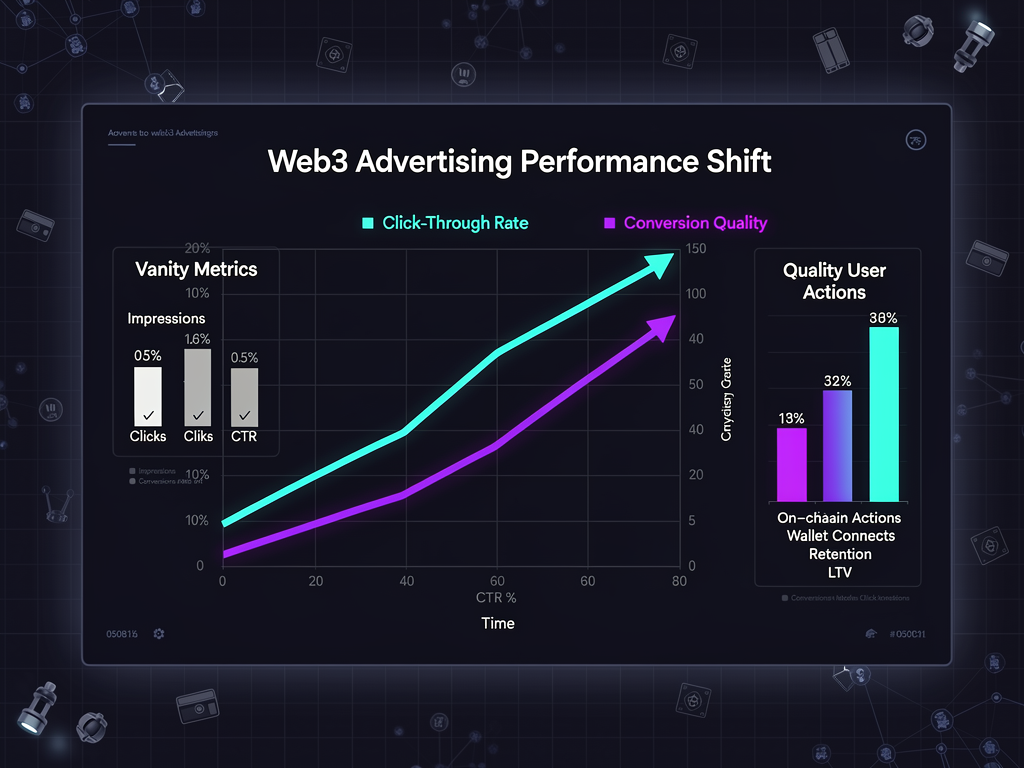
Converting curiosity into committed users. High click-through rates used to signal campaign success, but Web3 audiences scroll fast and filter hard. Data from live campaigns shows that CTR is dropping while conversion quality is rising. Users who take deliberate actions—joining a Discord after reading contextual content, connecting a wallet after watching a demo—stick around longer than those who clicked a flashy banner out of curiosity. The fix is native ad formats and high-trust placements where the audience already engages with similar content.
Building community without burning out the team. Running Discord, Telegram, Twitter Spaces, and influencer partnerships in parallel drains small teams. Successful projects limit posts to three per day, never within two hours of each other, and use tools that stimulate engagement without becoming full-time social media jobs. One marketing lead reported that spending just one hour daily on structured content creation, combined with selective community interaction, generated $20,000 in a single month and over $50,000 across six months.
Validating product-market fit before scaling spend. Many Web3 projects raise capital, hire agencies, and launch paid ads before confirming anyone will pay for the product. A better sequence: send direct emails to your ideal customer profile offering a paid demo or beta access, close three out of four calls, and use that revenue to fund the first version of the product. One team reached $10,000 in monthly recurring revenue in thirty days using this approach, then layered on public content, events, and paid channels only after proving the core offer worked.
Filtering real partnerships from noise. Inbound partnership offers flood Web3 project inboxes. Roughly 95% are low-value or outright scams—pay-to-play press releases, bot-driven engagement services, KOL agencies with fake followers. The remaining 5% can be transformational: integrations with complementary tools, co-marketing with established platforms, or access to curated communities. Teams that build a clear filter—Does this partner have real users? Can we verify their past results? Do they ask for equity or value exchange instead of cash up front?—save time and budget.
How This Works: Step-by-Step
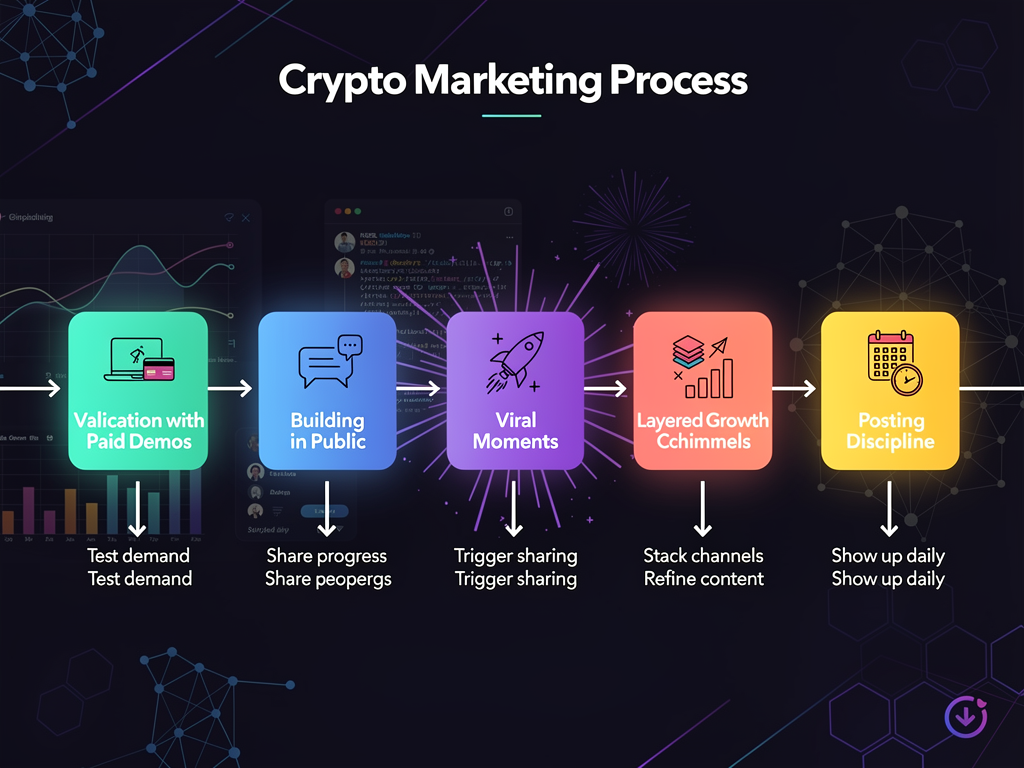
Step 1: Validate Demand with Paid Demos Before Building
Before writing a single line of code or minting a contract, reach out directly to ten to twenty people in your target audience. Describe the outcome your tool or protocol delivers in one sentence, and offer early access for a small payment—$500, $1,000, whatever signals commitment. If three out of four prospects say yes and pay, you have real signal. If they ghost or ask for free trials, you likely need to reframe the value proposition or pick a different market.
The team behind Arcads.ai sent cold emails saying “We’re building a tool that lets you create 10x more ad variations with AI. Want to test it for $1,000?” and closed deals on three out of every four calls. That revenue funded the first product build and gave them reference customers to showcase when they went public. Source: Tweet
Step 2: Build in Public and Post Daily on X
Once you have proof of concept, start sharing progress, lessons, and early wins publicly. Posting daily on X (formerly Twitter) builds an audience that becomes your first distribution channel. Early in 2024, the Arcads founder had zero followers. Daily posts about the product, growth tactics, and behind-the-scenes challenges led to a steady stream of demo bookings and closed deals, growing monthly recurring revenue from $10,000 to $30,000.
The content does not need to be long. Short updates, screenshots of product improvements, and quick tactical threads perform better than walls of text. Nobody reads ten-tweet threads anymore. Keep it visual, keep it concrete, and let people see the momentum.
Step 3: Engineer One Viral Moment (or Be Ready When It Happens)
Viral growth is hard to manufacture, but you can stack the odds. If your product or campaign produces something visual or emotionally resonant—a stunning piece of generative art, a tool output that surprises people, a user testimonial with a big number—make it easy to share. One client video created with Arcads went fully viral and drove growth from $30,000 to $100,000 MRR, saving an estimated six months of manual effort. The lesson is not “pray for virality” but “build a product that creates shareable moments, then amplify the best ones.”
Step 4: Layer Multiple Growth Channels in Parallel
Once you have product-market fit and early revenue, run several tactics at once instead of testing one channel for three months before trying the next. Successful Web3 projects combine paid ads (often using their own product to create the creatives), direct outreach to high-value prospects, speaking slots and live demos at industry events, influencer partnerships with credible voices, coordinated product launch campaigns across email and social, and strategic integrations with complementary platforms.
Arcads scaled from $100,000 to over $800,000 in monthly recurring revenue by running all six of these channels simultaneously. Each reinforced the others: influencer mentions made paid ads more trusted, event demos turned into inbound leads, and launch campaigns reactivated old users while bringing in new ones. Most teams barely scratch the surface—they attend 1% of relevant events, run ads in 10% of viable markets, and localize content for only their primary language.
Step 5: Optimize for Quality Actions, Not Vanity Metrics
Track what matters: wallet connections, token buys that hold past ninety days, Discord members who participate more than once, demo requests that turn into paying customers. Click-through rate and raw follower count tell you almost nothing about long-term success. Web3 audiences are deliberately filtering out noise. When your ad or post appears in the right context—a relevant newsletter, a topical Telegram group, a high-trust media placement—users take action even if they do not click immediately. Campaigns running on contextual, native placements are seeing higher conversion quality even as overall CTR declines. Source: Tweet
Step 6: Maintain Discipline on Posting Cadence and Team Interaction
Limit your main project account to three posts per day maximum, never within two hours of each other. Always include media—images, GIFs, short videos. Avoid spamming reposts, because it kills engagement. Have one team member reply to every comment under the brand’s posts; it establishes personality and builds trust. Use tools like TweetDeck with boolean search operators to monitor every mention of your project, and engage with anyone posting about you. Add key community members to X lists; the notification often leads to follows and retweets. These small disciplines compound over weeks into measurably stronger engagement. Source: Tweet
Where Most Projects Fail (and How to Fix It)
Chasing every inbound partnership offer. Your inbox will fill with agencies, media outlets, and influencer networks promising exposure. Ninety-five percent are either scams or deliver bot-driven engagement that looks good in a dashboard but brings zero real users. The five percent that matter will have verifiable case studies, transparent pricing, and a willingness to align incentives—rev share, performance fees, or equity instead of cash up front. Build a simple filter: ask for three recent clients you can contact, check their follower quality with a Twitter audit tool, and walk away if anything feels off.
Publishing roadmaps instead of shipping updates. Roadmaps were popular in 2021. Today, they signal vaporware. Users and investors want to see progress, not promises. Ship small features and improvements, then announce them as you go. Coordinate several updates into a single launch event instead of dripping them out randomly. Bundling a few big and small deliverables in one week captures the timeline and creates momentum that individual announcements cannot match.
Overusing Twitter Spaces and long-form content. Running a Space every week dilutes your message and exhausts your team. Threads longer than five tweets rarely get read all the way through. Walls of text perform poorly because the audience scrolls fast. Keep posts short, visual, and actionable. Use humor as a tool, not a crutch. If you need to explain something complex, break it into multiple posts over several days or turn it into a short video.
Ignoring engagement quality in favor of reach. High impressions and follower counts feel good but mean little if those people never buy, hold, or participate. One crypto ad network observed that campaigns optimized for CTR on generic placements were underperforming campaigns with lower click rates but higher-context placements. The users who clicked out of curiosity churned fast. The users who found the project in a trusted environment—a niche newsletter, a curated Telegram group, a relevant media article—converted at much higher rates and stuck around longer.
Trying to do everything in-house without expert support. Building a Web3 marketing engine from scratch takes time most early teams do not have. Founders who try to learn paid ads, influencer vetting, media relations, community management, and content production simultaneously often burn out or waste budget on low-leverage experiments. Partnering with specialists who know the landscape can compress months of trial and error into weeks of focused execution. FLEXE.io, with over seven years in Web3 marketing and a client base of 700+ projects, helps teams access 150+ media outlets, 10+ crypto traffic sources, and 500+ vetted KOLs to accelerate user and holder growth. Get in touch on Telegram: https://t.me/flexe_io_agency
Real Cases with Verified Numbers
Case 1: Content Creator Earning $50K in Six Months with One Hour Daily
Context: A crypto content creator and trader wanted to monetize expertise without sacrificing time for active trading. The goal was to build a revenue stream that did not require full-time content production.
What they did:
- Joined Kaito as an Inner Circle follower, focusing on trending crypto projects.
- Spent approximately one hour per day creating and publishing content about those projects.
- Followed market trends without locking into specific categories, moving with momentum.
- Engaged actively with the community to maintain motivation and loyalty.
Results:
- Before: Lower or inconsistent earnings from content.
- After: Over $50,000 earned in six months from Kaito-related content alone; $20,000 of that in September.
- Growth: Six-figure trading income in September when combining content revenue with active trading.
The daily time commitment stayed under one hour, proving that structured, trend-focused content can generate meaningful revenue without dominating the creator’s schedule.
Source: Tweet
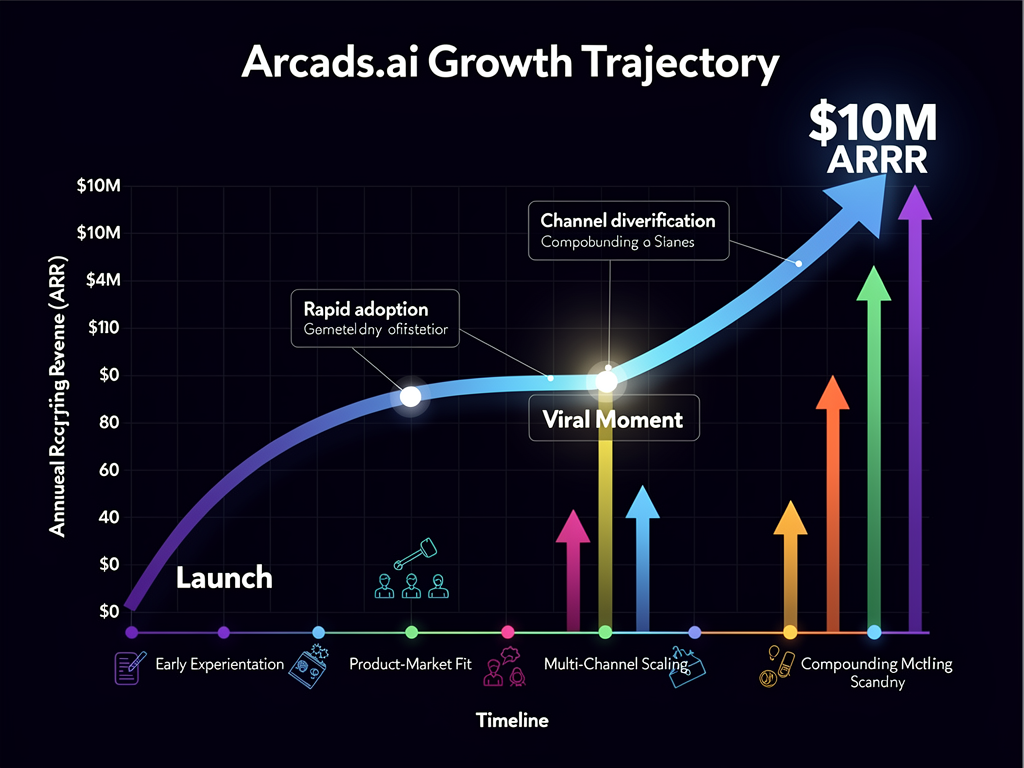
Case 2: AI Ad Tool Scaling from Zero to $10M ARR
Context: Arcads.ai built an AI-powered platform that generates ad creatives at scale. The founding team needed to validate demand and grow revenue without venture backing in the early stages.
What they did:
- Validated the idea pre-product by emailing the ideal customer profile and offering paid beta access at $1,000 per participant, closing three out of four calls.
- Built the tool after reaching $10,000 MRR in one month, then started posting daily on X to build an audience from zero followers.
- Leveraged a viral client video that drove explosive organic growth from $30,000 to $100,000 MRR.
- Layered six growth channels in parallel: paid ads using their own tool, direct outreach to top prospects, speaking at events like Affiliate World and App Growth Summit, influencer partnerships, coordinated product launch campaigns, and strategic integrations with complementary marketing tools.
Results:
- Before: $0 MRR.
- After: $10 million ARR (approximately $833,000 MRR) according to project data.
- Growth: $0 to $10,000 MRR in one month, then to $30,000, $100,000, and ultimately over $800,000 MRR.
- The viral moment saved an estimated six months of growth effort.
Their next target is $100 million ARR by expanding into untapped channels like SEO, AI-driven content, community building, and international localization.
Source: Tweet
Case 3: Web3 Ad Network Seeing CTR Drop but Conversions Rise
Context: A crypto-focused advertising platform noticed declining click-through rates across client campaigns but observed that actual business outcomes—sign-ups, token purchases, long-term engagement—were improving for many advertisers.
What they did:
- Analyzed user behavior shifts: audiences scrolling faster, filtering more aggressively, and ignoring generic or low-trust placements.
- Shifted campaign optimization away from CTR toward quality engagement and conversion metrics.
- Prioritized native ad formats and high-context placements where the project’s message aligned with the surrounding content and audience intent.
- Focused on deliberate user actions—wallet connections, Discord joins, demo requests—instead of curiosity clicks.
Results:
- Before: Higher CTR on generic, broad placements.
- After: Lower CTR overall, but measurably higher engagement quality and conversion rates on contextual placements.
- Growth: Campaigns running on integrated, native formats drove more direct actions without needing high click volume.
The insight: in Web3, attention is fleeting, but conversions must be earned through trust and context. Vanity metrics like raw clicks no longer predict success.
Source: Tweet
Case 4: Tactical Playbook from an NFT Marketing Lead
Context: An experienced Web3 marketer managing NFT and token projects shared a list of tactical lessons learned from running campaigns on X and coordinating cross-platform growth.
What they did:
- Limited brand account posts to three per day, always with media, never within two hours of each other.
- Used X lists to add community members, triggering notifications that often led to follows and retweets.
- Encouraged quote retweets (QRTs) of the brand’s own posts for visibility, while avoiding QRTing others to protect engagement metrics.
- Had a team member reply to every comment on brand posts to build personality and trust.
- Monitored all mentions using TweetDeck and boolean operators, engaging with everyone posting about the project.
- Filtered inbound partnerships aggressively, recognizing that 95% are scams but 5% are transformational.
- Avoided long threads, roadmaps, and text walls; shipped features and updated the community as progress happened.
- Used humor deliberately and kept campaigns simple to respect the audience’s short attention span.
Results:
- No specific revenue numbers shared, but the tactical framework reflects lessons from managing successful NFT and token launches.
- Key metric: 95% of inbound partnership offers identified as low-value or scams, allowing focus on the high-impact 5%.
- Posting discipline and reply strategy measurably improved engagement rates and community sentiment.
This case illustrates that execution details—cadence, reply habits, content format—matter as much as strategy.
Source: Tweet
Tools and Next Steps
Kaito: A platform that helps creators and projects identify trending topics in crypto and produce timely, relevant content. Used by creators earning significant monthly income from one-hour daily workflows.
TweetDeck: Free tool from X that lets you set up filtered columns using boolean operators. Monitor brand mentions, competitor activity, and keyword trends in real time without manual searching.
Dripchain: An engagement tool mentioned as a non-SocialFi way to stimulate meaningful interactions and reward active community members without relying on token gimmicks.
Arcads.ai: AI ad creative generator that teams use to produce 10x more video and image variations. Useful for paid campaigns, especially when you need to test multiple angles fast.
Twitter Audit Tools: Services like SparkToro or FollowerAudit help you check the quality of an influencer’s or partner’s audience before committing budget.
Event Platforms: Affiliate World, App Growth Summit, and regional crypto conferences offer speaking slots, live demo opportunities, and high-value networking. Underutilized by most teams.
Scaling Web3 projects requires expertise across paid media, influencer networks, and crypto-native distribution. FLEXE.io brings seven-plus years of Web3 marketing experience and has worked with over 700 clients, offering access to 10+ crypto traffic sources, 150+ media outlets, and 500+ KOLs to help teams grow users, holders, and brand awareness quickly. Reach out on Telegram: https://t.me/flexe_io_agency
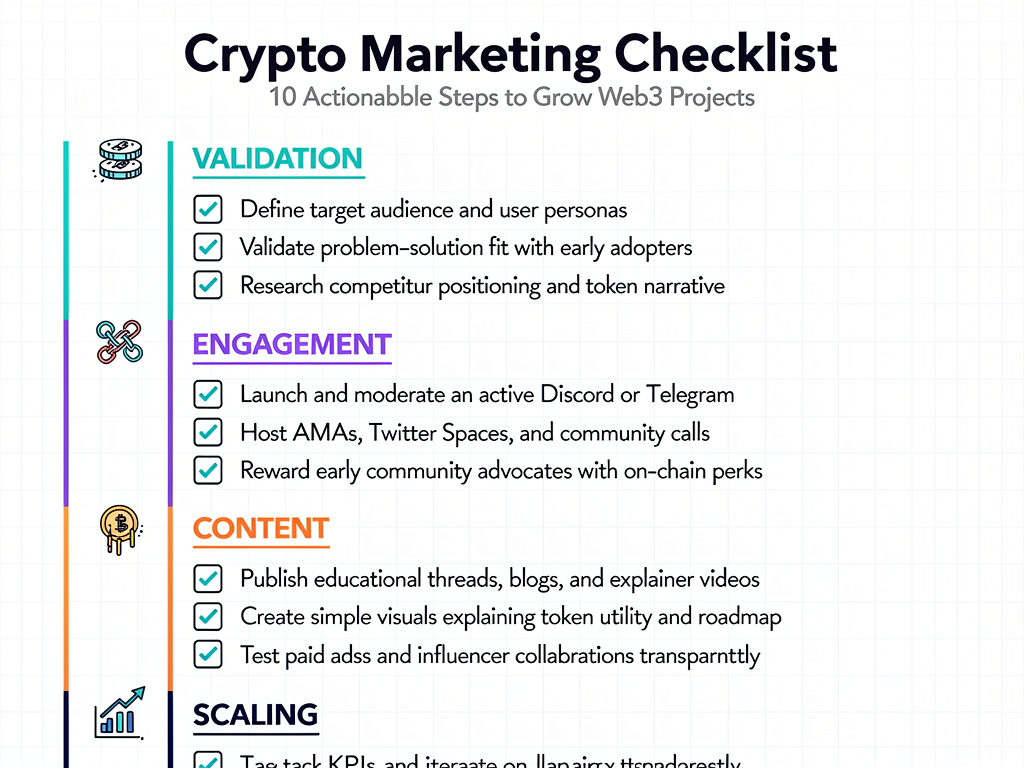
Checklist: Your Next Ten Actions
- [ ] Email ten ideal customers with a one-sentence value prop and paid demo offer (validate demand before building).
- [ ] Set up a TweetDeck column tracking every mention of your project name, founder names, and core keywords.
- [ ] Commit to posting three times daily on X with media, spaced at least two hours apart, for the next thirty days.
- [ ] Assign one team member to reply to every comment on your brand posts within two hours of posting.
- [ ] Audit your last five inbound partnership offers: verify follower quality, ask for client references, and walk away from anything that feels off.
- [ ] Identify one upcoming crypto conference where you can speak or demo; submit a proposal this week.
- [ ] Create a simple shared doc listing three to five shareable moments your product or campaign could generate, and plan how to amplify them.
- [ ] Replace your roadmap with a weekly or biweekly shipping update; announce features as they go live, not months in advance.
- [ ] Run a small paid ad test using native formats on a contextual crypto media site; track wallet connections or demo requests, not just clicks.
- [ ] Review your analytics: identify which posts, channels, or campaigns drove quality actions (holds past ninety days, repeat participation), and double down on those while cutting vanity-metric chases.
FAQ: Your Questions Answered
What makes Web3 marketing different from traditional digital marketing?
Web3 audiences are pseudonymous, globally distributed, and deeply skeptical of hype. Trust is earned through transparency, proof of delivery, and community engagement, not polished ad copy. Metrics like wallet connections and token holder retention matter more than email opens or page views.
How much should I spend on paid ads versus organic community building?
Start organic to validate messaging and build a core community. Once you have proof that people pay or hold, layer in paid ads on contextual, high-trust placements. Successful projects run both in parallel—organic creates authenticity, paid scales reach. Budget split varies, but many allocate 30–50% to paid once product-market fit is clear.
Are influencer partnerships worth the cost in crypto?
Yes, if you vet carefully. Avoid pay-to-shill arrangements with accounts full of bot followers. Partner with influencers who have real engagement, relevant audiences, and transparent pricing. The best deals involve rev share, token allocations, or long-term ambassadorships instead of one-off posts. Roughly 95% of inbound offers are low-value; focus on the credible 5%.
Should I focus on X, Discord, Telegram, or another platform?
X is best for public visibility, announcements, and building an audience. Discord works for deep community interaction and support. Telegram is popular for real-time updates and regional communities. Run all three if you have the team capacity, but start with X for reach and one community platform where your audience already gathers.
How do I measure success if CTR is falling across the industry?
Track quality actions: wallet connections, users who stay past ninety days, repeat participation in governance or events, demo requests that convert to paying customers. Engagement quality and conversion rates are rising even as CTR declines, especially on contextual placements. Optimize for long-term holder behavior, not curiosity clicks.
What is the fastest way to validate a new crypto project idea?
Email ten to twenty people in your target audience with a one-sentence pitch and offer paid early access—$500 to $1,000. If three out of four say yes and pay, you have real demand. If they ghost or ask for freebies, refine your value prop or pick a different market. This approach can generate $10,000 in monthly recurring revenue in thirty days and funds your first build.
How can small teams compete with well-funded projects?
Focus on execution discipline: post consistently with media, reply to every comment, engage with everyone mentioning you, and ship features instead of publishing roadmaps. Use free or low-cost tools like TweetDeck and Kaito to punch above your weight. Partner with specialists for paid ads, media, and influencer vetting instead of trying to learn everything in-house. One creator earned over $50,000 in six months spending just one hour daily on structured content.