Most articles about promoting blockchain projects are full of theory and hype. This one isn’t. Below you’ll find actual numbers from real campaigns—no fluff, no guesswork.
Key Takeaways
- A single micro-influencer crypto marketing campaign generated 427,000 impressions and 200% engagement growth in 30 days for a major project.
- Two DeFi campaigns with budgets of $0 and $10k delivered 30,000 and 60,000 community members respectively by nailing messaging first.
- One creator earned over $13,000 in two months by focusing on authentic content instead of robotic promotional posts.
- Cost-per-impression on some platforms dropped to single-digit dollars for 10,000 views, but trust erosion is becoming a major issue.
- Proven infrastructure campaigns can reach 98,000+ users and distribute $224M+ in rewards when execution aligns with technology.
- Success depends less on budget size and more on messaging clarity, product journeys, and authentic community engagement.
- Most high-reward campaigns fail to deliver advertised results, making transparency and realistic expectations critical.
Introduction
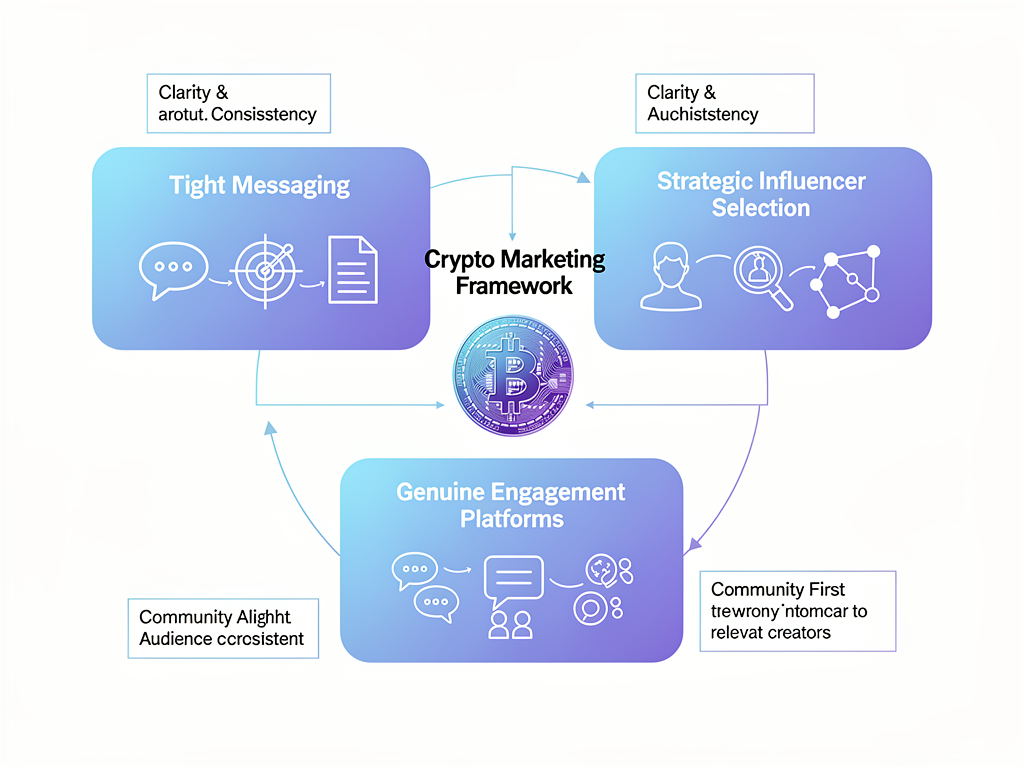
Launching a crypto marketing campaign in 2025 means navigating a landscape where hype no longer converts and communities demand proof before participation. Projects burn budgets on influencers who generate impressions but zero retention, or chase viral moments that fade within 48 hours. The reality is: campaigns that work today rely on transparent metrics, authentic storytelling, and distribution channels that match your audience’s behavior—not vanity plays that look good in pitch decks.
Here’s what matters: successful promotion combines tight messaging, strategic influencer selection, and platforms that reward genuine engagement over bot-driven volume. The cases below show how projects with budgets ranging from zero to mid-five figures built communities, drove on-chain activity, and earned measurable returns.
We’ll walk through documented implementations where teams shared step-by-step processes and verifiable outcomes, so you can replicate what worked and avoid what failed.
What Is a Crypto Marketing Campaign: Definition and Context
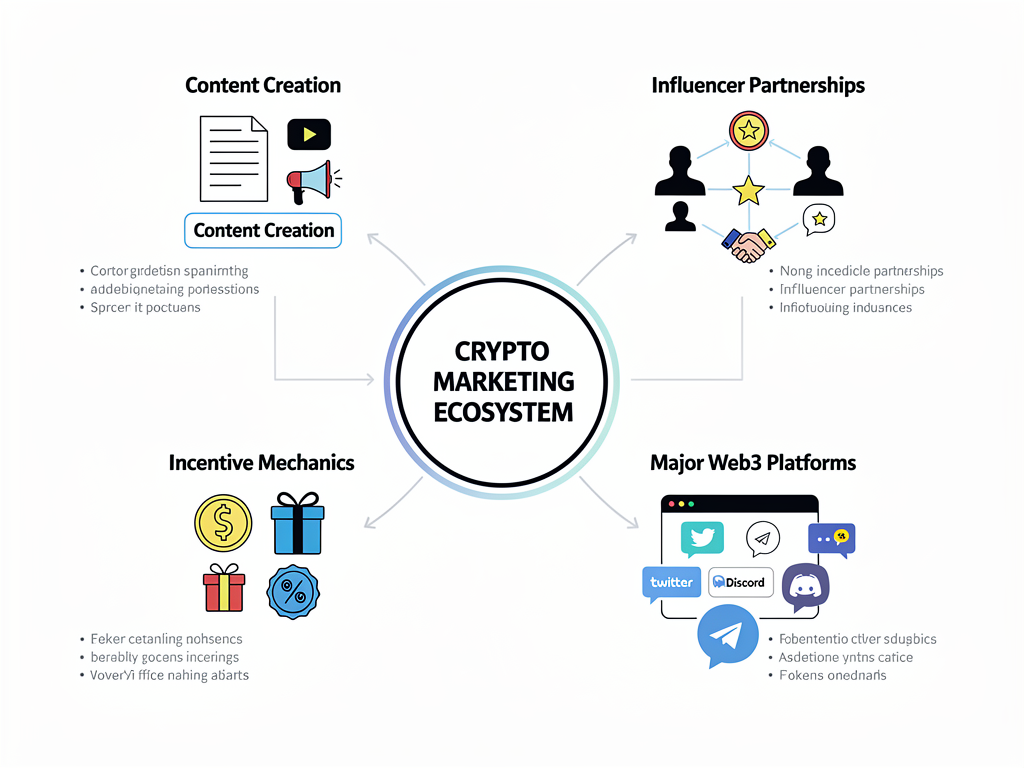
A crypto marketing campaign is a coordinated effort to build awareness, drive user acquisition, and grow community engagement for a blockchain project, token, protocol, or decentralized application. Recent implementations show that effective campaigns integrate content creation, influencer partnerships, incentive mechanics, and distribution across Web3-native platforms like Twitter (X), Discord, Telegram, and specialized earn-to-engage tools.
Modern deployments reveal three core objectives: increasing visibility among target users, converting attention into on-chain actions (wallet connections, transactions, staking), and sustaining engagement through transparent rewards and authentic narratives. Today’s blockchain leaders prioritize campaigns that balance paid reach with organic community building, leveraging data to optimize spend and prove ROI in real time.
This approach suits projects at any stage—pre-launch teams validating product-market fit, mid-stage protocols scaling user bases, and established platforms defending market share. It is not for projects without a working product, teams unwilling to share transparent metrics, or those expecting viral growth without strategic planning.
What These Implementations Actually Solve
Low visibility in a saturated market is the first challenge. Thousands of projects compete for attention daily, and most struggle to break through noise. Strategic campaigns solve this by combining micro-influencer networks with platform-specific distribution—one team generated 427,000 impressions in 30 days using 170 unique posts from targeted Key Opinion Leaders, reaching engaged audiences without relying on a single viral post.
Budget waste from misaligned messaging drains resources quickly. Many teams overspend on marketing before clarifying their value proposition or designing clear user journeys. Two DeFi campaigns demonstrated the alternative: by nailing messaging and product flows first, they grew communities by 30,000 and 60,000 members with budgets of $0 and $10,000 respectively—proving that preparation outperforms spending.
Robotic or forced promotional content kills trust and engagement. Audiences in blockchain spaces are skeptical of scripted endorsements and generic hype. One creator earned over $13,000 in two months by focusing on authentic, conversational content that explained product value without sounding like an ad, showing that quality storytelling converts better than volume.
Lack of measurable outcomes makes it impossible to optimize or justify budgets. Traditional metrics like impressions and followers often fail to correlate with on-chain activity or retention. Successful campaigns now track engagement rates, cost-per-action, community growth, and distributed rewards—like a ZK infrastructure project that documented 98,000+ users, $224M+ in rewards, and 130M+ proofs generated, linking marketing efforts directly to protocol adoption.
Trust erosion from over-promising campaigns damages both platforms and projects. Recent analysis of earn-to-engage campaigns revealed significant gaps between advertised rewards and actual distributions, with some campaigns delivering single-digit dollar costs per 10,000 impressions while promising millions in payouts. This discrepancy teaches projects to prioritize transparency and realistic goal-setting over inflated projections.
How This Works: Step-by-Step
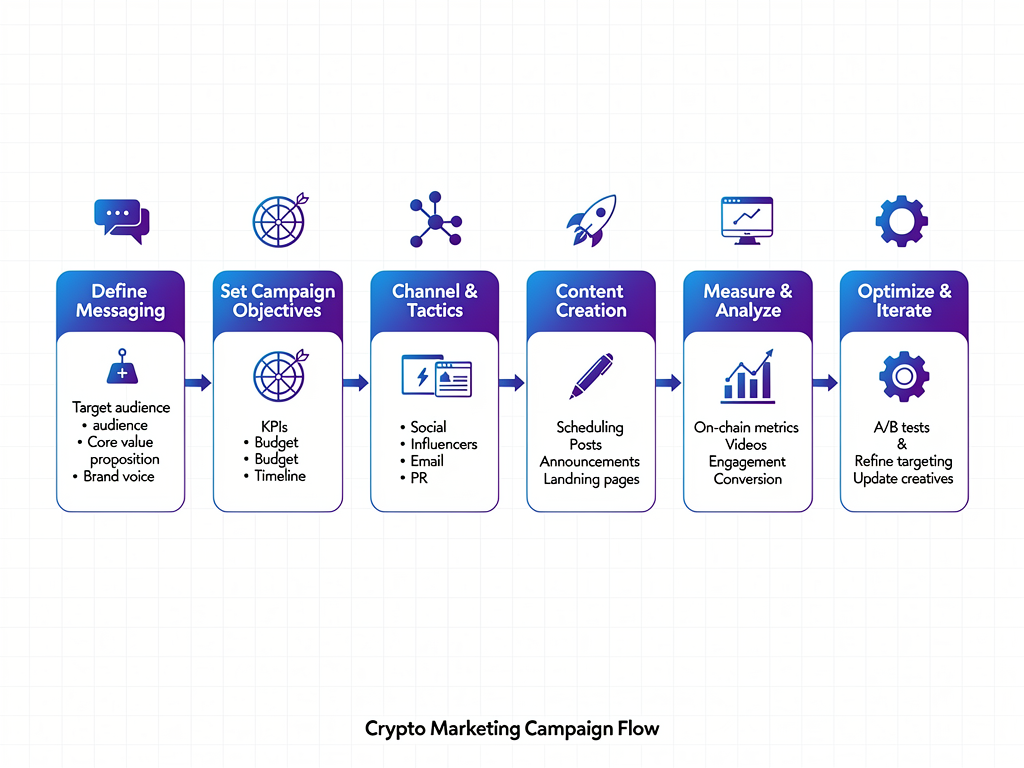
Step 1: Define Clear Messaging and Product Journeys
Before spending a dollar, document your value proposition, target user personas, and the exact path from first touchpoint to desired action. Many teams skip this step and pay for reach that generates curiosity but no conversions. One marketer prepared brand, product, and narrative assets before launching campaigns, enabling community growth of 30,000 and 60,000 members on minimal budgets.
Avoid launching campaigns with vague promises or complex jargon that confuses potential users. Test messaging with small audiences, gather feedback, and refine until the value is immediately clear.
Step 2: Select Distribution Channels That Match Audience Behavior
Identify where your target users already spend time—Twitter for real-time discussion, Discord for community, Telegram for updates, or specialized platforms for incentivized engagement. A project using micro-influencer outreach on Twitter generated 170 unique posts and 427,000 impressions by aligning channel choice with audience habits rather than chasing trendy platforms.
Many teams waste budgets on channels where their audience doesn’t exist. If your users are active DeFi traders, prioritize Twitter and DeFi-focused platforms; if you’re targeting NFT collectors, focus on Discord and NFT marketplaces.
Step 3: Build or Engage Authentic Influencer Networks
Micro-influencers with engaged audiences often outperform large accounts with passive followers. One campaign achieved a 4.6% average engagement rate and 200% brand account engagement boost by working with Key Opinion Leaders who genuinely understood and used the product, creating authentic content rather than scripted promotions.
The mistake here is choosing influencers based solely on follower count. Vet potential partners for audience alignment, engagement quality, and content style before committing budget.
Step 4: Design Transparent Incentive Mechanics
If your campaign includes rewards or airdrops, specify eligibility, distribution timelines, and payout structures upfront. Projects that promise large rewards but change terms or under-deliver destroy trust and create backlash. Analysis of recent earn-to-engage campaigns showed that many advertised millions in rewards but distributed only fractions, eroding platform credibility.
Set realistic reward pools, communicate clearly, and over-deliver when possible. Transparency builds long-term community loyalty far more effectively than inflated initial promises.
Step 5: Create Content That Educates and Entertains
Audiences engage with content that solves problems, tells stories, or entertains—not promotional copy disguised as education. A creator earned $13,000 in two months by producing content that explained product benefits naturally, avoiding robotic or forced language. Each post demonstrated value without sounding like an advertisement.
Teams often produce content that only insiders understand. Simplify technical concepts, use real-world analogies, and focus on outcomes that matter to users—like saving fees, earning yield, or accessing exclusive features.
Step 6: Track Metrics That Correlate with Business Goals
Measure what drives value: on-chain transactions, wallet connections, community growth, engagement rates, cost-per-acquisition, and retention. A ZK infrastructure campaign documented 98,000+ users, $224M+ distributed rewards, and 130M+ proofs generated, linking marketing spend directly to protocol adoption and usage.
Vanity metrics like total impressions or follower counts mean little without corresponding user actions. Set up analytics to track the full funnel from awareness to conversion to retention.
Step 7: Iterate Based on Data and Community Feedback
Review campaign performance weekly, identify what’s working, and double down. Cut underperforming channels or tactics quickly. Successful marketers adjust messaging, test new influencers, and refine incentive structures based on real-time feedback rather than sticking to a rigid plan.
The failure mode is setting a campaign and ignoring it until completion. Continuous optimization separates campaigns that hit targets from those that burn budgets.
Where Most Projects Fail (and How to Fix It)
Launching campaigns without product-market fit is a common trap. Teams assume marketing will generate demand for products users don’t want or understand. If your messaging isn’t converting in organic conversations, paid campaigns will amplify confusion, not clarity. Fix this by validating product value with small user groups before scaling spend.
Overspending on reach while ignoring engagement wastes resources. High impression counts mean nothing if users scroll past without acting. Projects that prioritize engagement rate, cost-per-action, and retention metrics over vanity numbers build sustainable growth. One DeFi marketer grew communities of 30,000 and 60,000 members on budgets of $0 and $10,000 by focusing on messaging quality, not paid reach.
Choosing influencers based on follower count alone leads to poor ROI. Large accounts with disengaged audiences generate impressions but few conversions. A micro-influencer campaign achieved 4.6% engagement and 200% brand account growth by selecting Key Opinion Leaders with genuinely engaged communities. Vet influencers for audience alignment, content quality, and authentic product interest.
Under-delivering on campaign promises destroys trust permanently. Analysis of recent earn-to-engage platforms revealed significant gaps between advertised rewards and actual distributions, eroding user confidence. Set conservative reward estimates, communicate timelines clearly, and over-deliver when possible. Transparency and reliability build long-term community loyalty.
Ignoring platform-specific best practices reduces campaign effectiveness. Each channel has unique norms—Twitter rewards concise, opinionated content; Discord requires active community management; Telegram favors frequent updates. A creator earned $13,000 in two months by tailoring content style to each platform’s audience expectations rather than reposting identical messages everywhere.
When teams struggle with execution, expert guidance accelerates results. FLEXE.io, with 7+ years in Web3 marketing and experience serving 700+ clients, provides access to 150+ media outlets and 500+ KOLs to help projects scale campaigns efficiently. Reach out on Telegram: https://t.me/flexe_io_agency
Real Cases with Verified Numbers
Case 1: Micro-Influencer Campaign Drives 200% Engagement Growth
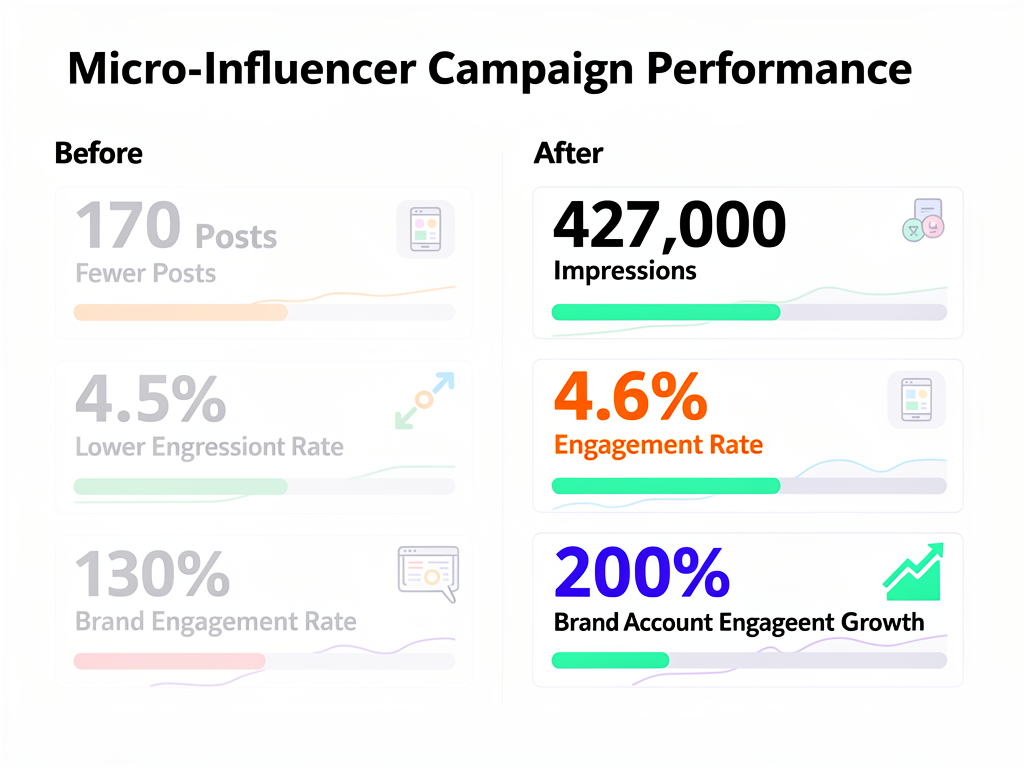
Context: A major crypto project needed to boost brand visibility and community engagement within a competitive market.
What they did:
- Organized a micro-influencer campaign targeting Key Opinion Leaders with engaged, niche audiences.
- Ran the campaign for one month, coordinating content creation and publication timing.
Results:
- Before: Limited brand account engagement and low organic reach.
- After: 170 unique posts generated, 427,000 impressions delivered, 4.6% average engagement rate achieved.
- Growth: 200% increase in brand account engagement, proving that targeted influencer partnerships outperform broad reach strategies.
The key insight here is that small, engaged audiences convert far better than large, passive ones. Quality of influencer selection matters more than follower counts.
Source: Tweet
Case 2: Zero-Budget and Low-Budget DeFi Campaigns Scale Communities
Context: Two DeFi ecosystem projects needed community growth without overspending, operating with limited budgets of $0 and $10,000.
What they did:
- Focused on nailing messaging, product journeys, and brand narrative before launching campaigns.
- Executed targeted outreach and content distribution through organic channels and minimal paid promotion.
Results:
- Before: Early-stage projects with minimal community presence.
- After: First campaign (according to project data) grew community by 30,000 members on $0 spend; second campaign reached 60,000 members on $10,000 budget.
- Growth: Demonstrated that preparation and messaging clarity reduce cost-per-acquisition dramatically compared to campaigns that prioritize spend over strategy.
Preparation matters more than budget size. Teams that invest time in messaging and product clarity achieve better outcomes with less spend.
Source: Tweet
Case 3: Authentic Content Creation Earns $13,000 in Two Months
Context: An individual creator joined a Layer-2 blockchain campaign with the goal of demonstrating how quality content drives visibility and engagement.
What they did:
- Participated in the Morph campaign on a specialized platform, creating educational and engaging content.
- Focused on authentic, non-robotic messaging that explained product value naturally over a two-month period.
Results:
- Before: No established relationship with the project or platform.
- After: Earned over $13,000 from campaign participation.
- Growth: Proved that content quality and authenticity generate measurable earnings and audience trust, offering a replicable model for other creators.
Quality trumps quantity. Authentic storytelling that educates and engages converts better than high-volume promotional posts.
Source: Tweet
Case 4: Web3 Marketing Platform Delivers Low Cost-Per-Impression but Trust Erodes
Context: A Web3 marketing platform facilitated earn-to-engage campaigns, promising high rewards to users and cost-effective reach for projects.
What they did:
- Ran multiple campaigns advertising millions in rewards to incentivize user participation and content creation.
- Delivered reach and impressions at scale across crypto Twitter.
Results:
- Before: High user expectations based on advertised reward pools.
- After: Some campaigns delivered single-digit dollar costs per 10,000 impressions, according to analysis; actual reward distributions fell significantly short of promises.
- Growth: While cost-per-impression was low, trust erosion among users grew as campaigns failed to deliver advertised outcomes, highlighting the importance of transparency and realistic projections.
Low cost matters less than trust. Projects and platforms must balance efficiency with honest communication to build sustainable communities.
Source: Tweet
Case 5: ZK Infrastructure Campaign Reaches 98,000+ Users and Distributes $224M+
Context: A zero-knowledge proof infrastructure project launched applications and a rewards campaign to drive adoption and demonstrate technology viability.
What they did:
- Built and deployed applications on proven ZK infrastructure, creating user-facing products with real utility.
- Distributed rewards to incentivize early adoption and sustained engagement.
Results:
- Before: Technology in development with limited real-world usage.
- After: 98,000+ users participated, according to project data; $224M+ in rewards distributed; 130M+ ZK proofs generated.
- Growth: Demonstrated that campaigns aligned with functional technology and transparent incentives can achieve significant scale and measurable on-chain activity.
Technology must work before marketing scales. Campaigns built on functional products and transparent reward systems drive genuine adoption.
Source: Tweet
Tools and Next Steps
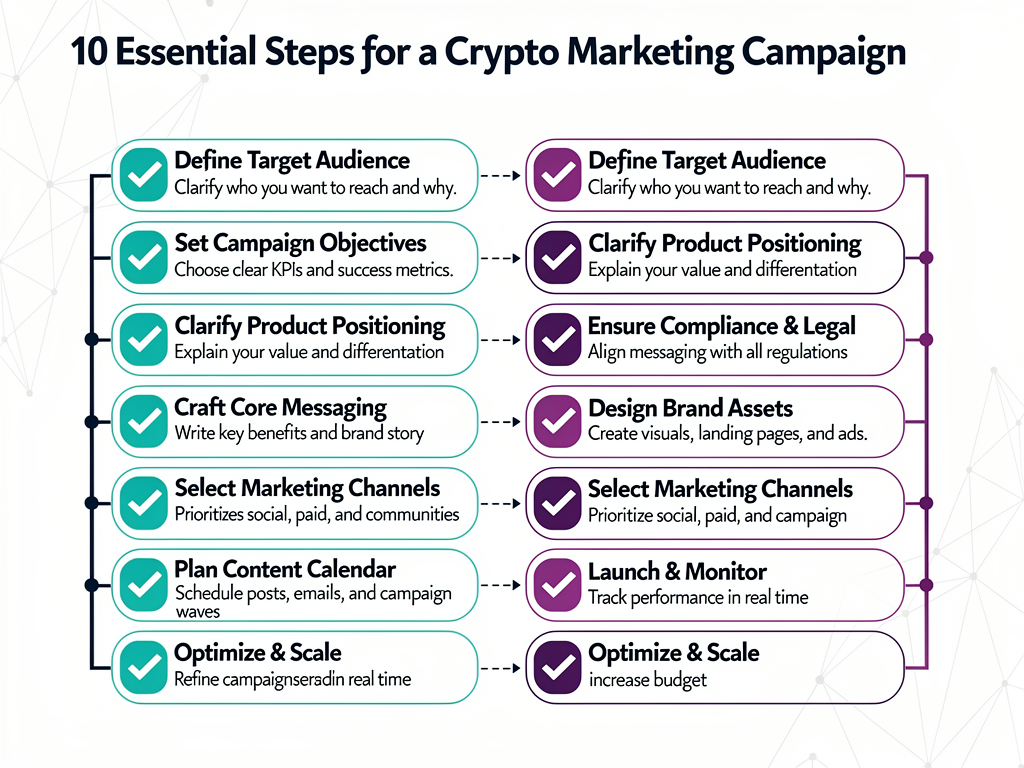
Several platforms and tools support campaign planning and execution. Twitter (X) remains the primary channel for real-time engagement and influencer partnerships. Discord and Telegram enable community management and direct communication. Specialized Web3 marketing platforms offer earn-to-engage mechanics, though teams should prioritize those with transparent track records and realistic reward structures. Analytics tools that track on-chain activity, engagement rates, and cost-per-acquisition help optimize spend and prove ROI.
To get started, follow this checklist:
- [ ] Define your target user persona and document the exact problem your product solves for them (clarity prevents wasted spend).
- [ ] Write and test three versions of your core value proposition with small audiences before scaling (messaging refinement improves conversion).
- [ ] Identify 10–20 micro-influencers whose audiences match your target users, and vet them for engagement quality (authentic reach beats follower counts).
- [ ] Set up analytics to track on-chain actions, not just impressions—wallet connections, transactions, staking, and retention (measure what matters).
- [ ] Design transparent incentive mechanics with clear eligibility, timelines, and payout structures, and communicate them publicly (trust is earned through honesty).
- [ ] Launch a pilot campaign with 10–20% of your budget, gather data for two weeks, and optimize before scaling (iteration beats guessing).
- [ ] Create a content calendar with educational, entertaining, and promotional posts in a 60/30/10 ratio (audiences engage with value, not ads).
- [ ] Schedule weekly reviews of campaign metrics, cut underperforming tactics, and double down on what works (agility separates success from failure).
- [ ] Build a community management process for Discord and Telegram to answer questions and gather feedback daily (engagement requires responsiveness).
- [ ] Document learnings and share results transparently to build credibility and attract future community members (transparency compounds trust).
For teams that need expert execution and access to established networks, FLEXE.io brings 7+ years of Web3 marketing experience and 700+ client relationships, connecting projects to 10+ crypto traffic sources, 150+ media outlets, and 500+ KOLs. DM us on Telegram: https://t.me/flexe_io_agency
FAQ: Your Questions Answered
What budget do I need to run a successful crypto marketing campaign?
Success depends more on messaging clarity and strategy than budget size. Two documented DeFi campaigns grew communities by 30,000 and 60,000 members with budgets of $0 and $10,000 by focusing on product journeys and authentic outreach. Start with a pilot at 10–20% of your total budget, optimize based on data, then scale what works.
How do I choose the right influencers for my project?
Prioritize engagement quality over follower count. Vet influencers for audience alignment, content authenticity, and genuine product interest. A micro-influencer campaign achieved 4.6% engagement and 200% brand growth by selecting Key Opinion Leaders with engaged, niche communities rather than chasing large accounts with passive audiences.
What metrics should I track to measure campaign success?
Focus on metrics that correlate with business goals: on-chain actions (wallet connections, transactions, staking), engagement rates, cost-per-acquisition, community growth, and retention. Vanity metrics like total impressions or follower counts matter less than user actions that drive protocol adoption and revenue.
How long does it take to see results from promotional efforts?
Micro-influencer campaigns can generate measurable engagement and reach within 30 days. One project achieved 427,000 impressions and 200% engagement growth in one month. Community-building efforts require longer timelines—expect 60–90 days to establish sustained engagement and trust, especially for campaigns prioritizing organic growth over paid reach.
Why do some high-reward campaigns fail to deliver?
Many platforms over-promise rewards to attract participants but under-deliver due to budget changes, unrealistic projections, or opaque distribution processes. Analysis of recent earn-to-engage campaigns revealed significant gaps between advertised and actual payouts, eroding user trust. Projects should set conservative reward pools, communicate terms clearly, and prioritize transparency over hype.
Should I focus on Twitter, Discord, or Telegram for my campaign?
Channel choice depends on your audience’s behavior and your campaign goals. Twitter excels for real-time engagement and influencer partnerships; Discord suits community building and ongoing conversations; Telegram works for updates and direct communication. Most successful campaigns integrate multiple channels, tailoring content style to each platform’s norms.
How do I avoid wasting budget on ineffective tactics?
Run pilot campaigns with 10–20% of your budget, track performance weekly, and cut underperforming tactics quickly. Nail messaging and product journeys before scaling spend. Two DeFi campaigns achieved significant community growth on minimal budgets by prioritizing preparation over spend, proving that strategy reduces cost-per-acquisition more effectively than throwing money at channels.