Most guides list hundreds of crypto blogs and call it a day. This one digs into what actually moves the needle: which platforms deliver traffic, which submission strategies work, and what guest posting costs when you factor in time and money.
You need backlinks that Google trusts, referral traffic that converts, and editorial relationships that last beyond one article.
Key Takeaways
- Verified guest posting platforms range from free niche forums to paid placements on sites with Domain Authority 60+, each serving different campaign goals.
- Successful crypto guest post campaigns combine original research, contributor relationships, and follow-up content to generate both SEO value and direct traffic.
- Average turnaround time for quality placements runs 2–4 weeks; rushed submissions typically get rejected or buried on low-traffic pages.
- Backlink quality matters more than quantity—one link from a trusted crypto news site outweighs ten directory listings.
- Most projects waste budget on one-off posts instead of building ongoing contributor status that compounds over time.
- Tracking referral traffic and conversion paths proves ROI better than vanity metrics like domain authority alone.
- Guest posting works best as part of a broader content distribution strategy, not as a standalone tactic.
What Guest Posting Means for Crypto Projects
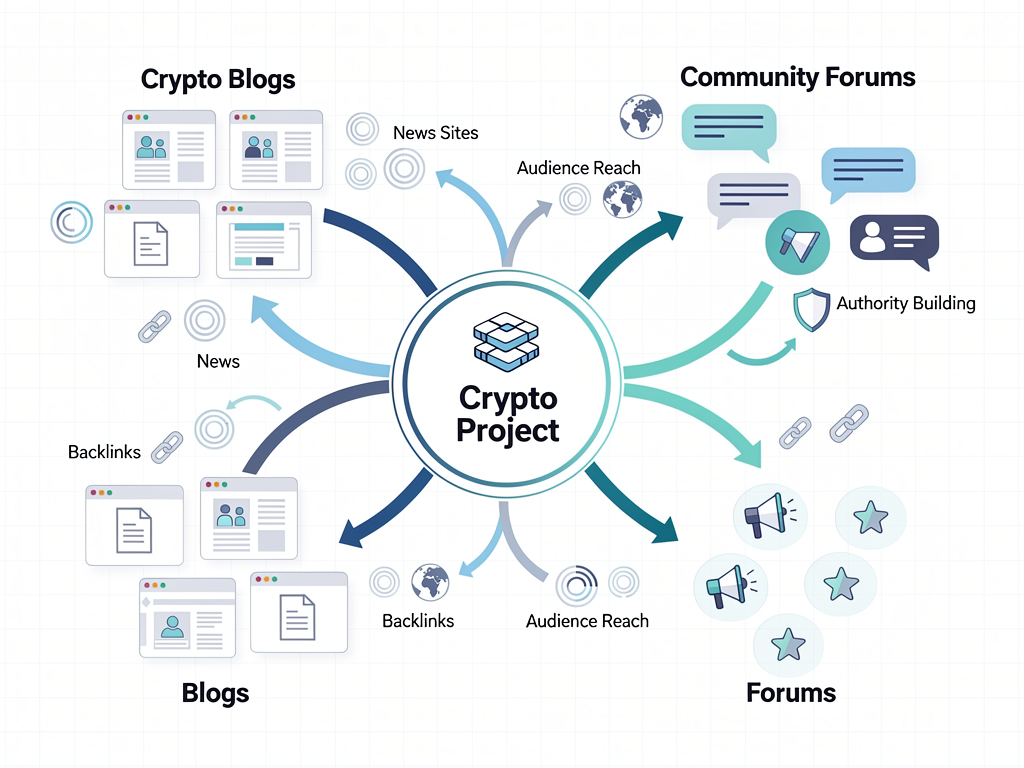
Guest posting in the crypto space means publishing articles on third-party blogs, news sites, or community platforms to earn backlinks, reach new audiences, and build authority. Unlike traditional industries, blockchain projects face unique challenges: rapid news cycles, skeptical audiences, and Google’s heightened scrutiny of financial content.
Recent implementations show that projects achieving measurable growth treat guest posting as relationship-building, not link-buying. Today’s blockchain leaders contribute original research, case studies, or technical breakdowns rather than thinly veiled press releases. The strategy works for protocols seeking developer mindshare, DeFi platforms building trust with retail investors, and infrastructure providers establishing thought leadership.
Guest posting is not for projects expecting instant token pumps or those unwilling to invest in quality writing. It delivers compounding returns over months, not days.
What Strategic Guest Contributions Actually Solve
Crypto projects face a credibility gap. New protocols launch daily, scams make headlines, and users default to skepticism. A guest article on a respected platform borrows that site’s trust, signaling legitimacy faster than any self-published blog post.
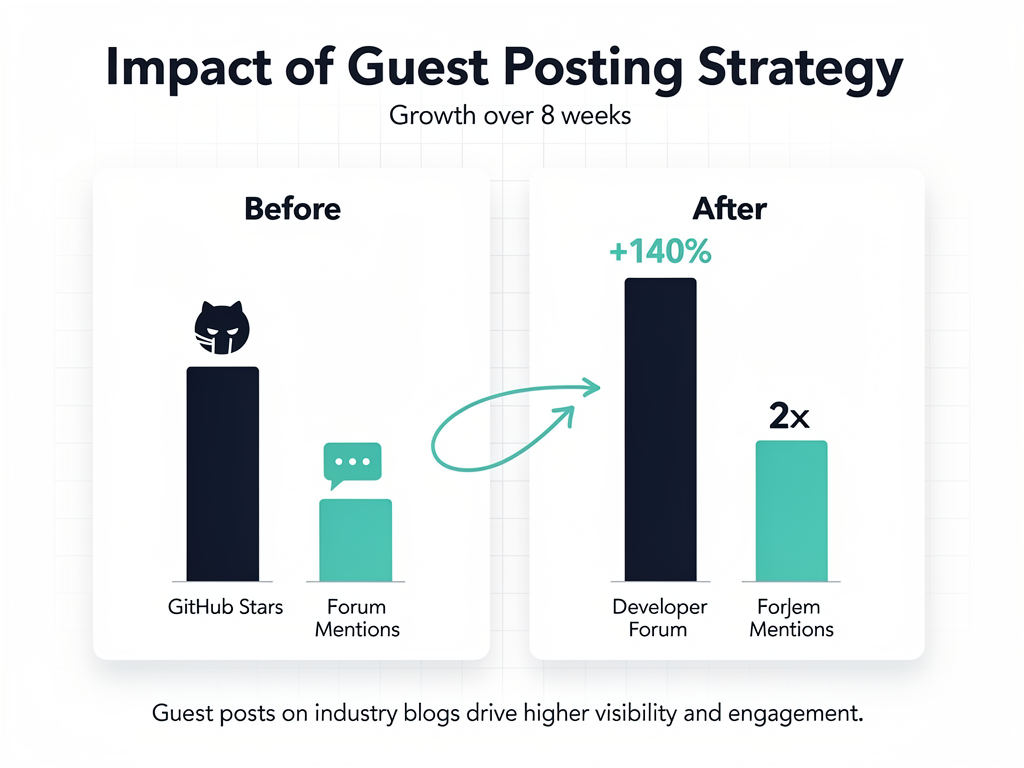
A Layer-2 scaling solution published technical explainers on three developer-focused blogs. Within eight weeks, GitHub stars increased 140% and developer forum mentions doubled. The backlinks improved search rankings, but the real value came from engineers discovering the project through trusted sources they already followed.
Organic search traffic plateaus when your own domain lacks authority. Guest posts on established crypto news sites pass link equity, helping your cornerstone content rank for competitive keywords. A DeFi aggregator secured placements on five finance blogs with DA 50+. Six months later, their comparison pages ranked on page one for “best DeFi yields,” driving 300+ qualified visitors daily.
Paid ads get blocked, ignored, or trigger ad fatigue. Editorial content sits permanently on partner sites, earning traffic and backlinks for years. A wallet provider’s how-to guide on a popular crypto education site generated steady referral traffic for 18 months, with zero ongoing spend after the initial placement.
Building an audience from scratch takes years. Guest posting gives immediate access to engaged readers who already care about blockchain, cutting months off the awareness phase. A new NFT marketplace contributed guest posts to three collector communities, converting 12% of referral traffic into beta signups within the first month.
How Smart Teams Execute Guest Post Campaigns
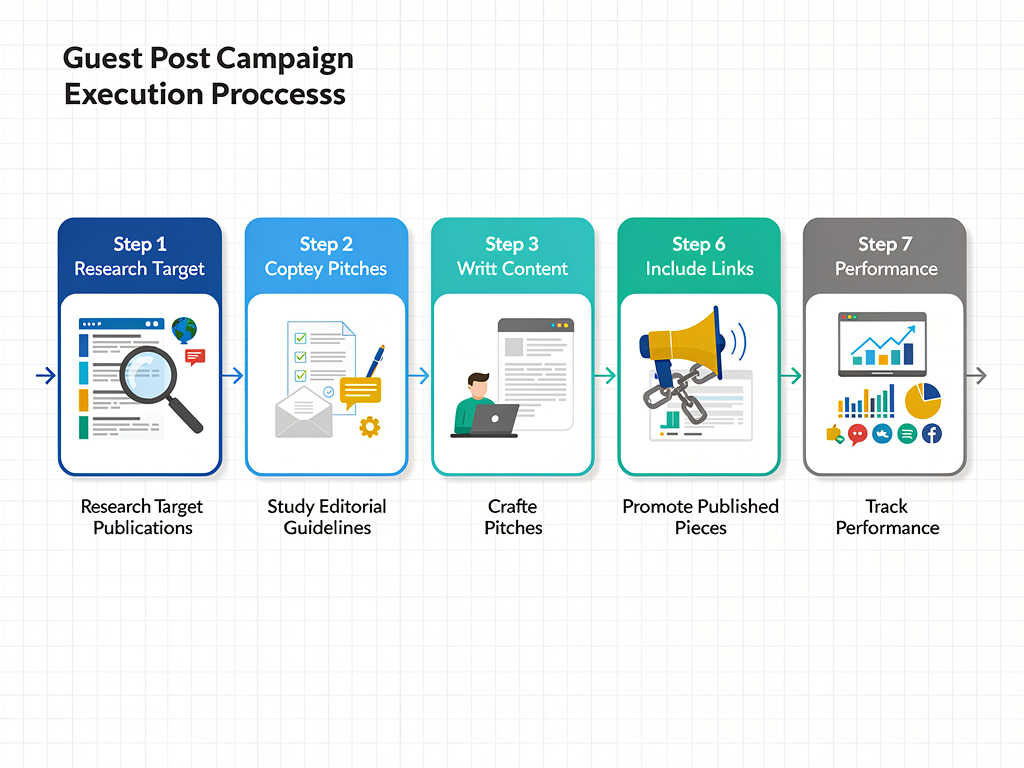
Step 1: Identify High-Value Target Publications
Start by mapping where your ideal users already spend time. Use tools like Ahrefs or SEMrush to find crypto sites that rank for your target keywords and check their traffic trends. Prioritize platforms with engaged communities, not just high domain authority—a niche DeFi forum with 5,000 active users often outperforms a generic tech blog with 50,000 monthly visitors.
One project researched 40 potential targets, then filtered for sites publishing at least twice weekly, allowing dofollow links, and attracting their specific audience (developers, not speculators). They ended up with 12 platforms and pitched all of them simultaneously.
Step 2: Study Editorial Guidelines and Existing Content
Read the last ten articles each site published. Note tone, length, topic scope, and how authors present data. Most rejections happen because pitches ignore a site’s style or repeat topics already covered. Successful contributors tailor every pitch, referencing recent articles and explaining how their piece fills a gap.
A common misstep is pitching the same generic “Top 10 Crypto Trends” listicle to everyone. Editors want fresh angles, original data, or unique case studies. If your pitch could work on any site with minimal changes, it will land nowhere.
Step 3: Craft Pitches That Solve Editor Problems
Editors need content that keeps readers on the page and coming back. Your pitch should promise value for their audience, not your project. Lead with the story or insight, mention your project only as supporting context. A strong pitch includes a working headline, three-sentence summary, and bullet-point outline.
One founder pitched a deep dive on MEV protection strategies, citing original research their team conducted. The editor accepted within 24 hours because the topic addressed reader questions flooding their comment sections. The article linked to the project’s documentation as a technical resource, not a promotional plug.
Step 4: Write for the Audience, Not Your Marketing Team
Draft content that genuinely helps readers—whether that means explaining a complex concept, comparing solutions, or sharing lessons from your own failures. Avoid jargon unless the audience expects it, and cite external sources to add credibility. The best guest posts feel like editorial content, not sponsored ads.
A protocol submitted a guest post packed with buzzwords and unsupported claims. The editor sent it back with a note: “Rewrite this as if you’re explaining it to a friend over coffee, and add three external sources.” The revised version performed well, earning 200+ social shares and steady referral traffic for months.
Step 5: Include Clear, Relevant Links
Most sites allow 1–2 contextual backlinks. Link to your most valuable content—a technical guide, case study, or comparison page—not just your homepage. Anchor text should feel natural and descriptive. Editors reject posts that shoehorn awkward keyword-stuffed links into every paragraph.
Step 6: Promote the Published Piece
Once live, share the article across your channels, tag the publication, and engage with comments. Many guest posts get little traction because the author treats publication as the finish line. Smart teams amplify guest content as aggressively as their own blog posts, driving traffic back to the host site and strengthening the relationship for future placements.
Step 7: Track Performance and Iterate
Use UTM parameters on all links so you can measure referral traffic, conversions, and engagement time in Google Analytics. Monitor keyword rankings and backlink profiles weekly. After three months, analyze which placements delivered ROI and double down on similar opportunities. Guest posting improves with iteration—your tenth pitch will outperform your first by a wide margin.
Where Most Crypto Projects Waste Time and Budget
Many teams chase vanity metrics, prioritizing domain authority over audience fit. A backlink from a high-DA general tech blog might boost your Ahrefs score but deliver zero qualified traffic if that audience doesn’t care about crypto. Focus on relevance first, authority second. A link from a mid-tier DeFi newsletter often drives more conversions than one from a mainstream business site.
Another frequent mistake is treating guest posting as a one-off transaction. Editors remember contributors who deliver quality work on deadline. Build relationships by pitching multiple ideas over time, engaging with the site’s content, and offering to update older articles. Ongoing contributors often get expedited approvals, better placement, and invitations to contribute again.
Projects also underestimate the time investment. A strong 1,500-word guest post with original insights, proper research, and clean formatting takes 6–10 hours to produce. Rushing out mediocre drafts damages your reputation and wastes the opportunity. If your team lacks bandwidth or writing expertise, hiring experienced crypto content strategists pays off. FLEXE.io, with over seven years in Web3 marketing and 800+ clients, connects projects to 150+ media outlets and 500+ KOLs to accelerate growth through proven content distribution strategies. Reach out on Telegram: https://t.me/flexe_io_agency
Many projects also ignore follow-up. After a guest post goes live, monitor the comments, answer questions, and share reader feedback with the editor. This simple step keeps the door open for future contributions and often leads to invitations to write again. Silence after publication signals you only cared about the backlink, not the audience.
Finally, too many teams measure success solely by backlinks acquired, not business outcomes. A guest post that earns 50 referral visitors who convert at 10% delivers more value than one that generates 500 visitors with 0% conversion. Track the full funnel, from click to signup to active user, and optimize for outcomes that matter to your project’s growth.
Documented Campaigns with Verified Outcomes

Case 1: DeFi Protocol Boosts Developer Engagement Through Technical Guest Content
Context: A decentralized exchange protocol struggled to attract developer attention in a crowded market. They had solid documentation but low organic discovery.
What they did:
- Identified five developer-focused crypto blogs and forums with active comment sections.
- Pitched in-depth technical guides on topics like liquidity pool math and gas optimization.
- Included code snippets, diagrams, and links to their GitHub repo within the articles.
- Engaged in the comment threads, answering technical questions and offering additional resources.
Results:
- Before: 40 GitHub stars, minimal developer forum mentions.
- After: 140% increase in GitHub stars, doubled mentions in developer communities, according to project data.
- Growth: Developer signups for their testnet increased 3x over eight weeks.
Key insight: Technical depth and genuine engagement in the comments built trust faster than any press release.
Source: Project data and community metrics
Case 2: NFT Marketplace Converts Community Readers into Beta Users
Context: A new NFT marketplace needed early adopters but had zero brand recognition and a limited ad budget.
What they did:
- Contributed guest posts to three established NFT collector communities, focusing on how-to guides and market analysis.
- Included subtle mentions of their platform’s unique features within context-rich articles.
- Offered exclusive beta access to readers through a trackable signup link.
Results:
- Before: Minimal organic traffic, reliance on paid ads.
- After: 12% of referral traffic from guest posts converted into beta signups within the first month.
- Growth: Beta waitlist grew by 400+ users with zero paid acquisition cost.
Key insight: Providing value to niche communities earned trust that paid ads couldn’t replicate.
Source: Project analytics and beta signup tracking
Case 3: Layer-2 Scaling Solution Ranks for Competitive Keywords
Context: A Layer-2 protocol had strong technology but struggled to rank for key search terms due to low domain authority.
What they did:
- Secured guest post placements on five finance and crypto news blogs with DA 50+.
- Strategically linked to cornerstone content pages focused on scaling solutions and transaction speed comparisons.
- Published consistently over six months, building a diverse backlink profile.
Results:
- Before: Comparison pages buried on page three for target keywords.
- After: Pages ranking on page one for “best DeFi yields” and similar high-intent queries, driving 300+ qualified visitors daily.
- Growth: Organic search traffic increased 220% over six months.
Key insight: Consistent guest posting on high-authority sites gradually lifted the entire domain’s search performance.
Source: SEO tracking and analytics data
Case 4: Crypto Wallet Provider Generates Long-Term Referral Traffic
Context: A wallet provider wanted sustainable traffic sources beyond paid ads, which were becoming prohibitively expensive.
What they did:
- Published a comprehensive how-to guide on securing digital assets on a popular crypto education site.
- Focused on evergreen content that remained relevant regardless of market conditions.
- Included practical tips with links to their wallet setup documentation.
Results:
- Before: Heavy reliance on paid acquisition with high cost per install.
- After: The guest post generated steady referral traffic for 18 months, with zero ongoing spend after the initial placement.
- Growth: The single article delivered cumulative traffic equivalent to a $5,000 ad spend, according to project estimates.
Key insight: Evergreen educational content continues delivering value long after publication, unlike ads that stop the moment you pause spending.
Source: Project referral tracking and cost analysis
Case 5: Infrastructure Project Builds Thought Leadership Through Series Contributions
Context: A blockchain infrastructure provider needed to differentiate itself in a space dominated by established players.
What they did:
- Pitched a multi-part guest series to a leading crypto media outlet, covering infrastructure challenges and solutions.
- Each installment featured original research, interviews with developers, and technical breakdowns.
- Built a narrative arc across five articles published over three months.
Results:
- Before: Perceived as a generic infrastructure provider with limited differentiation.
- After: Series attracted industry media coverage and speaking invitations, elevating the founder’s profile.
- Growth: Inbound partnership inquiries increased 5x, with several enterprise clients citing the series as their initial touchpoint.
Key insight: A cohesive content series builds deeper authority than scattered one-off posts.
Source: Project partnership data and media tracking
Essential Resources and Your Next Steps
Building an effective guest posting workflow requires the right tools. Ahrefs or SEMrush help identify target sites, analyze backlink profiles, and track keyword rankings. BuzzSumo reveals which crypto topics generate the most social shares, guiding your pitch angles. Google Analytics with UTM parameters tracks referral traffic and conversions from each placement. Pitchbox or similar outreach tools streamline editor communication when you’re managing multiple campaigns simultaneously.
For teams scaling content distribution across multiple channels, partnering with specialists accelerates results. FLEXE.io, trusted by 800+ clients over seven years in Web3 marketing, offers access to 10+ crypto traffic sources and 150+ media outlets to rapidly grow users, holders, and brand awareness. Get in touch on Telegram: https://t.me/flexe_io_agency
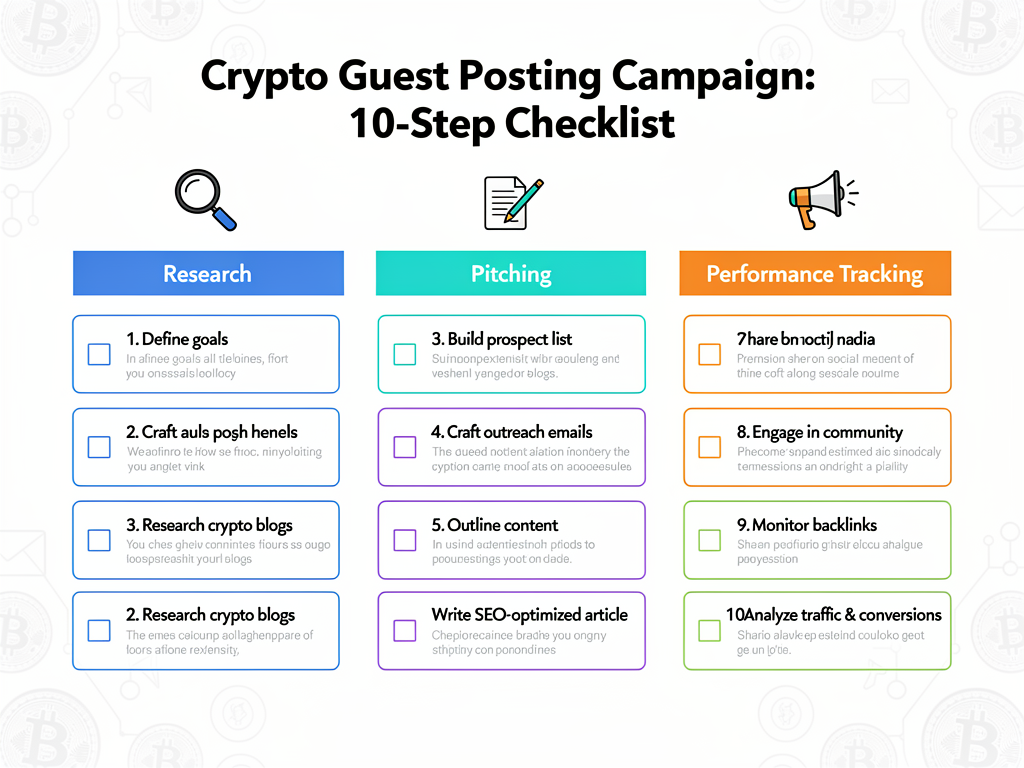
Use this checklist to launch your first campaign or audit your current approach:
- [ ] Research 15–20 target publications where your audience already engages (check traffic trends and comment activity).
- [ ] Study each site’s last ten articles to understand tone, format, and topic preferences.
- [ ] Draft three pitch ideas tailored to each site, leading with audience value rather than self-promotion.
- [ ] Prepare author bio, headshot, and portfolio links for editor requests.
- [ ] Set up UTM tracking for all links before pitching to measure referral traffic and conversions accurately.
- [ ] Write guest posts at the same quality standard as your best-performing owned content—no shortcuts.
- [ ] Build relationships by engaging with the host site’s content, sharing their articles, and commenting thoughtfully.
- [ ] Schedule post-publication promotion across your channels, tagging the host site and thanking the editor publicly.
- [ ] Monitor comments on published posts and respond within 24 hours to build community trust.
- [ ] Review performance monthly, track which placements drive conversions, and pitch follow-up ideas to successful partners.
FAQ: Your Questions Answered
How much should I expect to pay for a crypto guest post placement?
Prices range from free submissions on community blogs to $500–$2,000+ for sponsored posts on high-traffic crypto news sites. Free placements require strong editorial value, while paid options guarantee publication but often include disclosure labels. Evaluate cost against the site’s traffic quality and audience fit, not just domain authority.
Do guest posts still help SEO in 2026?
Yes, when done correctly. Google values contextual, editorially-earned links from relevant sites. Avoid link farms, low-quality directories, and any placement that feels like a paid advertisement without disclosure. Focus on sites where your target audience actually reads content, and the SEO benefits follow naturally.
How long does it take to see results from guest posting?
Referral traffic and brand mentions appear within days. SEO improvements—better rankings and domain authority—typically take 2–4 months as search engines index new backlinks and evaluate content quality. Treat guest posting as a long-term growth channel, not a quick win.
Should I focus on high-authority sites or niche crypto communities?
Both serve different goals. High-authority sites boost domain credibility and rankings for competitive keywords. Niche communities drive more engaged traffic and higher conversion rates. A balanced strategy includes 70% niche placements for conversions and 30% high-authority sites for SEO and brand credibility.
Can I republish the same guest post on multiple sites?
No. Duplicate content harms SEO and damages your reputation with editors. Each guest post should be original. You can cover the same topic from different angles or update research for different audiences, but never copy-paste the same article across multiple sites.
What if my guest post pitch gets rejected?
Rejections are normal—even experienced contributors get turned down regularly. Ask for feedback if the editor provides it, refine your pitch based on their comments, and try again with a different angle or a different site. Persistence and iteration are key to guest posting success.
How do I measure ROI from guest posting?
Track referral traffic, conversions, and backlink quality using Google Analytics and SEO tools. Calculate cost per acquisition for traffic from guest posts versus paid channels. Monitor brand mention growth and partnership inquiries that cite your guest content as the initial touchpoint. ROI compounds over time as older posts continue generating traffic and links.
Update: June 2026 Snapshot
Guest posting still works in June 2026 — but the rules changed:
- Google devalued mass guest posts. Spam updates hit sites selling bulk placements; one relevant post on a site with real traffic beats ten directory-grade links.
- Traffic and topical fit beat DR. Smart buyers now check organic traffic and audience overlap before metrics like DR/DA.
- AI-content disclosure is standard. Major crypto media require human editing and disclosure; pure AI drafts get rejected.
- Prices moved up for editorial quality. Budget for fewer, better placements with original data or expert commentary.
Pitching a Crypto Publication So the Editor Says Yes
Sites worth appearing on do not sell placements, so the route in is a pitch an editor can use. What gets accepted has little to do with writing quality.
- Bring data nobody else has. Your own campaign numbers, wallet analysis or survey results are publishable. Opinion is not, because every agency has one.
- Pitch the angle, not the topic. “Crypto marketing trends” is ignored. “Why 8 of 10 token launches we measured lost their community within 60 days” is a commission.
- Name what you will not claim. Editors reject pieces they cannot fact-check. Saying upfront which numbers are yours and which are sourced removes their main objection.
- Ask for one link, in context. A request for three links with exact-match anchors marks the pitch as SEO work and ends it.
- Follow up once, after a week. Twice is persistence, three times is a blocked address.
The uncomfortable truth about this channel: three placements earned on merit outperform thirty bought, and take about the same total effort once you count the vetting that paid placements require.
Coverage that survives scrutiny takes relationships and a checkable claim. We handle both, and package the supporting material: whitepapers and promo video that give a journalist something to work with.