You’ve seen the screenshots. Huge profits, perfect entries, 10x gains posted daily. Most articles about free crypto signal groups are written by the groups themselves. This one comes from members who actually tracked the results.
Key Takeaways
- One trader followed crypto free signals telegram groups for 6 months and ended with a net loss, despite providers posting impressive screenshots from demo accounts.
- A detailed analysis of 165 members in a private signal group revealed most coin calls underperformed immediately and long-term, contradicting the hyped success stories.
- Signal providers amplify rare wins while quietly ignoring the majority of losing trades, creating a false perception of profitability.
- Free Telegram signal channels can serve as educational tools when used critically, not as blind trading instructions.
- Successful traders verify every call independently, track actual performance data, and develop their own analysis skills rather than relying on third-party signals.
- The gap between advertised results and reality stems from selective reporting, demo account profits, and lack of accountability in free channels.
Crypto free signals telegram channels promise easy profits through expert calls delivered straight to your phone. Thousands of groups claim consistent 2-3x returns and occasional 10x moonshots. The appeal is obvious: skip the learning curve, copy profitable trades, and join a community of winners.
Here’s what matters: the actual performance of these channels rarely matches the hype. When traders export chat histories and verify every call against real price data, most picks show losses. The few wins get amplified endlessly while losing trades disappear from the narrative.
This doesn’t mean all signal channels are worthless, but it does mean you need a completely different approach than blindly following calls. The difference between traders who profit and those who lose comes down to verification, independent analysis, and using signals as research starting points rather than trading instructions.
What Are Crypto Free Signals on Telegram: Definition and Context
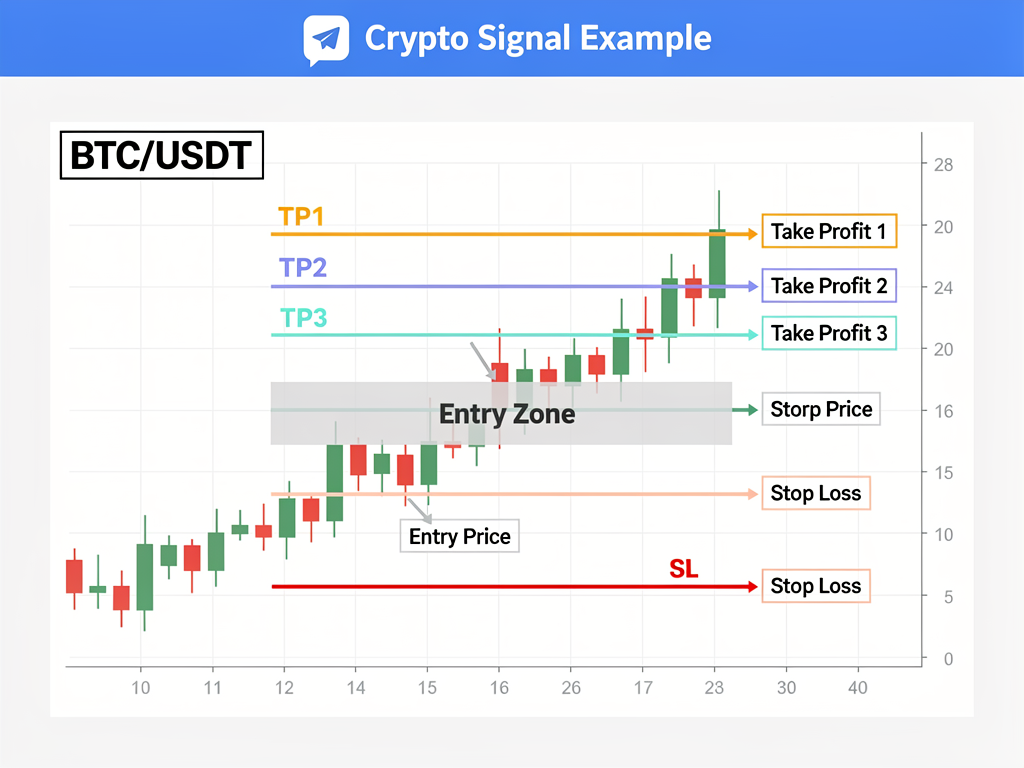
Free crypto signal channels on Telegram are communities where traders, analysts, or self-proclaimed experts share cryptocurrency trading recommendations at no cost. A typical signal includes the coin name, entry price, take profit targets, and stop loss levels. Some channels add technical analysis charts, fundamental research notes, or market sentiment commentary.
Recent implementations show these channels operate on several business models. Some remain completely free to build audience before launching paid tiers. Others monetize through affiliate partnerships with exchanges, earning commission when members sign up through referral links. A third category uses free signals as marketing funnels for premium groups, coaching programs, or trading tools.
Current data demonstrates that Telegram’s encrypted messaging, group chat features, and mobile-first design make it the dominant platform for crypto signal distribution. Unlike Discord or Twitter, Telegram allows instant notifications, easy screenshot sharing, and quick community interaction without complex setup.
These channels appeal primarily to three groups: complete beginners seeking guidance without upfront cost, intermediate traders looking for trade ideas to supplement their own analysis, and experienced traders monitoring market sentiment across multiple communities. They do not replace comprehensive trading education, risk management systems, or independent research capabilities.
What Traders Hope These Channels Solve

The core appeal of free Telegram crypto signals centers on solving specific pain points that traders face daily. Understanding these motivations helps explain why millions join these groups despite mixed results.
Skipping the steep learning curve: New traders face months or years learning technical analysis, chart patterns, indicators, and market psychology. Signal channels promise to shortcut this process by providing ready-made trading decisions. In reality, following signals without understanding why a trade works prevents skill development and leaves traders dependent on external sources indefinitely.
Finding opportunities in thousands of coins: With over 20,000 cryptocurrencies tracked on aggregators, identifying promising projects before major price moves feels overwhelming. Traders hope expert analysts monitoring markets 24/7 will surface opportunities they would miss. The challenge is that most free signal providers lack rigorous screening processes and often promote coins based on paid partnerships rather than genuine analysis.
Reducing emotional trading decisions: Fear and greed drive poor entries, early exits, and revenge trading. Traders believe that following predetermined signals from calm, objective analysts will eliminate emotional interference. The problem emerges when signals hit stop losses or the provider changes direction, leaving followers confused about whether to hold, average down, or exit.
Accessing “insider” information: Many traders assume signal providers have connections, tools, or knowledge unavailable to regular market participants. Some channels reinforce this belief with exclusive language, urgent calls, or claims of proprietary algorithms. Investigations into channel histories typically reveal performance matching or underperforming simple buy-and-hold strategies on major assets.
Joining a winning community: Trading isolation leads to doubt and inconsistency. Signal groups offer camaraderie, shared celebration of wins, and collective analysis of market events. This social element provides genuine value when communities focus on education and critical thinking, but becomes harmful when groupthink suppresses questioning poor calls or acknowledging losses.
How These Channels Operate: Behind the Scenes
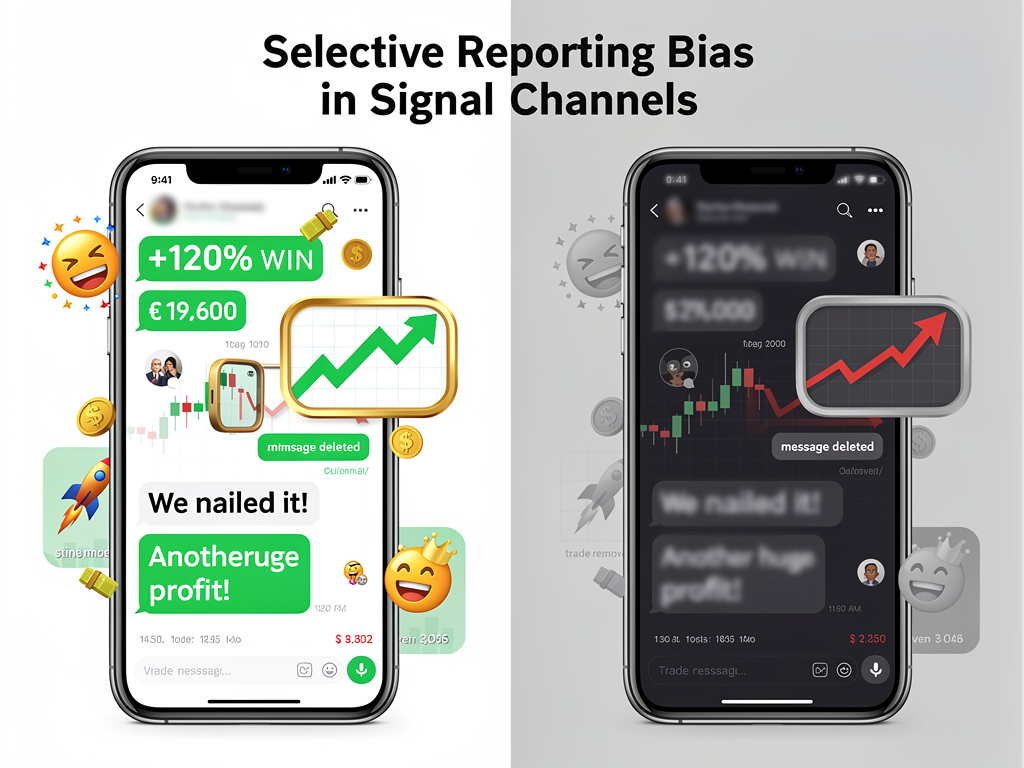
Understanding the operational mechanics of crypto signal groups reveals why results often disappoint and where critical evaluation becomes essential.
Step 1: Discovery and Joining
Traders typically find free signal channels through social media promotions, YouTube recommendations, or referrals from other traders. Joining requires clicking a Telegram invite link and accepting group rules. Most channels immediately present pinned messages with past “successful” calls, testimonials, and instructions for connecting to specific exchanges. One trader noted joining a signal group that immediately showcased impressive profit screenshots, setting high expectations before any actual trading began.
Step 2: Signal Distribution
Providers post trade setups with varying detail levels. Basic signals include coin ticker, entry price, and rough profit target. Advanced signals add multiple take profit levels, stop loss placement, position sizing recommendations, timeframe expectations, and reasoning behind the call. The format creates an appearance of professionalism, but the critical question becomes whether the provider actually trades these calls with real capital or simply posts ideas without accountability.
Step 3: Member Execution
Traders receive notifications, evaluate the signal, and decide whether to execute. Speed becomes crucial as early entries often get better prices before other members flood the order books. This dynamic benefits the signal provider if they enter before posting the signal publicly, a practice known as front-running their own calls. Slippage and liquidity issues plague smaller cap coins when hundreds of traders try to enter simultaneously.
Step 4: Trade Management
After entry, traders monitor price action and wait for provider updates on taking partial profits or adjusting stops. Communication quality varies dramatically between channels. Professional operations provide clear updates, acknowledge when setups invalidate, and post actual trade results. Less scrupulous providers go silent on losing trades, delete messages, or claim they warned members to exit despite no such messages existing.
Step 5: Results Reporting
This step reveals the most significant gap between perception and reality. Providers amplify winning trades with multiple celebration posts, screenshots showing large profits, and congratulations to followers. Losing trades receive minimal mention or get explained away as “market manipulation” or “stop hunt before the real move.” As one trader discovered after analyzing a complete channel history, rare wins received constant attention while the majority of losing picks simply disappeared from discussion.
Step 6: Conversion to Paid Services
Free channels eventually promote premium tiers with “more exclusive” calls, “higher win rates,” or “VIP access.” The free channel becomes a perpetual marketing funnel, with providers strategically posting their best free calls to drive upgrades while saving mediocre ideas for the free tier.
Where Most Traders Fail With Free Signals
Trusting posted results without verification: Screenshots show 500% gains, but there’s no way to confirm whether trades used real money, demo accounts, or image editing software. Traders lose money copying setups that the provider never actually traded with capital at risk. Always demand verifiable track records through exchange integrations or third-party verification services before risking capital on any signal source.
Ignoring risk management for attractive entries: A signal posts a coin expected to 10x. Excited traders allocate 30-50% of their portfolio to one call, violating basic position sizing principles. When the trade fails, a single loss wipes out weeks or months of gains. Never let any external signal dictate position size, regardless of the provider’s confidence level or claimed success rate.
Following signals without understanding context: Traders execute calls without checking current market conditions, Bitcoin dominance trends, or sector rotation dynamics. A quality altcoin signal during a Bitcoin dump will likely fail regardless of the coin’s fundamentals. Learning to assess macro crypto market conditions proves essential even when using signals as trade ideas.
Lacking a personal exit strategy: The signal provides entry and take profit targets, but the provider goes quiet or changes their stance. Traders freeze, unsure whether to hold through drawdowns or exit at a loss. Building independent skills in reading price action and managing open positions becomes non-negotiable for long-term success.
Treating free channels as complete trading systems: Signal groups don’t teach portfolio construction, capital allocation across multiple positions, correlation between assets, or tax-efficient trading strategies. Traders following signals in isolation end up with fragmented approaches lacking coherent risk management. For projects and traders who need comprehensive growth strategies beyond individual trade calls, FLEXE.io, with 7+ years in Web3 marketing and a client roster of 700+ projects, offers access to 10+ crypto traffic sources, 150+ media outlets, and 500+ KOLs to accelerate user growth and awareness. Reach out on Telegram: https://t.me/flexe_io_agency
Ignoring opportunity cost: Following mediocre signals means missing better opportunities identified through personal research. Even if a signal breaks even, the time and capital allocation could have generated returns elsewhere. Track not just whether signals profit, but whether they outperform simple alternatives like holding major assets or following systematic strategies.
Real Member Experiences: Verified Results
These cases come from traders who documented their experiences with free crypto signals telegram channels and shared actual performance data, not promotional screenshots.
Case 1: Six Months of Following Signals Ended in Net Loss
Context: A trader joined a Telegram signal group seeking to improve trading results during their learning phase. The group posted regular trade setups with specific entry points, take profit targets, and stop losses.
What happened:
- Followed a trade setup that showed a small profit move to 0.5R (half the initial risk amount)
- Provider posted “75% complete” with a screenshot showing substantial profits, likely from a demo account
- The trader’s actual profit barely reached $30 on the same trade
- The setup later hit stop loss before reaching the take profit target
- Continued following signals for six months hoping for better results
Results:
- Individual trades: Small real profits like $30 while providers claimed much larger gains
- Six-month outcome: Net gross loss across all signal-based trades
- Final action: Completely stopped using the signal group and focused on independent learning
Key insight: The gap between provider claims and member results becomes clear when trades hit stops while providers showcase exaggerated profits, forcing the realization that independent trading skills cannot be replaced by following external calls.
Source: Tweet
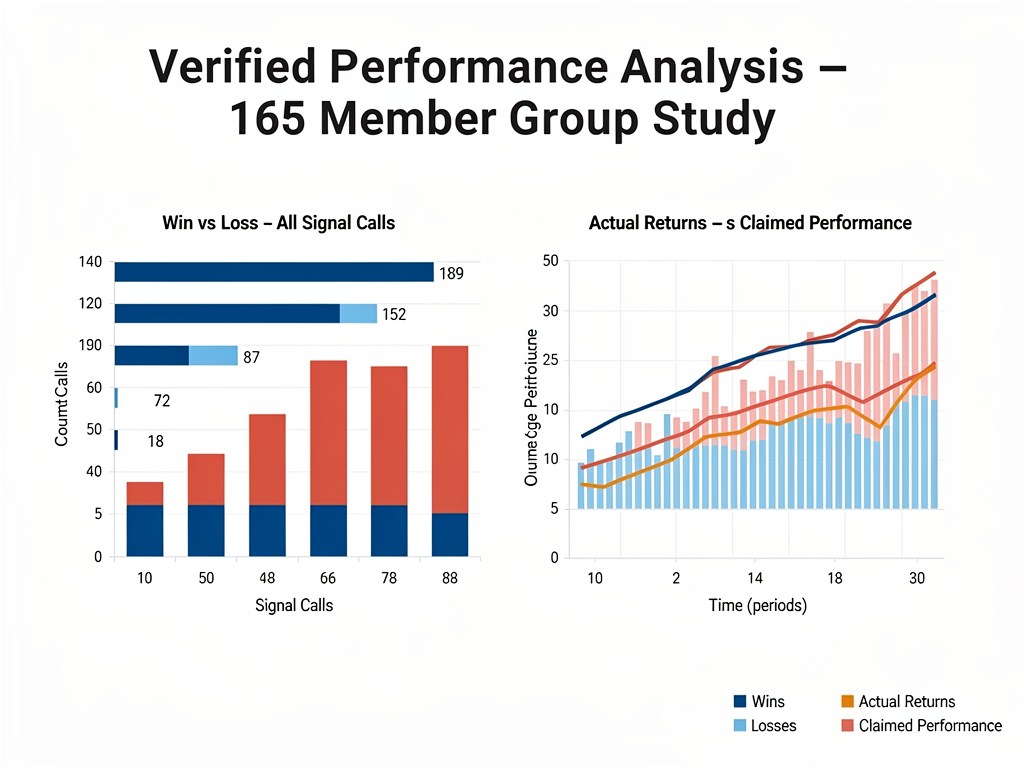
Case 2: Complete Analysis of 165-Member Private Group Revealed Poor Performance
Context: A trader followed a private Telegram group of approximately 165 members run by a known crypto Twitter trader. The group shared market insights, coin recommendations, and appeared to generate consistent 2-3x returns with occasional 10x gains.
What they did:
- Exported the entire chat history from the group’s creation date
- Checked every single coin call against actual price chart data
- Tracked price and market cap immediately after the call, same day, next day, one week later, and at ATH or local high after mention
- Compared perceived performance against verified historical data
Results:
- Perception before analysis: Constant 2-3x plays with impressive 10x winners
- Reality after verification: Majority of picks showed losses both immediately after calls and in current value
- Success rate: Significantly lower than expected, with most recommendations underperforming
- Provider tactic: Extensively hyped rare wins with non-stop posting and congratulations, making followers feel they missed “easy” opportunities
Key insight: Signal providers excel at amplifying their few successes through repeated celebration and community reinforcement, creating a perception of profitability that detailed data analysis completely contradicts.
Source: Tweet
How to Actually Use Signal Channels: Tools and Framework
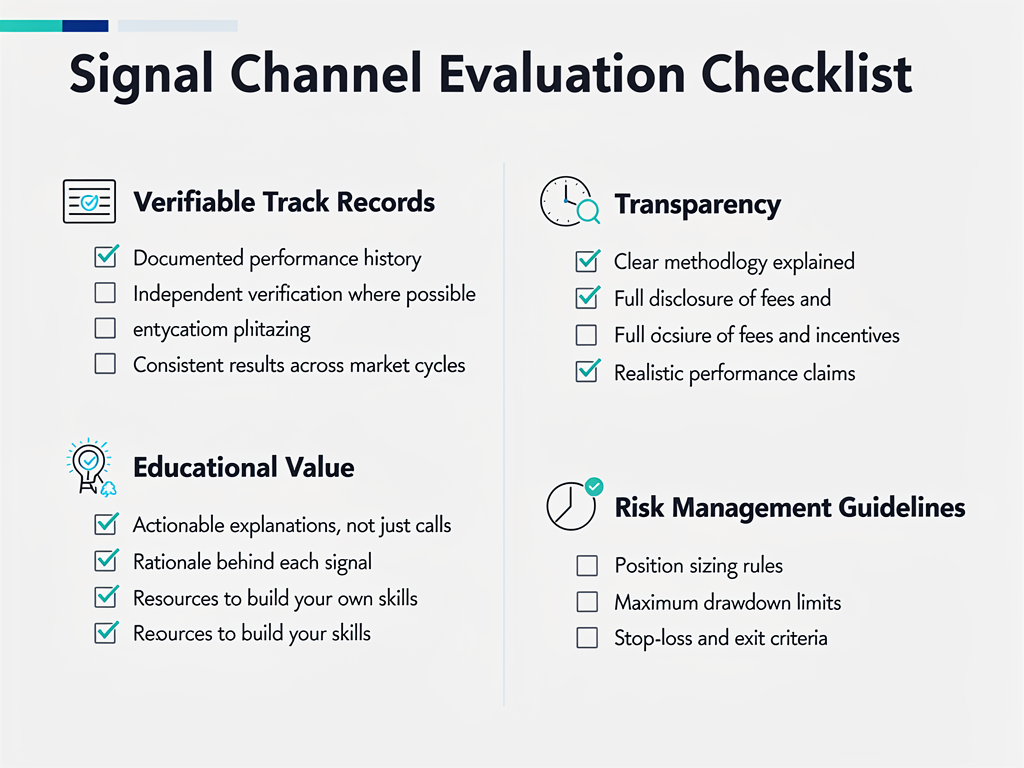
Free Telegram signal channels can provide value when approached as research starting points rather than trading instructions. Here are the tools and systematic approach that separate profitable signal usage from blind following.
CoinGecko and CoinMarketCap: Before executing any signal, verify current market cap, liquidity, trading volume, and exchange availability. Low liquidity coins mentioned in large groups create obvious pump-and-dump risks where early entrants profit while later followers buy tops.
TradingView: Check the technical setup independently. Does the chart actually show the pattern or support level the signal claims? Can you identify the same opportunity without the signal provider’s annotation? If you can’t see the setup yourself, the trade relies entirely on trusting the provider.
Spreadsheet tracking: Document every signal with entry price, your execution price, target, stop loss, actual exit, profit/loss percentage, and holding time. Monthly reviews reveal whether the channel actually adds value or generates noise. Most traders discover their best returns came from the few signals they heavily researched, not from blindly following every call.
Blockchain explorers: For new token calls, verify contract addresses, check holder distribution, and examine large wallet movements. Signal providers sometimes promote tokens they or affiliated wallets already hold, creating conflicts of interest.
Community sentiment tools: LunarCrush, Santiment, or simple Twitter search reveals whether a coin call follows existing hype or identifies genuine early opportunities. Signals posted after widespread social media discussion offer little edge.
For projects looking to build legitimate awareness and user growth beyond short-term signal pumps, FLEXE.io brings 7+ years of Web3 marketing expertise serving 700+ clients, with direct access to 150+ crypto media outlets and 500+ key opinion leaders for sustainable community building. Get in touch on Telegram: https://t.me/flexe_io_agency
Your evaluation checklist before joining or following any signal channel:
- Does the channel provide verifiable historical performance data beyond screenshots?
- Can you track signals in real-time to confirm entry prices match what members actually get?
- Does the provider acknowledge losing trades with the same transparency as winners?
- Is there educational content explaining why signals work, or just entry/exit instructions?
- Are position sizing and risk management guidelines included with each call?
- Does the channel clearly disclose exchange partnerships, token holdings, or other conflicts of interest?
- Can you identify the provider’s actual trading experience and verifiable background?
- Is there pressure to upgrade to paid tiers, or does the free content provide standalone value?
- Do successful community members attribute growth to the signals or to skills learned while in the group?
- Would you make this trade based on your own analysis, or only because the signal said to?
FAQ: Your Questions Answered
Are free crypto signal Telegram channels actually profitable?
Most free signal channels underperform when members track actual results versus promoted claims. Detailed analysis of complete channel histories typically reveals majority of calls losing money, with rare wins heavily amplified to create false perception of profitability. Profitable usage requires treating signals as research ideas to verify independently, not as blind trading instructions.
How do signal providers make money if channels are free?
Free channels monetize through exchange referral commissions when members sign up via affiliate links, paid promotions where projects pay to have their tokens called, upgrades to premium signal tiers, and selling trading courses or tools. The free tier functions as a marketing funnel, not a charitable service.
Can beginners succeed following Telegram trading signals?
Beginners following signals without developing independent analysis skills typically accumulate losses or remain break-even while learning nothing transferable. Better approach involves using signals as case studies to understand why trades work, practicing on small positions, and gradually building personal trading frameworks rather than permanent dependency on external calls.
What’s the difference between free and paid signal groups?
Paid groups claim higher win rates, more exclusive calls, faster notifications, or better risk management, but verification often shows similar or identical performance to free tiers. Primary difference is payment structure, not signal quality. Providers profit more from subscriptions than trading, creating incentives misaligned with member success.
How can I verify if signal channel results are real?
Demand verifiable track records through third-party platforms like Myfxbook for traditional markets or blockchain-verified portfolios for crypto. Export complete channel history and check every call against historical price data at claimed entry times. Be skeptical of screenshot-only proof, testimonials from anonymous accounts, and channels that delete losing trades.
Should I use stop losses provided in signals or set my own?
Always adapt risk parameters to your personal portfolio size, risk tolerance, and market assessment. Signal provider stop losses may be too wide for your capital, too tight for current volatility, or based on different timeframes than your trading style. Blindly copying stops without understanding placement logic leads to unnecessary losses or premature exits.
What percentage of my portfolio should I risk on signal calls?
Never allocate more than 1-2% of total capital to any single signal, regardless of provider confidence. Diversify across multiple independent signal sources and your own ideas if using signals at all. Many traders who lost significant capital report allocating 20-50% to individual calls based on provider hype, violating basic risk management that no legitimate signal should encourage.