Most articles about crypto marketing tools are full of theory and hype. This one isn’t. You’re about to see 14 real cases where teams used AI content tools, automation workflows, and smart distribution—including Telegram channels—to grow revenue from $0 to six or seven figures, complete with verified numbers and public sources.
Key Takeaways
- 14 documented cases show teams used AI content tools combined with Telegram, X, and SEO to generate $3,806 to $1.2M/month in revenue.
- Replacing $10,000–$267,000/year marketing teams with automated workflows and AI agents cut costs by 90% while scaling output.
- SEO content targeting pain points like “alternative” and “fix” queries drove $925 MRR and 21,329 visitors from a brand-new domain rated DR 3.5 in 69 days.
- AI-generated ad creatives and copywriting systems produced 3.9M+ single-post views and 4.43 ROAS with image ads alone, no video.
- Automated content pipelines published 200 SEO articles in 3 hours, capturing $100,000+ in monthly organic traffic value.
- Distribution channels—Telegram DM funnels, auto-scheduled X posts, and viral theme pages—turned AI-generated content into consistent buyer flow.
- Projects that combined human taste, real user feedback, and AI speed grew followers 500+ per day and engagement from 0.8% to 12%+.
What Automated Content and Signal Systems Really Mean
When someone searches for crypto buy signals on Telegram, they’re not just looking for token alerts. Today’s blockchain marketers use the same phrase to describe entire ecosystems: AI-generated content, automated workflows, Telegram DM funnels, and analytics dashboards that turn research into revenue without manual copywriting or designer salaries.
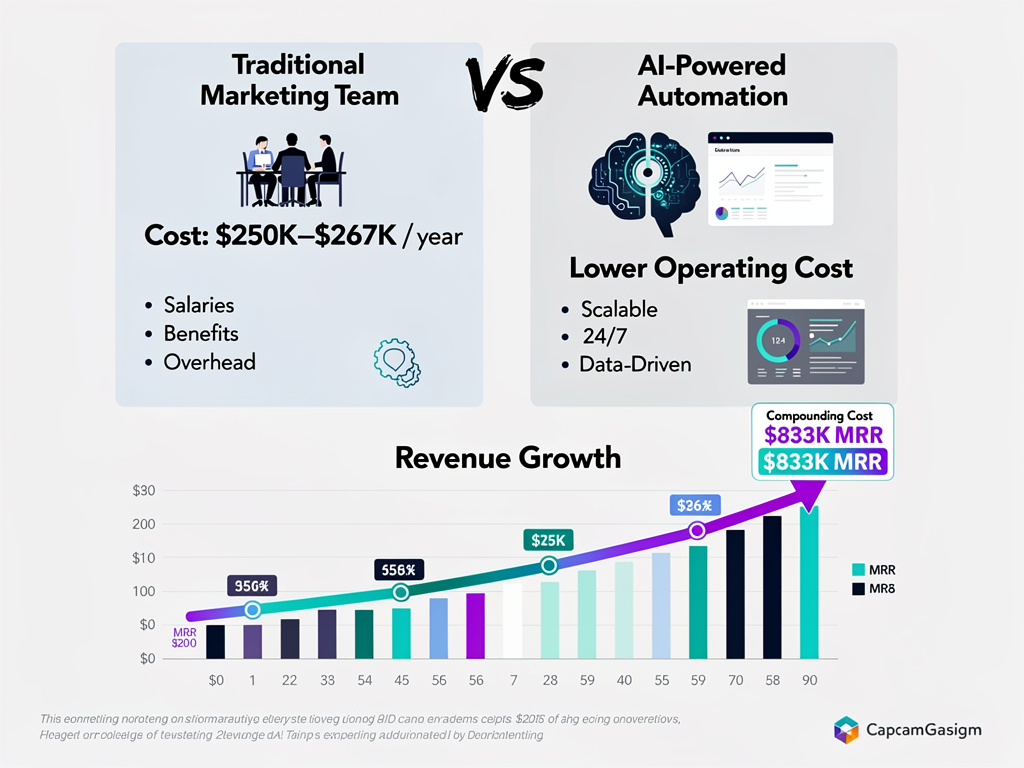
Current data from real implementations shows these systems aren’t theory. In February 2025, entrepreneurs documented replacing content teams costing $250,000–$267,000 per year with AI agents that analyzed winning ads, generated creatives in under 60 seconds, and distributed hundreds of posts daily across X, Telegram, and Reddit. The result? Revenue growth from zero to $10,000–$833,000 monthly recurring revenue (MRR), with engagement rates jumping from under 1% to over 12%.
This approach is for: product founders who need marketing scale without hiring entire teams; solo operators running affiliate or SaaS plays; growth hackers in DeFi, NFT, or Web3 who want predictable user acquisition. It’s not for: teams requiring 100% human-written brand journalism; projects where compliance demands manual content review; or anyone expecting fully automated “set and forget” with zero oversight.
What These Implementations Actually Solve
Traditional crypto marketing hits three walls: high cost, slow output, and unpredictable ROI. Here’s how modern content automation addresses each.
Eliminating $100K+ annual team costs. One project (source) replaced a $267,000-per-year content team with a single AI ad agent. The system analyzed 47 winning ads, mapped 12 psychological triggers, and generated 3 scroll-stopping creatives ready to launch—in 47 seconds. Where agencies charged $4,997 for five concepts delivered over five weeks, the automated workflow produced unlimited variations in under a minute.
Scaling from 2 posts per month to 200 articles in 3 hours. Another operator (source) built an engine that extracted high-value keywords from Google Trends, scraped competitor sites with 99.5% success, and generated page-one ranking content. The monetary impact: capturing over $100,000 in organic traffic value monthly, replacing a $10,000-per-month content team with a 30-minute setup and zero ongoing costs.
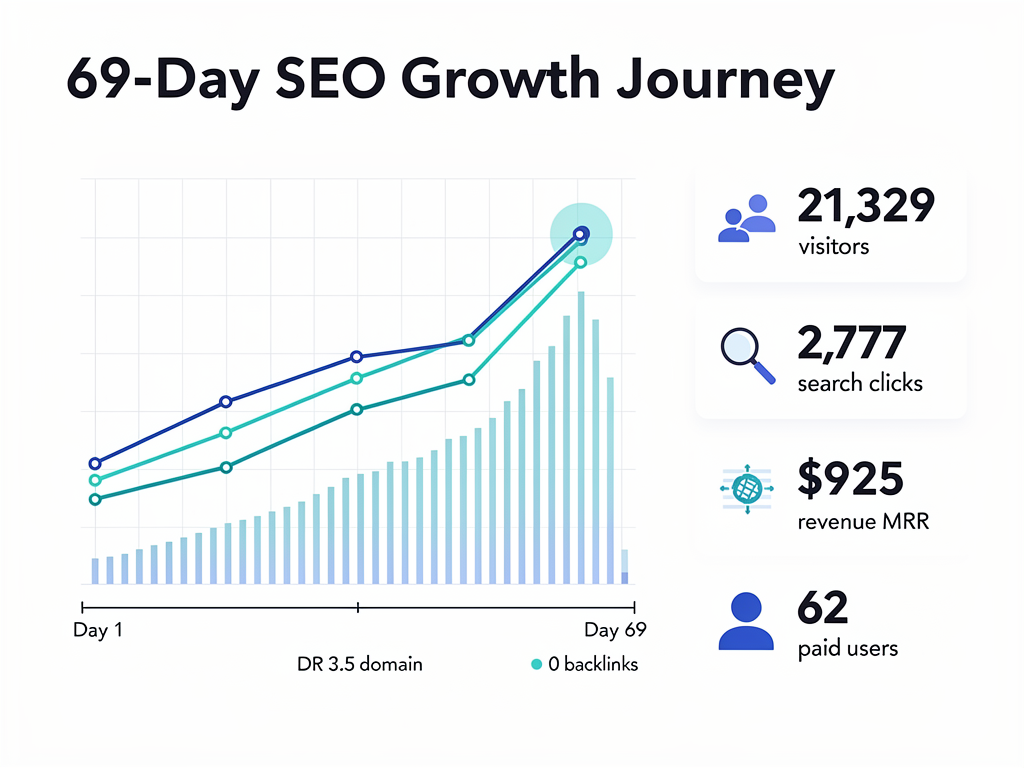
Converting cold traffic into paying customers at scale. A bootstrapped SaaS founder (source) launched a new domain (rated DR 3.5) and added $925 MRR purely from SEO in 69 days. By targeting “alternative,” “not working,” and “how to fix” queries instead of generic guides, the team attracted readers already searching for solutions—then converted them with CTAs embedded in the content. Total traffic: 21,329 visitors, 2,777 search clicks, $13,800 ARR, 62 paid users.
Turning one viral post into 120M+ monthly views. Theme-page operators (source) used Sora2 and Veo3.1 AI tools to generate reposted content with strong hooks, curiosity-driven middles, and product tie-ins. Pages in niches that already buy regularly cleared $100,000+, with the largest pulling 120 million views per month and the combined network generating $1.2 million monthly.
Automating daily distribution to build 1M+ views and $10K/month profit. One creator (source) repurposed top influencer content with AI, generated hundreds of posts, auto-scheduled 10 per day on X, and built a Telegram DM funnel to a product. AI produced five eBooks in roughly 30 minutes. A few hundred checkout views monthly yielded approximately 20 buyers at $500 each, equaling $10,000 per month profit and seven-figure annual profit.
How This Works: Step-by-Step
Step 1: Choose Your Core AI Stack and Distribution Channels
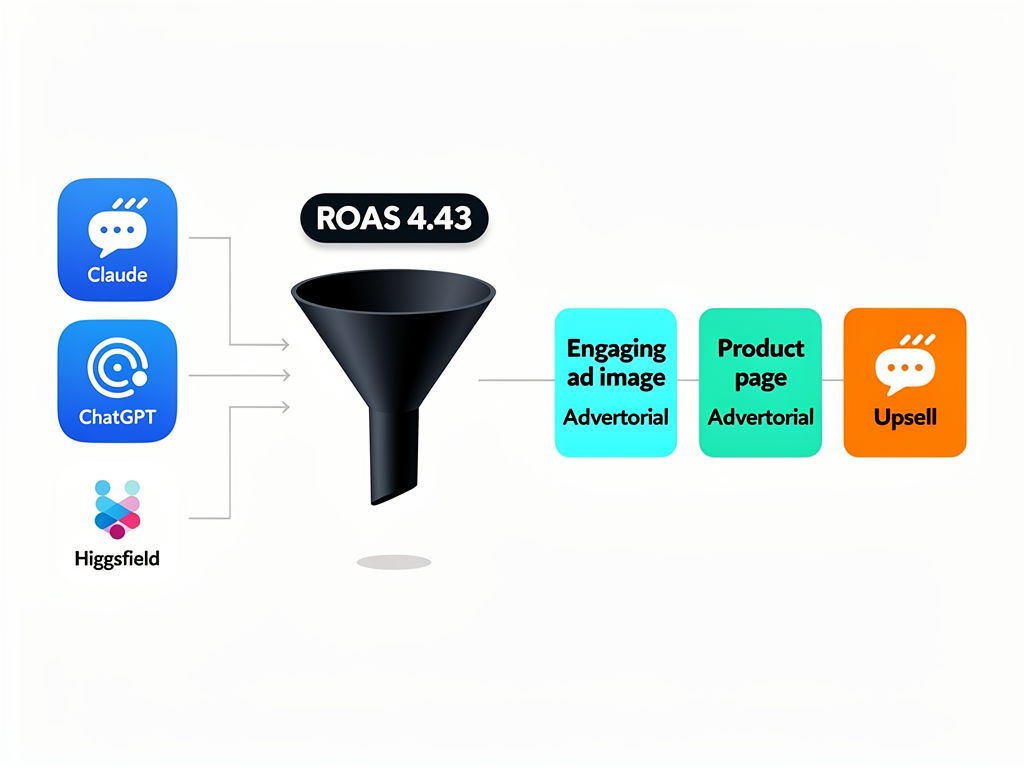
Successful operators don’t rely on ChatGPT alone. One ecommerce marketer (source) running $860 ad spend to generate $3,806 revenue (ROAS 4.43, ~60% margin) combined Claude for copywriting, ChatGPT for deep research, and Higgsfield for AI images. The team invested in paid plans and ran only image ads—no video—yet hit nearly $4,000 per day. Distribution funnel: engaging ad image → advertorial → product detail page → post-purchase upsell.
Another team (source) built four AI agents on n8n for content research, creation, ad creative analysis, and SEO. Tested over six months, the system generated millions of impressions monthly and tens of thousands in revenue on autopilot. One post alone hit 3.9 million views. The workflow handled 90% of workload for less than one employee’s cost, replacing a $250,000 team.
Step 2: Build Content That Matches High-Intent Search and Social Queries
Generic “ultimate guide” listicles barely convert and rank slowly. The SaaS team that grew to $13,800 ARR in 69 days (source) wrote content targeting people already looking for a switch or fix: “X alternative,” “X not working,” “X wasted credits,” “how to do X in Y for free,” “how to remove X from Y.” Zero backlinks. Many posts ranked number one or high on page one. The strategy: put yourself in the reader’s shoes—they hit a frustrating limitation in a competitor tool, Google or ChatGPT the problem, find your content addressing precisely that pain, and see an upsell to your product that genuinely solves it.
They also joined Discord servers, subreddits, and Indie Hacker groups where the target audience hung out, read competitor roadmaps, and listened to complaints. One user couldn’t export code from a competitor, so the team wrote an article and added their product as the solution. Others wanted an alternative with higher character limits in the prompt box—so they built content around that exact need.
Step 3: Use AI to Generate Creatives, Not Just Text
A Creative OS builder (source) reverse-engineered a $47 million creative database and fed it into an n8n workflow running six image models and three video models simultaneously. Result: marketing content worth over $10,000 generated in under 60 seconds, fully automated. The system accessed 200+ premium JSON context profiles, delivered Veo3-quality videos plus photorealistic images, and handled lighting, composition, and brand alignment automatically. This replaced creative directors charging $20,000 per month and agencies taking five to seven days for deliverables.
Step 4: Automate Distribution Across X, Telegram, and Niche Communities
The creator who hit seven figures in profit (source) created an X profile, locked in a niche (ecommerce, sales, AI), studied top influencers, and repurposed their content with AI. Hundreds of posts were generated instantly, then auto-scheduled at 10 per day to hit 1 million+ views monthly. A DM funnel pointed to a product—AI-generated eBooks produced in roughly 30 minutes. A few hundred checkout views per month converted approximately 20 buyers at $500 each, yielding $10,000 monthly profit.
Another operator (source) bought a domain for $9, used AI to build a niche site in one day (fitness, crypto, parenting), scraped and repurposed trending articles into 100 blog posts, and auto-spun them into 50 TikToks and 50 Reels per month. Email capture popups fed an AI-written nurture sequence, then an affiliate offer at $997 closed. Approximately 5,000 site visitors monthly converted roughly 20 buyers, equaling $20,000 per month profit and six figures per year.
Step 5: Optimize for AI Overviews, ChatGPT, Perplexity, and LLM Citations
An SEO agency client (source) competing against global SaaS companies with multimillion-dollar budgets grew search traffic 418% and AI search traffic over 1,000%. The formula: repositioned content around commercial intent (“Top [service] agencies,” “Best [service],” “[Service] for SaaS brands,” “[Competitor] reviews”). Every page had a TL;DR summary at the top (two to three sentences answering the core question), H2s written as questions, and two to three short sentences under each H2 providing direct answers—lists and factual statements instead of opinion. This structure alone landed over 100 AI Overview citations because it aligned with how LLMs extract content blocks.
Authority came from DR50+ backlinks from related business domains already getting organic traffic and visible in AI search, using contextual anchors like “[service] agency” and embedding the brand name plus country in schema and metadata. Internal linking passed semantic meaning: every service page linked to three to four supporting blog posts, every blog post linked back to the relevant service page, using intent-driven phrasing. After 60 to 90 days, the brand appeared across Google, ChatGPT, Gemini, and Perplexity.
Step 6: Layer Human Taste and Real User Feedback Over AI Output
A vibe-coding tool founder (source) reached 50,000 MRR, with half from the previous month, bootstrapped. Focused on HTML and Tailwind CSS for landing pages, generating a page took 30 seconds instead of 3 minutes. Used the product to make 2,000 templates and components—90% AI, 10% manual edits. Taste was the differentiator. Taught prompting in video tutorials that got millions of views combined. Last month’s growth wouldn’t have been possible without Gemini 3, which proved AI’s design capability.
A content creator agent user (source) reported the tool listened to tone, timing, and topic sentiment across over 240 million live content threads daily, then synthesized fresh narratives aligned with real-time cultural momentum. Early tests showed 58% higher engagement while cutting content prep time by half. The system tracked originality entropy—a metric measuring creative repetition across social platforms—and adapted style dynamically based on audience reactions, not algorithm rankings.
Step 7: Test, Iterate, and Scale What Converts
The ecommerce marketer hitting $3,806 revenue days (source) used a simple framework: test new desires, test new angles, test new iterations of angles/desires, test new avatars, improve metrics by testing different hooks and visuals. The team avoided asking ChatGPT for “the most converting headline” or “generate a better version of this competitor’s copy” because that approach was ineffective—you don’t know why something worked, so you can’t iterate. By understanding the core reason, the team could systematically improve.
An AI-to-video ad business (source) grew to $10 million ARR using multiple channels in parallel: paid ads (using their own product to create ads for themselves), direct outreach to top prospects (high conversion on live demos), events and conferences (underrated, maybe 1% tapped), influencer marketing (social proof and discovery boosting other channels), launch campaigns (coordinated announcements for each new model or feature), and partnerships (integrating with other tools instead of competing). The biggest lever remained building the best product in the world for the category.
Where Most Projects Fail (and How to Fix It)
Relying on vanilla ChatGPT prompts and wondering why posts get 12 likes. One creator (source) reverse-engineered 10,000+ viral posts to build a psychological framework, then turned AI into a viral copywriting machine. Result: impressions jumped from 200 per post to 50,000+ consistently, engagement rates from 0.8% to 12%+ overnight, followers from stagnant to 500+ daily, totaling 5 million+ impressions in 30 days. The difference wasn’t the AI model—it was the framework using neuroscience triggers and advanced prompt engineering with a viral post database of 47+ tested hacks.
Chasing generic “top 10” listicles that barely convert and can’t rank early. The SaaS team that added $925 MRR in 69 days (source) explicitly avoided “best no-code app builders” listicles or “ultimate guides.” Instead, they targeted commercial intent: alternatives, fixes, and niche pain points. They also skipped backlink swaps (never bothered), hired writers (too slow, wrong tone), and guest writing (low quality). Best pages came from writing themselves after talking to users and listening.
Ignoring real user feedback and community signals. Successful teams joined Discord servers, subreddits, Indie Hacker groups, and read competitor roadmaps to find what made people upset, what features they wanted, what they couldn’t achieve. They reviewed past customer support chats for feedback, studied competitors’ blogs to see what moved the needle, then created content with an extra touch—FAQs, pricing calculators, screen recordings, tables. This approach turned upset readers into happy customers.
If your team is struggling to balance automation with brand quality, or you need help setting up workflows that actually convert, FLEXE.io brings 7+ years of Web3 marketing experience and has supported 700+ clients. We connect projects to 10+ crypto traffic sources, 150+ media outlets, and 500+ KOLs to accelerate user growth, holder acquisition, and brand awareness. Reach out on Telegram: https://t.me/flexe_io_agency
Treating AI output as final copy without human editing. The vibe-coding founder who hit 50,000 MRR (source) used 90% AI but added 10% manual edits for taste. The Creative OS builder (source) spent three weeks studying a $47 million creative database methodology and built a system that thinks in JSON context profiles, referencing the user’s own winners instead of random internet mediocrity. Taste and context separate high-converting content from generic slop.
Skipping internal linking and schema for AI search visibility. The SEO agency client (source) that grew AI search traffic over 1,000% used internal linking to pass meaning, not just boost pages. Every service page linked to three to four blog posts, every blog post linked back, using intent-driven anchors. They added brand and location schema, refreshed content monthly, and optimized meta descriptions with branded language. Strong internal linking and schema helped Google and AI engines recognize the agency as a known entity in its space.
Real Cases with Verified Numbers
Case 1: Ecommerce Marketer Hits $3,806 Revenue Day with Image Ads Only
Context: Solo operator running paid ads for a client, testing AI tools for copy and creatives.
What they did:
- Switched from ChatGPT-only to Claude for copywriting, ChatGPT for research, Higgsfield for AI images.
- Invested in paid plans.
- Built funnel: engaging ad image → advertorial → product detail page → post-purchase upsell.
- Tested new desires, angles, iterations, avatars, hooks, and visuals systematically.
Results:
- Revenue: $3,806 in one day.
- Ad spend: $860.
- Margin: ~60%.
- ROAS: 4.43.
- Format: Image ads only, no videos.
Key insight: Combining specialized AI tools for each function (copy, research, images) and testing structured variations delivered nearly $4,000 daily revenue with simple image-based funnels.
Source: Tweet
Case 2: Four AI Agents Replace $250,000 Marketing Team
Context: Entrepreneur tested AI automation for six months to handle content research, creation, ad creatives, and SEO.
What they did:
- Built four AI agents on n8n for content research, creation, ad creative analysis/rebuilding, and SEO content.
- Ran system 24/7 on autopilot.
- Replaced full marketing team tasks.
Results:
- Before: $250,000 annual marketing team cost.
- After: Millions of impressions monthly, tens of thousands in revenue, enterprise-scale content.
- One post: 3.9 million views.
- Workload: 90% handled for less than one employee’s cost.
Key insight: AI agents running continuously can handle research, creation, and ad work at a fraction of human team costs while scaling output massively.
Source: Tweet
Case 3: AI Ad Agent Replaces $267K/Year Content Team in 47 Seconds
Context: Builder created an AI agent to automate ad creative generation and psychological targeting.
What they did:
- Built AI Ad agent analyzing 47 winning ads and 12 psychological triggers.
- Input product details to generate breakdowns, hooks, and platform-native visuals.
- Deployed for unlimited variations.
Results:
- Before: $267,000/year content team; agencies charged $4,997 for 5 concepts over 5 weeks.
- After: Concepts generated in 47 seconds.
- Output: 12+ psychological hooks, IG/FB/TikTok-ready visuals.
Key insight: Behavioral psychology deployed at machine speed beats manual creative teams on both cost and turnaround time.
Source: Tweet
Case 4: New Domain Adds $925 MRR from SEO in 69 Days
Context: SaaS founder launched new domain (Ahrefs DR 3.5) targeting pain-point SEO queries.
What they did:
- Wrote content targeting “X alternative,” “X not working,” “how to fix,” etc.
- Used human-like short sentences, structures for AI/Google, clear CTAs.
- Strong internal linking, user feedback from communities/roadmaps.
- Avoided generic content, backlinks, hired writers.
Results:
- Before: New domain, DR 3.5.
- After (69 days): ARR $13,800, MRR $925 from SEO, 21,329 visitors, 2,777 search clicks, $3,975 gross volume, 62 paid users.
- Many posts ranked #1 or high on page 1.
- Zero backlinks needed.
Key insight: Targeting high-intent pain-point queries with zero backlinks can drive significant MRR from a brand-new domain in under three months.
Source: Tweet
Case 5: Theme Pages Generate $1.2M/Month with AI Video Tools
Context: Operators ran AI theme pages posting reposted content in niches that already buy.
What they did:
- Used Sora2 and Veo3.1 AI tools for video content.
- Created consistent posts with hooks, curiosity/value, product tie-ins.
- Posted reposted content in buying niches.
Results:
- Revenue: $1.2 million/month combined.
- Per page: $100,000+ regularly.
- Largest page: 120 million+ views/month.
Key insight: AI-generated video content distributed via theme pages in pre-validated niches can scale to eight-figure annual revenue without personal branding.
Source: Tweet
Case 6: Creative OS Generates $10K+ Content in Under 60 Seconds
Context: Builder reverse-engineered creative database and automated content generation workflow.
What they did:
- Reverse-engineered $47 million creative database into n8n workflow.
- Ran 6 image + 3 video models in parallel with 200+ JSON context profiles.
- Handled lighting, composition, brand automatically.
Results:
- Before: Manual processes taking 5–7 days.
- After: $10,000+ marketing content in under 60 seconds.
- Output: Ultra-realistic creatives, Veo3-quality videos, photorealistic images.
Key insight: Parallel AI model execution with structured context databases collapses creative timelines from days to seconds.
Source: Tweet
Case 7: AI Engine Publishes 200 SEO Articles in 3 Hours
Context: Operator built content engine to scale blog output and capture organic traffic.
What they did:
- Extracted keywords from Google Trends automatically.
- Scraped competitors with 99.5% success.
- Generated page-1 ranking content outperforming human writers.
- Setup in 30 minutes.
Results:
- Before: 2 posts/month manual.
- After: 200 articles in 3 hours, $100,000+ organic traffic value/month.
- Replaced: $10,000/month content team.
- Ongoing costs: Zero.
Key insight: Automated keyword extraction, competitive scraping, and AI content generation can replace five-figure monthly teams with one-time setup.
Source: Tweet
Tools and Next Steps
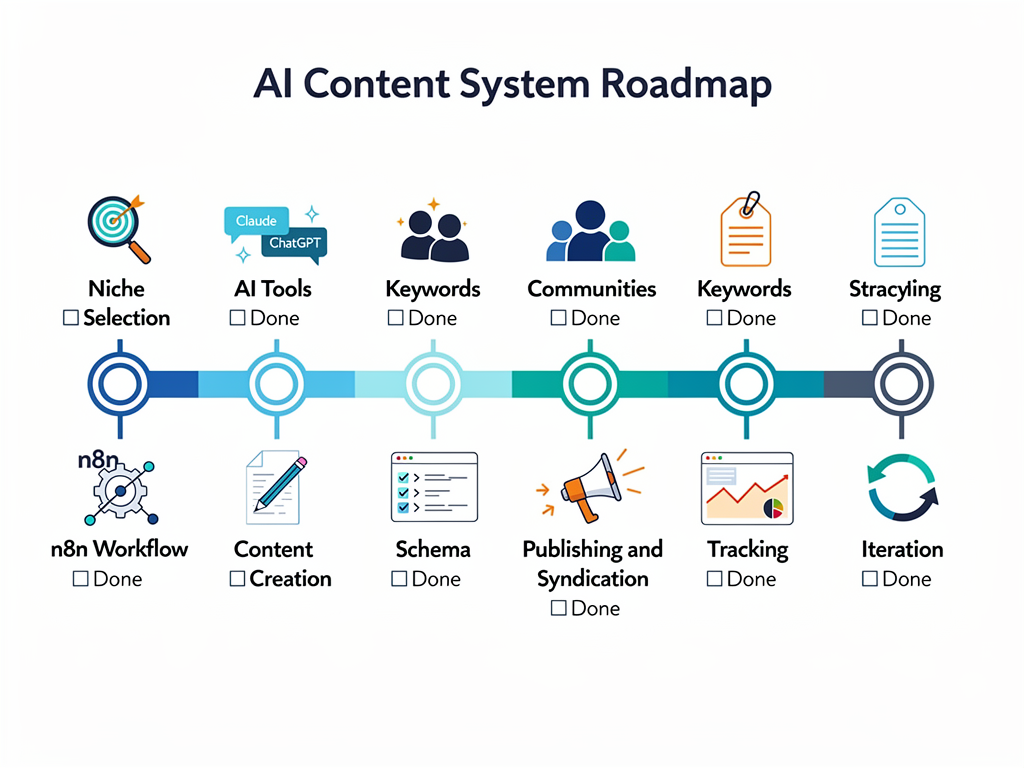
Core AI tools mentioned in real deployments:
- Claude: Copywriting, long-form content, tone control.
- ChatGPT: Deep research, brainstorming, data analysis.
- Higgsfield: AI image generation for ads and social.
- Gemini 3: Design capabilities, multi-modal reasoning.
- Sora2 / Veo3.1: AI video generation for theme pages and ads.
- n8n: Workflow automation, agent orchestration, API integrations.
- NotebookLM: Context management, JSON profile storage.
Distribution and analytics platforms:
- X (Twitter): Auto-scheduled posts, viral testing, engagement tracking.
- Telegram: DM funnels, signal channels, community engagement.
- Perplexity / ChatGPT / Gemini: AI search visibility, citation tracking.
- Ahrefs: Keyword research, competitor analysis, ranking tracking.
- Google Trends: Trending keyword extraction.
Your 10-step implementation checklist:
- [ ] Pick your niche and core distribution channel (X, Telegram, SEO, or combination).
- [ ] Invest in paid plans for Claude, ChatGPT, and one image/video AI tool (budget $60–$200/month).
- [ ] Join 3–5 communities where your target audience complains (Discord, subreddits, Indie Hackers).
- [ ] Identify 10 high-intent pain-point keywords or competitor gaps from real user feedback.
- [ ] Set up basic n8n workflow or Zapier automation for content generation and scheduling.
- [ ] Write 5–10 seed articles or posts manually, then feed them to AI as context/style examples.
- [ ] Build internal linking structure and add schema markup for AI search visibility.
- [ ] Test 3–5 distribution channels (X auto-schedule, Telegram DM funnel, Reddit posting, TikTok/Reels).
- [ ] Track which content drives actual signups or sales, not just vanity metrics—double down on winners.
- [ ] Iterate weekly: replace low-performing content types, add manual edits for taste, refresh based on user feedback.
Looking to skip the trial-and-error and deploy a system that’s already proven? FLEXE.io has helped 700+ Web3 clients over 7+ years access 10+ crypto traffic sources, 150+ media outlets, and 500+ KOLs to grow users, holders, and awareness at scale. DM us on Telegram: https://t.me/flexe_io_agency
FAQ: Your Questions Answered
Can AI content tools really replace a full marketing team?
Yes, for 90% of execution tasks. Teams documented replacing $250,000–$267,000 annual costs with AI agents handling research, content creation, ad creatives, and SEO. However, human oversight for strategy, taste, and quality control remains essential—the 10% manual edits and feedback loops are what separate high-converting output from generic slop.
How long does it take to see revenue from AI-generated SEO content?
One verified case added $925 MRR in 69 days from a brand-new domain with zero backlinks. Timeline depends on niche competition and content quality, but targeting high-intent pain-point queries can drive traffic and conversions in 60–90 days if you follow proper structure, schema, and internal linking.
Which AI tools should I start with on a tight budget?
Start with Claude for copywriting, ChatGPT for research, and one image tool like Higgsfield or Midjourney. Total cost: approximately $60–$80/month for paid plans. Avoid free tiers—paid plans unlock better quality and higher limits. Add n8n (free tier available) for basic automation once you validate content-to-revenue conversion.
Do I need coding skills to build AI content automation workflows?
No. Tools like n8n offer visual workflow builders. The Creative OS and AI agent examples used n8n templates and API integrations without custom code. However, understanding basic API concepts and JSON helps you customize and troubleshoot. Many builders share templates publicly—search X or GitHub for “n8n AI content workflow” to find starting points.
How do I avoid AI-generated content looking like generic slop?
Feed AI your own context: write 5–10 seed articles manually in your voice, then reference them in prompts. Use JSON context profiles (like the Creative OS builder), study 10,000+ examples in your niche to build psychological frameworks, and always add 10% manual edits for taste. The vibe-coding founder hit 50,000 MRR with 90% AI + 10% human polish—that ratio works.
What’s the best distribution channel for AI-generated crypto content?
X (Twitter) for viral reach and engagement (500+ followers/day possible), Telegram for DM funnels and community (direct product sales), SEO for long-tail organic traffic (works even with new domains), TikTok/Reels for theme pages (120M+ views/month documented). Most successful cases combined 2–3 channels instead of relying on one. Test all, double down on what converts for your niche.
How can I get my content cited in ChatGPT and AI Overviews?
Structure matters more than backlinks. Use TL;DR summaries at the top (2–3 sentences), H2s as questions, short factual answers (2–3 sentences) under each H2, lists instead of opinion text, and schema markup with brand/location. The SEO agency case landed 100+ AI Overview citations with this format. Add DR50+ backlinks from related domains and strong internal linking to boost authority signals AI systems recognize.