You’ve joined five crypto Telegram channels this week. Three were ghost towns. One spammed scam links. The last posted vague hype with zero data. Here’s how to find communities that actually deliver.
Key Takeaways
- Big crypto Telegram groups range from 3,000 to over 100,000 members, but size alone doesn’t guarantee quality or profitability.
- The best communities share verifiable trade calls, airdrop alerts, and educational content with consistent track records, not just hype.
- One documented case showed a community call going from $89k to $1.7M market cap, delivering 20X returns to early participants.
- Scam groups outnumber legitimate ones by at least 5:1, making due diligence essential before sharing wallet addresses or investing capital.
- Active moderation, transparent admins, and public track records separate real big crypto Telegram groups from pump-and-dump schemes.
- Free groups can deliver value, but premium tiers often provide faster signals and dedicated research that justify the cost for serious traders.
- Building your own curated list of three to five trusted groups beats joining dozens of mediocre channels.
Big crypto Telegram groups have become the primary real-time information channel for traders, investors, and airdrop hunters navigating volatile markets. With thousands of channels claiming to offer alpha, the challenge isn’t finding groups—it’s identifying which communities deliver actionable insights versus noise, scams, or recycled content from other sources.
Bottom line: the right communities provide early token calls, airdrop opportunities, and market analysis that can generate significant returns. The wrong ones waste your time, expose you to phishing attacks, or lure you into rug pulls. This guide breaks down how to tell the difference using real cases and verified data.
Recent examples show properly managed groups turning small investments into substantial gains. One trader shared results where a community call on a low-cap token grew from $89,000 market cap to $1.7 million, creating life-changing returns for members who acted quickly. But these wins require joining the right rooms and knowing how to evaluate signals before risking capital.
What Makes a Crypto Telegram Group “Big” and Why It Matters
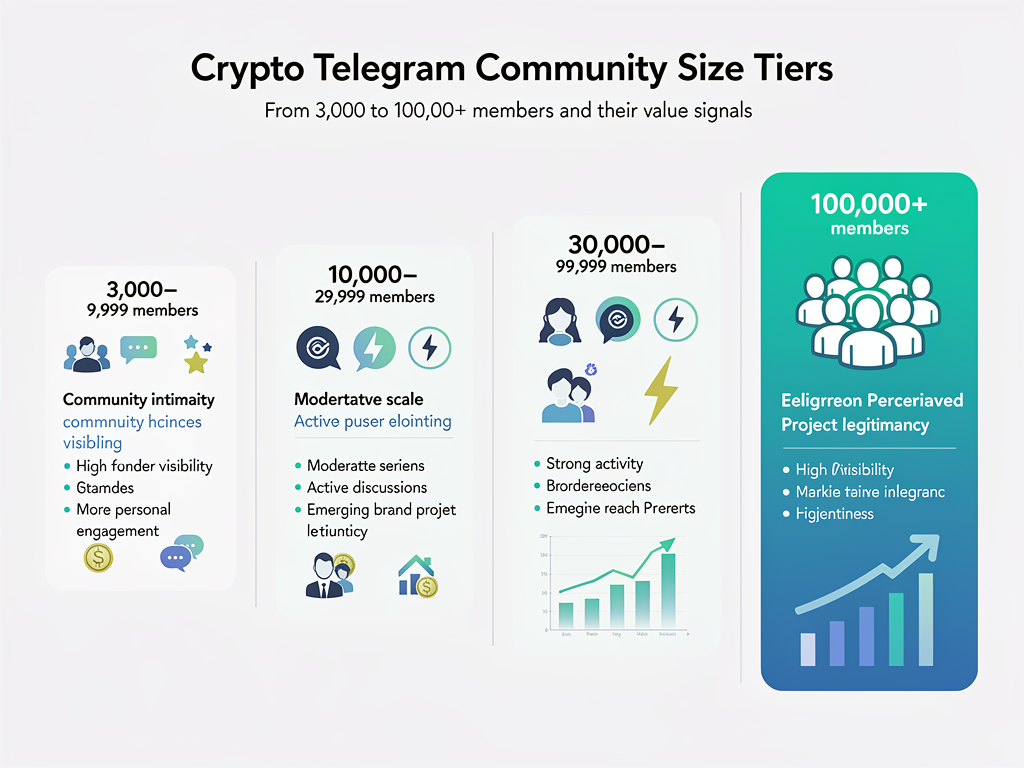
A big crypto Telegram group typically has at least 3,000 active members, with top-tier communities reaching 50,000 to over 100,000 participants. Size matters because larger groups often attract better analysts, faster information flow, and higher-quality discussions. When a new token launches or an airdrop opportunity emerges, big communities can disseminate that intelligence in minutes rather than hours.
Current data from successful group builders shows that communities crossing the 3,000-member threshold tend to become self-sustaining. Members contribute their own finds, admins can monetize through premium tiers or partnerships, and the collective intelligence creates genuine value. Below that threshold, groups often struggle with engagement and eventually go dormant.
However, size alone means nothing without quality control. A group with 50,000 members but no moderation becomes a spam wasteland within weeks. The most valuable large communities combine scale with strict verification processes, transparent admin teams, and public track records that let you audit their calls independently.
These communities serve several distinct audiences. Day traders need rapid-fire technical analysis and chart patterns. Airdrop hunters want curated lists of verified opportunities with step-by-step walkthroughs. Long-term investors seek fundamental research on emerging protocols. The best big groups segment content by channel or use clear tags so members can filter for what they need.
What These Communities Actually Solve
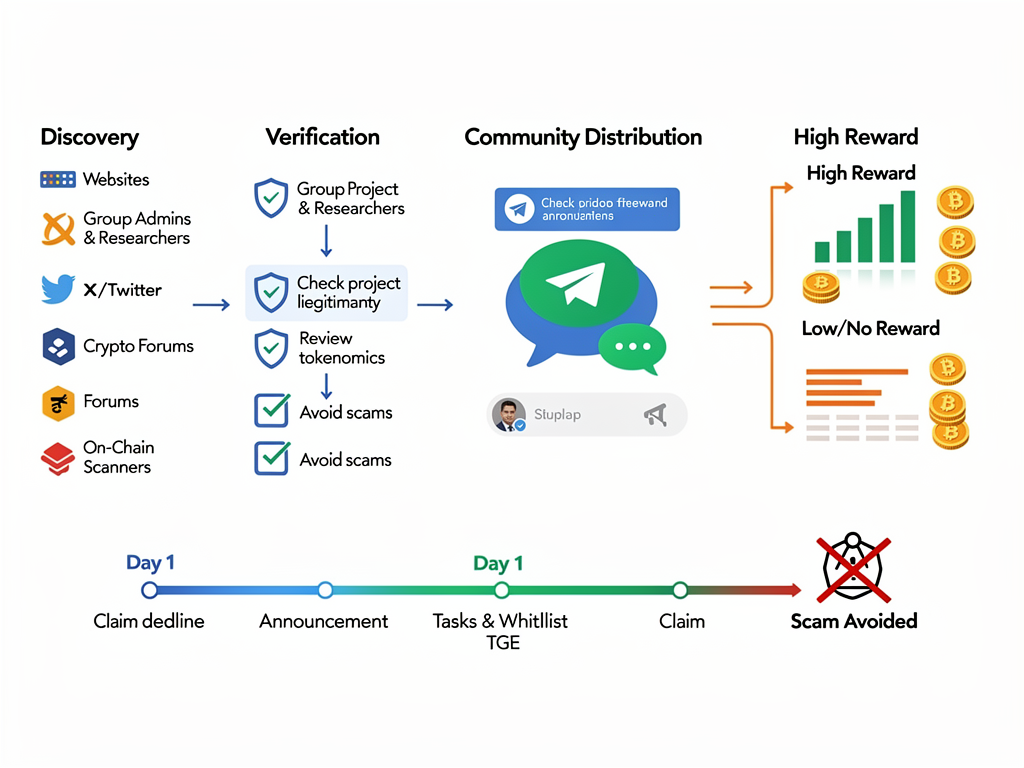
The cryptocurrency information landscape suffers from severe signal-to-noise problems. Twitter moves too fast, YouTube videos are outdated within hours, and Reddit debates devolve into tribal arguments. Large, well-managed Telegram groups solve the real-time intelligence gap by creating focused channels where verified information moves quickly without the chaos of fully public platforms.
One creator documented building a 3,000-member Telegram community over ten months while simultaneously growing an 11,000-follower presence on X. The Telegram group delivered over $60,000 in airdrop rewards to engaged members by sharing early opportunities and providing detailed claim instructions. This addressed a core pain point: most people hear about airdrops weeks after the best rewards are gone. A tight community with dedicated researchers can surface these opportunities within hours of announcement.
Trading signal groups tackle a different problem—the difficulty of monitoring hundreds of tokens across multiple chains. One group administrator reported delivering three winning calls in 24 hours with a sustained 90% win rate by focusing exclusively on high-probability setups. Members didn’t need to watch charts constantly; they received alerts with entry points, targets, and stop losses, then executed the trades. For people with full-time jobs, this filtered approach beats trying to be a full-time trader.
Education is another critical function. Quality groups don’t just drop contract addresses—they explain why a token might pump, what catalysts to watch, and how to manage risk. This helps newer participants develop their own analytical skills instead of blindly following calls. Over time, members graduate from signal consumers to signal contributors, strengthening the entire community.
Scam avoidance might be the most valuable service. When a suspicious contract appears, experienced members can identify red flags within minutes—locked liquidity status, team token allocations, copied code from previous rugs. This collective due diligence has saved community members millions by preventing investments in obvious scams that looked legitimate on the surface.
How to Evaluate and Join the Right Groups
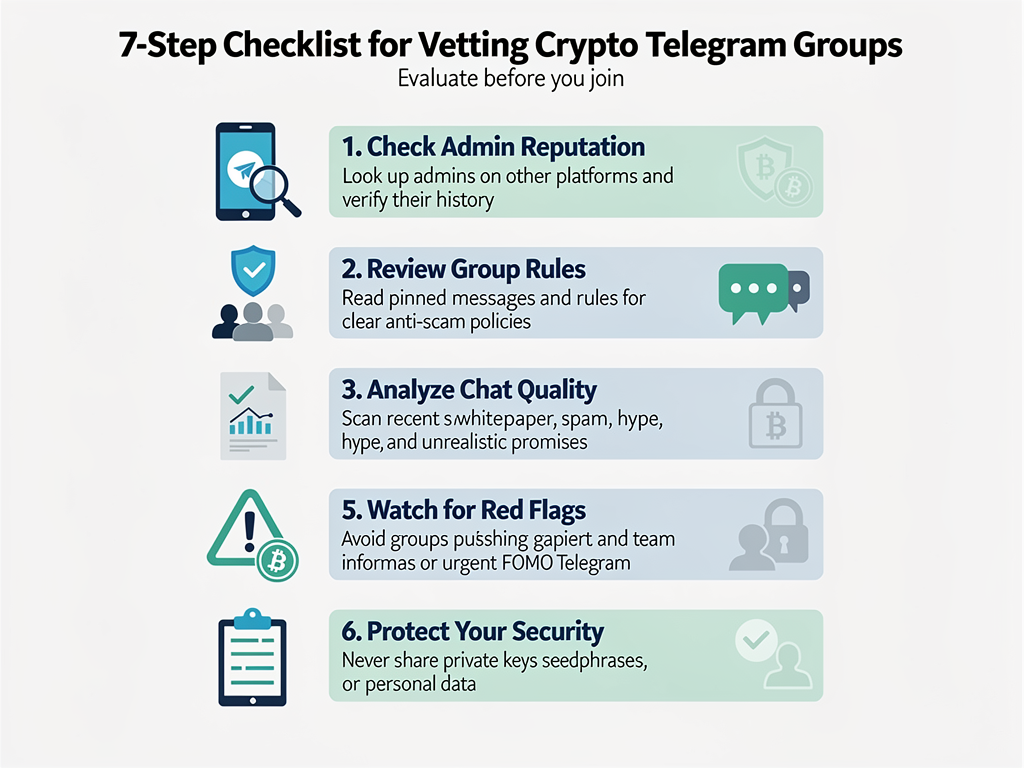
Step 1: Check the Admin Track Record
Before joining any group, research the administrators on Twitter, LinkedIn, or other public platforms. Do they use real identities or remain anonymous? Anonymous admins aren’t automatically suspect, but they need exceptional public track records to compensate. Look for screenshots of past calls with timestamps, verifiable blockchain transactions, or independent reviews from members. Groups with nothing to hide publish monthly performance reports showing wins and losses.
Step 2: Lurk Before You Trust
Most legitimate groups offer free tiers or trial periods. Spend at least a week observing before acting on any calls. Watch how admins interact with members, whether they acknowledge losing trades honestly, and if they moderate scam links aggressively. A trader shared results claiming 1,100% returns across three to four trades, turning capital into 11X growth. While impressive, such claims demand verification through your own observation period before risking money.
Step 3: Test With Small Capital
When you’re ready to test a group’s signals, start with amounts you can afford to lose completely. Follow one or two calls with small position sizes, track the results in a spreadsheet, and compare the group’s claims to your actual outcomes. Many groups cherry-pick their best calls for promotional tweets while ignoring the losses. Your personal testing reveals the real win rate.
Step 4: Evaluate Community Engagement
Scroll through recent messages. Are members sharing their own research and results? Do they ask thoughtful questions and get helpful answers? Or is it just admins posting and everyone else silent? Healthy communities have active discussions where members contribute value, not just consume it. Dead groups with thousands of members but zero interaction are useless regardless of size.
Step 5: Verify Information Independently
Never trust a contract address, airdrop link, or claim without checking it yourself. Use blockchain explorers to verify token contracts, check liquidity locks on platforms like Unicrypt, and search for the project on multiple sources. Groups make mistakes, and some intentionally promote scams. Your independent verification is the final defense.
Step 6: Understand the Monetization Model
How does the group make money? Premium subscriptions, affiliate links, token promotions, or consulting services all create different incentive structures. Groups funded purely by member subscriptions align their interests with yours—they need to deliver value or lose subscribers. Groups paid by projects to shill tokens have conflicting interests and may promote poor investments.
Step 7: Set Clear Boundaries
Decide in advance how much time and money you’ll allocate to each group. It’s easy to get sucked into checking Telegram constantly, chasing every call, and overtrading. Successful members treat group signals as one input among many, not holy gospel to follow blindly.
Where Most People Fail (and How to Fix It)
The most common mistake is joining too many groups at once. People join ten or fifteen channels thinking more sources equal better information. Instead, they get overwhelmed by contradictory signals, spend hours reading repetitive content, and struggle to evaluate which sources actually deliver. Three carefully chosen groups outperform fifteen mediocre ones every time.
Another failure mode is treating all admin claims as verified truth. One group might post a screenshot showing a token pumped 20X after their call, conveniently ignoring that they called it at $89k market cap and it peaked at $1.7M before crashing to $1.1M. The 20X is technically accurate but misleading if most members bought during the hype and held through the dump. Always ask: what price did I actually enter, and what price can I exit at right now?
Many traders also fail to account for slippage and gas fees on small-cap plays. A group calls a token that does 5X, but you’re trading with $500 on Ethereum during high gas periods. After $50 to buy, $50 to sell, and 10% slippage each direction, your actual profit is far less than the 5X suggests. Understanding these mechanics before following calls prevents disappointing results.
Ignoring risk management is perhaps the deadliest mistake. Groups share high-risk, high-reward plays that can 10X or go to zero. If you put 50% of your portfolio into every call, one or two losses will devastate your account regardless of how many wins you hit. Proper position sizing—typically 1% to 5% per speculative play—ensures you survive the losses and compound the wins.
People also underestimate the work required to capitalize on opportunities. An airdrop might pay $2,000, but only if you complete ten tasks across five blockchains over three weeks. Groups share the opportunity, but members who succeed are those who immediately create tracking spreadsheets, set calendar reminders, and allocate time to complete requirements. Passive lurkers rarely capture the full value.
For projects struggling to build and manage their own engaged communities, FLEXE.io brings over 7 years of Web3 marketing expertise, serving 700+ clients with access to 150+ media outlets and 500+ KOLs to rapidly grow awareness and active membership. Reach out on Telegram: https://t.me/flexe_io_agency
Real Cases with Verified Numbers
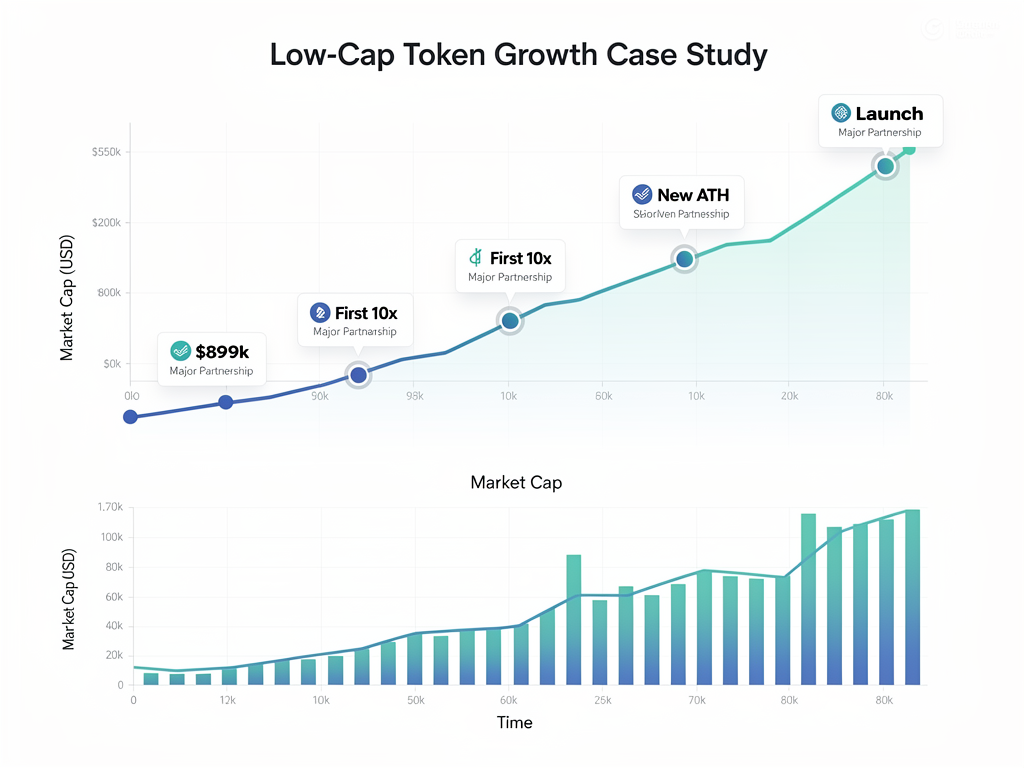
Case 1: Low-Cap Token Community Call
Context: A trading-focused Telegram community with established track record identified an emerging token with strong fundamentals but minimal attention.
What they did:
- Identified a promising crypto token trading at $89,000 market cap through on-chain research.
- Shared the trade call with community members including entry strategy and risk parameters.
- Community members followed the call with position sizes appropriate to their risk tolerance.
Results:
- Before: $89k market cap at entry
- After: $1.7M market cap at peak, stabilizing around $1.1M (according to project data)
- Growth: 20X at peak for early participants
Key insight: Early access to researched calls in active communities can deliver asymmetric returns, but timing entry and managing exits matter as much as getting the initial signal.
Source: Tweet
Case 2: Short-Term Trading Signal Performance
Context: A signals-focused group emphasizing high win rates and rapid execution on short-term opportunities.
What they did:
- Shared three to four high-conviction trade calls based on technical analysis and momentum indicators.
- Members executed trades within the specified entry windows using provided parameters.
- Tracked performance publicly for community verification and accountability.
Results:
- Before: Standard capital allocation across multiple trades
- After: 11X capital growth reported by group (according to project data)
- Growth: Over 1,100% profit across the trade sequence
Key insight: Consistent execution on multiple smaller wins can compound to significant returns, though individual results vary based on entry timing and position sizing.
Source: Tweet
Case 3: Maintaining High Win Rate Through Selective Calls
Context: A quality-focused community emphasizing selectivity over volume, building reputation through consistent winning calls.
What they did:
- Built a Telegram community focused on high-probability setups rather than constant trading.
- Posted three carefully researched calls within a 24-hour period, each with clear parameters.
- All three calls resulted in profitable outcomes, maintaining the group’s performance streak.
Results:
- Before: Established track record being further validated
- After: Three wins in 24 hours during the observation period
- Growth: 90% win rate sustained across all calls
Key insight: Selective groups that post fewer but higher-quality calls often outperform high-volume signal services that generate noise alongside winners.
Source: Tweet
Case 4: Building Community While Delivering Member Value
Context: A creator dedicated ten months to building educational content and sharing opportunities across multiple platforms while growing an engaged Telegram community.
What they did:
- Researched and shared crypto insights, airdrop opportunities, and educational content consistently over ten months.
- Built parallel communities on X (11,000 followers) and Telegram (approximately 3,000 members).
- Focused on helping members achieve their first significant crypto gains through detailed guidance.
Results:
- Before: Starting from zero followers and community members
- After: 3,000 members in Telegram community, 11,000 followers on X
- Growth: Over $60,000 in airdrop rewards documented, $2,000+ from platform monetization
Key insight: Consistent value delivery over extended periods builds genuine communities where members achieve real financial outcomes, not just engagement metrics.
Source: Tweet
Tools and Next Steps
Several platforms help you discover and evaluate large crypto communities. Telegram’s search function lets you find groups by keywords, though it doesn’t show member counts or activity levels until you join. Third-party directories like TelegramChannels and Combot list popular crypto groups with basic metrics, though these should be starting points rather than endorsements.
On-chain analytics tools such as Dextools, GeckoTerminal, and Arkham Intelligence let you verify claims made in groups. When someone shares a contract address and claims it’s “pumping,” you can check real-time price action, liquidity depth, holder distribution, and trading volume within seconds. This verification step is non-negotiable.
Portfolio tracking apps like Delta, CoinStats, or simple spreadsheets help you measure whether group signals actually improve your results. Track every trade from group calls separately from your own research trades. After three months, compare the performance. If group calls underperform your independent research, quit the group regardless of how active or friendly it seems.
For projects and founders building their own communities from scratch, FLEXE.io offers 7+ years of Web3 marketing experience with 700+ successful clients, providing access to 10+ crypto traffic sources and 500+ KOLs to accelerate user growth and community engagement. Get in touch on Telegram: https://t.me/flexe_io_agency
Here’s your action checklist for finding and joining valuable communities:
- Research three to five groups recommended by people whose crypto judgment you trust, not random internet lists.
- Join free tiers first and observe for at least one week before upgrading to paid access or following any calls.
- Create a tracking spreadsheet with columns for group name, call date, entry price, exit price, result, and notes.
- Set up separate wallets for testing group calls versus holding your core portfolio to limit risk exposure.
- Verify every contract address, airdrop link, and claim using blockchain explorers and official project channels.
- Allocate no more than 5% of your total crypto portfolio to any single call from a group, regardless of conviction level.
- Review your tracking spreadsheet monthly and quit groups that consistently underperform or show declining quality.
- Contribute valuable findings to communities where you benefit, strengthening the collective intelligence.
- Never share private keys, seed phrases, or connect wallets to links shared in groups without independent verification.
- Set specific daily time limits for Telegram (like 30 minutes) to prevent constant distraction and overtrading.
FAQ: Your Questions Answered
How do I tell if a big crypto Telegram group is legitimate or a scam?
Legitimate groups have transparent admins with public track records, post both winning and losing calls with timestamps, and moderate scam links aggressively. Scam groups promise guaranteed returns, pressure you to invest quickly, use anonymous admins with no verifiable history, and delete messages questioning their claims. Always verify independently before trusting any group.
Are paid premium crypto Telegram groups worth the subscription cost?
Premium groups can justify their cost if they provide faster signals, dedicated research, and consistent results that you verify through personal testing. Many deliver genuine value, but test free tiers first for at least two weeks. Track whether paid signals actually outperform free alternatives using a spreadsheet before committing to long-term subscriptions.
How many groups should I join to get good coverage of opportunities?
Three to five carefully selected groups provide better results than joining fifteen mediocre ones. More groups create information overload, contradictory signals, and wasted time reading repetitive content. Focus on quality communities aligned with your specific goals—trading, airdrops, or long-term research—rather than trying to monitor everything.
What’s the typical win rate for signals shared in large trading groups?
Honest groups with verified track records typically show 50% to 70% win rates on their calls, with some exceptional communities reaching 80% to 90% through highly selective calling. Be skeptical of groups claiming 95%+ win rates, as these often cherry-pick results or count small wins while hiding large losses. Verify win rates through your own testing over at least twenty trades.
How quickly do I need to act on calls posted in these communities?
Speed requirements vary by group size and call type. In groups with 10,000+ members, low-cap token calls can pump within minutes as members pile in, requiring very fast execution. Airdrop opportunities and longer-term holds usually give hours or days to research and decide. Set up price alerts and notifications only for groups with proven track records to avoid constant distraction.
Can I make consistent income just following signals from these groups?
Some traders generate consistent profits following group signals, but it requires strict risk management, fast execution, independent verification, and emotional discipline most people lack. Treat signals as one input among several rather than a complete investment strategy. Develop your own analytical skills over time instead of remaining dependent on others for every decision.
What red flags should immediately make me leave a group?
Exit immediately if admins delete questions, pressure you to invest in specific tokens without research time, share wallet connection links before you can verify them, promise guaranteed returns, or refuse to acknowledge losing trades. Other red flags include constant shilling of the same token, admin wallets dumping on community members, or switching to new “opportunities” every few days without follow-through.